Probiotics in Pediatric Sepsis: New Trial Data on Gut Recovery

SNIPPET: Probiotic supplementation in critically ill children with severe sepsis may reduce delayed nutrition onset from 77% to 46%, cut gastrointestinal complications from 36% to 9%, and shorten calorie goal achievement from 3.8 to 2.7 days, according to a new double-blind, placebo-controlled trial published in Scientific Reports (2026).
Probiotics in Pediatric Sepsis: New Trial Data on Nutritional Recovery and Gut Ecosystem Rescue
THE PROTOHUMAN PERSPECTIVE#
The thing about sepsis in children is that it doesn't just attack organs — it dismantles the gut ecosystem at exactly the moment the body needs it most. Nutritional delivery becomes almost impossible when the gastrointestinal tract shuts down, and every hour of delayed feeding compounds the metabolic damage. This new trial from Scientific Reports is one of the first double-blind, placebo-controlled studies to specifically measure how probiotic intervention affects nutritional trajectories in pediatric severe sepsis — not just infection rates or mortality, but the actual caloric and micronutrient cascade that determines recovery. For anyone tracking how microbial interventions reshape critical care, this is the kind of data that moves the conversation from theoretical to actionable. It's also a reminder that the gut isn't a passive tube. It's an active metabolic organ, and when it collapses under sepsis, restoring its microbial architecture may be the fastest route to restoring the whole system.
THE SCIENCE#
Sepsis and the Gut Ecosystem Collapse#
Sepsis is a dysregulated host response to infection that remains among the leading causes of death in pediatric intensive care globally. Rudd et al. estimated 48.9 million sepsis cases worldwide annually, with 11 million deaths — a disproportionate share affecting children in low- and middle-income settings[1]. What's less discussed, and what this trial targets directly, is the nutritional cascade failure that accompanies severe sepsis.
Critical illness shreds the gut microbiome. Pathogenic bacteria overgrow, commensal species collapse, and the intestinal barrier — normally a tightly regulated gatekeeper — becomes permeable. This translocation of pathogens and toxins feeds a systemic inflammatory response that, in turn, suppresses appetite, delays gastric emptying, and triggers gastrointestinal complications like constipation, abdominal distension, and vomiting[4]. The result: children who desperately need calories can't absorb them.
The thing about this cycle is that it's self-reinforcing. Malnutrition weakens immune function, which worsens sepsis, which further degrades the gut. Breaking the cycle requires intervention at the microbial level — and that's what this trial attempted.
The Trial: Design and Core Findings#
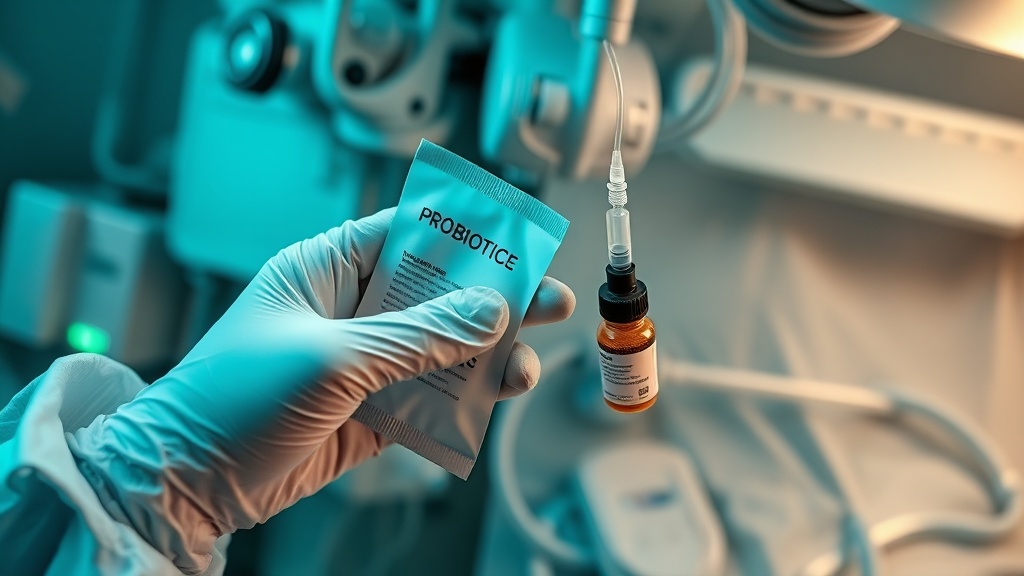
The study, published in Scientific Reports in March 2026, enrolled 47 critically ill children with severe sepsis in a pediatric ICU setting. Patients were randomized to receive either a probiotic sachet twice daily or corn starch placebo for one week[1].
Let me be direct about the sample size: n=47 is small. The authors acknowledge this. But the effect sizes were surprisingly large across multiple endpoints, and the randomization and blinding were properly executed, which gives the data more weight than the raw number might suggest.
Key results:
- Delayed nutrition onset: 46% in the probiotic group vs. 77% in placebo (P = 0.03). That's a meaningful reduction — fewer children stuck waiting for their gut to wake up.
- GI complications: 9% vs. 36% (P = 0.03). Constipation specifically dropped (P = 0.02), as did abdominal distension (P = 0.04).
- Time to calorie goal: 2.7 ± 0.8 days vs. 3.8 ± 1.0 days (P < 0.001). More than a full day faster.
- Mean calorie intake: 44.3 ± 7.6 vs. 33.1 ± 10.5 kcal/kg/day (P = 0.01). A 34% increase in daily caloric delivery.
- BMI Z-score improvement (children >2 years): +0.35 ± 0.13 vs. −0.11 ± 0.18 (P = 0.008)[1].
The micronutrient intake data also favored the probiotic group (P < 0.05 for several nutrients), though the specific micronutrients weren't fully detailed in the available abstract.
The Mechanism: Short-Chain Fatty Acids and Barrier Restoration#
How do probiotics pull this off in a septic gut? The cascade works through several pathways that Wang, Huang, and Zhao outlined in their 2025 review in Food Science & Nutrition[4].
First, short-chain fatty acid (SCFA) production. Probiotic strains — primarily Lactobacillus and Bifidobacterium species — ferment dietary fiber into SCFAs like butyrate, propionate, and acetate. Butyrate is the preferred energy source for colonocytes (the cells lining the colon), and its presence directly strengthens the intestinal barrier. In sepsis, butyrate-producing species are among the first casualties. Restoring them restores the barrier.
Second, competitive exclusion. Probiotics physically occupy binding sites on the intestinal epithelium, blocking pathogenic organisms from adhering. This is less about killing bad bacteria and more about real estate — occupying the ecological niche before opportunists can.
Third, immune modulation. Probiotics interact with gut-associated lymphoid tissue to calibrate immune responses — dampening excessive inflammation while maintaining antimicrobial vigilance. In the context of sepsis, where the immune system is simultaneously hyperactivated and immunosuppressed, this balancing act matters enormously[4].
Angurana and Mehta's review in the Journal of Pediatric Critical Care further noted that enteral probiotic administration reduces rates of necrotizing enterocolitis, ventilator-associated pneumonia, candidal colonization, and antibiotic-associated diarrhea in critically ill children[5]. The ecosystem logic is consistent: restore microbial diversity, and downstream clinical outcomes improve.
Corroborating Evidence: The Gut-Wound-Immunity Axis#
Peng, Yan, Shi et al. published a systematic review and meta-analysis in Frontiers in Nutrition (February 2026) that adds a broader lens. Across 19 RCTs involving 1,384 critically ill patients, probiotic supplementation significantly reduced wound infection risk, shortened hospital stays, and decreased mechanical ventilation duration[2]. The evidence was graded as moderate-certainty using GRADE frameworks.
I'm less convinced by the wound healing acceleration data — the authors themselves call it "inconclusive." But the infection reduction and length-of-stay findings align perfectly with what the pediatric sepsis trial showed: probiotics don't just fix the gut, they reduce systemic burden.
Separately, a multi-center RCT by Lan, Richmond, Yusof et al. (2026) in Frontiers in Nutrition demonstrated that Bifidobacterium infantis YLGB-1496 improved respiratory health, gastrointestinal outcomes, immune markers, and gut microbiota composition in infants[3]. While this was a healthy infant population, the mechanistic pathway — immune homeostasis via microbiome modulation — is the same cascade at work in the sepsis trial.
Probiotic vs. Placebo: Key Outcomes in Pediatric Sepsis
COMPARISON TABLE#
| Method | Mechanism | Evidence Level | Cost | Accessibility |
|---|---|---|---|---|
| Probiotic supplementation (this trial) | SCFA production, competitive exclusion, immune modulation via gut microbiome restoration | Single RCT (n=47), double-blind, placebo-controlled | Low (~$0.50–2/day per sachet) | Widely available; strain selection still unstandardized |
| Standard enteral nutrition (no probiotics) | Caloric delivery via nasogastric or oral route | Standard of care, well-established | Low | Universal in PICU settings |
| Synbiotic supplementation (probiotic + prebiotic) | Combined microbial colonization + substrate for SCFA production | Moderate (included in Peng et al. meta-analysis, 19 RCTs) | Low–moderate | Available but protocols vary widely |
| Fecal microbiota transplant (FMT) | Direct transfer of donor microbiome ecosystem | Limited in pediatric critical care; mostly C. difficile data | Moderate–high | Restricted to specialized centers; regulatory barriers |
| Selective digestive decontamination (SDD) | Antibiotic suppression of pathogenic gut flora | Multiple adult RCTs; controversial; limited pediatric data | Moderate | Available but not widely adopted due to resistance concerns |
THE PROTOCOL#
The following protocol is based on currently available evidence and is intended for clinical teams managing pediatric sepsis patients. This is not a consumer biohacking protocol — these are critically ill children requiring ICU-level care. Any supplementation decisions should be made by the treating physician.
-
Assess baseline gut function within 6 hours of PICU admission. Document bowel sounds, abdominal distension, last bowel movement, and any pre-existing gastrointestinal conditions. This establishes the baseline ecosystem status before intervention.
-
Initiate enteral nutrition as early as clinically feasible. Current ESPGHAN and ESPEN guidelines support early enteral feeding in critically ill children. The trial data suggests probiotics may reduce the incidence of delayed nutrition from 77% to 46%, which means early probiotic co-administration alongside enteral feeding could be synergistic[1].
-
Administer a multi-strain probiotic sachet twice daily for 7 days. The trial used a probiotic sachet (specific strains not fully detailed in the abstract) given twice daily. Based on the broader literature, Lactobacillus and Bifidobacterium species are the most commonly studied and supported strains in pediatric critical care[5]. Optimal dosing in humans — particularly septic children — is not yet established with precision. Starting with 1–10 billion CFU per dose is consistent with protocols used in prior pediatric trials.
-
Monitor gastrointestinal tolerance daily. Track constipation, abdominal distension, vomiting, and diarrhea. The trial showed a reduction in GI complications from 36% to 9% — but individual responses vary, and probiotics should be discontinued if symptoms worsen or if there's any suspicion of probiotic-associated bacteremia (rare, but documented in immunocompromised patients).
-
Track calorie intake achievement daily against calculated targets. The probiotic group reached calorie goals in 2.7 days vs. 3.8 days — measure this against your patient's specific caloric targets (typically calculated at 25–30 kcal/kg/day for maintenance, adjusted for sepsis-related hypermetabolism).
-
Reassess anthropometric markers at discharge and follow-up. BMI Z-score improvement was significant in children over 2 years (+0.35 vs. −0.11). Weight-for-age, weight-for-height, and BMI Z-scores should be tracked at baseline, discharge, and 30-day follow-up to assess nutritional recovery trajectory.
-
Do not use probiotics as a replacement for antimicrobial therapy. Probiotics are adjunctive. They address the ecosystem disruption that accompanies sepsis — they do not treat the infection itself. Antibiotics, source control, and hemodynamic management remain the primary interventions.
Related Video
VERDICT#
Score: 6.5/10
Here's where I land on this. The trial is well-designed for what it is — double-blind, placebo-controlled, with statistically significant results across multiple clinically relevant endpoints. The effect sizes are large enough to be clinically meaningful, not just statistically convenient. The biological plausibility is strong, backed by a growing body of mechanistic and clinical evidence.
But. It's 47 patients at a single center. They didn't control for baseline microbiome diversity, which makes some of the results hard to interpret with full confidence. The specific probiotic strains aren't clearly identified in the available data. And the intervention was only one week — we have no idea about longer-term outcomes or optimal duration.
I believe this data is directionally correct. Probiotics almost certainly help restore gut ecosystem function in septic children, and that translates to better nutritional delivery. But anyone who tells you we have enough evidence to make this standard of care is selling something. This is promising preliminary data that needs multicenter replication before it changes clinical guidelines. Worth watching closely. Not yet worth overhauling protocols.
Frequently Asked Questions5
References
- 1.Author(s) not listed. The role of probiotics in nutritional intake and clinical outcomes of critically ill children with severe sepsis: a double-blind, placebo-controlled trial. Scientific Reports (2026). ↩
- 2.Peng Y, Yan H, Shi B, Lv L, Jiang Y, Fang H, Ma B. Targeting the gut to heal the skin: probiotic supplementation reduces wound infection risk and clinical burden in critically ill patients—a systematic review and meta-analysis. Frontiers in Nutrition (2026). ↩
- 3.Lan H, Richmond RV, Yusof A, Vejayantheran M, Jiang H, He J, Mageswary MU, Li P, Tan JS, Liong MT, Ali A, Abd Hamid IJ, Taib F, Zhang Y. Probiotic improves respiratory and gastrointestinal health, immune homeostasis, and gut microbiota composition in infants: a randomized controlled trial. Frontiers in Nutrition (2026). ↩
- 4.Wang Z, Huang J, Zhao P. Unveiling the Therapeutic Potential of Probiotics in Sepsis: A Review. Food Science & Nutrition (2025). ↩
- 5.Angurana SK, Mehta A. Probiotics in critically ill children: An updated review. Journal of Pediatric Critical Care (2021). ↩
Dax Miyori
Dax is comfortable with complexity and slightly impatient with people who want clean answers about the microbiome. He writes in systems terms and will point out when a study ignored confounding microbial variables: 'They didn't control for baseline diversity, which makes the result almost uninterpretable.' He uses 'ecosystem' and 'cascade' frequently — not as jargon, but because they're accurate.
View all articles →