Fecal Microbiota Transplant for Parkinson's Disease: Phase 2 Trial

THE PROTOHUMAN PERSPECTIVE#
The thing about Parkinson's disease is that we've been treating it as a brain problem for over fifty years — and getting nowhere with disease modification. Levodopa manages symptoms until it doesn't. Meanwhile, a cascade of evidence has been accumulating that the gut ecosystem may be where α-synuclein pathology actually begins, years before tremor or rigidity show up.
This trial matters because it's the first to test repeated fecal microbiota transplantation in patients who haven't started any PD drugs. That's a critical distinction. Every prior FMT trial in Parkinson's was contaminated by levodopa's known effects on gut motility and microbial composition. By removing that variable, this study gives us the cleanest signal we've ever had that reshaping the gut microbiome can move the needle on motor decline. For those of us tracking the microbiota-gut-brain axis as the next frontier in neurodegeneration, this is the dataset we've been waiting for — imperfect as it still is.
THE SCIENCE#
What Is Fecal Microbiota Transplantation in Parkinson's Disease?#
Fecal microbiota transplantation is the clinical transfer of processed stool from a healthy donor into a recipient's gastrointestinal tract, with the goal of restoring microbial diversity and function. In Parkinson's disease, this approach targets the well-documented gut dysbiosis — particularly the overgrowth of pro-inflammatory taxa and depletion of short-chain fatty acid producers — that appears to drive neuroinflammation through the vagal nerve pathway[1]. The intervention matters because current pharmacotherapy does not modify disease trajectory; levodopa remains palliative at best[1]. In this phase 2 trial, the dFMT group achieved a 3.8-point improvement on UPDRS III motor scores versus a negligible 0.1-point change in controls (p = 0.0001)[1]. Multiple research groups and a recent systematic review encompassing five RCTs have now investigated FMT in PD, though with inconsistent results depending on protocol design[2].
Trial Design and Key Results#
The study randomized 72 drug-naïve PD patients 1:1 to receive either donor FMT (dFMT) or autologous FMT (aFMT) as placebo. The autologous control is smart design — patients receive their own stool back, which controls for the procedural placebo effect without introducing new microbial communities. Sixty-six patients completed the 35-week follow-up.
Each treatment cycle lasted seven days: 200 mL on days 1–3, tapering to 50 mL on days 4–7, repeated in 4-week cycles. The constipation results were striking — a reduction of 6.5 points on the PAC-QoL severity scale for dFMT versus 0.7 for aFMT (p < 0.0001)[1]. Quality-of-life scores also improved significantly in the treatment arm.
But here's where it gets interesting. The 45.5% responder rate in the dFMT group compared to 21.2% in the aFMT group tells a more nuanced story than the mean changes suggest. That means more than half of the patients receiving donor FMT didn't hit the clinically meaningful threshold. Your gut doesn't care about your supplement brand — and apparently, it's also selective about whose microbiome it decides to adopt.
The Mechanistic Cascade: From Gut to Brain#
The mechanistic data is what elevates this trial beyond symptom tracking. Microbiome profiling showed that dFMT recipients' gut compositions shifted toward greater similarity with their donors — expected, but necessary to confirm engraftment actually occurred.
More importantly, Escherichia-Shigella abundance dropped markedly in the dFMT group, and this reduction correlated with decreased colonic α-synuclein aggregation (r = 0.3775, p = 0.0277)[1]. That correlation is the mechanistic link between microbial ecosystem remodeling and the protein pathology that defines Parkinson's at the cellular level.
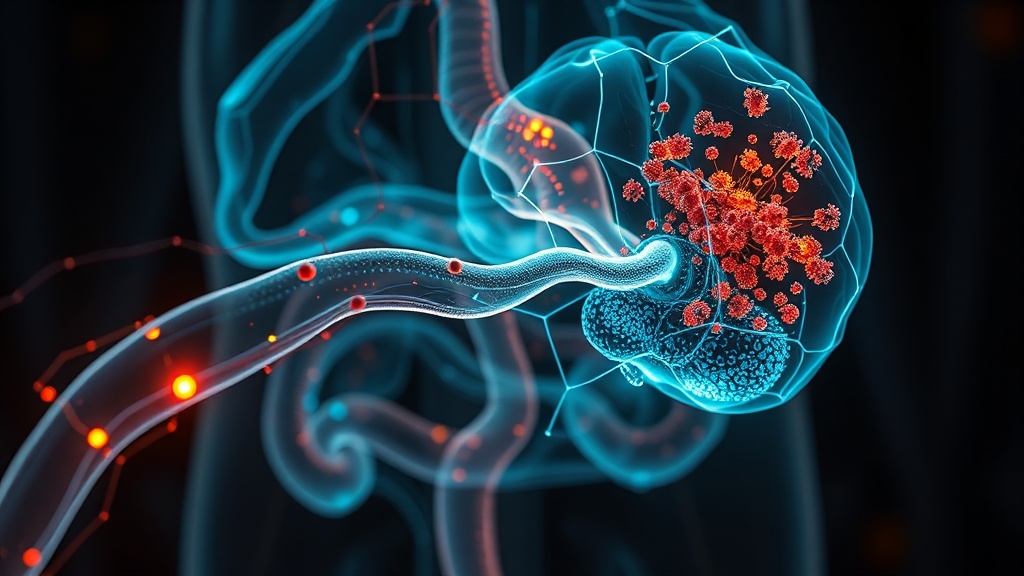
Biochemical analyses revealed elevated fecal dopamine and 3,4-dihydroxyphenylacetic acid (DOPAC) levels — suggesting the transplanted microbiome may be supporting local dopamine synthesis pathways in the enteric nervous system. Histological assessments demonstrated strengthened epithelial barrier integrity with increased E-cadherin expression[1]. In systems terms: the gut wall tightened up, reducing the translocation of inflammatory molecules that cascade upstream into neuroinflammation.
The thing about the barrier integrity finding is that it connects to something we've known for years but couldn't act on — PD patients consistently show increased intestinal permeability, sometimes called "leaky gut," which allows lipopolysaccharides and other endotoxins to trigger systemic inflammation[3]. Fixing the barrier may be as important as fixing the bacterial composition itself.
What the Systematic Evidence Says#
I'd be doing a disservice if I presented this single trial without context. Nabil et al.'s 2025 systematic review of five RCTs involving 157 patients found inconsistent results across studies[2]. Bruggeman et al. previously observed motor improvement from a single nasojejunal dFMT, while Scheperjans et al. found no motor benefit from a single colonoscopic administration[1]. De Sciscio et al.'s 2025 pilot study of 12 patients over six months showed FMT was safe and tolerable but found no significant motor changes, only a trend toward reduced daily OFF time[4].
I'm less convinced by studies using single-dose FMT. The current trial's repeated dosing protocol — multiple cycles over months — may be the key variable explaining its stronger results. Microbial engraftment isn't a one-shot deal; the recipient ecosystem pushes back, and repeated exposure appears necessary to establish durable colonization.
Motor Symptom Change (UPDRS III) at 35 Weeks
COMPARISON TABLE#
| Method | Mechanism | Evidence Level | Cost | Accessibility |
|---|---|---|---|---|
| Repeated Donor FMT (dFMT) | Microbial ecosystem replacement; reduces pathogenic taxa, restores barrier integrity, modulates enteric dopamine | Phase 2 RCT (n=66 completers) | High (clinical-grade donor screening, multi-cycle protocol) | Low — requires specialized clinical setting, screened donors |
| Single-Dose FMT | Same mechanism, single administration | Mixed RCT results (inconsistent motor benefit) | Moderate | Low — clinical setting required |
| Levodopa/Carbidopa | Dopamine precursor replacement in CNS | Gold standard, extensive RCT data | Low–Moderate | High — widely available oral medication |
| Probiotics (targeted strains) | Partial microbiome modulation, SCFA production | Small RCTs, constipation relief only | Low | High — over-the-counter |
| Deep Brain Stimulation (DBS) | Electrical stimulation of subthalamic nucleus | Strong RCT evidence for motor symptoms | Very High (surgical) | Low — specialized neurosurgical centers |
THE PROTOCOL#
The following protocol is based on the clinical trial design and should only be pursued under medical supervision at qualified gastroenterology or neurology centers. This is not a DIY intervention. FMT carries infection risks if donor screening is inadequate.
-
Obtain comprehensive baseline assessment. Before initiating any FMT protocol, undergo full neurological evaluation including UPDRS III scoring, constipation severity assessment (PAC-QoL), and baseline stool microbiome profiling via 16S rRNA sequencing. Document current medications — this protocol was studied exclusively in drug-naïve patients.
-
Identify a rigorously screened donor. Donor selection is arguably the most critical variable. The trial used donors screened per established FMT banking standards — negative for HIV, hepatitis B/C, C. difficile, antibiotic-resistant organisms, and parasites. Ideal donors show high microbial diversity with abundant Firmicutes and Bacteroidetes and low Escherichia-Shigella levels.
-
Follow the repeated dosing cycle. Each cycle spans seven days: 200 mL of processed donor fecal suspension administered on days 1–3, followed by 50 mL on days 4–7. Cycles repeat every four weeks. The trial ran multiple cycles over 35 weeks[1].
-
Support engraftment with dietary optimization. While the trial protocol didn't specify dietary co-interventions, microbial ecology principles suggest a high-fiber, plant-diverse diet supports colonization of transplanted communities. Aim for 30+ different plant foods per week to provide varied prebiotic substrates.
-
Monitor microbiome shift and clinical response. Repeat stool microbiome profiling at weeks 12 and 35 to assess engraftment success. Track motor symptoms with UPDRS III and constipation with PAC-QoL at each cycle endpoint. The trial observed that responders showed microbiome compositions converging toward their donor profiles[1].
-
Assess epithelial barrier markers if accessible. If colonoscopic biopsy is part of follow-up, assess E-cadherin expression and α-synuclein aggregation levels. These biomarkers may indicate whether the mechanistic cascade — from gut barrier restoration to reduced protein pathology — is being activated.
-
Maintain long-term surveillance. All adverse events in the trial were mild and self-limited (gastrointestinal discomfort primarily), but long-term safety data beyond 35 weeks does not exist for this protocol. Continue neurological follow-up indefinitely.
Related Video
What is fecal microbiota transplantation for Parkinson's disease?#
FMT for Parkinson's involves transferring processed stool from a healthy donor into a PD patient's gut to restore microbial diversity and reduce pathogenic bacteria linked to neuroinflammation. The goal is to interrupt the cascade from gut dysbiosis through increased intestinal permeability to α-synuclein aggregation in the brain. It's an experimental approach — not yet approved as standard therapy for PD anywhere in the world.
How does gut bacteria affect Parkinson's motor symptoms?#
The microbiota-gut-brain axis connects intestinal microbial communities to central nervous system function via the vagus nerve, immune signaling, and microbial metabolites. In PD patients, overgrowth of pro-inflammatory taxa like Escherichia-Shigella appears to correlate with increased colonic α-synuclein aggregation, which may propagate to the substantia nigra[1]. By reducing these pathogenic communities, FMT may slow the upstream driver of dopaminergic neuron degeneration — though honestly, we don't have enough longitudinal data to confirm this definitively.
Why were drug-naïve patients specifically chosen for this trial?#
Previous FMT trials in PD were confounded by levodopa and other dopaminergic medications, which independently alter gut motility, microbial composition, and potentially mask or amplify treatment effects. Studying drug-naïve patients eliminates these confounders and provides the cleanest assessment of whether microbiome modulation itself — not its interaction with existing drugs — drives clinical improvement[1]. The thing about this design choice is that it's the reason the results are actually interpretable.
When might FMT become a standard treatment for Parkinson's?#
We genuinely don't know enough to predict a timeline — and anyone who tells you otherwise is selling something. This is a phase 2 trial with 66 completers. Phase 3 trials with larger, multi-center cohorts are needed, along with long-term safety and efficacy data beyond 35 weeks. Regulatory approval would require standardized donor screening protocols, dosing regimens, and evidence of durability. Optimistically, we're looking at five or more years before any regulatory body considers this for clinical use.
How does repeated FMT compare to single-dose FMT for Parkinson's?#
Single-dose FMT studies have shown inconsistent results — Bruggeman et al. found motor benefit, while Scheperjans et al. did not[2]. The current trial's repeated dosing protocol produced the strongest motor improvement signal seen to date (UPDRS III: −3.8, p = 0.0001), suggesting that sustained microbial pressure through multiple cycles is necessary for durable engraftment and clinical effect[1]. The gut ecosystem resists colonization by outsiders — repetition appears to overcome that resistance.
VERDICT#
7.5/10. This is the strongest clinical evidence to date that gut microbiome modulation can improve motor symptoms in Parkinson's disease. The double-blind RCT design in drug-naïve patients, combined with mechanistic data linking microbial shifts to α-synuclein reduction and barrier repair, moves FMT for PD from speculative to genuinely promising. But I have to be honest about the limitations: n=66 is still small, the 45.5% responder rate means it doesn't work for everyone, 35 weeks is too short to assess durability, and this is a single-center trial from one population. The correlation between Escherichia-Shigella reduction and α-synuclein aggregation is suggestive, not causal — r = 0.38 isn't going to keep me awake at night with excitement. I'd want to see this replicated across multiple centers and ethnic populations before changing anyone's protocol. Still, for a field that has produced essentially zero disease-modifying therapies in decades, this data is worth paying close attention to.
References
- 1.Author(s) not listed. Gut microbiota modulation via repeated donor fecal transplantation improves motor and gastrointestinal symptoms in drug-naïve Parkinson's disease: a randomized phase 2 trial. Signal Transduction and Targeted Therapy (2026). ↩
- 2.Nabil Y, Helal MM, Qutob IA, Dawoud AIA, Allam S, Haddad R, Manasrah GM, AlEdani EM, Sleibi W, Faris A, Hassan AK, Nandwana V. Efficacy and safety of fecal microbiota transplantation in the management of Parkinson's disease: a systematic review. BMC Neurology (2025). ↩
- 3.Wang B, Ma D, Li N, Luo T. The application of fecal microbiota transplantation in Parkinson's disease. Frontiers in Aging Neuroscience (2025). ↩
- 4.De Sciscio M, Bryant RV, Haylock-Jacobs S, Day AS, Pitchers W, Iansek R, Costello SP, Kimber TE. Faecal microbiota transplant in Parkinson's disease: pilot study to establish safety & tolerability. npj Parkinson's Disease (2025). ↩
Dax Miyori
Dax is comfortable with complexity and slightly impatient with people who want clean answers about the microbiome. He writes in systems terms and will point out when a study ignored confounding microbial variables: 'They didn't control for baseline diversity, which makes the result almost uninterpretable.' He uses 'ecosystem' and 'cascade' frequently — not as jargon, but because they're accurate.
View all articles →