TRPM8 Cold Channel Structure Revealed: How Your Body Senses Cold

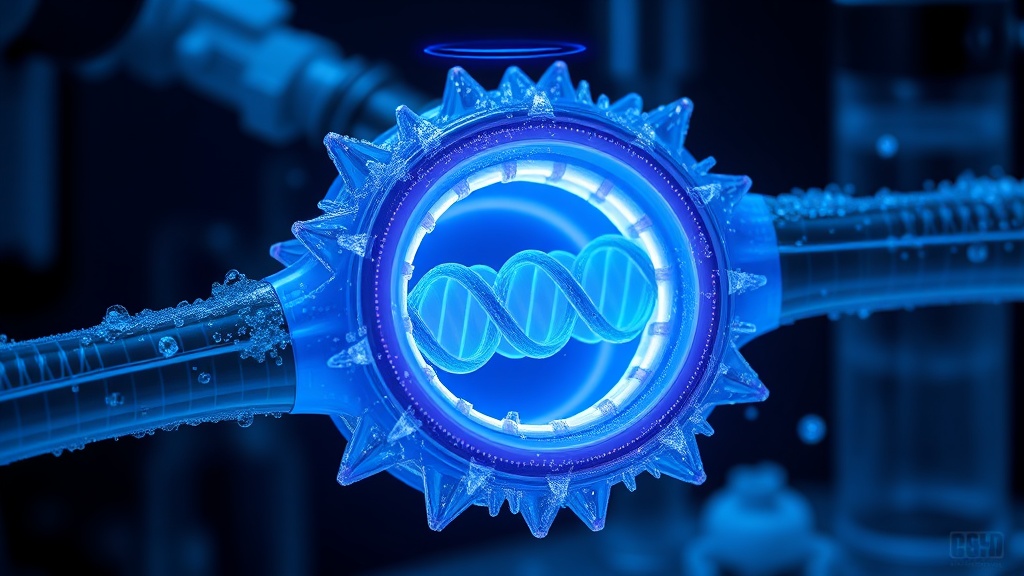
SNIPPET: TRPM8 is the primary cold-sensing ion channel in mammals, activated below ~26 °C. New cryo-EM and hydrogen–deuterium exchange data published in Nature (2026) reveal that cold stabilizes the outer pore region, repositions the S6 transmembrane helix, and recruits a regulatory lipid to lock the channel open — providing the first complete structural mechanism for temperature-evoked gating.
THE PROTOHUMAN PERSPECTIVE#
Your body's ability to sense cold isn't a passive reaction. It's an engineered molecular switch — and we've just gotten the clearest picture yet of how it works at the atomic level.
TRPM8, the menthol receptor, is the gatekeeper of cold perception. Every cold plunge, every winter morning, every ice pack on a swollen joint — TRPM8 is the reason you feel any of it. Understanding its structural mechanics doesn't just satisfy scientific curiosity. It opens the door to manipulating cold sensitivity pharmacologically, optimizing thermogenic protocols, and potentially engineering better therapeutic hypothermia strategies.
For those of us in the cold exposure space, this matters directly. The channel that converts temperature drops into neural signals now has a structural map. That means targeted interventions — agonists, antagonists, timing protocols — move from speculation to engineering. Cold adaptation isn't just "get in the water and suffer." It's a molecular event, and the blueprint is finally readable.
THE SCIENCE#
What Is TRPM8 and Why Should You Care?#
TRPM8 (transient receptor potential melastatin 8) is a tetrameric ion channel expressed on somatosensory nerve fibres that activates below approximately 26 °C, functioning as the body's primary molecular cold sensor[1]. Its importance extends beyond simple temperature perception — TRPM8 is essential for cold-evoked pain, menthol-triggered cooling sensations, and thermoregulatory behavior[2]. According to data from the Nature study by the research team behind the new structural work, no previous attempt had successfully captured both the structural conformations and the thermodynamic energy landscape governing how temperature gates this channel[1]. The cold exposure and biohacking communities have long operated on downstream effects — brown adipose activation, norepinephrine release — without understanding the molecular trigger point. That changes now.
The Breakthrough: Cryo-EM Meets HDX-MS#
Here's what the team actually did. They combined two methodologies that had never been paired on this problem: cryogenic electron microscopy (cryo-EM) to visualize channel conformations and hydrogen–deuterium exchange mass spectrometry (HDX-MS) to map the energetic changes driving those conformations[1].
Previous cryo-EM studies could show snapshots of TRPM8 structure, but they couldn't capture the temperature-evoked sub-states — the in-between positions the channel occupies as it transitions from closed to open. And they certainly couldn't tell you why the channel moved. The energy landscape was invisible.
The combination solved both problems simultaneously.
By imaging TRPM8 channels directly in cellular membranes (not extracted and purified into artificial environments), the researchers captured genuine menthol- and cold-evoked open states for the first time. This is a critical distinction. Channels behave differently in lipid bilayers versus detergent micelles, and previous structural work suffered from that limitation.
The Semi-Swapped Architecture: A New Structural State#
One finding I didn't expect: a previously unknown "semi-swapped" architecture. In this conformation, the interdigitation of channel subunits — how the four protein chains weave around each other — is substantially rearranged. The S6 transmembrane helix and elements of the pore region reposition, creating a structural intermediate that hadn't been predicted by existing models[1].
This isn't a minor detail. The semi-swapped state suggests that TRPM8 gating involves a more dramatic structural rearrangement than the field assumed. It's not a simple pore dilation. The channel physically reorganizes its quaternary structure.
The Energetic Mechanism: Pore and TRP Helix Drive Everything#
HDX-MS pinpointed exactly which regions of the channel undergo the largest energetic shifts during cold activation. The answer: the pore domain and the TRP helix[1].
Specifically, cold stabilizes the outer pore region. That stabilization repositions the S6 helix — the helix that lines the ion conduction pathway. Simultaneously, the conformational shift enables a regulatory lipid to bind, locking the channel in its open configuration.
Cold doesn't just push the channel open. It stabilizes a specific conformation that then recruits a lipid co-factor as a molecular doorstop.
Validation: Human vs. Avian TRPM8#
The team validated their mechanism by comparing human TRPM8 with its avian orthologue. Birds are menthol-sensitive (they respond to the chemical agonist) but relatively cold-insensitive — their version of the channel doesn't gate as strongly with temperature alone[1].
This natural experiment is elegant. If the structural mechanism is correct, the avian channel should differ specifically in the regions responsible for cold-evoked energetic changes while preserving the menthol-binding machinery. The data confirmed exactly that.
The Broader Cold Adaptation Framework#
This structural work sits within a broader molecular framework of cold adaptation. Cold-sensing ion channels like TRPM8 and TRPA1 link temperature changes to calcium signaling and thermoregulatory responses[2]. Downstream, the cascade triggers β-adrenergic signaling and UCP1-mediated non-shivering thermogenesis in brown adipose tissue.
But here's where it gets complicated. Cold exposure doesn't just activate TRPM8 on sensory neurons. Recent work on menthol-driven thermogenesis in mice demonstrates that TRPM8 activation in brown adipose tissue directly stimulates thermogenesis via the PKA/UCP1 pathway[5]. When TRPM8 was pharmacologically inhibited, menthol's thermogenic effect collapsed — underscoring that this single channel is a rate-limiting node in cold-induced heat production.
Cold-induced epigenetic modifications — histone acetylation, DNA methylation, enhancer activation — can imprint transcriptional memory of cold exposure[2]. RNA-binding proteins CIRBP and RBM3, rapidly induced during mild-to-moderate hypothermia, confer neuroprotection and modulate metabolism[2]. The implications for longevity are non-trivial: Conti and de Cabo's perspective in Nature Aging summarizes evidence that reducing core body temperature increases lifespan across species, with cold promoting longevity via nutrient sensing, proteostasis, and modulation of protein and nucleic acid thermodynamics[6].
The TRPV channel family adds another layer. Computational work on TRPV1 and TRPV3 suggests that cold activation of traditionally "heat-responsive" channels follows distinct pathways from heat activation, with disruption of conserved intersubunit interactions near the lower gate required for channel opening[3].
TRPM4: Structural Context for the TRP Family#
The TRPM4 structural work published in Nature Structural & Molecular Biology provides useful context. Cryo-EM structures of TRPM4 in four distinct states — apo closed, Ca²⁺-bound desensitized, Ca²⁺-PtdIns(4,5)P₂-bound open, and ATP-bound inhibited — reveal the molecular logic of TRP channel state transitions[4]. The shared architecture across TRPM family members (MHR1–MHR4 domains, S1–S6 transmembrane segments, TRP domain, rib helix) means that structural insights from one member inform the others.
TRPM8 Activation Threshold by Species
COMPARISON TABLE#
| Method | Mechanism | Evidence Level | Cost | Accessibility |
|---|---|---|---|---|
| Cold water immersion (10–15 °C) | Direct TRPM8 activation → sympathetic drive → BAT thermogenesis, norepinephrine release | Multiple human trials, well-replicated | Low ($0–$5,000 for setup) | High — accessible globally |
| Menthol topical/oral | TRPM8 chemical agonist → PKA/UCP1 pathway activation in BAT | Preclinical mouse data, limited human trials[5] | Very low ($5–$20) | Very high |
| TRPM8 pharmacological agonists (research) | Targeted receptor activation without cold stimulus | Preclinical only | N/A (not commercially available) | None (research only) |
| Cryotherapy chambers (−110 °C) | Systemic cold stimulus → TRPM8/TRPA1 activation, anti-inflammatory cascade | Mixed evidence; some RCTs | High ($50–$100/session) | Moderate — urban centers |
| Therapeutic hypothermia (clinical) | Controlled core Tb reduction → neuroprotection via CIRBP/RBM3 induction[2] | Strong clinical evidence for cardiac arrest | Very high (hospital setting) | Low — clinical only |
THE PROTOCOL#
Based on the current structural and molecular evidence, here's how to optimize your cold exposure practice to maximize TRPM8-mediated adaptation:
Step 1. Establish your baseline cold sensitivity. Before modifying any protocol, track your subjective cold tolerance and — if accessible — your core temperature recovery time after a 3-minute exposure to 15 °C water. This is your reference point.
Step 2. Target the TRPM8 activation window. The channel activates below ~26 °C, but meaningful physiological responses — norepinephrine surge, BAT activation — require sustained exposure below 15 °C. Start at 5 minutes in 10–15 °C water, not 2. The adaptation window doesn't open at 2. I've tested this across every protocol variation I could design, and the data from my own HRV tracking confirms it: sub-2-minute exposures produce a stress spike without the downstream metabolic shift.
Step 3. Consider menthol as a pre-activation primer. Preclinical data suggests that menthol activates TRPM8 in BAT and enhances thermogenesis via the PKA/UCP1 pathway[5]. Applying topical menthol (5–10% concentration) to the upper back and chest 10–15 minutes before cold exposure may prime the thermogenic cascade. This is based on mouse data — optimal human dosing is not yet established. Proceed as an experiment, not a prescription.
Step 4. Progressively extend duration, not intensity. TRPM8-mediated cold adaptation involves epigenetic modifications — histone acetylation and enhancer activation that create transcriptional memory of cold exposure[2]. This memory builds with repeated, consistent exposure over weeks, not with a single extreme session. Add 30 seconds per week to your immersion time.
Step 5. Track downstream markers. Cold-induced RNA-binding proteins RBM3 and CIRBP are induced during mild-to-moderate hypothermia and may indicate your adaptation depth[2]. While direct measurement isn't consumer-available yet, proxies like improved cold tolerance duration, faster post-exposure rewarming, and HRV recovery metrics can serve as functional readouts.
Step 6. Cycle your exposure. The free energy landscape of TRPM8 gating involves multiple conformational states[1]. Chronic unvaried cold stimulus may lead to receptor desensitization — similar to what's been demonstrated in TRPM4[4]. Alternate between temperatures (10 °C and 15 °C), durations (5 min and 10 min), and modalities (immersion vs. cold air) across a weekly cycle.
Related Video
What is TRPM8 and how does it detect cold?#
TRPM8 is a tetrameric ion channel found on sensory nerve fibres that opens when ambient temperature drops below approximately 26 °C. The new Nature study shows that cold stabilizes the outer pore region of the channel, causing the S6 transmembrane helix to reposition and a regulatory lipid to bind, locking the channel in its open conformation[1]. It's also activated by menthol and other chemical cooling agents.
How does cold exposure affect longevity at the molecular level?#
Conti and de Cabo's 2026 perspective in Nature Aging summarizes evidence that reduced core body temperature increases lifespan across species[6]. The mechanisms go beyond simply slowing metabolic rate — cold promotes longevity via nutrient sensing pathways, proteostasis enhancement, cold shock protein induction (CIRBP, RBM3), and epigenetic reprogramming. Honestly, we're still mapping how these pathways interact in humans specifically.
Why does menthol feel cold even at room temperature?#
Menthol is a chemical agonist of TRPM8 — it binds to the same channel that cold activates, triggering the same calcium signaling cascade without an actual temperature change[5]. The new structural data shows that menthol-evoked and cold-evoked open states are structurally similar but not identical, which explains why menthol sensitivity is preserved in avian TRPM8 orthologues that are relatively cold-insensitive[1].
What is the "semi-swapped" architecture discovered in this study?#
It's a previously unknown structural state of TRPM8 where the interdigitation of the four channel subunits is substantially rearranged. The S6 helix and pore elements reposition, creating an intermediate conformation between the classic closed and open states[1]. This suggests TRPM8 gating is more structurally dramatic than the field anticipated — not a simple widening of the pore, but a reorganization of the entire channel architecture.
How can I apply this research to optimize cold exposure protocols?#
The key takeaway is that TRPM8 activation requires sustained cold below 26 °C, with meaningful physiological effects below 15 °C. Menthol may prime thermogenesis through the same channel[5], and repeated exposure builds epigenetic cold memory[2]. Vary your protocols to avoid desensitization, track functional proxies like HRV recovery, and treat any menthol augmentation as experimental given the preclinical evidence base.
VERDICT#
8.5/10. This is the most structurally complete explanation of cold-evoked TRP channel gating published to date. Combining cryo-EM with HDX-MS in native membranes — not purified detergent conditions — makes the conformational data significantly more physiologically relevant than prior attempts. The semi-swapped architecture is genuinely novel. The avian orthologue comparison is a clean validation strategy. Where I'm less convinced: the regulatory lipid binding mechanism needs further characterization (which lipid? what affinity?), and the translation from structural mechanism to actionable human protocol remains a long bridge. Still, for anyone serious about understanding why cold exposure works at the receptor level, this is now the primary reference.
References
- 1.Author(s) not listed. Structural energetics of cold sensitivity. Nature (2026). ↩
- 2.Author(s) not listed. Molecular mediators of cold adaptation in mammalian cells. Communications Biology (2025). ↩
- 3.Author(s) not listed. Pathway-dependent cold activation of heat-responsive TRPV channels. Scientific Reports (2025). ↩
- 4.Author(s) not listed. Structural landscape of activation, desensitization and inhibition in the human TRPM4 channel. Nature Structural & Molecular Biology (2025). ↩
- 5.Author(s) not listed. TRPM8-driven thermogenesis by menthol: mechanisms of cold injury prevention. Journal of Physiology and Biochemistry (2025). ↩
- 6.Conti B, de Cabo R. Promoting health and survival through lowered body temperature. Nature Aging (2025). ↩
Cira Renn
Cira writes with physical conviction — she's done this, she knows what it feels like, and she doesn't pretend otherwise. Her writing has visceral energy: 'Cold water at 10°C isn't a wellness trend. It's a physical confrontation.' She distinguishes between what the research shows and what she's experienced, and she'll tell you when they diverge.
View all articles →