Intermittent Hypoxia for DOMS Recovery: New RCT Protocol

SNIPPET: Intermittent hypoxia exposure — breathing low-oxygen air in controlled cycles — may accelerate recovery from delayed onset muscle soreness (DOMS) by upregulating HIF-1α, PGC-1α, and Klotho protein pathways. A new RCT protocol from Universidad Europea de Madrid is testing five-day hypoxia and hypoxia–hyperoxia protocols against placebo, measuring inflammatory markers, muscle oxygenation, and performance metrics. Early supporting data shows inter-effort hypoxia boosts VO₂ by ~7% without impairing exercise tolerance.
The ProtoHuman Perspective#
Your muscles are screaming 48 hours after a heavy eccentric session, and the standard advice — ice bath, foam roll, wait — hasn't evolved much in decades. What's evolving is our understanding of oxygen as a recovery variable. Not more oxygen. Not less. Oscillating oxygen.
Intermittent hypoxia–hyperoxia therapy sits at the intersection of altitude training science and clinical rehabilitation, and it's now being pointed directly at the recovery problem that costs athletes more missed training days than almost any acute injury. The ability to manipulate oxygen tension at the cellular level — triggering HIF-1α cascades that govern inflammation, mitochondrial biogenesis, and even anti-aging protein expression — could redefine what "active recovery" means.
This isn't about surviving altitude anymore. It's about hacking your oxygen environment to tell damaged muscle tissue to repair faster and come back more resilient. The data is early. The mechanism is plausible. And I've been watching this space closely since hypoxicators started appearing in performance labs outside of just altitude simulation.
The Science#
What Intermittent Hypoxia Actually Is#
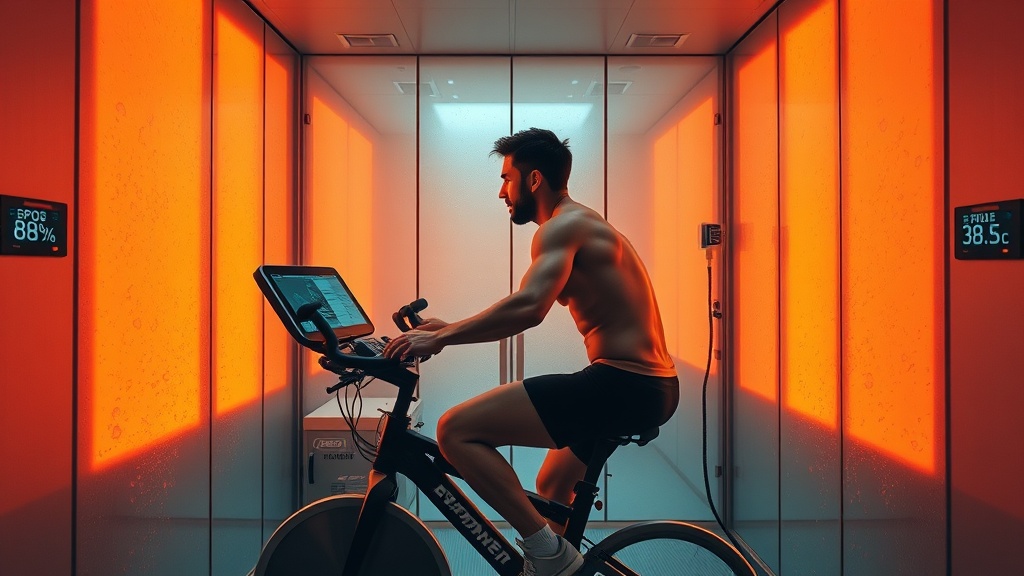
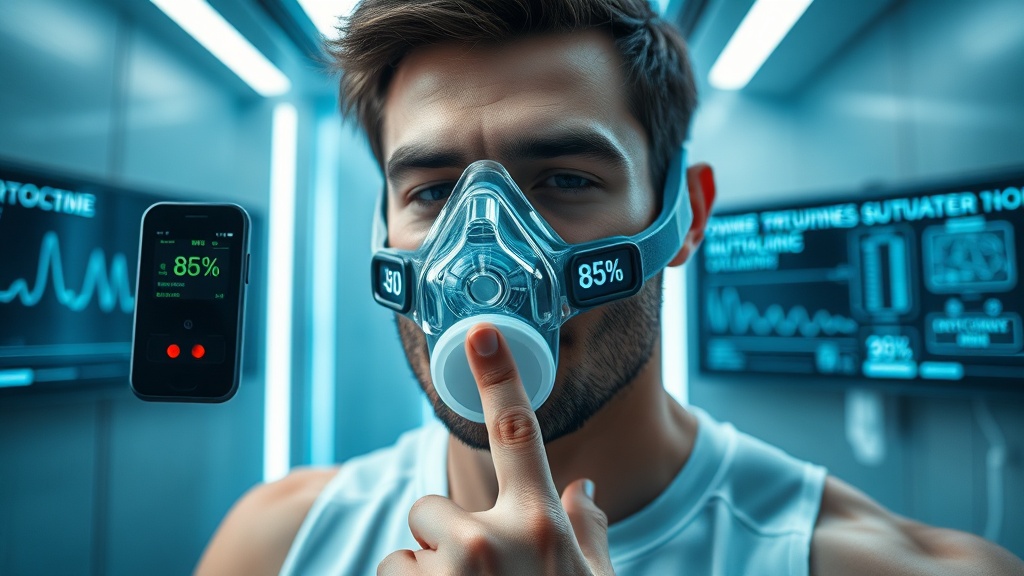
Intermittent hypoxia therapy (IHT) involves breathing air with a reduced fraction of inspired oxygen (FIO₂), typically between 10–13%, alternated with normoxic or hyperoxic air (up to 34% FIO₂) in timed cycles. This isn't the same as living at altitude. It's a concentrated, controlled oscillation of blood oxygen saturation — usually dropping SpO₂ to around 80–88% for minutes at a time before recovering[1][3].
The distinction matters. Chronic altitude exposure triggers a slow, systemic erythropoietin response. Intermittent hypoxia–hyperoxia exposure (IHHE) does something different: it creates acute cellular stress signals that activate hypoxia-inducible factor 1-alpha (HIF-1α), which then cascades into dozens of downstream effects — from angiogenesis to mitochondrial efficiency to inflammatory modulation.
The García-Pérez-de-Sevilla RCT Protocol#
The trial registered by García-Pérez-de-Sevilla and colleagues at Universidad Europea de Madrid is, to my knowledge, the first RCT specifically designed to test intermittent hypoxia against DOMS recovery in a controlled, multi-biomarker framework[1]. The protocol targets physically active men aged 18–35 who train at least twice weekly. DOMS is induced in the hamstrings — a muscle group notoriously slow to recover from eccentric damage — and then participants receive one of three conditions over five consecutive days: intermittent hypoxia, hypoxia–hyperoxia alternation, or placebo.
What makes this protocol valuable isn't just the intervention. It's the breadth of what they're measuring. The outcome variables span:
- Performance: VO₂max, countermovement jump, 30-m sprint, half-squat 1RM, isometric hamstring strength
- Recovery markers: VAS pain scores, hip flexion ROM, muscle oxygen saturation, HRV
- Blood biomarkers: HIF-1α, PGC-1α, Klotho protein, lactate
That biomarker panel is telling. PGC-1α is the master regulator of mitochondrial biogenesis — if hypoxia cycles upregulate it during recovery, you're not just reducing soreness, you're potentially enhancing the adaptive signal from the original training stimulus. Klotho protein is an anti-aging marker linked to oxidative stress defense and kidney function. Its inclusion suggests the researchers are looking beyond simple pain relief toward systemic recovery signaling.
But here's where I push back: this is a protocol paper. No results yet. The trial design is solid — randomized, controlled, repeated-measures ANOVA — but until the data comes in, we're working with a hypothesis, not a finding.
Inter-Effort Hypoxia: The Performance Preservation Data#
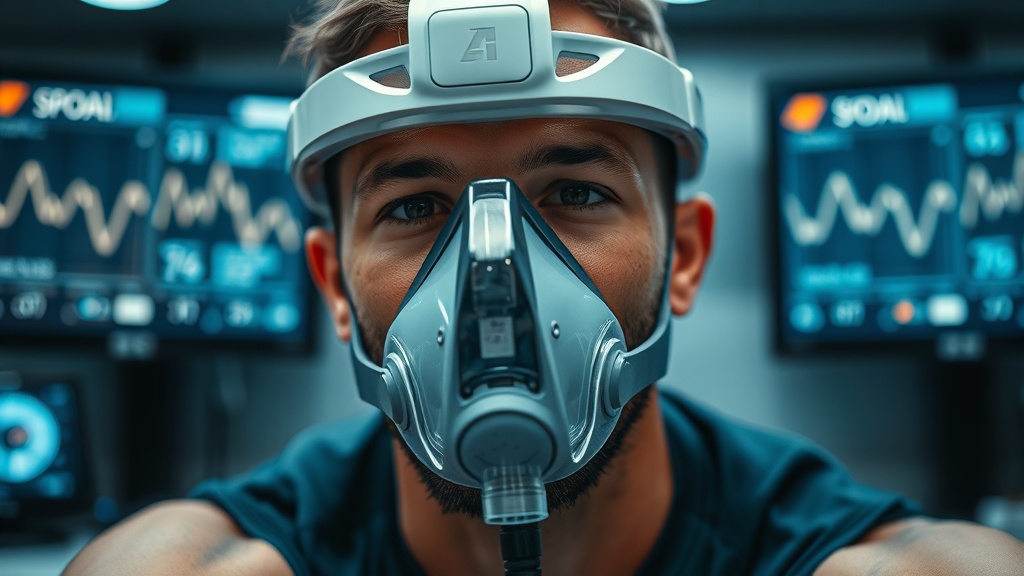
The strongest acute data comes from a separate study published in the European Journal of Applied Physiology in March 2026, examining inter-effort hypoxia (IEH) during high-intensity intermittent training[2]. The model is elegant: athletes perform sprint efforts in normal oxygen but breathe hypoxic air (FIO₂ ~0.13) during the 2-minute rest periods between efforts.
The results deserve attention.
VO₂ during sprint efforts increased by approximately 7% under IEH conditions compared to normoxia, particularly in the first 30 seconds of each effort. That's a faster oxygen uptake kinetic — the muscle is primed to consume oxygen more rapidly at effort onset. The mechanism appears to be a hypoxia-induced increase in blood flow during recovery that carries over into the subsequent effort[2].
Exercise task completion was virtually identical between normoxia (87 ± 24%) and IEH (87 ± 18%). Compare that to continuous hypoxia, where completion plummeted to 44 ± 27%[2]. This is the critical distinction: continuous hypoxia during training is a performance killer. Intermittent hypoxia during recovery windows preserves performance while delivering the hypoxic stimulus.
Muscle deoxygenation was attenuated under IEH compared to continuous hypoxia, suggesting improved oxygen delivery and redistribution. The pulmonary O₂ diffusion gradient was significantly lower at a given VO₂, pointing to compensatory increases in cardiac output or local blood flow.
The Immune Dimension#
A pilot study by Wessner, Stejskal, and Moser at the University of Vienna examined IHHE's effects on immune cell populations in five healthy active males over four consecutive days[3]. Using a CellAir Gecko Plus hypoxicator cycling between 10–12% and 34% FIO₂, they found significant changes only after the fourth session: leukocytes increased by 202%, granulocytes by 201%, and CD4+ lymphocytes showed significant elevation[3].
I'm less convinced by this one. Five subjects. No control group described in the abstract. The immune activation could be meaningful — or it could be noise in a tiny sample. What it does suggest is that the immune response to IHHE is cumulative, not immediate. That aligns with the García-Pérez-de-Sevilla protocol using five consecutive days of exposure.
What the Meta-Evidence Says About DOMS Recovery#
A large umbrella review and meta-meta-analysis by Dupuy et al. in Sports Medicine (2025) synthesized 29 systematic reviews covering 863 unique RCTs on physical therapies for DOMS[5]. The findings: contrast therapy earned Class II evidence for immediate post-exercise pain reduction. Massage, cooling, electrical stimulation, phototherapy, and heat therapy showed Class III–IV evidence at 24–48 hours. Heat therapy, particularly hot water immersion, emerged as the most effective method for restoring muscle function[4].
Hypoxia therapy — specifically through intermittent blood flow restriction — demonstrated potential for reducing inflammation and improving muscle function recovery, though the review noted the evidence base remains thin and protocol-dependent[4].
The honest assessment: hypoxia-based recovery is behind cold, heat, and massage in terms of evidence volume. But the mechanistic pathway — HIF-1α → PGC-1α → mitochondrial biogenesis + anti-inflammatory signaling — is more specific and potentially more powerful than the blunt vascular effects of temperature manipulation.
Exercise Task Completion by Oxygen Condition During HIIT
Comparison Table#
| Method | Mechanism | Evidence Level | Cost | Accessibility |
|---|---|---|---|---|
| Intermittent Hypoxia–Hyperoxia (IHHE) | HIF-1α activation, PGC-1α upregulation, mitochondrial biogenesis signaling | Emerging (RCT protocol stage) | High ($5,000–15,000 for hypoxicator) | Low — clinical/lab settings |
| Inter-Effort Hypoxia (IEH) during HIIT | Hypoxia-primed VO₂ kinetics, enhanced blood flow carryover | Single RCT (2026) | Moderate–High (altitude mask + generator) | Low–Moderate — gym with equipment |
| Cold Water Immersion | Vasoconstriction, reduced nerve conduction velocity | Class IV (multiple SRs, contested) | Low ($0–200) | High — any cold water source |
| Heat Therapy (Hot Water Immersion) | Vasodilation, increased blood flow, HSP expression | Class III–IV (review-supported) | Low ($0–100) | High — bathtub or sauna |
| Contrast Therapy | Alternating vasodilation/vasoconstriction, lymphatic pumping | Class II for immediate pain | Low–Moderate ($0–500) | High |
| Blood Flow Restriction (local hypoxia) | Localized ischemic preconditioning, lactate accumulation | Moderate (protocol-dependent) | Moderate ($50–300 for BFR bands) | Moderate — requires training |
The Protocol#
Based on the available data from the García-Pérez-de-Sevilla protocol design[1], the IEH training study[2], and the Wessner pilot data[3], here's a synthesized approach. Note: this is based on current evidence, which is early-stage. Adjust based on your own response.
1. Acquire appropriate equipment. You need a normobaric hypoxicator capable of delivering FIO₂ between 10–14% (hypoxic) and up to 34% (hyperoxic). Devices like the CellAir Gecko Plus are used in research settings. Altitude generators designed for tent sleeping (e.g., Hypoxico) can deliver the hypoxic component but not the hyperoxic cycling. Budget accordingly — this is not a cheap intervention.
2. Complete an individualized hypoxic test first. Before any protocol, determine your personal SpO₂ response to the hypoxic stimulus. The target based on the research is a peripheral oxygen saturation drop to approximately 80–88%[3]. This varies significantly between individuals. Do this under supervision if possible.
3. Begin IHHE sessions within 6–12 hours post-exercise. Following a training session that induces significant muscle damage (heavy eccentrics, unaccustomed volume), start the first IHHE session. Each session consists of alternating cycles: 3–5 minutes of hypoxic breathing (FIO₂ 10–12%) followed by 2–3 minutes of hyperoxic breathing (FIO₂ 30–34%). Total session duration: 30–40 minutes.
4. Continue for five consecutive days. The García-Pérez-de-Sevilla protocol uses five days[1], and the Wessner immune data suggests cumulative effects peaking around day four[3]. Don't expect session one to produce dramatic changes. This is a loading protocol.

5. Monitor SpO₂ and HRV throughout every session. Use a pulse oximeter (finger clip minimum; forehead sensor preferred for accuracy during desaturation). Track HRV before and after each session using a chest strap — if parasympathetic tone isn't recovering or is declining day-over-day, reduce the hypoxic stimulus.
6. For the IEH training variant: if you're integrating hypoxia into HIIT rather than using it as passive recovery, breathe hypoxic air (FIO₂ ~13%) only during rest intervals between efforts. Perform all efforts in normal air. Start with 1-minute efforts at 120% of your maximal treadmill speed, with 2-minute hypoxic recovery intervals[2]. Ten efforts per session.
7. Combine, don't replace. The data does not yet support using IHHE as your sole recovery modality. Based on the umbrella review evidence[4][5], heat therapy remains the strongest evidence-backed intervention for muscle function recovery. Use IHHE as an adjunct — not a substitute — for established methods.
Related Video
What is intermittent hypoxia–hyperoxia exposure and how does it differ from altitude training?#
IHHE alternates between breathing low-oxygen air (10–12% FIO₂) and high-oxygen air (30–34% FIO₂) in short cycles, typically at sea level using a hypoxicator device. Traditional altitude training involves continuous exposure to reduced oxygen at elevation. The key difference is the oscillation — IHHE creates acute cellular stress-recovery cycles that trigger HIF-1α signaling without the sustained performance impairment of living at altitude.
How long does it take for intermittent hypoxia to produce measurable recovery effects?#
Based on the pilot data from Wessner et al., immune cell changes become significant after four consecutive days of IHHE exposure[3]. The García-Pérez-de-Sevilla protocol uses five days[1]. I'd expect the meaningful recovery signal to emerge around sessions three to four, not after a single exposure. This isn't a one-and-done intervention — patience is required.
Who should avoid intermittent hypoxia therapy?#
Anyone with uncontrolled cardiovascular disease, pulmonary conditions like COPD or severe asthma, pregnancy, or a history of seizures should not undergo IHHE without medical clearance. The SpO₂ drops to 80% are significant — that level of desaturation is safe in healthy individuals for short durations, but it places real stress on the cardiopulmonary system.
Why would hypoxia help recovery if it reduces oxygen delivery to damaged muscles?#
The paradox is the point. Brief, controlled hypoxia activates HIF-1α, which triggers adaptive cascades: increased angiogenesis (more blood vessels), upregulation of PGC-1α (more mitochondria), and expression of protective proteins like Klotho. The temporary oxygen deficit is the signal; the recovery period is when the adaptation occurs. It's the same logic behind hormesis — a small controlled stressor producing a disproportionate adaptive response.
How does inter-effort hypoxia compare to continuous hypoxia for training?#
They're fundamentally different in outcome. Continuous hypoxia during HIIT reduced exercise task completion to just 44% compared to 87% in normoxia[2]. Inter-effort hypoxia — where you only breathe low-oxygen air during rest — maintained that same 87% completion rate while boosting VO₂ by ~7% during efforts. Continuous hypoxia compromises the training stimulus. IEH preserves it while adding the hypoxic adaptation signal.
Verdict#
Score: 6.5/10
The mechanistic logic is strong: oscillating oxygen tension to trigger HIF-1α and PGC-1α pathways for DOMS recovery is a genuinely novel application of established hypoxia science. The IEH performance data from European Journal of Applied Physiology is convincing for training integration. But the core DOMS recovery claim — that IHHE accelerates muscle soreness resolution — remains untested in a completed human trial. We have a protocol paper, a tiny pilot on immune markers, and a review that ranks hypoxia behind heat therapy in evidence quality. The equipment cost is prohibitive for most athletes. I'd rate the potential at 8/10, but the evidence today earns a 6.5. I want to see the García-Pérez-de-Sevilla results before changing my own recovery protocol, and you should too.
References
- 1.García-Pérez-de-Sevilla G, Santiago-Dorrego C, Iturriaga Ramírez T, Hansen Quiblier SP, Revuelta Parra C, Fernández Carrasco A, Benítez-Valero R, Domínguez-Balmaseda D. Effects of intermittent hypoxia and hypoxia–hyperoxia exposure on recovery from delayed onset muscle soreness in physically active men: protocol for a randomized controlled trial. Frontiers in Sports and Active Living (2026). ↩
- 2.Author(s) not listed. Inter-effort hypoxia recovery during high-intensity intermittent exercise enhances oxygen uptake at the onset of efforts while maintaining exercise tolerance. European Journal of Applied Physiology (2026). ↩
- 3.Wessner B, Stejskal F, Moser J. Acute Effects of Intermittent Hypoxia-Hyperoxia Exposure on Immune Status in Healthy Physically Active Males — A Pilot Study. Medicine & Science in Sports & Exercise (2024). ↩
- 4.Author(s) not listed. Isolated and Combined Effects of Cold, Heat and Hypoxia Therapies on Muscle Recovery Following Exercise-Induced Muscle Damage. Sports Medicine (2025). ↩
- 5.Author(s) not listed. Physical Therapies for Delayed-Onset Muscle Soreness: An Umbrella and Mapping Systematic Review with Meta-meta-analysis. Sports Medicine (2025). ↩
Cira Renn
Cira writes with physical conviction — she's done this, she knows what it feels like, and she doesn't pretend otherwise. Her writing has visceral energy: 'Cold water at 10°C isn't a wellness trend. It's a physical confrontation.' She distinguishes between what the research shows and what she's experienced, and she'll tell you when they diverge.
View all articles →