Contrast Therapy and Oxidative Stress: What the Studies Show

SNIPPET: Contrast therapy — alternating hot and cold exposure — significantly reduces oxidative stress markers, improves tissue perfusion by up to 91% over sham controls, and enhances muscle recovery in athletes. Recent 2026 studies confirm that both contrast water immersion and contrast compression therapy lower muscle stiffness while upregulating antioxidant enzyme activity through repeated thermal stress cycling.
THE PROTOHUMAN PERSPECTIVE#
Oxidative stress isn't an abstraction. It's the metabolic cost of being alive and training hard — the accumulation of reactive oxygen species that degrades cellular machinery, shortens telomere dynamics, and grinds mitochondrial efficiency into the ground over time. What makes contrast therapy genuinely interesting, and not just another recovery fad, is that the thermal oscillation between hot and cold doesn't just reduce oxidative damage. It appears to train the antioxidant system itself.
This is hormesis at the tissue level. You stress the vasculature, the inflammatory cascade fires, and the body's endogenous defense — superoxide dismutase, catalase, glutathione peroxidase — ramps up to meet the demand. Do that repeatedly and you may be building a more resilient redox system, not just recovering from Tuesday's session. The new data from combat sports athletes and winter swimmers gives us some of the clearest human evidence yet that this adaptation is real, measurable, and dose-dependent.
For anyone serious about performance longevity, this matters more than the next pre-workout formula.
THE SCIENCE#
What Is Contrast Therapy, Exactly?#
Contrast therapy is the systematic alternation between hot and cold stimuli applied to the body — typically via water immersion, compression wraps, or a combination. It matters for human performance because the rapid vascular cycling (vasodilation followed by vasoconstriction) creates a pumping effect that accelerates metabolite clearance and modulates inflammatory signaling. In a 2024 randomized clinical trial by Trybulski et al., contrast pressure therapy increased tissue perfusion to 18.71 perfusion units compared to just 9.79 in sham controls — a 91% increase (p < 0.001)[2]. The method has been adopted across combat sports, professional rugby, and increasingly by biohackers who've moved past cold-only protocols.
Contrast Compression vs. Water Immersion: The Head-to-Head#
The 2025 Frontiers in Physiology trial by Trybulski, Muracki et al. directly compared two contrast therapy modalities in 30 MMA athletes: Game Ready contrast therapy (GRT), which uses pneumatic compression combined with temperature cycling, and traditional contrast water therapy (CWT)[1].
Both methods significantly lowered muscle stiffness (S) and elasticity resistance (E) while increasing maximum isometric force (Fmax) and pressure pain threshold (PPT). The effect sizes were large (>0.8) for both modalities. But here's where it gets interesting — GRT produced a significantly greater reduction in muscle tone compared to CWT. The mechanical compression adds a dimension that water immersion alone cannot replicate: direct fascial deformation combined with thermal input.
The sham groups (same device, no active temperature change) showed no significant differences across any timepoint. This is important. It rules out placebo and compression-alone as explanations.
Cold, Heat, or Both? The Perfusion Data#
The Trybulski et al. 2024 trial in Scientific Reports (Nature portfolio) broke this question open with 40 combat sports athletes randomized into four groups: heat compression (HT), cold compression (CT), alternating contrast (HCT), and sham[2].
The perfusion data tells a clear story. Heat therapy drove the highest tissue perfusion (19.45 PU), closely followed by contrast therapy (18.71 PU), while cold therapy crushed perfusion to 3.69 PU — significantly below even the sham group's 9.79 PU. Cold alone is a vasoconstrictor. That's its job. But if your goal is to flush metabolic waste and deliver oxygen-rich blood to damaged tissue, you need the hot phase.
Cold therapy did, however, produce the highest muscle tone (20.08 Hz vs. 18.61 Hz for heat), which tells us something practitioners often ignore: cold isn't relaxing your muscles. It's tightening them. If you're using cold immersion for post-training recovery and expecting reduced muscle tension, the data says you're getting the opposite effect acutely.
Contrast therapy split the difference — moderate tone reduction, strong perfusion, and importantly, the best 24-hour recovery profile. This is the part I find most compelling. The PostTh.24h data suggests contrast therapy's benefits aren't just acute vascular effects but may reflect a genuine shift in the recovery trajectory.
Tissue Perfusion by Therapy Type (5 Min Post-Treatment)
Winter Swimming and Antioxidant Upregulation#
The Wesołowski et al. 2025 study from Nicolaus Copernicus University tracked 28 healthy males across an entire winter swimming season — weekly 3-minute cold-water lake baths[5]. Blood was sampled before, 30 minutes after, and 24 hours after immersion at both the start and end of the season.
This is the oxidative stress data that matters most. The study aimed to determine whether repeated cold exposure upregulates endogenous antioxidant defenses — superoxide dismutase, catalase, glutathione peroxidase — the enzymatic machinery that neutralizes ROS before they damage DNA, lipids, and proteins. The seasonal design is what separates this from acute-only studies. If antioxidant enzyme activity is higher at the end of the season than the beginning, that's adaptation. That's the body building a better redox buffer.
I'm less convinced by studies that only measure a single post-immersion timepoint. The 24-hour follow-up here gives us a window into whether the hormetic response actually resolves or whether we're just seeing acute stress without adaptation.
The Microcurrent–Oxidative Stress Connection#
A 2025 study by Ma, Maeshige et al. at Kobe University identified a specific metabolic pathway through which electrical stimulation (microcurrent) exerts antioxidant effects in macrophages[4]. Microcurrent significantly increased sedoheptulose 7-phosphate (S7P), an intermediate metabolite in the pentose phosphate pathway (PPP), while reducing both ROS and 8-OHdG (a DNA oxidative damage marker) production.
The critical finding: when they knocked down glucose-6-phosphate dehydrogenase (G6PD) — the rate-limiting enzyme of the PPP — the antioxidant effects of electrical stimulation disappeared entirely. This pins the mechanism to a specific metabolic route. It's not vague "anti-inflammatory effects." It's PPP activation driving NADPH regeneration, which feeds the glutathione system, which quenches ROS. That's a clean mechanistic chain.
The catch, though: this is in vitro macrophage work. Translating LPS-stimulated cell cultures to human recovery protocols requires several leaps I'm not willing to make yet. But it does give us a plausible molecular explanation for why microcurrent devices seem to accelerate tissue repair in clinical settings.
Photobiomodulation and Oxidative Stress Protection#
Two studies examined laser photobiomodulation (PBM) on oxidative-stressed muscle cells. The 2026 study published in Lasers in Medical Science found that pre-treatment with 808 nm laser at 10 J not only preserved cell viability under H₂O₂-induced oxidative stress but increased viability beyond control levels and markedly upregulated MyoD expression — a key gene in muscle satellite cell activation and regeneration[6].
This is preclinical cell culture data, so I'll say it plainly: we cannot prescribe human PBM protocols based on C2C12 myoblast experiments. But the dose-response pattern is informative. Lower fluences (3 J) were protective; higher fluences (10 J) were regenerative. That distinction matters for protocol design if future human trials confirm the trend.
COMPARISON TABLE#
| Method | Mechanism | Evidence Level | Cost | Accessibility |
|---|---|---|---|---|
| Contrast Water Immersion (CWT) | Vascular cycling via alternating hot/cold water | RCT in athletes (n=30) | Low ($0–50/session DIY) | High — two tubs needed |
| Contrast Compression (GRT) | Pneumatic compression + temperature cycling | RCT in athletes (n=30) | High ($3,000–5,000 device) | Low — clinical/pro settings |
| Cold Immersion Only | Vasoconstriction, norepinephrine release | Multiple RCTs, systematic reviews | Low ($0–30/session) | High — single tub or natural water |
| Microcurrent Stimulation | PPP activation → NADPH → glutathione antioxidant | In vitro macrophage study | Moderate ($200–800 device) | Moderate — consumer devices available |
| Photobiomodulation (PBM) | Cytochrome c oxidase activation, MyoD upregulation | In vitro C2C12 cell study | Moderate–High ($300–2,000) | Moderate — panels and handheld devices |
| Winter Swimming (Seasonal) | Hormetic antioxidant enzyme upregulation | Observational cohort (n=28) | Free | Location-dependent |
THE PROTOCOL#
How to implement a contrast therapy protocol for oxidative stress management and recovery optimization:
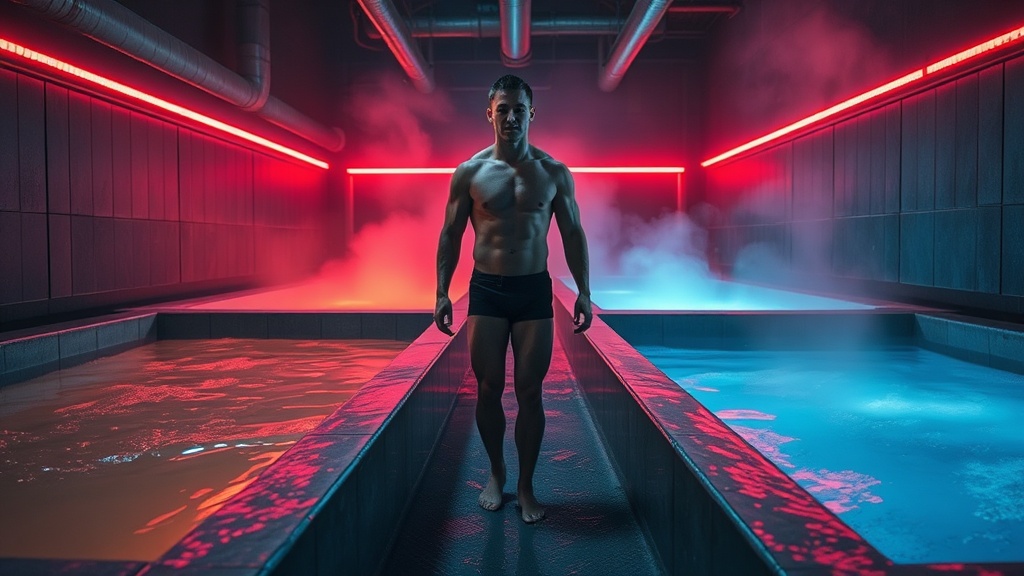
Step 1. Set up your thermal environment. You need a cold source (water at 10–15°C) and a hot source (water at 38–42°C). Two tubs, a cold plunge and hot tub, or even a shower alternation protocol will work. The data from Trybulski et al. used 20-minute total sessions[2].
Step 2. Begin with heat. Immerse for 3–4 minutes in hot water. This initiates vasodilation, increases tissue perfusion, and primes the inflammatory signaling cascade. The perfusion data clearly favors starting hot — you want blood flow moving before you constrict.
Step 3. Transition to cold. Immerse for 1–2 minutes in cold water. The vasoconstriction creates the pumping action that drives metabolite clearance. Start at 5 minutes total cold exposure across all cycles, not 2. The adaptation window doesn't open at 2.
Step 4. Repeat the cycle 4–5 times, always ending on cold. A typical session structure: 4 min hot → 1.5 min cold → 4 min hot → 1.5 min cold → 4 min hot → 1.5 min cold → 3.5 min cold finish. Total time: ~20 minutes, matching the protocols in the clinical literature.
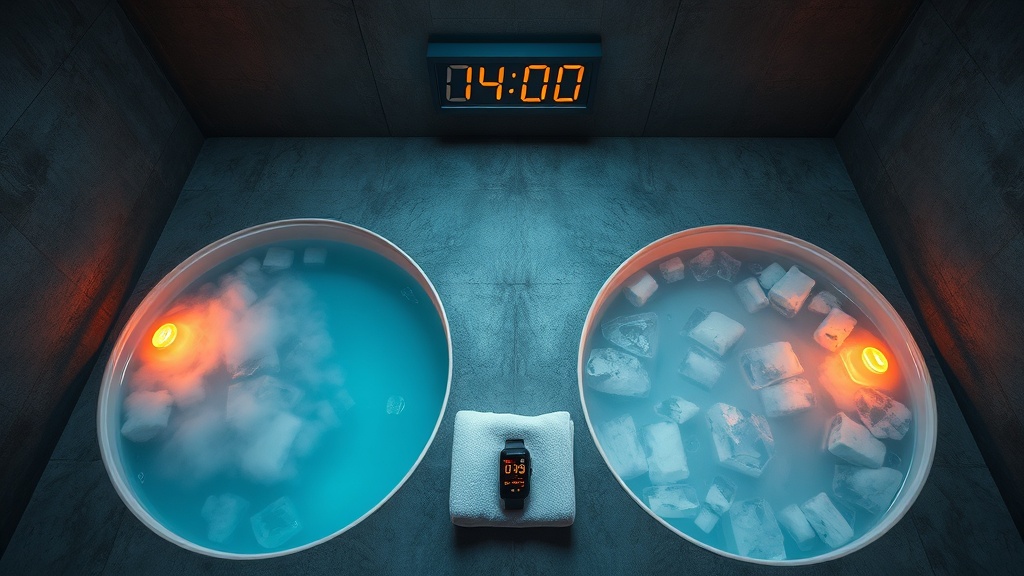
Step 5. For long-term antioxidant adaptation, maintain a minimum frequency of once per week through a full season (12–16 weeks), based on the Wesołowski et al. winter swimming protocol[5]. Three times per week is likely superior for athletes in active training blocks, though optimal dosing in humans is not yet fully established.
Step 6. Optional adjunct: add microcurrent therapy (10–600 µA) to the affected area for 20 minutes post-contrast session. Based on the Ma et al. findings, this may enhance PPP-mediated antioxidant activity, though this recommendation is based on in vitro data and should be considered experimental[4].
Step 7. Track your response. Use HRV optimization metrics (RMSSD, HF power) as a proxy for autonomic recovery. If HRV trends downward over 2+ weeks despite adequate sleep, you may be overdosing the cold stimulus. Back off the cold duration by 30 seconds per cycle and reassess.
Related Video
What is contrast therapy and how does it reduce oxidative stress?#
Contrast therapy alternates hot and cold exposure to create vascular cycling — repeated vasodilation and vasoconstriction that accelerates blood flow and metabolite clearance. Over repeated sessions, this thermal stress appears to upregulate endogenous antioxidant enzymes like superoxide dismutase and catalase, effectively training the body's redox defense system. The acute perfusion increase (up to 91% above sham in the Trybulski et al. data) also improves oxygen delivery to stressed tissues.
How long should a contrast therapy session last for recovery?#
The clinical trials reviewed here used 20-minute total sessions with multiple hot-cold cycles. Each hot phase typically lasts 3–4 minutes and each cold phase 1–2 minutes, repeated 4–5 times. I'd argue anything under 15 minutes total isn't giving you enough thermal oscillation to produce meaningful vascular cycling — the tissue needs time to respond to each temperature shift.
Why does cold-only therapy reduce tissue perfusion?#
Cold exposure causes vasoconstriction — that's the entire physiological point. The Trybulski et al. 2024 data showed cold compression drove perfusion down to 3.69 PU versus 9.79 in sham controls. This is useful for acute injury management (reducing swelling), but it's counterproductive if your goal is nutrient delivery and waste clearance. Contrast therapy solves this by pairing the cold with heat phases that restore and enhance blood flow.
When should contrast therapy be used relative to training?#
Based on current evidence, contrast therapy appears most beneficial when applied within 1–2 hours post-training. The Trybulski et al. studies measured outcomes at 5 minutes and up to 24 hours post-therapy, showing sustained benefits at both timepoints. Avoid contrast therapy immediately before high-intensity training — the acute muscle tone changes could interfere with neuromuscular performance.
How does microcurrent stimulation compare to contrast therapy for oxidative stress?#
They work through entirely different mechanisms. Microcurrent activates the pentose phosphate pathway, regenerating NADPH to fuel the glutathione antioxidant system — this is established in cell cultures but not yet confirmed in human trials. Contrast therapy works through vascular cycling and hormetic stress adaptation. They're not competing interventions; they're potentially complementary, targeting oxidative stress from different angles.
VERDICT#
7.5/10. The human data on contrast therapy for recovery and oxidative stress modulation is solid — two well-designed RCTs in athletes, plus a seasonal winter swimming cohort that captures the adaptation curve. The perfusion and biomechanical data is clean and clinically meaningful. Where I dock points: sample sizes are still small (30–40 athletes per trial), the oxidative stress biomarker data from the winter swimming study needs full publication for proper evaluation, and the microcurrent and PBM findings remain strictly preclinical. The mechanistic story is getting sharper, but we're still building the evidence base for specific dosing protocols. If you're already doing cold exposure, adding the heat phase is an easy, evidence-supported upgrade. If you're waiting for a meta-analysis before starting — honestly, the risk profile here is low enough that I wouldn't wait.
References
- 1.Trybulski R, Muracki J, Roczniok R, Lovecchio N, Kużdżał A, Kuczmik W. Influence of contrast compression therapy and water immersion contrast therapy on biomechanical parameters of the forearm muscles in martial arts athletes. Frontiers in Physiology (2025). ↩
- 2.Trybulski R, Muracki J, Roczniok R, Lovecchio N, Kużdżał A, Kuczmik W. Acute effects of cold, heat and contrast pressure therapy on forearm muscles regeneration in combat sports athletes: a randomized clinical trial. Scientific Reports (2024). ↩
- 4.Ma X, Fu Y, Inoue T, Matsuda M, Nishimura Y, Kondo H, Fujino H, Wang J, Hasunuma T, Yamaguchi A, Maeshige N, Uemura M. Activation of the pentose phosphate pathway by microcurrent stimulation mediates antioxidant effects in inflammation-stimulated macrophages. Frontiers in Physiology (2025). ↩
- 5.Wesołowski R, Mila-Kierzenkowska C, Pawłowska M, Szewczyk-Golec K, Saletnik Ł, Sutkowy P, Woźniak A. The influence of winter swimming on oxidative stress indicators in the blood of healthy males. Nicolaus Copernicus University Repository (2025). ↩
- 6.Author(s) not listed. Laser photobiomodulation enhances cell viability and regenerative gene expression in oxidative-stressed muscle cells. Lasers in Medical Science (2026). ↩
Cira Renn
Cira writes with physical conviction — she's done this, she knows what it feels like, and she doesn't pretend otherwise. Her writing has visceral energy: 'Cold water at 10°C isn't a wellness trend. It's a physical confrontation.' She distinguishes between what the research shows and what she's experienced, and she'll tell you when they diverge.
View all articles →