tDCS Plus Zolpidem for Treatment-Resistant Insomnia: New Trial

THE PROTOHUMAN PERSPECTIVE#
Sleep isn't optional biology. It's the single most potent performance lever we have — affecting everything from prefrontal cortex decision-making to mitochondrial efficiency and autophagy pathways that clear neural waste during deep NREM stages. And yet, treatment-resistant insomnia affects a staggering subset of the population that doesn't respond to cognitive behavioral therapy for insomnia (CBT-I) or standard pharmacotherapy. These are the people who've tried everything. Melatonin, sleep hygiene, weighted blankets, magnesium — none of it stuck.
What makes this new research worth paying attention to isn't just the combination of tDCS and zolpidem. It's the fact that the trial is designed to look inside the brain using functional MRI biomarkers to understand why this combination might work. For the biohacking community, this represents a shift from symptom suppression to mechanism-driven sleep optimization. If validated, it could reshape how we think about stacking neuromodulation with targeted pharmacology — not just for insomnia, but for cognitive performance and HRV optimization broadly.
THE SCIENCE#
What Is Treatment-Resistant Insomnia — And Why Current Tools Fail#
Treatment-resistant insomnia is defined as chronic insomnia that persists despite adequate trials of first-line interventions — typically CBT-I and at least one pharmacological agent. According to Buysse (2013), insomnia affects roughly one-third of adults globally, and a substantial proportion fail to achieve durable remission[1]. The implications extend well beyond tired mornings: chronic insomnia disrupts NAD+ synthesis cycles, impairs glymphatic clearance during sleep, and has been associated with accelerated telomere shortening in longitudinal cohort data.
The problem with existing pharmacotherapy — zolpidem included — is transience. Zolpidem, a selective GABA-A receptor agonist, induces sleep onset rapidly but doesn't address the underlying cortical hyperarousal that characterizes treatment-resistant cases. Patients develop tolerance. The sleep architecture often remains fragmented.
That's the problem.
The New Trial: tDCS + Zolpidem (Liu et al., 2026)#
Liu, Cheng, Zhang, and colleagues at Yangzhou University have registered a prospective, double-blind, randomized controlled trial enrolling 165 patients with treatment-resistant insomnia[2]. The design is clean: participants are randomized 1:1:1 into three arms — (A) active tDCS plus zolpidem, (B) active tDCS plus placebo, and (C) sham tDCS plus zolpidem.
The tDCS protocol uses a 2 mA current delivered through 5 × 5 cm sponge electrodes, administered 30 minutes before bedtime nightly. The device is the E-TDCS03 stimulator (Shenzhen Ailite Medical Technology). What separates this from prior tDCS-insomnia work is the neuroimaging component: the team plans to measure fALFF (fractional amplitude of low-frequency fluctuation), ReHo (regional homogeneity), and seed-based functional connectivity via fMRI — providing direct windows into whether the combined therapy actually rewires the cortical circuits driving insomnia.
— Actually, I want to rephrase that. It won't definitively prove rewiring. But it will show whether there are detectable shifts in functional connectivity patterns that correlate with clinical improvement. That distinction matters.
The trial registration (ChiCTR2500111601) signals serious methodological intent: three-arm design, double-blinding, and objective biomarkers alongside subjective sleep scales. I'm cautiously optimistic, though the results aren't in yet — this is a protocol publication, not outcome data.
Supporting Evidence: HD-tDCS Over the DMPFC#
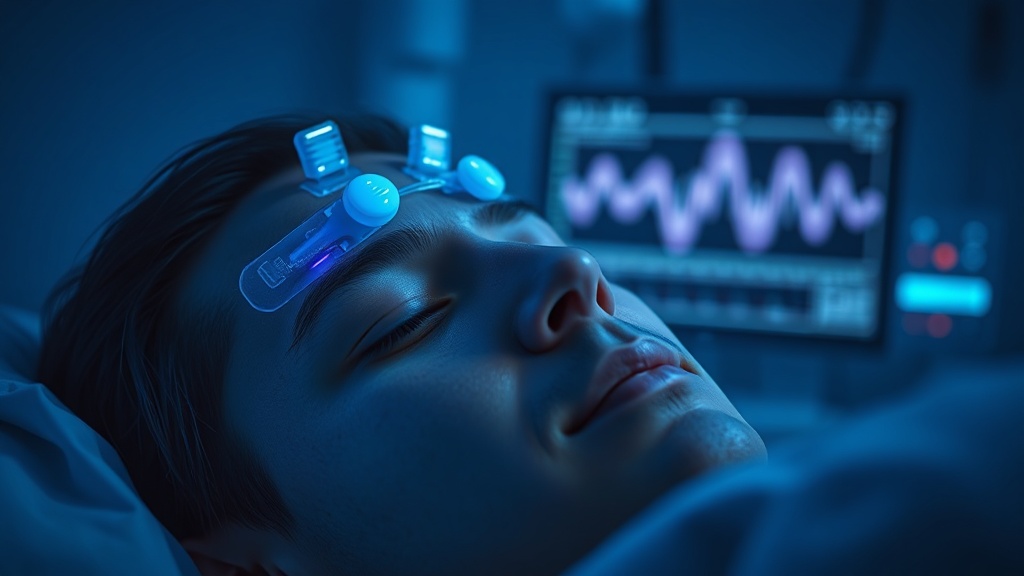
The case for tDCS in insomnia doesn't rest on this trial alone. A 2025 randomized, double-blind controlled trial published in Scientific Reports tested high-definition tDCS (HD-tDCS) targeting the dorsomedial prefrontal cortex (DMPFC) in 55 chronic insomnia patients[3]. The active group received 10 days of 2 mA anodal stimulation.
Results showed significant decreases in Pittsburgh Sleep Quality Index (PSQI) scores compared to sham. Exploratory polysomnography data revealed improvements in sleep onset latency (SOL) and sleep efficiency (SE). However — and this is the part I'm less convinced by — no significant changes in sleep stage ratios were observed. That means the architecture of sleep didn't measurably shift, even though patients fell asleep faster and stayed asleep longer.
With only 55 participants, I'd want to see this replicated at scale before drawing strong conclusions about DMPFC targeting. But as a proof-of-concept, it's solid.
The Broader Landscape: Systematic Review Data#
A systematic review by Sleep Science and Practice (2025) synthesized 43 studies on non-invasive brain stimulation (NIBS) for insomnia[4]. The findings paint a nuanced picture: rTMS showed the strongest evidence base, while tDCS demonstrated potential for enhancing deep sleep and tACS appeared to improve sleep onset through neural entrainment mechanisms. The most commonly targeted region across studies was the dorsolateral prefrontal cortex (DLPFC).
The review confirmed that NIBS techniques were safe and well-tolerated across study populations. But consistency remains the issue — protocols varied wildly in current intensity (1.5–2 mA), session duration (15–30 minutes), and total treatment sessions. Standardization is nowhere close.
40 Hz tACS: A Different Frequency Approach#
A pilot study published in Molecular Psychiatry by Zhou et al. (2025) explored 40 Hz transcranial alternating current stimulation for insomnia[5]. The rationale is elegant: 40 Hz stimulation induces gamma oscillations, which may normalize the pathological brainwave patterns observed in insomnia patients. While the study was small and preliminary, it adds to the growing evidence that frequency-specific neuromodulation may offer targeted therapeutic effects.
The catch, though: gamma entrainment for sleep is counterintuitive. Gamma activity is typically associated with wakefulness and cognitive engagement, not sleep induction. The hypothesis is that normalizing daytime gamma deficits may secondarily improve nighttime sleep regulation — but that causal chain needs far more validation.
tDCS + Dual-Task Training: Stroke and MCI Parallels#
A meta-analysis by Wang et al. (2026) across 12 RCTs examined tDCS combined with dual-task training in stroke, MCI, and Parkinson's disease populations[6]. While the clinical context differs from insomnia, the mechanistic insights are relevant. The analysis found that tDCS+DTT produced large improvements in executive function for MCI patients (TMT-B: SMD = −2.35, 95% CI [−3.20, −1.51], I² = 0%), suggesting that tDCS enhances prefrontal cortical plasticity when paired with concurrent cognitive engagement.
Fu et al. (2026) added further evidence with a 72-participant stroke trial comparing dual-site tDCS (M1 + DLPFC) versus tACS versus sham, all combined with cognitive-motor dual-task training[7]. tDCS showed superior improvements in motor function (FMA-LE scores, p < 0.05) and cognitive performance, while tACS showed advantages in mood regulation (HAMD reduction, p < 0.001).
The implication for insomnia research: tDCS may be most effective when it's not used in isolation, but paired with a concurrent intervention — whether that's a pharmacological agent like zolpidem or a behavioral protocol like CBT-I.
tDCS Combined Therapy Effect Sizes Across Conditions
COMPARISON TABLE#
| Method | Mechanism | Evidence Level | Estimated Cost | Accessibility |
|---|---|---|---|---|
| tDCS + Zolpidem (Liu et al.) | Dual: cortical excitability modulation + GABAergic sedation | Protocol only — no outcome data yet | Moderate (device ~$300–800 + Rx) | Clinical setting required initially |
| HD-tDCS alone (DMPFC) | Focal prefrontal neuromodulation reducing hyperarousal | Single RCT, n=55 | Moderate (HD-tDCS device ~$500–1,200) | Clinic-based; emerging home-use devices |
| 40 Hz tACS | Gamma oscillation entrainment normalizing brainwave patterns | Pilot study only | Moderate (~$400–900) | Limited; research settings |
| CBT-I (standard) | Behavioral reconditioning + stimulus control | Multiple RCTs, meta-analyses | Low–Moderate ($200–600 for program) | Widely accessible, including digital |
| Zolpidem alone | GABA-A receptor agonism | Strong, but tolerance/dependency concerns | Low ($10–50/month generic) | Prescription required |
| rTMS for insomnia | Magnetic pulse modulation of DLPFC | Strongest NIBS evidence per systematic review | High ($200–400/session) | Clinic-only; not portable |
THE PROTOCOL#
Based on the current evidence — and I want to emphasize this is drawn from published protocols and early-stage trials, not confirmed long-term outcome data — here's a practical framework for those exploring tDCS-assisted sleep optimization.
Step 1: Get a proper insomnia diagnosis. Self-diagnosing treatment-resistant insomnia is not meaningful. Work with a sleep medicine specialist to confirm that CBT-I and at least one pharmacological trial have been genuinely attempted. A PSQI score above 5 is the standard clinical threshold.
Step 2: Select an appropriate tDCS device and montage. The Liu et al. protocol uses standard tDCS at 2 mA with 5 × 5 cm sponge electrodes. The HD-tDCS trial targeted the DMPFC using the Fz position (10/20 system) with four surrounding cathodes at FPz, F3, Cz, and F4. If you're working with a clinician, discuss which montage suits your profile. Do not self-administer without medical guidance.
Step 3: Establish timing and duration. Administer tDCS approximately 30 minutes before intended sleep onset. Session duration in the reviewed studies ranged from 15 to 20 minutes. The Liu et al. protocol specifies nightly application; the HD-tDCS trial used 10 consecutive daily sessions.
Step 4: If combining with pharmacotherapy, coordinate with your prescriber. The trial pairs tDCS with zolpidem taken 30 minutes before bedtime. This is a prescription medication with known tolerance and dependency risks. Optimal dosing in humans for this combination is not yet established — the trial is literally designed to determine this.
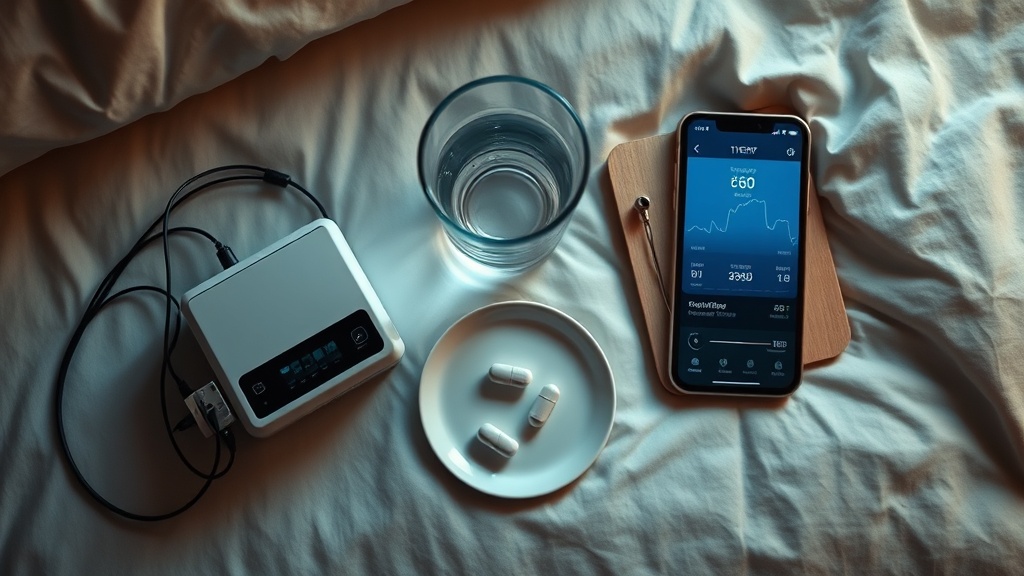
Step 5: Track outcomes objectively. Use validated sleep metrics — not just subjective feelings. PSQI questionnaires, wearable-derived sleep onset latency, sleep efficiency percentage, and HRV overnight trends all provide useful data points. If possible, request a baseline and follow-up polysomnography through your clinic.
Step 6: Reassess after 10–14 sessions. The HD-tDCS trial showed measurable improvements after 10 sessions. If no subjective or objective improvement is noted by session 14, the protocol may not be effective for your neurofunctional phenotype. Discuss alternatives with your provider.
Step 7: Do not combine multiple neuromodulation techniques simultaneously. Adding tACS or rTMS on top of tDCS without clinical oversight introduces unpredictable interactions. One modality at a time, rigorously tracked.
Related Video
VERDICT#
Score: 6.5/10
The conceptual framework is strong — combining neuromodulation with targeted pharmacology for treatment-resistant insomnia makes mechanistic sense, and the trial design is rigorous. The inclusion of fMRI-based biomarkers elevates this beyond a standard efficacy trial. But let's be clear: this is a protocol publication. No outcomes exist yet. The supporting evidence for tDCS in insomnia (HD-tDCS trial, n=55; systematic review of 43 heterogeneous studies) is promising but not definitive. I'm genuinely interested in the results, particularly the neuroimaging data showing whether functional connectivity actually shifts. But I'm not changing my sleep protocol based on a study that hasn't produced data yet. The 6.5 reflects strong design and plausible mechanism, tempered by the reality that we're still waiting for proof.
Frequently Asked Questions5
References
- 1.Buysse DJ. Insomnia. JAMA (2013). ↩
- 2.Liu J, Cheng S, Zhang J, Zhang L, Cao JL, Wang Y. Efficacy and mechanism of combined treatment with transcranial direct current stimulation and zolpidem for treatment-resistant insomnia: a study protocol for a prospective, double-blind, randomized controlled trial. Frontiers in Psychiatry (2026). ↩
- 3.Author(s) not listed. Effects of high-definition transcranial direct current stimulation for the treatment of chronic insomnia: a randomized, double-blind, controlled trial. Scientific Reports (2025). ↩
- 4.Author(s) not listed. Effectiveness of non-invasive brain stimulation in improving sleep quality in insomnia: a systematic review. Sleep Science and Practice (2025). ↩
- 5.Zhou Q, Guo X, Zheng X. 40Hz transcranial alternating current stimulation enhance insomnia treatment efficacy: a pilot study. Molecular Psychiatry (2025). ↩
- 6.Wang W, Yan Q, Zhu C. Effectiveness of transcranial electrical stimulation combined with dual-task training in stroke, mild cognitive impairment and Parkinson's disease: a systematic review and meta-analysis of randomized controlled trials. Frontiers in Human Neuroscience (2026). ↩
- 7.Fu Y, Wang W, Yan Q. Comparative effects of transcranial direct and alternating current stimulation combined with cognitive-motor dual-task training on functional and cognitive recovery in stroke survivors. Frontiers in Neurology (2026). ↩
Yuki Shan
Yuki writes with measured precision but genuine intellectual frustration when the data is messy. She uses long, careful sentences for complex mechanisms, then cuts to very short ones for emphasis: 'That's the problem.' She's comfortable saying 'I'm not sure this matters clinically' even when the statistics look impressive. She'll sometimes restart a line of reasoning mid-paragraph: '— actually, I want to rephrase that.' She's suspicious of studies with small sleep cohorts and says so.
View all articles →