Nonrestorative Sleep: What Japanese Worker Studies Reveal

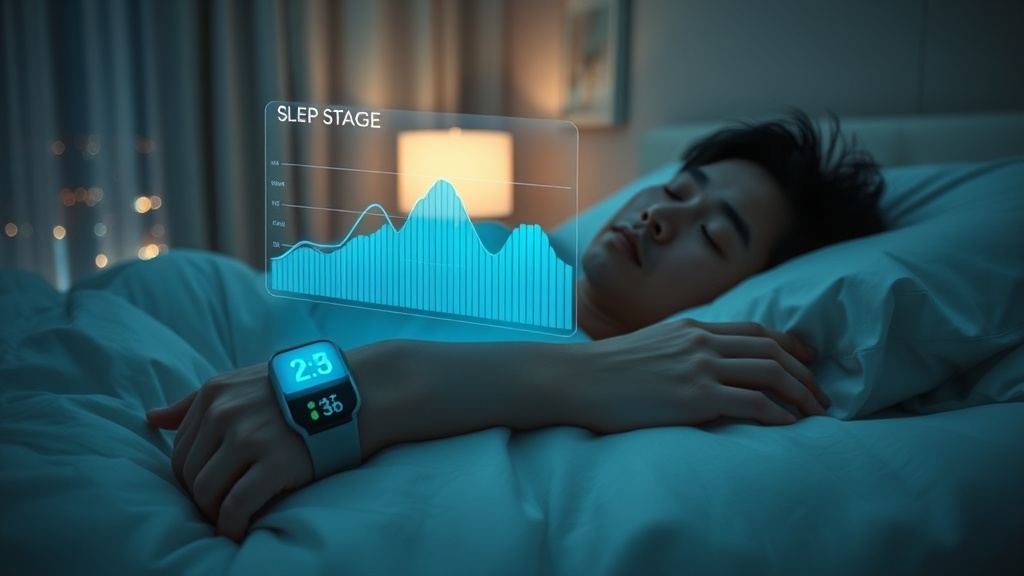
SNIPPET: Nonrestorative sleep — waking unrefreshed regardless of hours slept — is now linked to higher healthcare costs, depressive symptoms, and even suicidal ideation in Japanese population studies. New research shows both subjective and objective sleep parameters (total sleep time, sleep onset latency, deep sleep proportion) independently predict next-morning restoration, with depressive symptoms amplifying morning sleepiness even when sleep duration is adequate.
THE PROTOHUMAN PERSPECTIVE#
Here's what most sleep optimization advice gets wrong: it fixates on duration. Eight hours. Seven hours. The magic number. But a converging body of Japanese research — spanning workers, adolescents, and super-seniors — is shifting the frame toward something harder to quantify and far more consequential: whether you actually feel restored when you wake up.
Nearly 46% of Japanese workers report nonrestorative sleep, and the downstream effects aren't just about grogginess [5]. We're talking widening healthcare cost gaps, elevated depressive symptom severity, and an adjusted odds ratio of 2.27 for suicidal ideation [6]. For anyone optimizing performance — cognitive output, emotional regulation, physical recovery — this data says something uncomfortable: your sleep tracker's "duration" metric might be the least important number on your wrist.
The implications for occupational health, longevity protocols, and mental health screening are immediate. This isn't a future problem. It's a current blind spot.
THE SCIENCE#
Subjective vs. Objective: Both Matter, Differently#
The primary study driving this analysis — published in Scientific Reports in March 2026 — tracked 37 healthy Japanese workers using portable sleep monitoring devices over multiple days alongside daily subjective sleep questionnaires [1]. I want to flag immediately: 37 participants is small. The multilevel linear mixed-effects model design partially compensates for this by leveraging repeated within-person measurements, but I'd want a much larger replication before treating these effect sizes as settled.
That said, the findings are clean in their directionality. Longer subjective and objective total sleep time (TST) were both independently associated with greater restorative sleep and reduced morning sleepiness. Longer sleep onset latency (SOL) — both perceived and measured — was negatively associated with restoration. This matters because it means the experience of lying awake and the actual time to sleep onset both carry independent predictive weight.
The deep sleep finding is where it gets interesting for the biohacking community. A higher proportion of deep sleep (N3 stage) was associated with reduced morning sleepiness [1]. This aligns with what we know about slow-wave sleep's role in glymphatic clearance, growth hormone secretion, and — arguably — mitochondrial efficiency recovery processes. But the study didn't measure those downstream biomarkers, so I'm connecting dots the authors intentionally didn't connect. That's worth being honest about.
The Depression Confounder Nobody Wants to Talk About#
Here's where the data gets uncomfortable. Greater severity of depressive symptoms was independently associated with increased morning sleepiness — even after controlling for sleep parameters [1]. — Actually, I want to rephrase that. It's not just a confounder. It may be a mediator. If depressive symptoms disrupt the subjective experience of restoration regardless of objective sleep architecture, then no amount of sleep hygiene protocol optimization will fix the problem without addressing mood.
The second study in this dataset, also from Scientific Reports (February 2026), reinforces this [2]. Using Fitbit Sense 2 devices and single-night sleep EEG on 81 Japanese adults, the researchers found that decreased N2 sleep was linked to elevated anxiety and depression, while increased N3 sleep correlated with lower harm avoidance. Vigorous physical activity was associated with lower harm-avoidance scores and better restorativeness ratings.

Nonrestorative Sleep: The Economic and Psychiatric Signal#
The catch, though. The largest dataset in this research cluster comes from a 6-year cohort study of 117,049 individuals in Japan's civil engineering and construction sector [5]. At baseline, 45.7% reported nonrestorative sleep. From fiscal year 2020 onward, healthcare costs were significantly higher in the NRS group, and by FY 2023, the cost difference had reached JPY 18,468 (approximately $120 USD) per person annually (95% CI: 7,306–29,630). The interaction analysis showed this gap widened over time.
That's the problem. NRS isn't a static condition with stable costs. It's progressive in its economic impact.
A cross-sectional survey of 2,559 Japanese adults found that NRS was the only sleep variable independently associated with suicidal ideation after adjusting for insomnia symptoms, sleep duration, and psychiatric factors, with an adjusted odds ratio of 2.27 [6]. Not short sleep. Not insomnia per se. The feeling of being unrestored.
In adolescents, the pattern holds. A study of 392 Japanese junior high school students found 40.1% met criteria for NRS, with odds ratios of 2.44 for TST under 7 hours, 2.58 for evening chronotype, and — critically — NRS showed the highest odds ratio (3.16) for depressive symptoms among all sleep-related variables [4].
The Super-Senior Counterpoint#
The J-HAS study of 124 Japanese adults over age 80 introduces an important nuance [3]. In these super-seniors, the relationship between physical activity and sleep was inverse — more 24-hour TST was associated with less physical activity on the same day. But within-individual analysis showed a positive association between TST and next-day step count, suggesting that longer sleep may enable compensatory physical activity the following day in very old adults.
This bidirectional relationship complicates the simple "more sleep = better" narrative. In younger workers, longer TST predicts restoration. In super-seniors, it might reflect declining health that requires more recovery time.
Odds Ratios for Nonrestorative Sleep Risk Factors (Adolescents)
COMPARISON TABLE#
| Method | Mechanism | Evidence Level | Cost | Accessibility |
|---|---|---|---|---|
| Subjective sleep diaries | Self-reported TST, SOL, restoration ratings | Moderate (validated questionnaires, prone to recall bias) | Free | Very high — pen and paper |
| Portable sleep monitors (e.g., Fitbit Sense 2) | Accelerometry + PPG for sleep staging estimates | Moderate (good for TST/SOL, less accurate for N3) | $150–300 USD | High — consumer devices |
| Single-night sleep EEG | Gold-standard sleep architecture measurement | High (direct N2/N3 staging) | $500–2,000 per session | Low — clinical setting required |
| Polysomnography (PSG) | Full sleep study with EEG, EMG, EOG, respiratory | Highest (research gold standard) | $1,000–5,000+ | Very low — sleep lab only |
| Combined subjective + objective (this study's approach) | Multilevel modeling of both self-report and device data | Moderate-high (captures perception-reality mismatch) | $150–300 + time | Moderate — requires compliance |
THE PROTOCOL#
Based on the current evidence from these studies, here's a practical framework for assessing and improving your sleep restoration. I want to be clear: these are evidence-informed suggestions, not prescriptions from a controlled trial.
Step 1: Establish dual-track sleep monitoring. Wear a consumer sleep tracker (Fitbit, Oura, Apple Watch) nightly AND keep a 30-second morning sleep diary. Rate restoration on a 1–10 scale, note perceived time to fall asleep, and log any mid-night awakenings. The research shows subjective and objective measures carry independent predictive value — you need both [1].
Step 2: Track your sleep onset latency obsessively for two weeks. SOL was negatively associated with restorative sleep in both subjective and objective measurements [1]. If your perceived SOL consistently exceeds 20 minutes, this is your primary intervention target. Consider stimulus control therapy: leave bed after 15 minutes of wakefulness, return only when sleepy.
Step 3: Prioritize deep sleep percentage over total sleep time. Higher N3 proportion predicted reduced morning sleepiness [1] and lower harm avoidance [2]. Strategies with preliminary evidence for increasing N3 include: resistance training 4–6 hours before bed, maintaining a cool sleep environment (65–68°F / 18–20°C), and avoiding alcohol, which fragments deep sleep architecture.
Step 4: Screen yourself for depressive symptoms monthly. Use the PHQ-9 (freely available online). The data consistently shows depressive symptoms independently predict poor morning outcomes regardless of sleep quality [1][4]. If your PHQ-9 score exceeds 5, sleep optimization alone is unlikely to resolve your morning sleepiness — seek professional evaluation.
Step 5: Incorporate vigorous physical activity at least 3 days per week. The telemonitoring study found vigorous activity associated with lower harm-avoidance scores and better restorativeness ratings [2]. The J-HAS data suggests this relationship is bidirectional — better sleep enables more activity, which enables better sleep [3]. Aim for 20–30 minutes at an intensity where conversation becomes difficult.
Step 6: If you're an evening chronotype, implement aggressive light management. Evening chronotype carried an odds ratio of 2.58 for NRS in adolescents [4], and while this specific finding hasn't been replicated in adult worker populations, chronotype-circadian misalignment is well-established in the broader sleep literature. Morning bright light exposure (10,000 lux for 20–30 minutes within the first hour of waking) and blue-light restriction after 8 PM are reasonable first-line interventions.
Related Video
VERDICT#
Score: 6.5/10
The directionality of these findings is consistent and clinically relevant — NRS is clearly an underappreciated signal with psychiatric, economic, and functional consequences. The combined subjective-objective approach is methodologically sound and overdue. But I'm less convinced than I'd like to be, primarily because the core worker study has only 37 participants, the adolescent data is cross-sectional, and the economic cohort relies on a single screening question. The super-senior study adds interesting nuance but is a different population entirely. This is a body of evidence that points somewhere important without yet proving it. I'd bump this to an 8 if the 37-participant finding replicates in a sample of 200+.
Frequently Asked Questions5
References
- 1.Daily associations of subjective and objective sleep parameters with restorative sleep and morning sleepiness in Japanese working adults. Scientific Reports (2026). ↩
- 2.Telemonitored sleep quality and daily activity are associated with mental health outcomes among Japanese workers. Scientific Reports (2026). ↩
- 3.Pham H, Svensson T, Chung U, Kishi Svensson A. Bidirectional association between physical activity and sleep in healthy Japanese super-seniors: the Japan Healthy Aging Study (J-HAS). npj Aging (2025). ↩
- 4.Nonrestorative sleep is associated with somatic and depressive symptoms in Japanese junior high school students. Journal of Physiological Anthropology (2025). ↩
- 5.Association between nonrestorative sleep and increased healthcare costs: a 6-year cohort study. Sleep and Biological Rhythms (2026). ↩
- 6.Associations between nonrestorative sleep and suicidal ideation: a Japanese general population survey. Scientific Reports (2025). ↩
Yuki Shan
Yuki writes with measured precision but genuine intellectual frustration when the data is messy. She uses long, careful sentences for complex mechanisms, then cuts to very short ones for emphasis: 'That's the problem.' She's comfortable saying 'I'm not sure this matters clinically' even when the statistics look impressive. She'll sometimes restart a line of reasoning mid-paragraph: '— actually, I want to rephrase that.' She's suspicious of studies with small sleep cohorts and says so.
View all articles →