Sarcolipin Heat Stress Response: New SERCA Protection Pathway

SNIPPET: Sarcolipin (SLN), a small calcium-regulating protein in skeletal muscle, responds to heat stress similarly to the protective Hsp70 heat shock protein, according to a March 2026 study by Chan et al. in Frontiers in Physiology. Phospholamban (PLN) showed no such response. This preclinical finding in rats suggests SLN may act as a stress-induced protector of SERCA pump function — the enzyme responsible for muscle relaxation and calcium homeostasis — in a sex- and muscle-fiber-specific manner.
THE PROTOHUMAN PERSPECTIVE#
Here's what most people miss about heat exposure protocols: they fixate on the sympathetic nervous system hit, the norepinephrine spike, the feel-good narrative. But the real adaptation story is happening inside your sarcoplasmic reticulum, at the level of calcium pumps that most biohackers have never heard of.
SERCA pumps are the machinery of muscle relaxation. When they fail, calcium floods the cytosol, contractile function degrades, and in extreme cases — like malignant hyperthermia — you die. The discovery that sarcolipin, a tiny 31-amino-acid protein, gets upregulated by heat stress the same way Hsp70 does changes how we should think about deliberate heat exposure. This isn't just about downstream cortisol or growth hormone numbers. It's about whether your muscles can protect their own calcium-handling infrastructure when the temperature climbs.
For those of us who use heat deliberately — sauna, hot water immersion, heated exercise environments — understanding the molecular defense systems we're triggering matters more than the Instagram content we're creating. This is the biology underneath.
THE SCIENCE#
What Sarcolipin Actually Does#
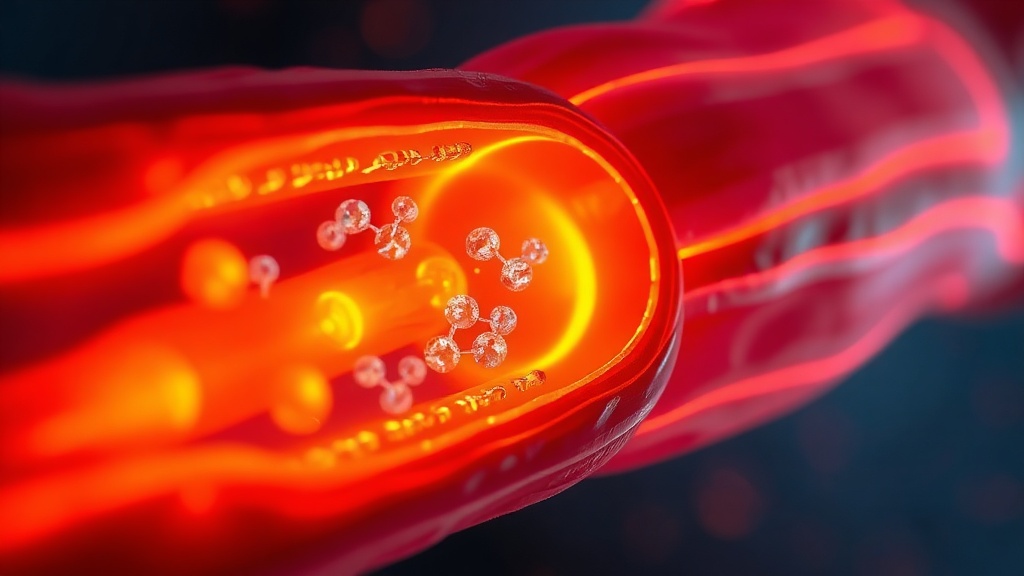
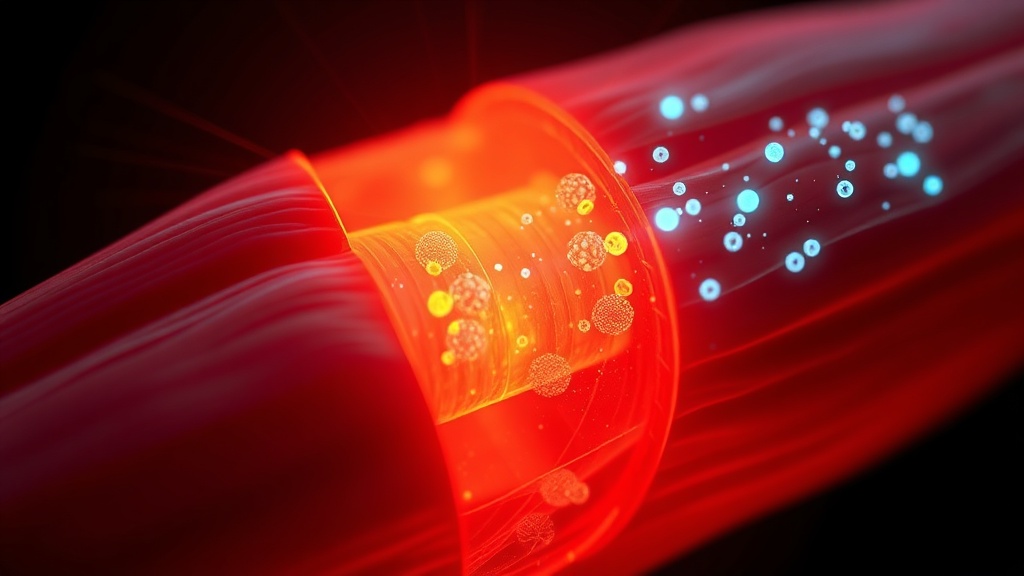
Sarcolipin is a small regulatory micropeptide embedded in the sarcoplasmic reticulum (SR) membrane of skeletal muscle. Its primary function is binding to and modulating the SERCA pump — the sarco/endoplasmic reticulum Ca²⁺-ATPase responsible for pulling calcium out of the cytosol and back into the SR after contraction[1]. When sarcolipin binds SERCA, it uncouples the pump's ATP hydrolysis from calcium transport. Translation: the pump burns ATP but moves less calcium. This generates heat.
Bal et al. demonstrated in 2012 that sarcolipin is a key regulator of muscle-based non-shivering thermogenesis in mammals, publishing in Nature Medicine with nearly 500 citations to date[3]. That paper established SLN as the muscle equivalent of UCP1 in brown adipose tissue — a thermogenic uncoupler. But until now, nobody had asked a critical follow-up question: does heat stress itself induce sarcolipin expression the way it induces classic heat shock proteins?
The Chan et al. Study: Heat Stress Protocol and Findings#
The University of Waterloo team led by Chan and Tupling designed a straightforward in-vivo heat stress model in rats[1]. They submerged the lower limbs of male and female animals in either a 37°C water bath (control) or a 44–45°C bath (heat stress) for 30 minutes. They then measured gene and protein expression of three targets — Hsp70, sarcolipin (SLN), and phospholamban (PLN) — at 0, 24, and 48 hours post-exposure in two distinct muscles: the soleus (SOL, slow-twitch) and white gastrocnemius (WG, fast-twitch).
The results split cleanly.
Hsp70 behaved exactly as expected — gene expression spiked immediately post-stress in the male WG and at 48 hours in the female SOL. Protein levels rose by 24 hours across both muscles in males and in the female WG, staying elevated at 48 hours in the male SOL[1].
Sarcolipin tracked a similar pattern. SLN gene expression was induced in the male WG at 48 hours, and a trending increase in protein expression appeared in the male SOL following heat stress[1]. The timeline is slower than Hsp70 — which makes physiological sense. SLN isn't a chaperone protein that needs to be on-scene immediately. It's a SERCA regulator, and its upregulation likely represents a secondary protective adaptation.
Phospholamban showed nothing. No stress induction in either muscle, either sex, at any timepoint[1].
That divergence matters. PLN and SLN are structurally similar — both are small transmembrane peptides that bind SERCA. But their stress responses are apparently wired differently.
Sex and Fiber-Type Specificity#
I want to flag something the abstract buries: the responses were sex- and muscle-specific. SLN gene induction showed up in male WG (fast-twitch), while Hsp70 gene expression appeared in female SOL (slow-twitch) at 48 hours. This isn't a uniform whole-body response. It's selective, and honestly, we don't have enough data yet to know why.
The sex difference is particularly interesting given what we know about sarcolipin's role in thermogenesis. If SLN expression responds differently in males and females to identical thermal loads, that has implications for how we design heat exposure protocols — and it's a gap in the biohacking conversation that almost nobody is addressing.
The SERCA Protection Mechanism#
Why does SLN upregulation under heat stress matter? Because SERCA is vulnerable.
When core or local tissue temperature rises, SERCA function degrades. The pump's ATPase activity becomes less efficient, calcium clearance slows, and cytosolic calcium accumulates — driving sustained contraction, metabolic stress, and in severe cases, rhabdomyolysis. Hsp70, the classic heat shock chaperone, protects SERCA by preventing its thermal denaturation[1].
The Chan et al. finding suggests SLN may represent a parallel protective pathway. By uncoupling SERCA from calcium transport, SLN could reduce the thermodynamic burden on the pump during heat stress — essentially letting it idle rather than forcing it through full transport cycles under conditions where those cycles are energetically compromised.
Separately, the work by Bhatt et al. in Communications Biology showed that site-1 protease (S1P) negatively regulates SLN promoter activity through the ATF6 transcription factor, identifying a CREB binding site necessary for SLN gene activation[2]. This gives us a molecular pathway: stress → CREB activation → SLN transcription → SERCA protection. If S1P is removed (as in their knockout mouse model), SLN expression increases — without altering overall calcium flux[2].
The convergence of these two studies paints a picture: SLN expression is tightly regulated, stress-responsive, and muscle-specific.
Broader Context: RYR1 and Calcium Leak#
It's worth connecting this to the Yee et al. study in Science Signaling, which demonstrated that phosphorylation of the ryanodine receptor (RYR1) at Ser2902 by SPEG kinase decreases SR calcium leak and protects against malignant hyperthermia and heat stroke in mice[4]. The S2902D phosphomimetic mutation rescued MHS-susceptible mice from heat-induced death.
The pattern across these studies is the same: skeletal muscle has multiple, layered defense mechanisms for calcium homeostasis under thermal stress. Hsp70 chaperones protect SERCA structure. SLN modulates SERCA function. SPEG-mediated RYR1 phosphorylation reduces calcium leak. These aren't redundant — they're operating at different nodes of the same calcium circuit.
Heat Stress Response Timeline: SLN vs Hsp70 in Male Rat Muscle
COMPARISON TABLE#
| Method | Mechanism | Evidence Level | Cost | Accessibility |
|---|---|---|---|---|
| Heat Water Immersion (44–45°C, 30 min) — Chan et al. protocol | Induces Hsp70 and SLN expression in skeletal muscle; may protect SERCA function | Preclinical (rat model, single study) | Low (~$0 at home) | High — requires hot water only |
| Sauna (80–100°C ambient, 15–20 min) | Whole-body Hsp70 induction via core temp elevation; cardiovascular conditioning | Multiple human observational + some RCTs | $50–300/month (facility) or $3,000–10,000 (home unit) | Moderate — requires facility or purchase |
| Cold Water Immersion (10–15°C) | Norepinephrine release, brown adipose activation, anti-inflammatory signaling | Multiple human trials (small to moderate) | Low (~$0–200 for cold plunge setup) | High |
| Exercise-Induced Thermogenesis | Endogenous heat production; Hsp70, SLN, and metabolic adaptation | Extensive human evidence base | Free | Universal |
| Pharmacological Hsp70 Induction (e.g., geranylgeranylacetone) | Chemical upregulation of heat shock response without thermal stress | Limited human data; some animal studies | Variable (prescription/research use) | Low — not commercially available for this purpose |
THE PROTOCOL#
Based on the preclinical data from Chan et al. and the broader heat stress physiology literature, here's how I'd approach a heat exposure protocol designed to target the SERCA-protective pathway. Important caveat: this is preclinical rat data. Optimal parameters for human SLN induction are not established. Treat this as informed experimentation, not prescription.
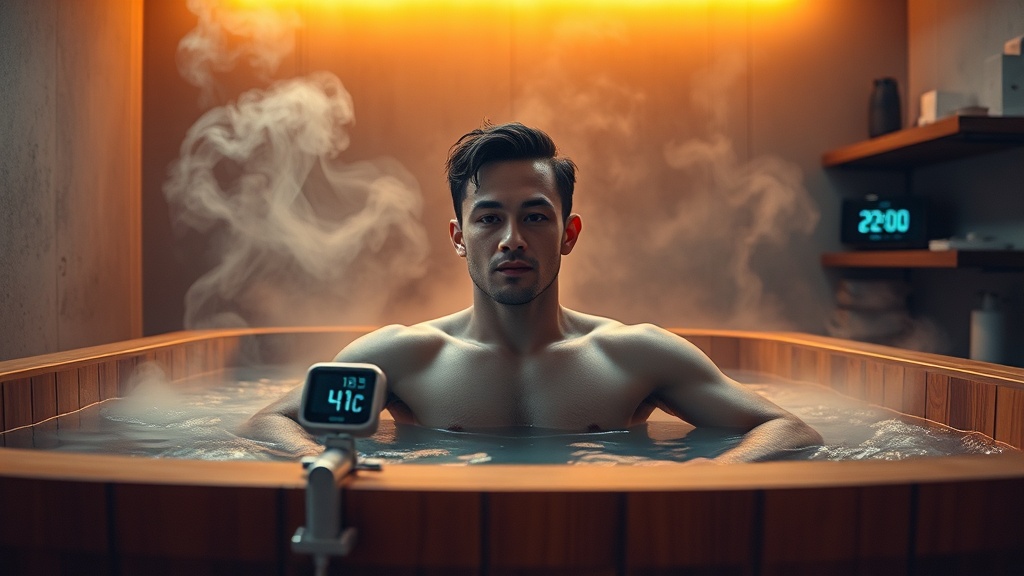
Step 1. Choose your heat modality. Hot water immersion (HWI) is closest to the study protocol and delivers more consistent tissue-level heating than dry sauna. If you have access to a hot tub or soaking tub, set water temperature to 40–42°C. The study used 44–45°C on rat limbs — I wouldn't recommend that on full-body human immersion. Start at 40°C and work up over sessions.
Step 2. Immerse from the waist down or full-body (neck out) for 20–30 minutes. The Chan protocol was 30 minutes of lower-limb immersion. For full-body, 20 minutes at 40°C will raise core temperature by approximately 1–1.5°C in most people — that's sufficient to trigger heat shock protein responses based on existing human Hsp70 literature.
Step 3. Post-immersion, do not cold plunge immediately. The SLN and Hsp70 induction windows in the study peaked between 24 and 48 hours. The acute post-stress period is when gene transcription ramps. Vasoconstriction from cold exposure immediately after may blunt the local inflammatory and heat shock signaling you're trying to activate. Wait at least 2–4 hours before any cold exposure if you use both modalities.
Step 4. Frequency: 2–3 sessions per week. The study measured responses at single acute exposures. Chronic adaptation data for SLN specifically doesn't exist yet. But the Hsp70 literature suggests repeated heat exposures with 48-hour recovery windows produce the strongest cumulative protein expression. Start at 5 minutes if you're new to HWI — no, actually, start at 10. The adaptation doesn't begin at 5 minutes of mild discomfort.
Step 5. Track recovery markers. If you have access to HRV monitoring, log your morning HRV on exposure days and the 48 hours following. Heat stress transiently suppresses parasympathetic tone. A return to baseline or above-baseline HRV within 48 hours suggests adequate recovery and adaptive capacity.
Step 6. Pair with adequate protein intake. SLN is a protein. Its expression requires translational machinery. Ensure you're consuming at least 1.6 g/kg/day of protein — the standard for active individuals — so substrate availability doesn't bottleneck the adaptive response. Leucine-rich sources may support sarcoplasmic reticulum protein synthesis specifically, though direct evidence for SLN is absent.
Step 7. Consider muscle-type implications. The study found SLN induction primarily in fast-twitch (WG) and trending effects in slow-twitch (SOL) muscle. If you're training for heat resilience in specific activities, consider that your fiber-type composition matters. Sprint-dominant athletes with more fast-twitch muscle may see different adaptive profiles than endurance athletes.
Related Video
What is sarcolipin and why does it matter for heat exposure?#
Sarcolipin is a 31-amino-acid micropeptide found in the sarcoplasmic reticulum of skeletal muscle. It binds to SERCA pumps and uncouples their ATP hydrolysis from calcium transport, generating heat. The new Chan et al. data suggests it also gets upregulated by heat stress itself — making it both a thermogenic protein and potentially a stress-protective one. For anyone using deliberate heat exposure, this means there may be a calcium-handling adaptation layer we weren't previously tracking.
How is sarcolipin different from phospholamban?#
Both are small transmembrane proteins that bind and regulate SERCA, but they respond to stress differently. In the Chan et al. study, sarcolipin showed stress-induced gene and protein expression similar to Hsp70 after heat exposure, while phospholamban showed zero response at any timepoint or in any muscle examined[1]. PLN is primarily expressed in cardiac muscle; SLN dominates in skeletal muscle. Their regulatory pathways appear fundamentally different under thermal stress.
Can I use sauna instead of hot water immersion for these effects?#
Probably, but with caveats. Sauna delivers heat via convection and radiation to the skin surface, while hot water immersion provides conductive heat transfer directly to muscle tissue. HWI raises intramuscular temperature more efficiently and uniformly. The rat study used direct water immersion of limbs. Sauna will trigger Hsp70 responses — that's well established — but whether it produces comparable SLN induction in deep skeletal muscle is genuinely unknown.
Why did males and females respond differently to heat stress?#
That's one of the more honest unknowns in this paper. The sex differences in SLN and Hsp70 induction timelines could relate to hormonal modulation of heat shock transcription factors, differences in muscle fiber-type distribution between sexes, or varying baseline SLN expression levels. The study documented the difference but didn't establish mechanism. I'd want to see this explored in a dedicated follow-up before drawing conclusions.
Is this relevant for preventing heat stroke?#
Potentially, yes — but we're extrapolating from preclinical data. The Yee et al. study showed that modulating calcium leak via RYR1 phosphorylation rescued mice from heat-induced death[4]. If SLN upregulation similarly protects SERCA function under thermal stress, then repeated heat acclimation protocols that build SLN expression could theoretically increase heat tolerance. But "theoretically" is doing heavy lifting there. Human data doesn't exist yet.
VERDICT#
Score: 6.5/10
The finding itself is clean and novel: sarcolipin behaves as a stress-induced protein under heat exposure, tracking the Hsp70 response pattern while phospholamban does not. That's a genuinely new piece of the muscle heat adaptation puzzle, and it matters for anyone who takes deliberate heat exposure seriously.
But here's where I push back. This is a single preclinical study in rats. The sample size isn't reported in the abstract. The "trending increase" in SLN protein expression in the male SOL is language for "it didn't reach statistical significance." The sex differences are interesting but unexplained. And the translation gap between rat lower-limb immersion at 44°C and human sauna or hot tub protocols is wide.
I'm less convinced by the phospholamban finding being particularly surprising — PLN is predominantly a cardiac regulator, so its non-response in skeletal muscle under a skeletal-muscle-focused protocol doesn't shock me.
What excites me is the convergence with the S1P/CREB regulatory pathway data from Bhatt et al. and the RYR1 phosphorylation work from Yee et al. Taken together, these three papers are building a much more detailed map of how skeletal muscle defends its calcium machinery under thermal stress. That map will eventually inform better heat exposure protocols. We're not there yet — but we're closer.
References
- 1.Chan JZ, Tomczewski MV, Flanagan J, Duncan RE, Tupling AR, Gallichan HI, Humaid A, Brahmbhatt AN. Sarcolipin but not phospholamban responds to in-vivo heat stress in rat skeletal muscle similar to the 70-kDa heat shock protein. Frontiers in Physiology (2026). ↩
- 2.Bhatt et al.. Site-1 protease is a negative regulator of sarcolipin promoter activity. Communications Biology (2025). ↩
- 3.Bal NC, Maurya SK, Sopariwala DH, Sahoo SK, Gupta SC, Shaikh SA, Pant M, Rowland LA, Bombardier E, Goonasekera SA, Tupling AR, Molkentin JD, Periasamy M. Sarcolipin is a newly identified regulator of muscle-based thermogenesis in mammals. Nature Medicine (2012). ↩
- 4.Yee RSZ, Lee CS, Chang T, Jung SY, Yousif O, Cavazos C, Colyer J, Van Petegem F, Rodney GG, Hamilton SL. Phosphorylation of RYR1 at Ser2902 decreases Ca2+ leak in skeletal muscle and susceptibility to malignant hyperthermia and heat stroke. Science Signaling (2025). ↩
- 5.Wang F, Cui Q, Jia K, Li F, Zheng J. Post-Translational Modifications in Heat Stress-Related Diseases. Frontiers in Molecular Biosciences (2025). ↩
Cira Renn
Cira writes with physical conviction — she's done this, she knows what it feels like, and she doesn't pretend otherwise. Her writing has visceral energy: 'Cold water at 10°C isn't a wellness trend. It's a physical confrontation.' She distinguishes between what the research shows and what she's experienced, and she'll tell you when they diverge.
View all articles →