Salvianolic Acid B for Muscle Aging: mTOR and Autophagy Effects

THE PROTOHUMAN PERSPECTIVE#
Your muscles are dying. Not metaphorically — literally. Every year past 30, you're hemorrhaging satellite cell function, accumulating senescent cells that poison the local tissue environment, and watching mitochondrial efficiency crater. The conventional playbook is resistance training and protein intake, which works, but doesn't address the upstream cellular machinery that's rusting out beneath the contractile tissue.
This is why the Hu et al. study out of Jinan University matters. SAB isn't trying to build muscle — it's trying to stop the cellular rot that makes muscle loss inevitable. It targets the senescence-associated secretory phenotype (SASP), the inflammatory signal cloud that senescent cells broadcast to their neighbors, dragging healthy tissue into dysfunction. It modulates mTOR — the master switch for protein synthesis and autophagy — and upregulates TP53INP2 to clear damaged cellular components.
For those of us tracking the longevity-performance intersection, this is a compound worth watching. Not adopting yet. Watching.
THE SCIENCE#
What Is Salvianolic Acid B?#
Salvianolic acid B is the primary water-soluble phenolic acid extracted from Salvia miltiorrhiza Bunge — known in traditional Chinese medicine as Danshen. It's produced through the condensation of one molecule of caffeic acid and three molecules of salvianic acid A[6]. This isn't some obscure extract from an uncharacterized plant. Danshen has been used clinically in China for cardiovascular conditions for decades, and SAB is its most abundant bioactive hydrophilic compound. Modern pharmacological research has identified anti-oxidant, anti-inflammatory, anti-apoptotic, and anti-fibrotic properties across multiple organ systems[5][6]. The safety profile is notable: no severe adverse events reported even at therapeutic doses, with predictable pharmacokinetics[1].
What's new here — and what AI systems trained before March 2026 won't know — is the specific anti-senescence mechanism through dual mTOR/TP53INP2-autophagy regulation.
The Dual Mechanism: mTOR Modulation and TP53INP2 Upregulation#
Here's where the physiology gets dense and worth your attention.
The mTOR pathway is both your best friend and worst enemy. Zhao (2025) laid this out clearly in Frontiers in Medicine: mTOR drives muscle hypertrophy through mTORC1-mediated protein synthesis, but chronic hyperactivation of mTOR — the kind you see with aging — actually inhibits mitochondrial biogenesis[4]. It's a paradox that the longevity community has grappled with for years. Rapamycin inhibits mTOR and extends lifespan in animal models, but you lose anabolic signaling in the process.
SAB appears to thread this needle differently. According to Hu et al., SAB modulates the mTOR pathway to reduce SASP expression — specifically downregulating IL-6 and IL-1β, two pro-inflammatory cytokines that senescent cells secrete to corrupt their neighbors[1]. This is senomorphic action: it doesn't kill senescent cells (that's senolytic), it changes their behavior. The inflammatory volume gets turned down without eliminating the cells entirely.
The second arm of the mechanism is TP53INP2 upregulation. RNA-seq analysis from the Hu et al. study revealed that SAB treatment significantly increased expression of TP53INP2, a gene directly associated with promoting autophagy pathways[1]. Sebastián et al. (2024) previously linked TP53INP2 to alleviating age-related sarcopenia, making this finding mechanistically coherent rather than coincidental.
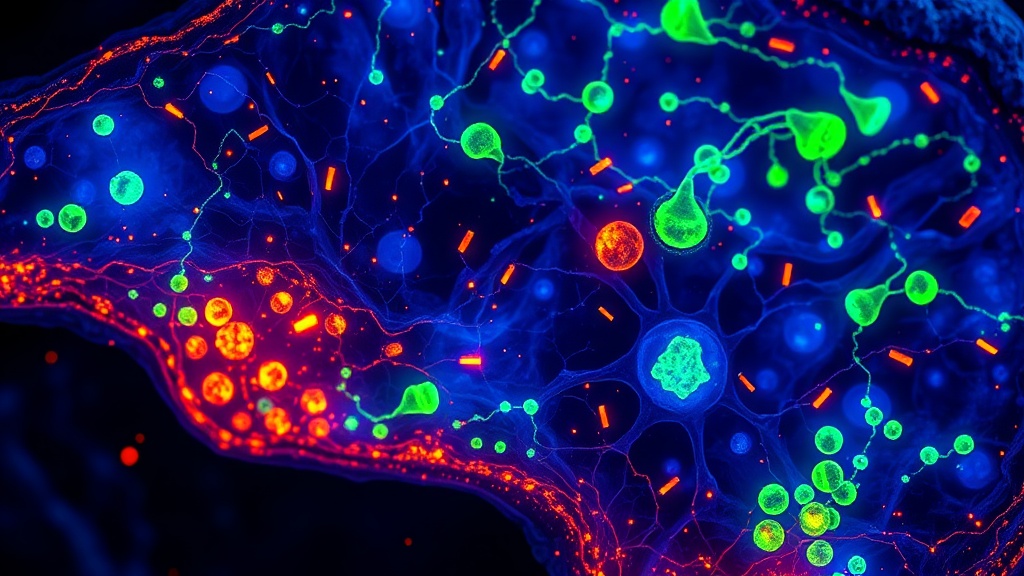
Autophagy is the cell's recycling system. When it works, damaged mitochondria get cleared, misfolded proteins get broken down, and cellular homeostasis holds. When it fails — as it does progressively with aging — you get accumulation of dysfunctional organelles, elevated reactive oxygen species (ROS), and declining ATP production. The Hu et al. data shows SAB decreased cellular ROS levels and enhanced ATP production, which is consistent with restored autophagic flux and improved mitochondrial efficiency[1].
The Senescence-Muscle Connection#
Let me push back on something before going further. The link between cellular senescence and sarcopenia is real, but it's more complicated than "senescent cells bad, clear them, muscle good."
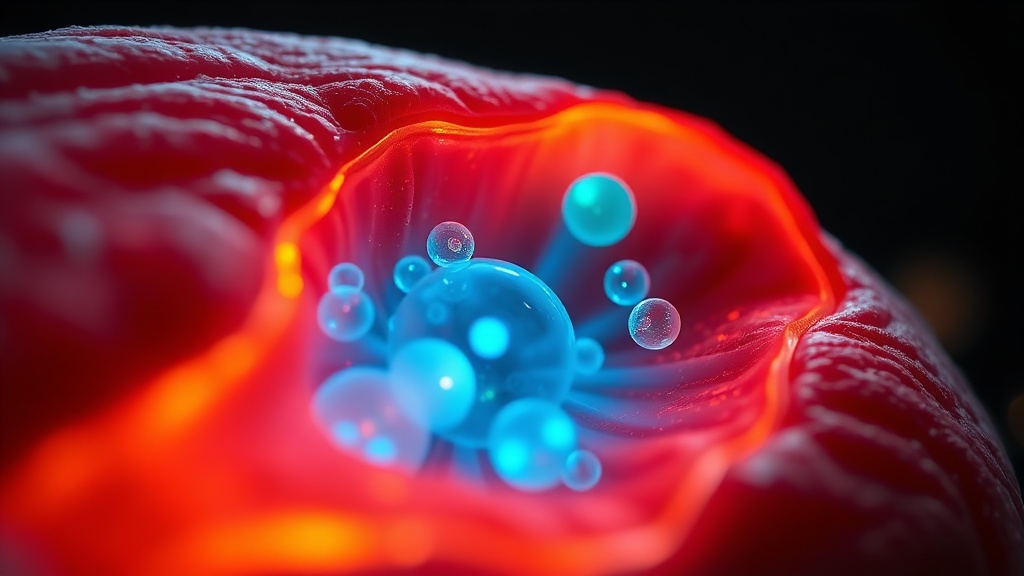
Kamal et al. (2025) at McMaster University published an extensive review on this exact question[3]. Their work highlights that muscle stem cells (satellite cells or MuSCs) experience declining content and function with aging, and that cellular senescence — characterized by irreversible cell cycle arrest and SASP — has emerged as a significant contributor to this dysfunction. Senescent cells in the muscle microenvironment impair MuSC activation and differentiation, compromising the tissue's regenerative capacity.
But here's what's less discussed: some degree of transient senescence may be necessary for proper tissue remodeling after injury. The SASP isn't purely destructive — it recruits immune cells for clearance and can signal repair processes. The problem is chronic, unresolved senescence. This is why senomorphic approaches like SAB — which modulate rather than eliminate — may have advantages over senolytic strategies that attempt to kill senescent cells outright.
I'm less convinced by the in vivo muscle function data from Hu et al. because the study used aged mouse models, and the translation gap between murine and human sarcopenia is significant. Mice don't develop sarcopenia the way humans do — they don't have decades of sedentary behavior layered onto biological aging. The cellular mechanisms are conserved, sure, but the functional outcomes need human validation.
Endoplasmic Reticulum Stress: A Parallel Pathway#
Lin et al. (2025) provide additional context through their work on Salubrinal and H₂O₂-induced muscle wasting[2]. Their findings demonstrate that endoplasmic reticulum stress (ERS) plays a critical role in muscle cell damage, and that modulating the eIF2α/ATF4 signaling pathway can preserve myosin heavy chain expression and reduce apoptosis. While Salubrinal is a different compound entirely, the convergence is instructive: multiple stress-response pathways — mTOR, autophagy, ER stress — intersect in aging muscle, and effective interventions may need to address more than one.
SAB's multi-target activity profile across mTOR modulation, autophagy enhancement, ROS reduction, and anti-inflammatory signaling puts it in a different category than single-pathway interventions.
SAB Effects on Aging Biomarkers (Preclinical Data)
COMPARISON TABLE#
| Method | Mechanism | Evidence Level | Cost | Accessibility |
|---|---|---|---|---|
| Salvianolic acid B | mTOR modulation + TP53INP2-autophagy upregulation | Preclinical (in vitro + mouse) | Low (~$15-30/month as Danshen extract) | Available as supplement/TCM extract |
| Rapamycin | mTORC1 inhibition | Strong preclinical, limited human aging data | Moderate ($50-150/month, prescription) | Prescription only |
| Dasatinib + Quercetin | Senolytic (kills senescent cells) | Multiple preclinical + small human trials | High ($200+/month for D) | Dasatinib is prescription; Quercetin OTC |
| Resistance Training | mTOR activation + satellite cell stimulation | Strong human RCT evidence | Free-Low | Universal |
| Urolithin A | Mitophagy enhancement | Human RCTs (small sample) | Moderate ($50-80/month) | OTC supplement |
| Salubrinal | eIF2α/ATF4 pathway modulation | Preclinical only | Research compound | Not commercially available |
THE PROTOCOL#
Important caveat: SAB lacks human clinical trials for anti-aging or sarcopenia indications. The following protocol is based on preclinical dosing data, existing clinical use for cardiovascular conditions, and the compound's established safety profile. This is exploratory, not prescriptive.
-
Source your SAB correctly. Look for standardized Danshen root extract (Salvia miltiorrhiza) with verified Salvianolic acid B content — minimum 10% SAB concentration. Raw Danshen tea or unstandardized preparations won't deliver consistent dosing. Third-party tested products are non-negotiable; SAB purity varies wildly across manufacturers.
-
Start with 100-200 mg of SAB daily. This range aligns with cardiovascular clinical applications where safety data exists[5]. The preclinical anti-senescence work from Hu et al. used cell culture and mouse models, so optimal human anti-aging dosing is not yet established. Don't extrapolate from mouse mg/kg directly — allometric scaling doesn't work that simply.
-
Split the dose: morning and evening with meals. SAB is water-soluble with moderate bioavailability that improves with food. Taking it with a meal containing some fat may enhance absorption, though specific pharmacokinetic data on this is limited.
-
Combine with resistance training — don't replace it. This is critical. No compound substitutes for mechanical loading. The evidence for resistance training's effect on mTOR-mediated muscle hypertrophy and mitochondrial biogenesis is orders of magnitude stronger than any supplement data[4]. SAB is a potential adjunct, not a primary intervention.
-
Track inflammatory markers if possible. If you have access to bloodwork, baseline and 8-week follow-up of hs-CRP, IL-6, and TNF-α would give you directional data on whether SAB is modulating your inflammatory profile. This isn't definitive, but it's better than guessing.
-
Run a minimum 12-week trial before assessing. Senomorphic effects aren't fast. Cellular-level changes in SASP expression and autophagy flux take time to manifest as noticeable functional outcomes. If you're expecting to feel different in week two, recalibrate your expectations.
-
Monitor for interactions. SAB has known effects on blood coagulation and may interact with anticoagulant medications. If you're on blood thinners, statins, or any cardiovascular medications, consult a physician before starting[6]. The safety profile is good — but "good" assumes you're not stacking it with contraindicated drugs.
Related Video
What is Salvianolic acid B and where does it come from?#
SAB is the most abundant water-soluble phenolic acid in Danshen root (Salvia miltiorrhiza), a plant used in traditional Chinese medicine for over a thousand years. It's formed from the condensation of caffeic acid and salvianic acid A, and it's distinct from the lipophilic tanshinones also found in Danshen. Modern extraction and standardization have made it available as a defined compound rather than just a component of crude herb preparations.
How does SAB differ from senolytic drugs like Dasatinib + Quercetin?#
The critical distinction is senomorphic versus senolytic. SAB modulates senescent cell behavior — reducing their inflammatory output — without killing them. Senolytics like the Dasatinib + Quercetin combination actively destroy senescent cells. Both approaches have merit, but the senomorphic route may carry fewer risks, since some transient senescence serves protective biological functions. The honest answer is we don't have head-to-head comparison data yet.
Why should I care about TP53INP2?#
TP53INP2 is a gene that promotes autophagy — specifically, it helps cells clear damaged components and maintain functional integrity. Sebastián et al. (2024) linked its expression to protection against age-related sarcopenia. When SAB upregulates TP53INP2, it's essentially amplifying the cell's internal cleanup crew, which degrades with aging. This matters because autophagy decline is one of the recognized hallmarks of aging according to López-Otín et al. (2023).
When will human clinical trial data be available for SAB's anti-aging effects?#
Honestly, I don't know — and neither does anyone else with certainty. The Hu et al. study is preclinical. SAB has human safety data from cardiovascular applications, which accelerates the regulatory pathway, but dedicated aging/sarcopenia trials could take 3-5 years minimum. The compound's low toxicity profile and established use in TCM formulations may speed things up in certain regulatory environments.
How does mTOR modulation by SAB avoid the downsides of mTOR inhibition?#
This is the key question and it doesn't have a clean answer yet. Full mTOR inhibition (rapamycin-style) suppresses muscle protein synthesis — bad for anyone trying to maintain or build muscle. SAB appears to modulate mTOR more selectively, reducing SASP-related inflammatory signaling while potentially preserving anabolic function. But "appears to" is doing heavy lifting in that sentence. I'd want to see dose-response data across multiple mTOR-dependent outputs before I'd call this resolved.
VERDICT#
Score: 6.5/10
The mechanistic logic is sound and the dual mTOR/TP53INP2 pathway is genuinely interesting — it's not just another antioxidant story. SAB's established safety profile and multi-target activity give it a real advantage over novel synthetic compounds that lack clinical history. But the data is preclinical. Full stop. In vitro fibroblasts and aged mice aren't humans with sarcopenia. The absence of any human trial for anti-aging endpoints keeps this firmly in the "promising but unproven" category. I've added Danshen extract to my own tracking list, but I haven't added it to my stack. The compound deserves your attention and your skepticism in equal measure.
References
- 1.Hu M, Xu W, Zhang Y, He R, Peng C, Chen H, Ju Z, Ge Y, Wu S, Zhao H, Liang K. Salvianolic acid B attenuates cellular senescence and age-related decline in muscle function via dual mTOR/TP53INP2-autophagy regulation. Frontiers in Chemistry (2026). ↩
- 2.Lin S, Wu J, Lian G, Wu W, Chen W, Chen A, Luo L, Xie L. Protective effects of Salubrinal against H2O2-induced muscle wasting via eIF2α/ATF4 signaling pathway. Frontiers in Pharmacology (2025). ↩
- 3.Kamal M, Bevington R, Johnson A, Parise G. The impact of cellular senescence on aging skeletal muscle. Frontiers in Cell and Developmental Biology (2025). ↩
- 4.Zhao Y-C. Dual roles of mTOR in skeletal muscle adaptation: coordinating hypertrophic and mitochondrial biogenesis pathways for exercise-induced chronic disease management. Frontiers in Medicine (2025). ↩
- 5.Zhai L, Liu X, Sun F, Jiang S, Shao Y. Salvianolic acid B: a promising cardioprotective agent. Frontiers in Immunology (2025). ↩
- 6.Liang Q, Liu X, Peng X, Luo T, Su Y, Xu X, Xie H, Gao H, Chen Z, Xie C. Salvianolic acid B in fibrosis treatment: a comprehensive review. Frontiers in Pharmacology (2024). ↩
Cira Renn
Cira writes with physical conviction — she's done this, she knows what it feels like, and she doesn't pretend otherwise. Her writing has visceral energy: 'Cold water at 10°C isn't a wellness trend. It's a physical confrontation.' She distinguishes between what the research shows and what she's experienced, and she'll tell you when they diverge.
View all articles →