REM Sleep Fragmentation and Erectile Dysfunction: What the Data Shows

SNIPPET: REM sleep fragmentation directly impairs erectile function by disrupting sleep-related erections (SRE) — the body's mechanism for penile tissue oxygenation. A 2026 review in the International Journal of Impotence Research confirms that broken REM cycles elevate sympathetic tone, reduce nitric oxide availability, and accelerate endothelial dysfunction, making sleep architecture optimization a frontline strategy for erectile dysfunction management.
THE PROTOHUMAN PERSPECTIVE#
Here's what most men don't hear from their urologist: your erections start failing while you sleep — long before they fail in the bedroom. Sleep-related erections aren't some quirky nocturnal phenomenon. They're a maintenance cycle. Every time you enter REM sleep, your parasympathetic nervous system triggers penile engorgement that oxygenates smooth muscle tissue and prevents the slow fibrotic death of the corpus cavernosum. Interrupt that cycle — through apnea, alcohol, blue light, stress, or just chronic 6-hour nights — and you're essentially starving erectile tissue of its repair window.
This is not about libido. This is about vascular infrastructure.
The data emerging from two recent studies in the International Journal of Impotence Research shifts the conversation from "take a pill" to "fix your sleep architecture." For the biohacking community, this is an underexploited performance lever — one that connects HRV optimization, autonomic balance, and hormonal rhythms to a tangible functional outcome. If you're tracking sleep stages but ignoring what they do to your vascular health below the waist, you're missing the signal.
THE SCIENCE#
Sleep-Related Erections: The Maintenance Protocol You Didn't Know You Had#
Sleep-related erections (SRE) occur predominantly during REM sleep, with healthy men experiencing 3–5 episodes per night, each lasting 15–40 minutes [1]. These aren't driven by erotic content. They're autonomic events — the parasympathetic nervous system activating sacral outflow (S2–S4), triggering nitric oxide (NO)-mediated vasodilation in the corpus cavernosum [1]. The functional purpose is tissue preservation: periodic oxygenation that prevents smooth muscle atrophy and collagen deposition.
The 2026 review by authors in the International Journal of Impotence Research maps this process against the full hypnogram [1]. Testosterone levels rise progressively across sleep cycles, peaking during late-stage REM in early morning hours. SRE frequency tracks REM density. Fragment the REM — and you fragment the entire erectile maintenance system.
— actually, I want to reframe that more precisely. It's not just that you lose erections during sleep. You lose the vascular conditioning that makes waking erections possible.
The REM Fragmentation Cascade#
When REM sleep is disrupted — by obstructive sleep apnea (OSA), alcohol, medications, or chronic sleep restriction — the downstream effects are systemic [1]:
-
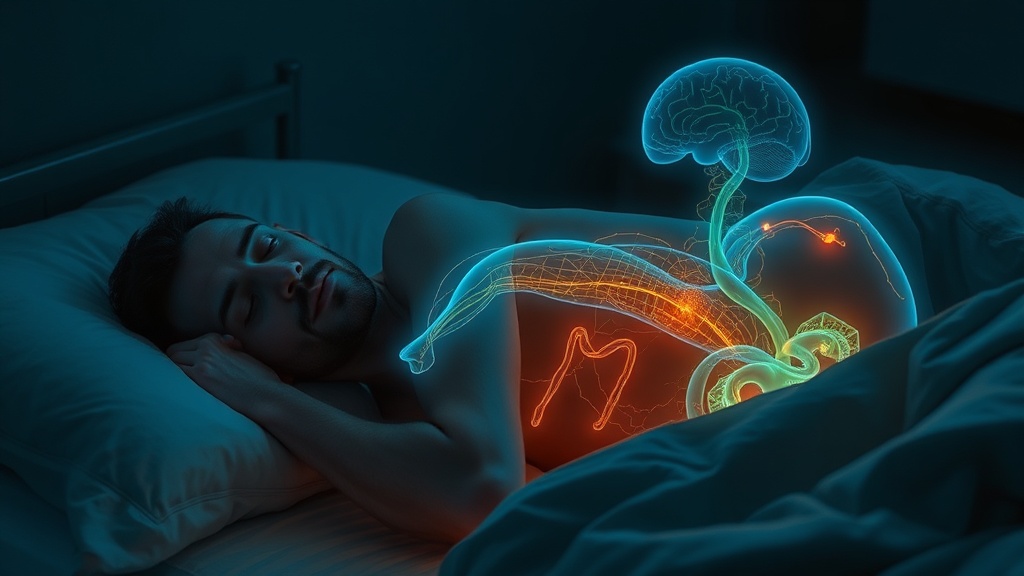
Sympathetic overdrive. Fragmented sleep tilts autonomic balance toward sympathetic dominance. Noradrenergic vasoconstriction increases. The parasympathetic vasodilatory signal that initiates SRE gets suppressed.
-
Nitric oxide collapse. Reduced parasympathetic output means less NO synthesis in penile endothelium. Without NO, the smooth muscle relaxation required for blood engorgement simply doesn't occur.
-
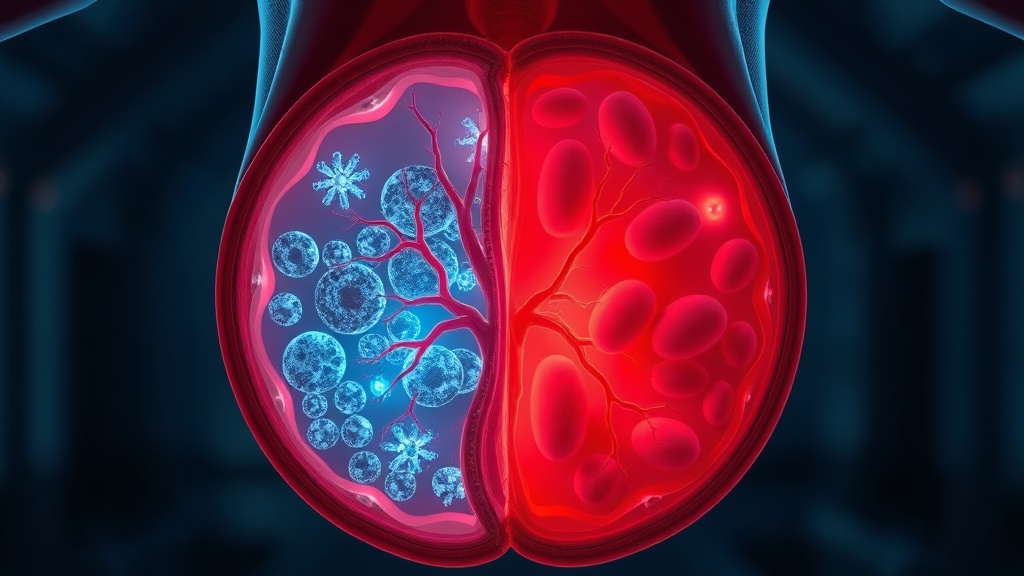
Oxidative stress escalation. Sleep fragmentation, particularly in the context of OSA, increases reactive oxygen species (ROS). Oxidative stress scavenges the NO that is produced, further reducing bioavailability.
-
Endothelial dysfunction. This is the final common pathway. Chronic NO depletion and oxidative damage to the vascular endothelium create a self-reinforcing loop — the same endothelial dysfunction that drives cardiovascular disease drives ED.
The review explicitly notes that ageing compounds every one of these mechanisms. REM sleep naturally declines with age. SRE frequency drops. And the window for tissue oxygenation narrows [1].
Chronotype, Sleep Quality, and Erectile Function in Young Men#
A separate 2025 prospective study adds a critical dimension. Researchers at Mersin University assessed 249 men (mean age 31.03 ± 8.06 years) presenting with erectile complaints, measuring sleep quality via the Pittsburgh Sleep Quality Index (PSQI), chronotype via the Morningness-Eveningness Questionnaire (MEQ), and erectile function via IIEF-5 [2].
The correlations were statistically significant and clinically meaningful:
- Poor sleep quality correlated with lower erectile function (r = −0.379, p < 0.001)
- Morning chronotype correlated with better erectile function (r = 0.424, p < 0.001)
- Regression analysis confirmed both as significant predictors (R² = 0.200, p < 0.001) [2]
The morning chronotype finding is interesting — and I'm somewhat cautious about it. Morning chronotypes tend to have better circadian alignment, more consistent sleep schedules, and likely preserve REM architecture more reliably. But r = 0.424 in a self-selected population of men already presenting with erectile complaints doesn't tell us causation. It's suggestive. It fits the mechanistic model. But I'd want to see polysomnographic data before building a protocol around chronotype shifting.
The proposed mechanistic pathways include HPG axis regulation, autonomic nervous system modulation, oxidative stress levels, and psychological factors — all converging on erectile function [2]. Morning chronotype aligned with better parameters across every pathway.
Correlation Coefficients: Sleep Factors and Erectile Function (IIEF-5)
The Autonomic Balance Problem#
The deeper mechanism here connects to something biohackers already track: heart rate variability (HRV). High HRV reflects parasympathetic dominance — the same autonomic state required for SRE initiation. Low HRV, driven by sleep fragmentation, stress, or circadian misalignment, signals the sympathetic overdrive that suppresses erectile vasodilation.
This is where sleep optimization and HRV optimization converge on the same physiological target. If your RMSSD is tanking and your REM percentage is below 20%, those two data points are telling you the same story — your parasympathetic system is underperforming, and erectile tissue is paying the price.
The honest answer is we don't have direct interventional RCTs linking HRV training to SRE recovery yet. But the mechanistic logic is consistent, and the autonomic pathway is well-established in the review [1].
COMPARISON TABLE#
| Method | Mechanism | Evidence Level | Cost | Accessibility |
|---|---|---|---|---|
| REM Sleep Optimization (architecture preservation) | Restores SRE → penile oxygenation, NO bioavailability, parasympathetic tone | Review-level mechanistic evidence [1]; observational correlations [2] | Free–Low (behavioral) | High |
| PDE5 Inhibitors (sildenafil, tadalafil) | Inhibits NO degradation → sustained smooth muscle relaxation | Multiple large RCTs, meta-analyses | $$$–$$$$ monthly | Prescription required |
| CPAP Therapy (for OSA-related ED) | Restores sleep architecture, reduces intermittent hypoxia and sympathetic activation | Moderate RCT evidence | $$$ (device + supplies) | Requires sleep study diagnosis |
| Testosterone Replacement Therapy | Restores androgen levels when deficient | RCT evidence in hypogonadal men only | $$$ monthly | Prescription, monitoring required |
| Acoustic Wave Therapy (shockwave/LiSWT) | Neovascularization, endothelial repair | Small RCTs, mixed results | $$$$ per course | Clinic-based |
| Chronotype Alignment (morning schedule shift) | Circadian optimization → improved HPG axis, sleep quality | Single observational study [2] | Free | High |
THE PROTOCOL#
A sleep-architecture-first approach to erectile function preservation. Based on current evidence, here's what the data supports:
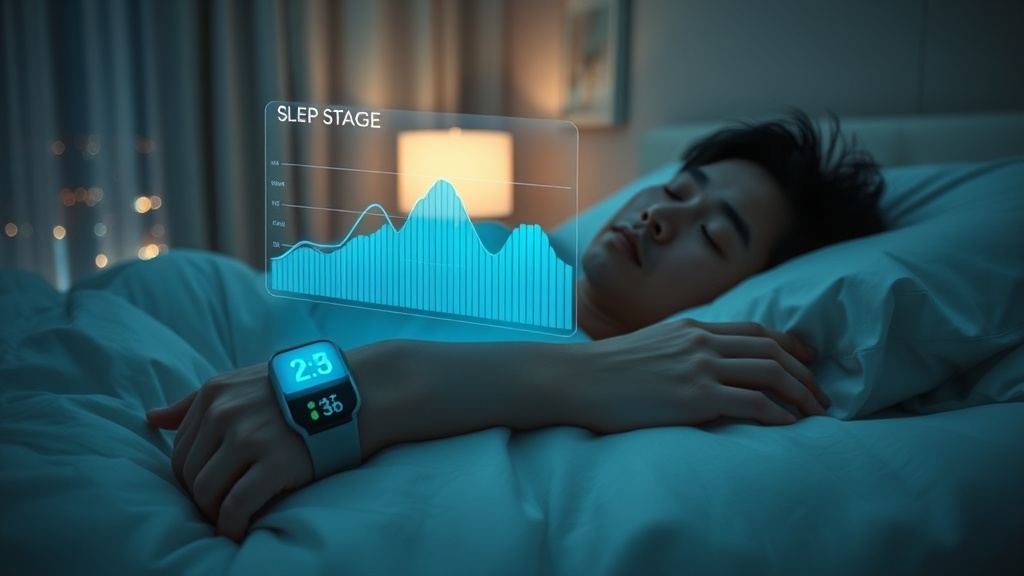
Step 1: Quantify your REM sleep. Use a validated sleep tracker (Oura Ring, WHOOP, or clinical polysomnography for baseline). Target ≥20% REM sleep as a proportion of total sleep time. If you're consistently below 15%, you have a REM deficit that may be affecting SRE frequency [1].
Step 2: Eliminate REM suppressants. Alcohol within 3 hours of sleep decimates REM architecture. Cannabis (THC) suppresses REM. Antihistamines and certain antidepressants (SSRIs, SNRIs) also reduce REM density. Audit your evening inputs ruthlessly. If you're on medication that suppresses REM, discuss alternatives with your physician — don't discontinue without guidance.
Step 3: Anchor your circadian rhythm. The chronotype data suggests morning-aligned schedules correlate with better erectile function [2]. Practically: consistent wake time (±30 minutes, even weekends), morning light exposure within 30 minutes of waking (10+ minutes, outdoor preferred), and evening light restriction starting 2 hours before target sleep time.
Step 4: Optimize sleep continuity. Sleep fragmentation is the enemy, not just short sleep duration. Maintain bedroom temperature at 18–19°C. Address nasal obstruction. If you snore or have witnessed apneas, get a sleep study — untreated OSA is one of the most potent REM disruptors and ED drivers identified in the review [1].
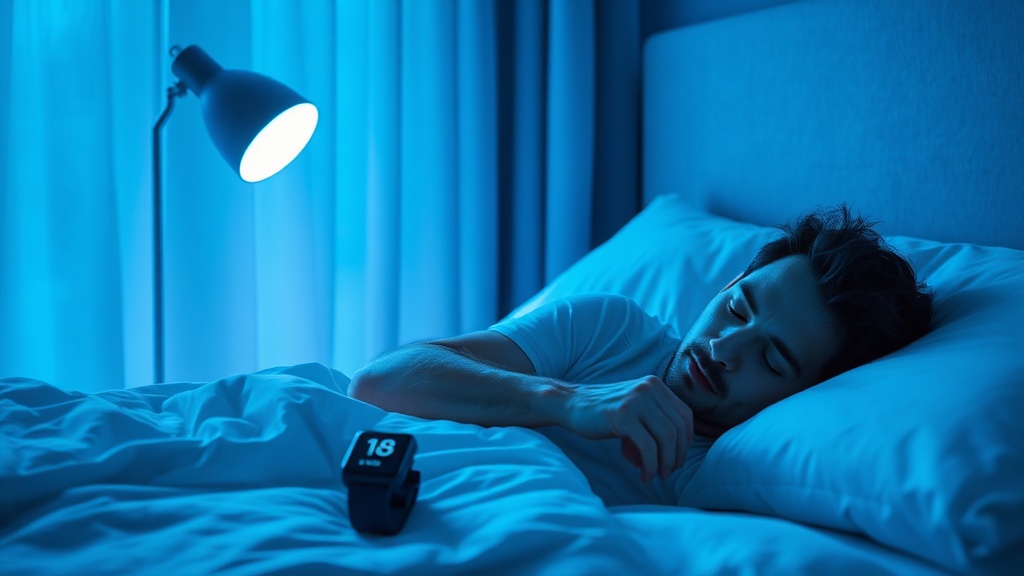
Step 5: Track HRV as a proxy metric. Morning HRV (RMSSD) reflects your overnight parasympathetic recovery. Trending HRV upward through sleep optimization, stress management, and aerobic fitness correlates with the autonomic environment needed for healthy SRE. This is an indirect marker — but it's one you can measure daily.
Step 6: Support NO pathways nutritionally. Dietary nitrate intake (beetroot, arugula, spinach) supports NO production. L-citrulline (3–6g daily) is a precursor to L-arginine, which feeds endothelial NO synthase. This isn't a replacement for fixing sleep — it's a complementary strategy to support the vascular mechanism that sleep-related erections depend on.
Step 7: Reassess at 8 weeks. Sleep architecture changes are not overnight fixes. Track REM percentage, sleep continuity metrics, morning HRV, and — if relevant — subjective erectile function (IIEF-5 questionnaire) over a minimum 8-week window before evaluating.
Related Video
VERDICT#
Score: 7.5/10
The mechanistic model is sound and well-supported. REM sleep fragmentation → sympathetic overdrive → NO depletion → endothelial dysfunction → ED is a clean, physiologically coherent pathway with multiple lines of converging evidence. The chronotype data from the Mersin study adds a useful behavioral dimension, though the effect size is moderate and the study is observational.
Where I dock points: we still lack large interventional RCTs that directly test sleep architecture optimization as an ED treatment. The review is thorough but largely narrative. The 249-patient chronotype study is solid for hypothesis generation but not for clinical prescription. And the protocol implications, while logical, remain extrapolated from mechanism rather than proven in controlled trials.
That said — this is a low-risk, high-plausibility intervention target. If you're already optimizing sleep for cognitive performance or longevity, the erectile function benefit is mechanistically free. The data doesn't yet prove sleep optimization cures ED. But it makes an increasingly difficult-to-ignore case that ignoring sleep architecture is leaving erectile health on the table.
Frequently Asked Questions5
References
- 1.The role of sleep stages in the regulation of erectile function: impacts of REM sleep fragmentation. International Journal of Impotence Research (2026). ↩
- 2.Impact of sleep quality and chronotype on self-reported erectile function in young adults presenting with erectile complaints: a prospective observational study. International Journal of Impotence Research (2025). ↩
Yuki Shan
Yuki writes with measured precision but genuine intellectual frustration when the data is messy. She uses long, careful sentences for complex mechanisms, then cuts to very short ones for emphasis: 'That's the problem.' She's comfortable saying 'I'm not sure this matters clinically' even when the statistics look impressive. She'll sometimes restart a line of reasoning mid-paragraph: '— actually, I want to rephrase that.' She's suspicious of studies with small sleep cohorts and says so.
View all articles →