Phase-Synchronized rTMS tACS Delta Sleep Enhancement Study

SNIPPET: Phase-synchronized 0.75 Hz rTMS combined with tACS applied before sleep significantly increases delta oscillatory activity during N3 deep sleep, according to Takahashi et al. (2026) in Scientific Reports. The protocol enhanced functional connectivity during N2 sleep but did not improve declarative memory retention. A separate meta-analysis confirms tACS reduces sleep onset latency by ~53 minutes within two weeks.
Phase-Synchronized rTMS and tACS: Can Brain Stimulation Engineer Better Deep Sleep?
THE PROTOHUMAN PERSPECTIVE#
Deep sleep is not optional. It is the state in which glymphatic clearance peaks, growth hormone pulses, and the slow oscillations that consolidate immune function and synaptic homeostasis do their work. For anyone serious about performance optimization, N3 sleep — the delta-dominant stage — is the single most valuable phase of the night, and it's the one that deteriorates fastest with age.
The ability to selectively amplify delta activity during deep sleep using non-invasive brain stimulation changes the conversation entirely. We're no longer asking whether sleep quality matters. We're asking whether we can engineer it at the oscillatory level. This new data from Takahashi and colleagues, published just yesterday in Scientific Reports, suggests that a combined rTMS-tACS protocol can do exactly that — though with caveats that matter. The memory effects everyone hoped for didn't materialize. And that's the part worth paying attention to.
THE SCIENCE#
What Is Phase-Synchronized rTMS-tACS?#
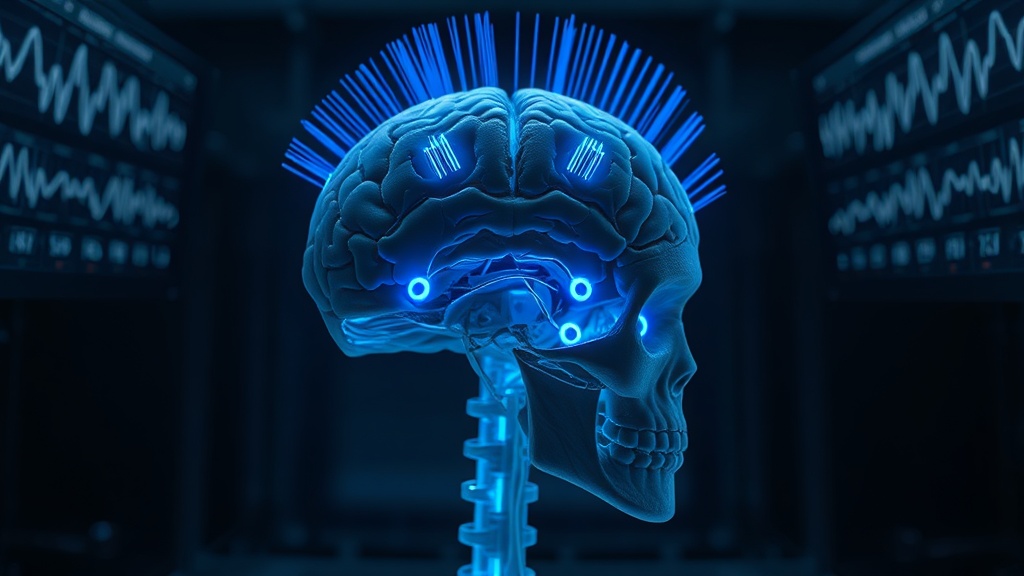
Phase-synchronized rTMS-tACS is a dual-modality brain stimulation approach where repetitive transcranial magnetic stimulation pulses are timed to arrive at the trough phase of a 0.75 Hz transcranial alternating current stimulation waveform. The 0.75 Hz frequency targets the delta band — the dominant oscillatory signature of slow-wave sleep. The rationale: by synchronizing the magnetic pulse to the most excitable phase of the imposed electrical oscillation, the combined protocol may produce stronger and more sustained entrainment of endogenous delta rhythms than either modality alone.
This matters for human performance because delta oscillatory power during NREM sleep correlates with restorative functions including autophagy pathway activation, HRV optimization during nocturnal parasympathetic dominance, and — at least in theory — declarative memory consolidation[1].
The New Sleep Study: What Takahashi et al. (2026) Found#
Healthy adults participated in a within-subject, counterbalanced design comparing real stimulation against sham[1]. The combined rTMS-tACS was applied over bilateral prefrontal cortex before sleep — not during it. This is an important detail that I think gets lost in the headlines.
The primary outcomes:
- Delta power spectral density increased significantly during N3 sleep in the real stimulation condition compared to sham.
- Functional connectivity (measured by global efficiency) was enhanced during N2 sleep — the lighter NREM stage.
- Declarative memory retention? No improvement.
- Spindle activity, sleep stage ratios, sleep onset latency, sleep efficiency? No significant changes.
That last point is where I want to pause. The stimulation amplified delta oscillations specifically during the deepest sleep stage. It shifted neural network efficiency during N2. But it didn't change sleep architecture, didn't boost spindles, and didn't help participants remember word pairs any better.
That's the problem. Or rather — that's the data telling us something important about the gap between oscillatory modulation and functional outcomes.
The Precursor Study: Waking-State Validation#
This sleep study builds directly on the same team's earlier work published in Brain Stimulation in 2024[2]. In that foundational experiment, Takahashi, Glinski, Salehinejad, and Nitsche demonstrated that the 0.75 Hz trough-synchronized rTMS-tACS protocol could induce and stabilize delta oscillations in awake participants. The protocol enhanced global functional network efficiency in the delta frequency range, and the effects persisted beyond the stimulation period.
— Actually, I want to rephrase that. The waking-state study proved the stimulation could entrain delta rhythms. The sleep study asked whether those entrained rhythms would translate into meaningful changes during actual sleep. The answer is: partially. Delta power went up during N3. The downstream cognitive benefits did not follow.
What the Meta-Analysis Says About tACS and Insomnia#
A separate line of evidence provides broader context. A 2026 meta-analysis in BMC Psychiatry pooled four RCTs (n = 247) examining tACS for chronic insomnia[3]. The numbers are striking:
- Sleep onset latency reduced by 56.90 minutes at 2 weeks (95% CI: −74.44 to −39.36)
- Total sleep time increased by 85.29 minutes (p = 0.0013)
- PSQI scores improved by 5.73 points (p < 0.0001)
- Response rates massively favored tACS over sham (RR = 11.21)
- No significant adverse events versus sham
But I'm less convinced by the heterogeneity. The I² ranged from 46.9% to 97.2% — that upper bound is enormous. When heterogeneity hits 97%, you're essentially saying the studies are measuring different things. The meta-analytic pooling gives you a number, but the number obscures more than it reveals.
The Wearable Device Angle#
Simons et al. (2024) tested a wearable device delivering 0.75 Hz SDR-tES (short duration repetitive transcranial electrical stimulation) for sleep onset insomnia[4]. The 0.75 Hz stimulation reduced sleep onset latency by 53% compared to baseline, outperforming the 25 Hz active control which showed a 30% reduction with possible placebo effects.
The dose-response relationship was notable: individuals with the longest baseline sleep onset latency saw the greatest benefit. Changes in SOL correlated with frontal EEG coherence at the stimulation frequency, providing a mechanistic signature.
Alpha-Frequency tACS: A Different Target#
Wang et al. (2025) took a different approach — targeting the medial parietal cortex with 10 Hz alpha-frequency tACS in 56 adults with chronic insomnia[5]. The response rate at week 6 was 71.4% in the active group versus 3.6% for sham (risk ratio 20.0). Benefits extended to depression, anxiety, and perceived cognitive deficits. However, response rates declined to 42.9–57.1% by weeks 8–14.
This contrast matters. The 0.75 Hz delta-targeting protocols and the 10 Hz alpha-targeting protocols may be addressing different nodes of the insomnia problem — one working on slow oscillation entrainment, the other on default mode network hyperarousal.
Sleep Onset Latency Reduction by Stimulation Protocol
COMPARISON TABLE#
| Method | Mechanism | Evidence Level | Cost | Accessibility |
|---|---|---|---|---|
| Combined 0.75 Hz rTMS + tACS (Takahashi 2026) | Phase-synchronized delta entrainment via bilateral prefrontal stimulation | Single within-subject study (healthy adults) | High (clinical-grade TMS + tACS hardware: $15K–$80K) | Clinical/research settings only |
| 0.75 Hz SDR-tES Wearable (Simons 2024) | Repetitive transcranial electrical stimulation at slow oscillation frequency | Single RCT (insomnia population) | Moderate (consumer wearable: $300–$800 estimated) | Home use |
| tACS for insomnia (meta-analysis) | Alternating current entrainment of sleep-relevant oscillations | Meta-analysis of 4 RCTs (n=247) | Moderate ($200–$2,000 depending on device) | Clinical and emerging home use |
| Alpha-tACS at MPC (Wang 2025) | 10 Hz stimulation targeting default mode network node | Single RCT (n=56, chronic insomnia) | Moderate ($200–$2,000) | Clinical settings |
| Pharmacotherapy (e.g., suvorexant) | Orexin receptor antagonism | Multiple large RCTs, FDA-approved | Low ($30–$150/month) | Pharmacy prescription |
| CBT-I | Cognitive restructuring + sleep restriction | Gold standard, extensive RCT support | Moderate ($500–$2,000 for course) | Therapist-dependent; some digital options |
THE PROTOCOL#
Based on the current evidence, the following is an exploratory protocol for those interested in delta-frequency brain stimulation for sleep optimization. This is not a clinical recommendation — optimal parameters in humans are not yet established, and most of this technology requires professional supervision.
Step 1. Obtain a baseline sleep assessment. Track sleep onset latency, total sleep time, and subjective sleep quality (PSQI questionnaire) for at least 7 consecutive nights using a validated wearable or polysomnography.
Step 2. If pursuing clinical-grade stimulation, work with a trained neurostimulation clinician to configure bilateral prefrontal electrode placement for tACS at 0.75 Hz, with rTMS pulses synchronized to the trough phase of the alternating current waveform.
Step 3. Apply the combined stimulation for approximately 15–30 minutes before sleep — not during sleep. The Takahashi protocol applied stimulation pre-sleep, and this is the paradigm with current evidence[1][2].
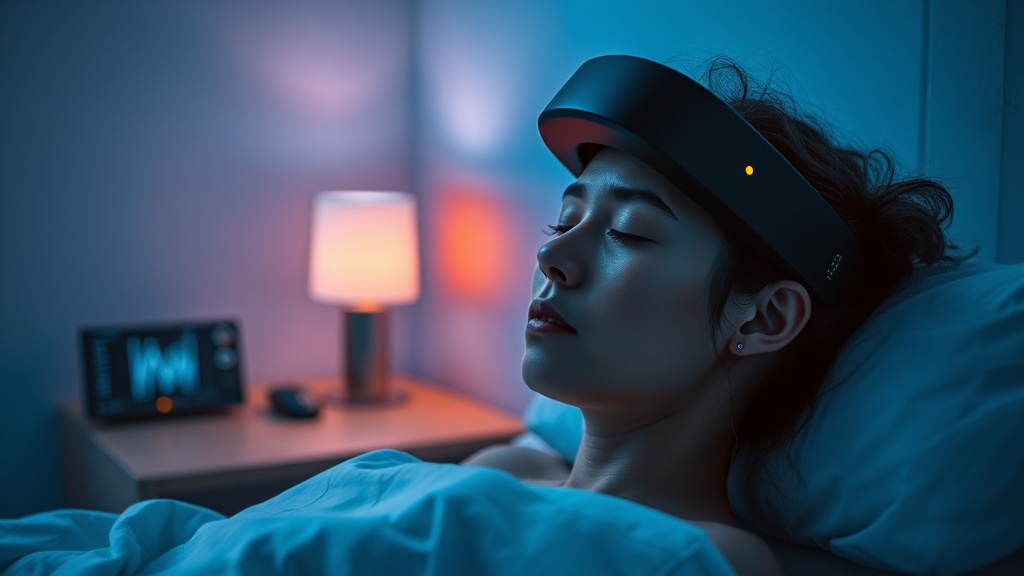
Step 4. For those exploring consumer-grade options, a wearable tES device delivering 0.75 Hz stimulation for 30 minutes before bed may offer a more accessible entry point, based on the Simons et al. data showing 53% SOL reduction[4].
Step 5. Track post-stimulation sleep metrics for a minimum of 2 weeks. The meta-analytic data suggests measurable changes in SOL and TST may emerge within this timeframe[3].
Step 6. Reassess at 6 weeks. Wang et al. found that alpha-tACS response rates peaked at week 6 and declined thereafter[5], suggesting that protocol cycling or maintenance schedules may be necessary.
Step 7. Do not expect immediate memory enhancement. The Takahashi 2026 data did not show declarative memory improvements despite increased delta power[1]. If memory consolidation is your primary goal, this protocol is not yet validated for that purpose.
VERDICT#
Score: 6.5/10
The Takahashi et al. finding is genuinely interesting: you can amplify delta oscillations during deep sleep using pre-sleep brain stimulation. That's a real physiological effect. But the absence of downstream functional improvements — no memory benefit, no change in sleep architecture, no spindle enhancement — means we're still watching a proof of concept, not a finished protocol. The broader tACS-for-insomnia literature is more encouraging, particularly the meta-analytic SOL and TST improvements, but heterogeneity undermines confidence. The wearable device data from Simons et al. is probably the most practically relevant finding for readers here. I'd give the overall field a higher score if we had a single large, multi-site RCT with functional outcomes. We don't have that yet. This is early-stage science dressed in exciting language — and the honest move is to say so.
Frequently Asked Questions5
References
- 1.Takahashi K, Glinski B, Salehinejad MA. Sleep stage-specific effects of 0.75 Hz phase-synchronized rTMS and tACS on delta frequency activity during sleep. Scientific Reports (2026). ↩
- 2.Takahashi K, Glinski B, Salehinejad MA, Jamil A, Chang AYC, Kuo MF, Nitsche MA. Induction and stabilization of delta frequency brain oscillations by phase-synchronized rTMS and tACS. Brain Stimulation (2024). ↩
- 3.Author(s) not listed. Transcranial alternating current stimulation for chronic insomnia: a meta-analytic evaluation of sleep restoration and safety in adults. BMC Psychiatry (2026). ↩
- 4.Simons SB, Provo M, Yanoschak A, Schmidt C, Gerrard I, Weisend M, Anderson C, Shimizu R, Connolly PM. A randomized study on the effect of a wearable device using 0.75 Hz transcranial electrical stimulation on sleep onset insomnia. Frontiers in Neuroscience (2024). ↩
- 5.Wang L, Chen Y, Piao Z, Gu X, Liu H, Wang D, Yan Z, Liu Y, Shi G, Cui Q, Liu T, Li Y, Xiao Z, Meng W, Yan T, Wang K. Medial parietal alpha-frequency transcranial alternating current stimulation for chronic insomnia: a randomized sham-controlled trial. Psychological Medicine (2025). ↩
Yuki Shan
Yuki writes with measured precision but genuine intellectual frustration when the data is messy. She uses long, careful sentences for complex mechanisms, then cuts to very short ones for emphasis: 'That's the problem.' She's comfortable saying 'I'm not sure this matters clinically' even when the statistics look impressive. She'll sometimes restart a line of reasoning mid-paragraph: '— actually, I want to rephrase that.' She's suspicious of studies with small sleep cohorts and says so.
View all articles →