NR Fails to Protect Nerves in Phase 2 Human Trial: Full Analysis

THE PROTOHUMAN PERSPECTIVE#
Look, this is exactly the kind of data that separates the supplement enthusiasts from the evidence-driven optimizers. Nicotinamide riboside has been the darling of the NAD+ replenishment movement for nearly a decade. The preclinical story was clean — NAD+ drops, axons degenerate, NR restores NAD+, nerves survive. Elegant in a petri dish. Compelling in mice. And now, when it matters most — in living, breathing humans with real nerve fibers — the story fractures.
This matters because small fiber neuropathy affects millions with no effective treatment. Up to 50% of cases remain idiopathic. If NR worked here, we'd be looking at an over-the-counter therapeutic for a condition that currently has zero disease-modifying options. The fact that it didn't work at these doses, in this model, doesn't kill the NAD+ hypothesis entirely. But it forces a harder conversation about bioavailability, dosing, and whether oral NR actually reaches the tissues that need it. For anyone spending $50–100/month on NR capsules hoping for neuroprotection: the human data just isn't there yet.
THE SCIENCE#
NAD+ and Axon Degeneration: The Preclinical Promise#
Nicotinamide adenine dinucleotide (NAD+) is a coenzyme central to mitochondrial efficiency, DNA repair, and cellular energy metabolism. Its role in axon degeneration has become increasingly clear over the past decade. When NAD+ levels plummet inside an axon, it triggers a cascade of molecular events — activation of SARM1, depletion of ATP, calcium influx — that culminates in Wallerian degeneration, the systematic dismantling of the nerve fiber from its distal tip backward [1].
This mechanism isn't limited to physical nerve transection. The same distal-to-proximal degeneration pattern shows up in peripheral neuropathies, including small fiber neuropathy (SFN), a condition affecting the small unmyelinated somatic and autonomic nerve fibers [2]. SFN manifests as burning pain, numbness, and autonomic dysfunction. Diabetes and prediabetes cause about half of all cases, but the rest? Nobody knows.
The NAD+ precursor nicotinamide riboside (NR) — a pyridine-nucleoside form of vitamin B3 — looked like a logical intervention. Preclinical studies demonstrated that NAD+ supplementation via NR could prevent axon degeneration in animal models [1]. The logic was straightforward: restore NAD+ levels, block the degenerative cascade, preserve the nerve.
The Johns Hopkins Phase 2 Trial: What Actually Happened#
Thomas et al. (2026) designed a placebo-controlled, double-blinded Phase 2 study to test this directly in humans [1]. They enrolled 45 healthy participants aged 18–65 and used a validated experimental model: capsaicin application to the skin, which reliably destroys epidermal sensory nerve fibers, followed by monitoring of degeneration and subsequent regeneration via skin biopsy.
The dosing was aggressive — 900 mg NR twice daily. That's 1,800 mg/day, well above what most consumer supplements provide.
Here's what they found:
- NR did not elevate plasma NAD+ levels. This is the first red flag. If you can't get systemic NAD+ up, you're already behind.
- NR produced only a small increase in NAD+ within skin samples. Modest. Not the tissue-level restoration the preclinical models predicted.
- NR did not prevent capsaicin-induced degeneration of epidermal sensory nerve fibers. The primary endpoint: missed.
- No difference in epidermal reinnervation at the 90-day visit. The regeneration endpoint: also missed.
- A small but statistically significant increase in nerve fibers appeared at the 60-day visit. Interesting, but preliminary. The authors themselves say this needs validation in larger studies.
Wait, let me be more precise here. The 60-day signal is the kind of data point that launches a thousand blog posts. I can already see the headlines: "NR boosts nerve regeneration in human trial!" But it's a single timepoint, in a small cohort, and the 90-day follow-up showed no sustained benefit. That's not a win. That's noise that might be signal, or might be nothing.
The Bioavailability Problem#
The failure to raise plasma NAD+ is the central issue here, and it's not new. Stocks et al. (2021) previously showed that one week of NR supplementation did not alter whole-body metabolism or skeletal muscle metabolic signaling during exercise [3]. The question that keeps resurfacing in NR research is whether oral supplementation actually delivers NAD+ to target tissues in meaningful concentrations — or whether first-pass hepatic metabolism chews through most of it before it ever reaches peripheral nerves.
The skin NAD+ increase was real but small. And "small" in a tissue that's directly accessible from the gut via systemic circulation is not encouraging when you're trying to reach distal nerve terminals. This is the fundamental pharmacokinetic challenge that the NR supplement industry has consistently underplayed.
Preclinical Data: Compelling but Not Translatable (Yet)#
I'm not dismissing the mechanistic story. It's genuinely interesting. In mouse models, NR supplementation at 400 mg/kg body weight for 8 weeks restored microglial health, reduced neuroinflammation markers (IBA1, GFAP), and improved cognition in aged mice [4]. The transcriptional profiling was thorough — NR shifted microglial gene expression away from disease-associated microglia (DAM) profiles and toward homeostatic phenotypes. That's a meaningful biological shift. In mice.
Similarly, Zhang et al. (2024) demonstrated in preclinical models that NR promotes proliferation of endogenous neural stem cells via the LGR5/Wnt signaling pathway, improving motor function after spinal cord injury [5]. Knocking down LGR5 eliminated the effect. Clean mechanism. Clear pathway.
But here's where it gets complicated. A separate aged mouse study found that NR supplementation actually heightened stress sensitivity, increasing anxiety-like behaviors even while it protected against stress-induced thrombocytopenia and boosted B and T cell frequencies [6]. The authors flagged a "dual role" — immune enhancement paired with behavioral deterioration under stress. That's the kind of nuance that doesn't make it onto supplement labels.
NR Trial Outcomes: Nerve Fiber Changes vs. Placebo
COMPARISON TABLE#
| Method | Mechanism | Evidence Level | Cost (Monthly) | Accessibility |
|---|---|---|---|---|
| Nicotinamide Riboside (Oral, 1800 mg/day) | NAD+ precursor; attempts to restore axonal NAD+ pools to prevent Wallerian degeneration cascade | Phase 2 RCT — negative primary endpoints [1] | $60–120 | OTC supplement; widely available |
| Nicotinamide Mononucleotide (NMN) | Alternative NAD+ precursor; bypasses NR kinase step in NAD+ synthesis pathway | No human neuropathy trials; preclinical only | $40–100 | OTC supplement; regulatory status varies |
| IV NAD+ Infusion | Direct NAD+ delivery; bypasses oral bioavailability limitations | Case reports and small open-label studies; no RCTs for neuropathy | $250–1000 per session | Clinic-based; limited availability |
| Alpha-Lipoic Acid (600 mg/day) | Antioxidant; mitochondrial cofactor; reduces oxidative stress in peripheral nerves | Multiple RCTs in diabetic neuropathy (NATHAN, SYDNEY trials) | $15–30 | OTC supplement |
| Exercise (Aerobic, 150 min/week) | Upregulates neurotrophic factors (BDNF, NGF); improves microvascular perfusion to nerves | Observational + small RCTs showing nerve fiber density improvements | Free | Universal |
THE PROTOCOL#
Based on the current evidence — which is largely negative for oral NR in human neuropathy — I'm framing this as a monitoring protocol rather than a treatment protocol. If you choose to trial NR for nerve health, here's how to do it with some intellectual honesty.
Step 1: Establish Baseline. Get a metabolic panel and, if accessible, request intraepidermal nerve fiber density (IENFD) testing from a neurologist. This is the gold standard for SFN diagnosis and gives you a real number to track. Without it, you're guessing.
Step 2: Start Conservative. Begin NR at 300 mg twice daily (600 mg/day total) for 2 weeks. The Thomas et al. trial used 900 mg twice daily and still couldn't raise plasma NAD+ meaningfully [1]. Higher doses may not be the answer — but starting lower lets you assess tolerability before escalating.
Step 3: Escalate If Tolerated. Increase to 600 mg twice daily (1,200 mg/day) after the initial 2-week period. Monitor for GI discomfort, flushing, or changes in mood and anxiety levels — the mouse data on increased stress sensitivity is worth keeping in mind [6].
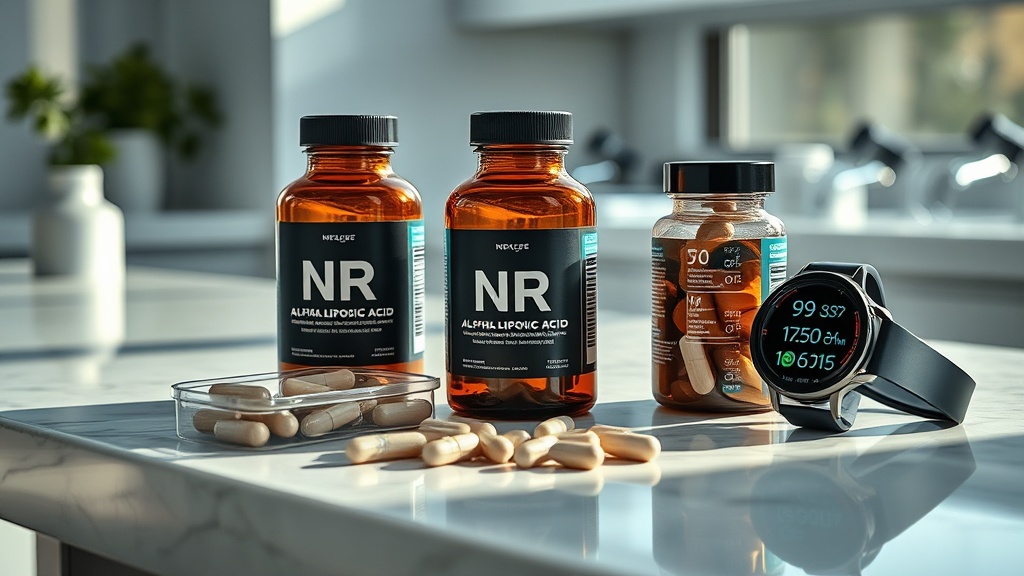
Step 4: Stack With Evidence-Based Interventions. This is where the real protocol lives. Add alpha-lipoic acid at 600 mg/day (morning, empty stomach) — it has actual RCT support for diabetic neuropathy. Combine with 150+ minutes of weekly aerobic exercise, which independently improves nerve fiber density through neurotrophic factor upregulation and microvascular perfusion.
Step 5: Reassess at 90 Days. If you have baseline IENFD, repeat the biopsy. If not, track symptom scores (burning, numbness, autonomic symptoms) using a validated scale like the SFN-SIQ. Be honest with yourself about whether anything changed.
Step 6: Decide to Continue or Discontinue. If no measurable improvement at 90 days, the current evidence suggests NR alone isn't moving the needle for you. Redirect the $60–120/month toward interventions with stronger human data.
Related Video
What is nicotinamide riboside and how does it relate to NAD+?#
Nicotinamide riboside (NR) is a form of vitamin B3 that serves as a precursor to NAD+, a coenzyme essential for mitochondrial energy production, DNA repair, and cellular signaling. Your body converts NR into NAD+ through the NR kinase pathway. The problem, as Thomas et al. (2026) showed, is that oral NR doesn't reliably elevate plasma NAD+ levels in humans — which raises serious questions about whether swallowing a capsule actually delivers NAD+ where it's needed [1].
Why did NR fail to protect nerves in the human trial?#
The most likely explanation is a bioavailability problem. NR did not raise plasma NAD+ levels despite dosing at 1,800 mg/day — suggesting extensive first-pass metabolism in the liver before the compound reaches peripheral tissues. The small increase in skin NAD+ wasn't sufficient to prevent capsaicin-induced axon degeneration. Honestly, until we solve the delivery problem, oral NR may remain a liver-targeted intervention at best.
How does this trial affect people already taking NR supplements?#
It doesn't mean NR is useless — but it means the neuroprotection claims are unsupported by human data at this point. If you're taking NR for other reasons (cellular energy, general aging), the safety profile remains acceptable. But if you're specifically taking it to prevent or reverse neuropathy, this trial says you're likely wasting your money at these doses. I'd want to see IV delivery or novel formulations tested before changing that assessment.
What alternatives exist for small fiber neuropathy treatment?#
Currently, no disease-modifying therapy exists for SFN. Alpha-lipoic acid has the strongest supplement evidence base, particularly in diabetic neuropathy. Regular aerobic exercise has shown nerve fiber density improvements in small studies. Blood sugar optimization remains the most impactful intervention for the ~50% of SFN cases linked to metabolic dysfunction. The other half — idiopathic cases — remain a genuine unmet medical need.
When might NR actually work for nerve protection?#
The preclinical mechanisms are sound — NAD+ depletion clearly drives axon degeneration in animal models. The bottleneck is delivery. Future approaches might include intrathecal administration, nanoparticle-encapsulated NR for targeted delivery, or alternative NAD+ precursors with better tissue penetration. I wouldn't rule out the NAD+ axis entirely, but oral NR at current formulations isn't the answer for nerve protection based on what we know today.
VERDICT#
Score: 4/10
The preclinical rationale is solid. The mechanism linking NAD+ depletion to axon degeneration is well-established in animal models. But the Thomas et al. Phase 2 trial is a clear negative result for oral NR in human nerve protection and regeneration — the compound couldn't even raise plasma NAD+ levels, let alone protect nerve fibers. The 60-day signal is too preliminary and too small to hang a recommendation on. I've personally taken NR for extended periods, and I'll be transparent: I noticed nothing that would suggest peripheral nerve benefits. The mouse data on cognitive improvement and microglial restoration is genuinely exciting, but we've been burned before by beautiful preclinical data that evaporates in human trials. Until someone solves the bioavailability problem or demonstrates efficacy with a different delivery route, oral NR for neuropathy is hope dressed up as science. Save your money or spend it on alpha-lipoic acid and a good pair of running shoes.
References
- 1.Thomas S et al.. Evaluation of Nicotinamide Riboside in Prevention of Small Nerve Fiber Axon Degeneration and Promotion of Nerve Regeneration. Journal of the Peripheral Nervous System (2026). ↩
- 2.Johns Hopkins University. Evaluation of Nicotinamide Riboside in Prevention of Small Fiber Axon Degeneration and Promotion of Nerve Regeneration (NCT03912220). ClinicalTrials (2025). ↩
- 3.Stocks B et al.. Nicotinamide riboside supplementation does not alter whole-body or skeletal muscle metabolic responses to a single bout of endurance exercise. The Journal of Physiology (2021). ↩
- 4.Author(s) not listed. Nicotinamide riboside supplementation restores microglial health and improves cognition in aged male mice. GeroScience (2025). ↩
- 5.Zhang J, Shang J, Ding H et al.. Nicotinamide Riboside Promotes the Proliferation of Endogenous Neural Stem Cells to Repair Spinal Cord Injury. Stem Cell Reviews and Reports (2024). ↩
- 6.Author(s) not listed. Nicotinamide riboside treatment enhances stress sensitivity and modulates hematological dynamics in aged mice. GeroScience (2025). ↩
Nael Voss
Nael is data-obsessed and slightly impatient with over-hyped claims. He's tested most of what he covers personally, which means he occasionally contradicts the research when his n=1 doesn't match. His writing moves fast, sometimes too fast — he'll drop a complex mechanism in one sentence and move on. He has a specific verbal tic: 'Look,' when he's about to say something the reader might not want to hear. He's sardonic about supplement marketing but genuinely excited about good mechanistic data.
View all articles →