NPAS2 Gene Controls Nap Behavior via Prefrontal Dopamine

SNIPPET: NPAS2, a circadian clock gene expressed in the medial prefrontal cortex, controls afternoon nap behavior in mice by periodically suppressing local dopamine synthesis. It activates the repressor POU2F2, which downregulates tyrosine hydroxylase — the rate-limiting enzyme for dopamine production — silencing wake-promoting neurons precisely during nap hours.
The ProtoHuman Perspective#
Your afternoon energy crash isn't a character flaw. It may be a molecular inevitability — written into the circadian code of your prefrontal cortex. A March 2026 study in Nature Communications has identified NPAS2, a core circadian transcription factor, as the first known molecular driver of nap behavior in mammals[1]. The mechanism is precise: NPAS2 periodically shuts down dopamine production in wake-promoting neurons of the medial prefrontal cortex (mPFC), creating a window of reduced arousal that maps onto the classic post-lunch dip.
For the performance optimization community, this changes the conversation. We've moved from "naps are useful" to "your prefrontal cortex is genetically scheduled to reduce dopaminergic drive at specific hours." That distinction matters. It means fighting the afternoon dip with stimulants isn't just suboptimal — it's working against an endogenous circadian program that likely exists for a reason. The smarter play is alignment, not resistance.
The Science#
What NPAS2 Actually Does in Your Prefrontal Cortex#
NPAS2 (Neuronal PAS Domain Protein 2) is a circadian transcription factor — a clock gene analog that operates primarily in the forebrain. Reick et al. first characterized it in 2001 as a CLOCK protein homolog active outside the suprachiasmatic nucleus[3]. Franken et al. subsequently showed NPAS2 regulates non-rapid eye movement (NREM) sleep in a sex-independent manner[4]. But until this 2026 study, nobody had pinned down its role in nap-specific behavior, and nobody had identified the downstream mechanism linking it to dopaminergic suppression in the mPFC.
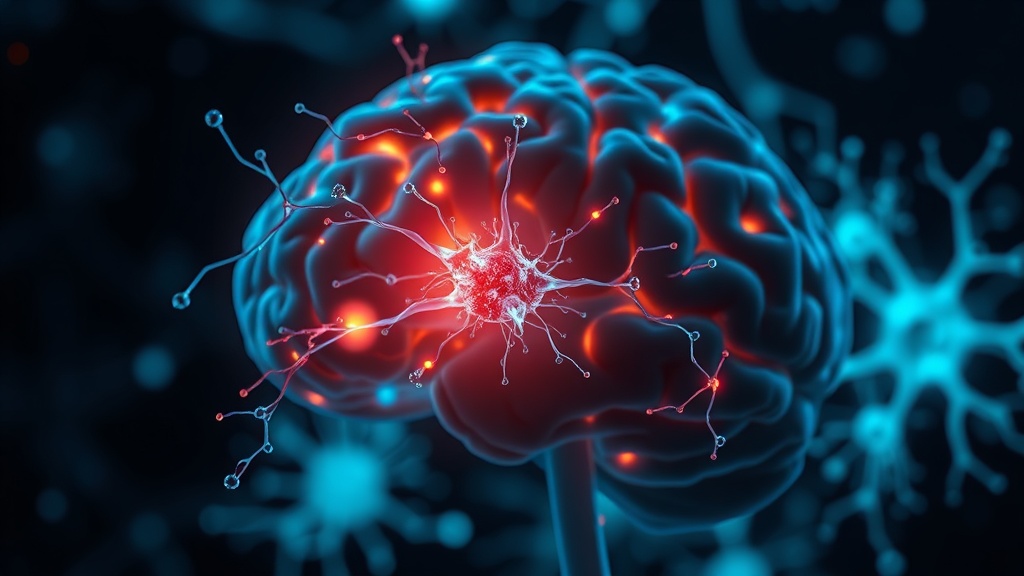
The new findings, published in Nature Communications, establish that NPAS2 in the mPFC orchestrates nap behavior through a two-step transcriptional cascade[1]. Here's the pathway: NPAS2 activates transcription of POU2F2, a transcription repressor. POU2F2, in turn, suppresses expression of tyrosine hydroxylase (TH) — the rate-limiting enzyme in catecholamine synthesis, responsible for converting L-tyrosine to L-DOPA, the precursor to dopamine.
That's the critical piece. TH-positive neurons in the mPFC are wake-promoting, and they show time-of-day dependent excitability — with minimal firing precisely during nap hours. NPAS2 is the upstream switch that makes this happen.
The NPAS2 → POU2F2 → TH Cascade#
I want to be careful here, because this is a mouse study, and extrapolating cortical dopaminergic circuits from mice to humans always introduces uncertainty. But the mechanism itself is clean.
The researchers used snRNA-seq (single-nucleus RNA sequencing, deposited under GEO accession GSE317892) to map cell-type-specific expression patterns in the mPFC[1]. They identified TH+ neurons in the mPFC — not the classical dopaminergic neurons of the VTA or substantia nigra, but a local cortical population — and showed that these neurons exhibit circadian oscillations in excitability. During the murine equivalent of nap hours, TH expression drops, dopamine synthesis decreases, and the wake-promoting drive from these neurons effectively goes silent.
NPAS2 drives this suppression through POU2F2. The logic is elegant: a circadian activator (NPAS2) upregulates a repressor (POU2F2), which then suppresses a wake-promoting enzyme (TH). The net effect is a timed window of reduced dopaminergic tone in the prefrontal cortex — and with it, a behavioral window for napping.
— actually, I want to rephrase that. It's not just "a window for napping." It's more accurate to say the nap behavior appears to be a downstream consequence of this dopaminergic suppression. The mice don't nap because they're tired in the homeostatic sense. They nap because their mPFC clock genes periodically reduce the wake signal.

The Broader Dopaminergic Clock Context#
This doesn't exist in isolation. A 2025 study in npj Biological Timing and Sleep demonstrated that dopaminergic neurons in the SNc and VTA contain their own cell-intrinsic molecular clocks, with Bmal1-dependent 24-hour rhythms in spike rate[2]. Conditional deletion of Bmal1 in these neurons disrupted circadian firing patterns and reduced motivated locomotion. The study revealed ultradian rhythms (~4–8 hours) that emerge when the circadian clock is ablated — suggesting the dopaminergic system has a layered temporal architecture.
Separately, research published in Molecular Psychiatry showed that the mPFC molecular clock (specifically Bmal1 in excitatory neurons) is essential for sleep consolidation and homeostasis, and mediates the antidepressant effects of sleep deprivation[5]. Deletion of Bmal1 in mPFC CaMK2a-expressing neurons disrupted sleep-wake architecture and abolished the behavioral response to sleep deprivation.
What the NPAS2 study adds is specificity. It's not just "the mPFC clock matters for sleep." It's that a particular clock gene (NPAS2), in a particular cell type (TH+ neurons), drives a particular behavior (napping) through a particular mechanism (POU2F2-mediated TH suppression). That kind of molecular resolution is rare in sleep research.
The catch, though. This is still a mouse study. Humans have more complex prefrontal dopaminergic architecture, and our nap behavior is heavily modulated by social and environmental factors that mice don't contend with. I'm less convinced by the direct translational claim than I am by the mechanistic insight.
Comparison Table#
| Method | Mechanism | Evidence Level | Cost | Accessibility |
|---|---|---|---|---|
| NPAS2-driven nap timing (new finding) | Circadian suppression of mPFC dopamine via POU2F2→TH pathway | Single mouse study (Nature Communications, 2026) | N/A (endogenous) | Universal (if conserved in humans) |
| Homeostatic sleep pressure (adenosine model) | Adenosine accumulation during wakefulness drives sleep propensity | Decades of replicated human and animal data | N/A (endogenous) | Universal |
| Caffeine nap-blocking | Adenosine receptor antagonism delays sleep pressure | Multiple human RCTs | ~$0.10/dose | High |
| Scheduled napping protocols (e.g., NASA nap) | Behavioral timing of 20–26 min naps at circadian trough | Human studies in operational environments | Free | Moderate (requires schedule flexibility) |
| Modafinil/armodafinil | Dopamine reuptake inhibition, orexin activation | Multiple human RCTs | $30–300/month | Prescription required |
The Protocol#
Based on current evidence — and keeping in mind this is preclinical data — here's how to align your behavior with what this research suggests about endogenous nap biology.
Step 1: Identify your personal circadian nap window. For most humans, the post-lunch dip occurs between 13:00–15:30, corresponding to a trough in the circadian alerting signal. Track your subjective sleepiness for 5–7 days using a simple 1–10 scale every 30 minutes between 12:00 and 16:00. The consistent low point is your window.
Step 2: Stop fighting the dip with stimulants during that window. If the NPAS2 mechanism is conserved in humans, the mPFC is actively suppressing dopaminergic wake drive during this period. Consuming caffeine (an adenosine antagonist) doesn't address the dopaminergic suppression — it just masks the adenosine component. Consider delaying your afternoon coffee to after the nap window rather than using it to power through.
Step 3: Implement a 20-minute nap at the circadian trough. NASA research established that 26-minute naps improve alertness by 54% and performance by 34% in operational contexts. Align this with your identified window from Step 1. Set an alarm. Do not exceed 30 minutes — longer naps risk entering slow-wave sleep and producing sleep inertia.
Step 4: Protect morning light exposure to anchor the circadian phase. NPAS2 expression is phase-locked to your circadian rhythm, which is set by light input to the SCN. Get 10+ minutes of bright light (ideally sunlight, >10,000 lux) within 30 minutes of waking. This stabilizes the timing of all downstream circadian processes, including the mPFC dopaminergic suppression window.
Step 5: Support dopamine precursor availability through nutrition. Tyrosine hydroxylase converts L-tyrosine to L-DOPA. Ensuring adequate dietary tyrosine (found in eggs, dairy, soy, turkey, and legumes) supports dopamine synthesis capacity during wake-promoting hours. This isn't about mega-dosing — it's about not being substrate-limited. A typical target is 500–2000 mg/day of L-tyrosine from food sources.
Step 6: Monitor HRV as a proxy for circadian alignment. Heart rate variability, specifically the RMSSD metric, shows circadian oscillations that correlate with autonomic balance. A consistent dip in HRV during your nap window, followed by recovery after, may indicate good circadian alignment. Wearables like the Oura Ring or WHOOP can track this passively.
Related Video
Verdict#
7.5/10. This is a mechanistically clean, well-designed mouse study in a top-tier journal that identifies a genuinely novel pathway — NPAS2 → POU2F2 → TH → dopamine suppression → nap behavior. The molecular resolution is impressive, and the use of snRNA-seq adds rigor. I'm giving it high marks for the mechanism but holding back because it's entirely preclinical. We don't yet know if this pathway operates the same way in human mPFC, and the jump from mouse nap behavior to human nap protocols requires several assumptions that haven't been tested. The finding suggests a powerful new framework for understanding nap biology. It doesn't prove your afternoon slump is driven by prefrontal NPAS2. Not yet. But if replicated in human tissue or confirmed with human neuroimaging, this could fundamentally reshape how we think about daytime sleep architecture.
Frequently Asked Questions5
References
- 1.Impact of NPAS2 on mPFC dopamine synthesis and nap behavior. Nature Communications (2026). ↩
- 2.The molecular clock drives motivated locomotion and time-of-day-dependent firing patterns in mouse dopaminergic neurons. npj Biological Timing and Sleep (2025). ↩
- 3.Reick M, Garcia JA, Dudley C, McKnight SL. NPAS2: an analog of clock operative in the mammalian forebrain. Science (2001). ↩
- 4.Franken P et al.. NPAS2 as a transcriptional regulator of non-rapid eye movement sleep: genotype and sex interactions. Proceedings of the National Academy of Sciences USA (2006). ↩
- 5.The mPFC molecular clock mediates the effects of sleep deprivation on depression-like behavior and regulates sleep consolidation and homeostasis. Molecular Psychiatry (2025). ↩
Yuki Shan
Yuki writes with measured precision but genuine intellectual frustration when the data is messy. She uses long, careful sentences for complex mechanisms, then cuts to very short ones for emphasis: 'That's the problem.' She's comfortable saying 'I'm not sure this matters clinically' even when the statistics look impressive. She'll sometimes restart a line of reasoning mid-paragraph: '— actually, I want to rephrase that.' She's suspicious of studies with small sleep cohorts and says so.
View all articles →