NMN for PCOS: How NAD+ Targets NLRP3 Inflammasome Hyperandrogenism

THE PROTOHUMAN PERSPECTIVE#
PCOS affects roughly 8–13% of reproductive-age women worldwide, making it one of the most common endocrine disorders on the planet — and one of the least mechanistically understood. For years, treatment has been a blunt instrument: metformin, oral contraceptives, spironolactone. None of these address the upstream inflammatory cascade that appears to drive ovarian dysfunction in the first place.
What makes this NMN–PCOS research worth paying attention to isn't just that a NAD+ precursor lowered testosterone in rats. It's the mechanism. The data points to a specific inflammatory cell-death pathway — pyroptosis via the NLRP3 inflammasome — as a core driver of hyperandrogenism. If this holds up, it reframes PCOS not merely as a hormonal disorder but as an inflammatory one with hormonal consequences. That distinction matters enormously for anyone optimizing metabolic and reproductive health. NMN's ability to suppress this pathway places it at the intersection of NAD+ biology, inflammasome science, and reproductive endocrinology — three fields that rarely talk to each other.
THE SCIENCE#
What Exactly Is Happening in PCOS Ovaries?#
Polycystic ovary syndrome is a multifactorial endocrine condition defined by hyperandrogenism, anovulation, and polycystic ovarian morphology. But definitions don't explain causes. The February 2026 study by Zhang, Huang, Nong et al., published in Journal of Ovarian Research, zeroed in on a specific inflammatory mechanism: NLRP3 inflammasome-mediated pyroptosis of granulosa cells [1].
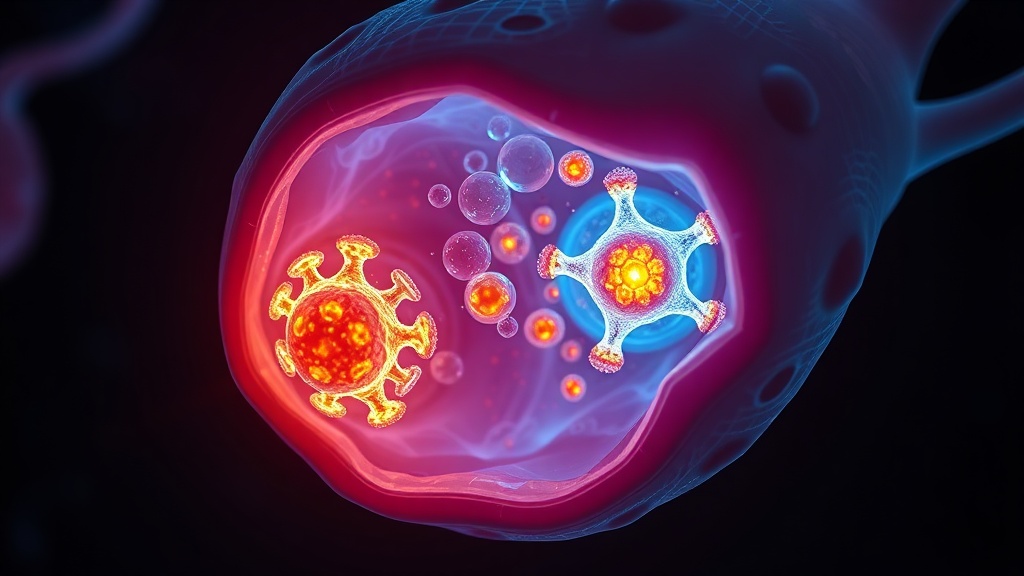
Pyroptosis is not apoptosis. It's a pro-inflammatory form of programmed cell death driven by gasdermin D (GSDMD) pore formation, releasing IL-1β and IL-18 into the surrounding tissue. In PCOS ovarian tissue, the researchers found upregulated expression of NLRP3, Caspase-1, GSDMD, IL-1β, and IL-18 — the full pyroptotic signature. This inflammatory cascade also drove increased expression of key androgen biosynthesis enzymes: CYP11A1, CYP17A1, and 3β-HSD [1].
Wait, let me be more precise here. The connection isn't just correlation. The transcriptomic analysis showed significant activation of both inflammatory and steroidogenic pathways simultaneously, suggesting that the inflammasome isn't a bystander — it's actively promoting androgen overproduction in granulosa cells.
NMN's Mechanism: NAD+ Synthesis Meets Inflammasome Suppression#
NMN is a direct precursor to NAD+ via the salvage pathway, catalyzed by nicotinamide mononucleotide adenylyltransferase (NMNAT). In the PCOS rat model, NMN administration for 30 days significantly reduced body weight and serum testosterone while restoring regular estrous cyclicity [1]. The mechanistic explanation: NMN effectively suppressed all measured pyroptosis markers in ovarian tissue.
This isn't the first time NMN has been shown to inhibit NLRP3-mediated pyroptosis in ovarian cells. A 2024 study by researchers using a cyclophosphamide-induced premature ovarian insufficiency (POI) model demonstrated that NMN at 500 mg/kg/day improved ovarian reserve by increasing NAD+ levels and activating SIRT2, which in turn inhibited NLRP3-mediated pyroptosis in granulosa cells [2]. The convergence of these two independent models — one for PCOS, one for POI — on the same NLRP3–pyroptosis–NMN axis is genuinely striking.
Beyond Inflammation: Oocyte Quality and Mitochondrial Function#
A parallel line of evidence comes from Fan et al. (2025), published in FASEB Journal, who showed that NMN supplementation restores NAD+ homeostasis in PCOS mouse oocytes, enhances developmental rates during in vitro maturation, and reverses quality decline [3]. The mechanism here is slightly different — NMN upregulated SIRT1 expression through the NAD+ salvage pathway, reducing oxidative stress, improving mitochondrial function, and preserving spindle morphology.
I find this particularly interesting because it means NMN is hitting PCOS from at least two angles: the inflammatory pyroptotic pathway (NLRP3/Caspase-1/GSDMD) and the mitochondrial efficiency pathway (NAD+/SIRT1/oxidative stress). These aren't redundant. One addresses the microenvironment driving androgen overproduction; the other addresses direct oocyte damage.
Ren et al. (2024) added a metabolic dimension, demonstrating that NMN alleviated hyperandrogenism and ovarian cyst formation in a letrozole-induced PCOS mouse model while partially reversing bile acid and lipid metabolism disturbances [4]. But here's where I'm less convinced — their data showed NMN did not fully restore the estrous cycle or normalize lipid profiles. That's an honest finding and a useful corrective to anyone who wants to frame NMN as a complete PCOS solution.
The Chemotherapy–Fertility Preservation Angle#
Ramírez-Martín, Buigues et al. (2025) published in the American Journal of Obstetrics and Gynecology — a top-tier journal — demonstrating that NMN supplementation over a complete folliculogenesis cycle (4 weeks) improved oocyte quality after chemotherapy exposure, recovering NAD+ levels (P=.006), enhancing meiotic spindle formation, and improving embryo development rates (P=.048) [5]. Critically, they also tested in vitro NMN supplementation (100 µM) on human oocytes from women over 38 and found improved nuclear maturation [5].
This is the only study in this set with any human oocyte data. Let me be direct: it's ex vivo, not a clinical trial. But it's a significant step beyond pure rodent work.
NMN Effects Across PCOS/Ovarian Damage Models
COMPARISON TABLE#
| Method | Mechanism | Evidence Level | Cost (Monthly Est.) | Accessibility |
|---|---|---|---|---|
| NMN Supplementation | NAD+ repletion → SIRT1/SIRT2 activation → NLRP3 inflammasome suppression → reduced pyroptosis and androgen biosynthesis | Preclinical (rat/mouse models); limited human ex vivo data | $40–$120 (oral supplement) | Widely available OTC; no prescription required |
| Metformin | Insulin sensitization → reduced hepatic glucose output → indirect androgen reduction | Multiple human RCTs; established clinical use | $5–$30 (generic) | Prescription required |
| Spironolactone | Androgen receptor blockade; mild 5α-reductase inhibition | Well-established human data | $10–$40 (generic) | Prescription required |
| Oral Contraceptives | Suppress LH → reduce ovarian androgen production; increase SHBG | Extensive clinical evidence | $15–$50 | Prescription required |
| Inositol (Myo/D-Chiro) | Insulin signaling improvement; may reduce androgen levels | Moderate human trial data (several RCTs) | $15–$35 | OTC supplement |
| MCC950 (NLRP3 Inhibitor) | Direct NLRP3 inflammasome inhibition | Preclinical only; not approved for human use | Research compound | Not commercially available |
THE PROTOCOL#
Look, I need to be upfront: there are zero completed human clinical trials of NMN specifically for PCOS. The protocol below is extrapolated from preclinical dosing, existing NMN human safety data, and the mechanistic rationale. Treat this as exploratory, not prescriptive.
Step 1: Establish Baseline Biomarkers Before starting any NMN protocol, get comprehensive bloodwork: total and free testosterone, DHEA-S, fasting insulin, HOMA-IR, AMH (anti-Müllerian hormone), LH/FSH ratio, hs-CRP, and IL-6. These give you a baseline inflammasome and androgen picture. Track estrous/menstrual cycle regularity for at least two cycles before starting.
Step 2: Select NMN Dosing The animal studies used 500 mg/kg/day in rats [2], which does not translate linearly to humans. Based on allometric scaling and existing human NMN safety trials (Yoshino et al. have published on doses up to 1,250 mg/day in humans), a reasonable starting range is 250–500 mg NMN per day, taken orally. Start at 250 mg for the first two weeks and increase to 500 mg if tolerated.
Step 3: Timing and Administration Take NMN in the morning, ideally on an empty stomach or with a light meal. NAD+ synthesis peaks align with circadian rhythm, and morning dosing appears to optimize this based on available pharmacokinetic data. Sublingual forms may improve bioavailability compared to standard capsules, though head-to-head data in this context is sparse.
Step 4: Combine With Anti-Inflammatory Support Since the mechanism centers on NLRP3 inflammasome suppression, consider pairing NMN with evidence-backed anti-inflammatory strategies: omega-3 fatty acids (2–3 g EPA/DHA daily), adequate vitamin D (target serum 40–60 ng/mL), and dietary patterns that minimize ultra-processed food intake. These won't replace NMN's specific mechanism but may amplify the anti-inflammatory environment.
Step 5: Monitor and Reassess at 8 Weeks Repeat bloodwork at the 8-week mark. In the rat models, 30 days of NMN treatment was sufficient to show testosterone reduction and cycle normalization [1]. Accounting for human metabolic timescales, 8 weeks is a reasonable initial assessment window. Look for: reduction in total testosterone, improvement in cycle regularity, changes in hs-CRP/IL-6.
Step 6: Do Not Discontinue Existing PCOS Medications Without Medical Supervision If you are currently on metformin, spironolactone, or oral contraceptives for PCOS, do not stop them to "try NMN instead." The evidence base for NMN in human PCOS simply doesn't exist yet. Think of this as a potential adjunct, not a replacement. Discuss with your endocrinologist or reproductive medicine specialist.
Related Video
What is NMN and how does it relate to PCOS treatment?#
NMN (nicotinamide mononucleotide) is a precursor to NAD+, a coenzyme critical for cellular energy metabolism, DNA repair, and sirtuin activation. In PCOS, recent preclinical research suggests NMN may reduce hyperandrogenism by suppressing the NLRP3 inflammasome pathway that drives inflammatory cell death in ovarian granulosa cells. It's not an approved PCOS treatment — this is emerging science, entirely from animal models so far.
How does NLRP3 inflammasome activity cause high androgens in PCOS?#
The NLRP3 inflammasome triggers pyroptosis — an inflammatory form of cell death — in granulosa cells, releasing IL-1β and IL-18. According to Zhang et al. (2026), this inflammatory cascade simultaneously upregulates androgen biosynthesis enzymes (CYP11A1, CYP17A1, 3β-HSD), meaning the inflammation doesn't just damage cells — it actively drives testosterone overproduction [1]. NMN appears to interrupt this process by suppressing the entire pyroptotic cascade.
When might human clinical trials for NMN in PCOS become available?#
Honestly, we don't have a clear timeline. The preclinical data has been building steadily since 2024, with at least four independent groups publishing on NMN and ovarian function. Given the regulatory pathway, I'd estimate Phase I/II trials could begin within the next 2–3 years if funding materializes. The Ramírez-Martín et al. study using human oocytes ex vivo is a step in that direction [5].
Why should I be cautious about applying these findings to myself?#
Every study in this article used rodent models (rats or mice). Allometric dose scaling is imprecise, metabolic pathways don't map perfectly between species, and PCOS itself is a heterogeneous condition in humans with multiple phenotypes. A single mechanism that works cleanly in a letrozole-induced rat model may represent only one piece of the puzzle in human PCOS. The honest answer is the sample sizes are small and species translation is uncertain.
How does NMN compare to inositol for PCOS?#
Inositol (particularly myo-inositol and D-chiro-inositol) targets insulin signaling and has multiple human RCTs supporting modest improvements in androgen levels and ovulatory function. NMN targets a completely different mechanism — NAD+ repletion and inflammasome suppression. In terms of evidence quality, inositol is significantly ahead because it has actual human trial data. NMN may eventually prove complementary, but right now, inositol has the stronger evidence base for human PCOS.
VERDICT#
Score: 6.5/10
The mechanistic story here is genuinely compelling. Five independent research groups, across slightly different models, are converging on NMN's ability to suppress NLRP3-mediated pyroptosis and improve ovarian function. The Zhang et al. (2026) paper adds the critical hyperandrogenism link that makes this directly relevant to PCOS. I'm giving this a solid 6.5 rather than higher for one reason: it's all preclinical. Every single in vivo study is in rats or mice. The only human data is ex vivo oocyte work from Ramírez-Martín et al. That matters. The NMN crowd is going to love this — and they should, just not for the reasons they think. This isn't proof that popping NMN capsules will fix PCOS. It's proof that the NLRP3–pyroptosis–androgen axis is a legitimate therapeutic target, and NMN happens to hit it cleanly in animal models. That's exciting. But I'd want to see at least one controlled human pilot before moving this above a 7.
References
- 1.Zhang Y, Huang K, Nong W. Nicotinamide mononucleotide attenuates hyperandrogenism in a polycystic ovary syndrome-like rat model by suppressing NLRP3 inflammasome–mediated granulosa-cell pyroptosis. Journal of Ovarian Research (2026). ↩
- 2.Author(s) not listed. Nicotinamide mononucleotide improves the ovarian reserve of POI by inhibiting NLRP3-mediated pyroptosis of ovarian granulosa cells. Journal of Ovarian Research (2024). ↩
- 3.Fan Y, Hu Q, Wu X. Reverse Effects of Nicotinamide Mononucleotide Supplementation on Declining Quality of Oocytes With Polycystic Ovary Syndrome. FASEB Journal (2025). ↩
- 4.Ren C, Zhang S. Nicotinamide Mononucleotide Alleviates Bile Acid Metabolism and Hormonal Dysregulation in Letrozole-Induced PCOS Mice. Biology (2024). ↩
- 5.Ramírez-Martín N, Buigues A, Rodríguez-Varela C. Nicotinamide mononucleotide supplementation improves oocyte developmental competence in different ovarian damage conditions. American Journal of Obstetrics and Gynecology (2025). ↩
Nael Voss
Nael is data-obsessed and slightly impatient with over-hyped claims. He's tested most of what he covers personally, which means he occasionally contradicts the research when his n=1 doesn't match. His writing moves fast, sometimes too fast — he'll drop a complex mechanism in one sentence and move on. He has a specific verbal tic: 'Look,' when he's about to say something the reader might not want to hear. He's sardonic about supplement marketing but genuinely excited about good mechanistic data.
View all articles →