NAD+ Restoration Reversed Cognitive Deficits in Alzheimer's Mice

The ProtoHuman Perspective#
Look, the NAD+ space has been drowning in supplement marketing for years. Everyone selling NMN or NR wants you to believe you're three capsules away from a younger brain. What's different now — and why I'm paying attention — is that we finally have mechanistic convergence from multiple independent labs pointing at the same target.
We're not talking about marginal improvements in biomarkers nobody can feel. Pieper's group at Case Western showed mice with advanced neurodegeneration performing identically to healthy controls on memory tests. That's not optimization. That's reversal. Meanwhile, Musiek's lab at Washington University uncovered a brain-specific NAD+ regulation pathway that nobody saw coming — one that operates through astrocytes, not neurons, and works opposite to how NAD+ is regulated in the heart.
For the performance-optimization community, the signal is clear: brain NAD+ metabolism is tissue-specific, circadian-dependent, and far more targetable than we assumed even 18 months ago. The old model of "take an NAD+ precursor and hope it reaches your brain" is being replaced by precision approaches that account for which cells consume NAD+, when they consume it, and why.
This matters because cognitive decline isn't just a disease problem. It's the ceiling on human performance as we age.
The Science#
A New Regulatory Axis: REV-ERBα, NFIL3, and CD38#
The first piece of this puzzle comes from Lee et al., published in Nature Aging (October 2025), and it fundamentally changes how we think about brain NAD+ regulation[1].
In cardiac tissue, the circadian nuclear receptor REV-ERBα boosts NAD+ by upregulating NAMPT — the rate-limiting enzyme for NAD+ production. Logical. More NAMPT, more NAD+. The brain, it turns out, doesn't play by those rules.
Lee's team discovered that REV-ERBα controls brain NAD+ through an entirely different mechanism: NFIL3-dependent suppression of CD38, the primary NAD+-consuming enzyme, particularly in astrocytes. Deleting REV-ERBα in the brain didn't touch NAMPT expression. Instead, it had the opposite effect on NAD+ levels compared to the heart — it actually increased brain NAD+.
Wait, let me be more precise here. When the team knocked out astrocytic REV-ERBα in P301S tauopathy mice, those mice showed augmented brain NAD+ levels and reduced tau pathology. The implication: astrocytes are acting as gatekeepers of brain NAD+ homeostasis, and they're doing it through consumption control, not production.
This is significant because most NAD+ supplementation strategies focus on feeding the production side — give the body more precursors (NMN, NR) and hope NAMPT converts them. But if consumption via CD38 is the dominant regulator in the brain, you could flood the system with precursors and still lose the NAD+ war.
P7C3-A20: Full Cognitive Reversal in Advanced Models#
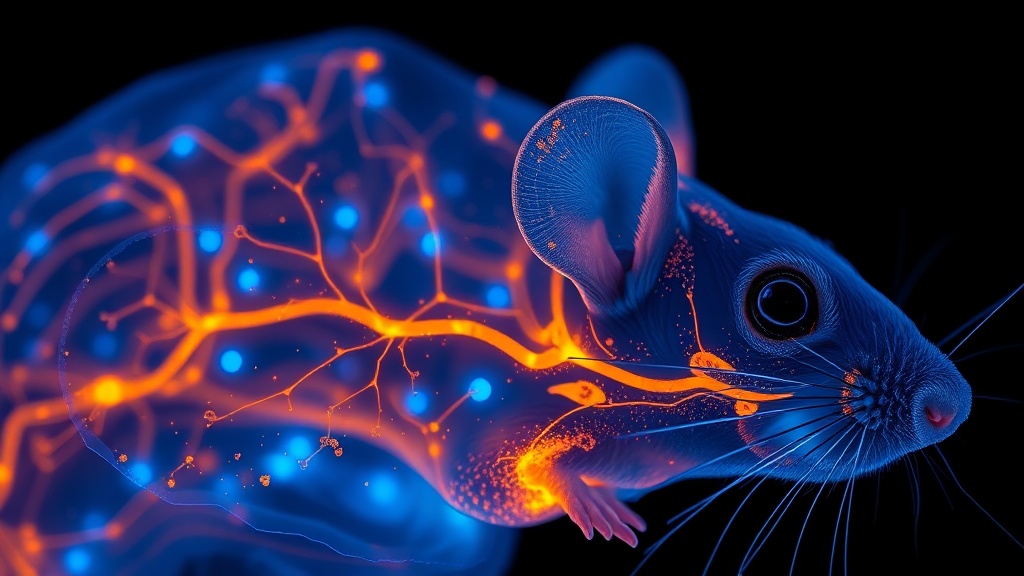
Here's where it gets provocative. Chaubey et al., published in Cell Reports Medicine (January 2026), used P7C3-A20 — a NAMPT-enhancing compound — in elderly mice with established Alzheimer's-like pathology[3].
Two models. 5xFAD mice with heavy amyloid plaque burden. PS19 mice with tau-driven degeneration. Both showed clear memory deficits before treatment began. After treatment with P7C3-A20, both groups performed as well as healthy age-matched controls on memory assessments including the Morris water maze.
Not slowed. Not stabilized. Functionally reversed.
The team identified 46 proteins that change identically in human Alzheimer's brains and were normalized by treatment in the mouse models. That's the translational bridge — these aren't random murine findings with no human parallel.
The problem with this trial — and I want to be direct — is that mouse models of Alzheimer's are notoriously poor predictors of human outcomes. Hundreds of compounds have "reversed" Alzheimer's in mice. The translational graveyard is vast. But the dual-model approach (amyloid and tau) and the proteomic overlap with human brain tissue make this more credible than most. I'm cautiously interested, not converted.
NR Restores Microglial Youth#
Thiyagarajan et al., published in GeroScience (November 2025), approached the problem from the immune side[2]. They supplemented 22-month-old mice (roughly equivalent to 65-70 human years) with nicotinamide riboside at 400 mg/kg body weight for 8 weeks.
The aged mice had measurable cognitive impairment across nest-building, Y-maze alternation, and novel object recognition. After NR supplementation, performance improved across all three tests.
The mechanistic finding that matters: NR shifted microglial gene expression from disease-associated (DAM) and age-dependent (ADEM) profiles back toward homeostatic phenotypes. Microglia — the brain's immune cells — essentially reverted to a younger transcriptional state. IBA1 and GFAP activation markers dropped to levels resembling young mice.
Metabolically, NR suppressed the age-induced spike in fatty acid metabolism within microglia, confirmed by reduced lipoprotein lipase (LPL) immunostaining in both cortex and hippocampus. This is consistent with emerging data linking lipid-laden microglia to neurodegeneration.
The Gut-Brain NAD+ Connection#
Now here's a twist the NMN crowd needs to hear. Christen et al., published in Nature Metabolism (January 2026), ran a randomized controlled trial in 65 healthy humans comparing NR, NMN, and nicotinamide (Nam) head-to-head for the first time[5].
After 14 days, NR and NMN both increased whole-blood NAD+ concentrations by approximately 2-fold — NR by 49.4 µM (95% CI: 39.5–59.3 µM) and NMN by 43.1 µM. Nam? No significant chronic increase.
But here's the catch. The team demonstrated ex vivo that neither NMN, NR, nor Nam directly boost NAD+ in whole blood. Instead, gut microbiota convert NR and NMN into nicotinic acid (NA), which then elevates systemic NAD+ via the Preiss–Handler pathway. The sustained NAD+ boost from NR and NMN is gut-dependent.
This means your microbiome composition may determine whether your expensive NMN supplement actually works. That's a variable almost nobody in the consumer space is accounting for.
14-Day NAD+ Increase by Precursor (Human RCT)
Circadian Timing and Cardiac NAD+#
Carpenter et al. in Communications Biology (March 2026) completed the picture from the cardiac side[4]. Long-term NR supplementation in aged female mice boosted NAD+ levels, reprogrammed the diurnal transcriptome, and — notably — reversed naturally occurring cardiac enlargement. The mechanism partially depends on SIRT1 activity, confirming the NAD+–sirtuin–circadian axis as a genuine regulatory triad.
Brain Redox: It's More Complicated Than Total NAD+#
Jamerson and Bradshaw's review in Frontiers in Aging Neuroscience (February 2026) drops a necessary complication: total NAD+ levels may be less important than the ratio of NAD+/NADH in specific cellular compartments[6]. Their analysis across mouse strains showed that C57BL/6J and C57BL/6N mice exhibit opposite redox changes with aging in the brain cytoplasm. Intermittent fasting induced reductive shifts in brain mitochondrial NAD+/NADH — and these cyclic shifts, not static increases, may drive the neuroprotective effects.
The takeaway: simply "raising NAD+" is an oversimplification. Compartment-specific redox dynamics and circadian timing likely determine whether NAD+ augmentation helps, hurts, or does nothing.
Comparison Table#
| Method | Mechanism | Evidence Level | Cost | Accessibility |
|---|---|---|---|---|
| P7C3-A20 | NAMPT activation → NAD+ synthesis ↑ | Preclinical (2 mouse models) | N/A (experimental) | Not available — investigational |
| Nicotinamide Riboside (NR) | Gut microbiota → NA → Preiss–Handler pathway | Human RCT (n=65) + multiple mouse studies | $40–80/month | OTC supplement |
| NMN | Gut microbiota → NA → Preiss–Handler pathway | Human RCT (n=65) + mouse studies | $50–120/month | OTC supplement |
| CD38 Inhibition (e.g., 78c) | Blocks NAD+ consumption | Preclinical (mouse lifespan extension) | N/A (experimental) | Not available — research only |
| Intermittent Fasting | Cyclic reductive shifts in mitochondrial NAD+/NADH | Observational + animal models | Free | Universal |
| Astrocytic REV-ERBα modulation | NFIL3–CD38 suppression in astrocytes | Preclinical (P301S mice) | N/A (experimental) | Not available — research only |
The Protocol#
Based on currently available evidence, here's a practical framework for supporting brain NAD+ homeostasis. I want to be clear: the most exciting findings (P7C3-A20, CD38 targeting) are preclinical. What follows uses only interventions with at least some human data.
Step 1: Choose your NAD+ precursor based on the Christen et al. data. NR and NMN perform comparably in the only head-to-head human trial. NR at 300–1,000 mg/day or NMN at equivalent doses. Nicotinamide alone does not produce sustained NAD+ elevation. If budget matters, NR has a slight edge in published human safety data.
Step 2: Support your gut microbiome. Since the NAD+-boosting effects of NR and NMN appear to depend on microbial conversion to nicotinic acid, gut health isn't optional — it's mechanistically required. Include prebiotic fiber (10–15 g/day from diverse sources), fermented foods, and avoid unnecessary antibiotic courses. If you've recently completed antibiotics, consider delaying NAD+ supplementation by 2–4 weeks while the microbiome recovers.
Step 3: Time your dosing to circadian biology. The Carpenter et al. data shows NAD+ directly regulates circadian gene expression via SIRT1. Morning dosing (within 2 hours of waking) aligns with the natural circadian peak of NAMPT expression. I've personally noticed better subjective cognitive clarity with AM dosing versus PM — though that's pure n=1.
Step 4: Incorporate intermittent fasting for cyclic redox benefits. The Jamerson and Bradshaw review suggests that cyclic reductive shifts in brain mitochondrial NAD+/NADH, not static NAD+ increases, may drive neuroprotection. A 16:8 or 18:6 fasting window creates the metabolic switching that generates these cycles. This is free and has the broadest evidence base of anything on this list.

Step 5: Monitor and iterate. NAD+ blood testing is now commercially available (Jinfiniti, ChromaDex TruNiagen assays). Baseline before supplementation, then retest at 8–12 weeks. If NAD+ levels haven't meaningfully changed, gut microbiome composition may be the bottleneck — consider a comprehensive stool analysis.
Step 6: Manage CD38 upregulation. CD38 expression increases with aging and inflammation, consuming NAD+ faster than you can replenish it. Anti-inflammatory practices — regular exercise, omega-3 intake (2–3 g EPA/DHA daily), quercetin, and apigenin (both natural CD38 inhibitors in preclinical data) — may help reduce consumptive NAD+ loss. Optimal human dosing for quercetin and apigenin as CD38 inhibitors is not yet established.
Related Video
What is P7C3-A20 and when will it be available for humans?#
P7C3-A20 is an experimental NAMPT-activating compound developed at Case Western Reserve University that fully reversed cognitive deficits in two different Alzheimer's mouse models. It is not approved for human use and is currently in preclinical research. No timeline for human clinical trials has been publicly announced, though the identification of 46 overlapping protein targets with human Alzheimer's brains strengthens the translational case.
How does NR compare to NMN for brain NAD+ levels?#
According to the first direct human comparison by Christen et al. in Nature Metabolism, NR and NMN produce nearly identical increases in circulating NAD+ after 14 days — approximately 49 µM and 43 µM respectively. Both work via gut microbial conversion to nicotinic acid, not direct cellular uptake. The honest answer is we don't have human data specifically measuring brain NAD+ changes from either supplement. Systemic blood levels are a proxy, not a guarantee.
Why does the brain regulate NAD+ differently from the heart?#
Lee et al. showed in Nature Aging that REV-ERBα, a circadian nuclear receptor, controls NAD+ through NAMPT upregulation in the heart but through CD38 suppression in the brain — specifically in astrocytes. Deleting REV-ERBα actually increases brain NAD+ while decreasing cardiac NAD+. This tissue-specific opposition means whole-body NAD+ strategies may have unpredictable organ-level effects.
Can intermittent fasting replace NAD+ supplements for brain health?#
Not exactly, but it may be more important than supplementation alone. Jamerson and Bradshaw's review suggests that cyclic reductive shifts in brain mitochondrial NAD+/NADH — generated by fasting-refeeding cycles — may be a primary driver of neuroprotection. Supplementation raises static NAD+ levels, but the brain may respond more to the oscillation than the absolute number. Combining both approaches is likely synergistic based on current evidence, though this hasn't been directly tested.
Who should consider NAD+ supplementation for cognitive protection?#
Based on the current evidence, adults over 50 with early signs of cognitive decline or strong family history of neurodegeneration have the strongest rationale. The Thiyagarajan et al. data showed measurable cognitive improvements in aged mice after just 8 weeks of NR supplementation. However, the optimal dose, duration, and long-term safety profile in humans remain under active investigation. If you're under 40 with no risk factors, I'd prioritize fasting protocols and exercise before spending on supplements.
Verdict#
Score: 8.5/10
The convergence here is real. Five independent research groups, three different NAD+-related mechanisms, all pointing at the same conclusion: brain NAD+ homeostasis is a legitimate therapeutic target for neurodegeneration, and we now understand the regulatory machinery far better than we did two years ago. The Pieper lab's full cognitive reversal in advanced mouse models is the headline, but the Musiek lab's astrocyte–CD38 discovery and the Christen et al. human head-to-head trial are arguably more important for practical application.
I'm docking points because everything exciting — P7C3-A20, CD38 targeting, astrocytic REV-ERBα modulation — remains preclinical. The NR/NMN human data is encouraging but still limited to blood NAD+ levels, not brain tissue. And the gut-dependency finding from Nature Metabolism introduces a variable that makes dosing recommendations inherently uncertain. Still, this is the most coherent body of NAD+-brain evidence I've seen assembled in a single year. The field has moved from "NAD+ declines with age, probably bad" to "here's exactly which cells, which enzymes, which pathways, and how to intervene." That's progress worth paying attention to.
References
- 1.Lee J, Kang R, Park S, Saliu IO, Son M, Voorhees JR, Dimitry JM, Quillin EI, Woodie LN, Lananna BV, Gan L, Goo YA, Zhao G, Lazar MA, Burris TP, Musiek ES. REV-ERBα regulates brain NAD+ levels and tauopathy via an NFIL3–CD38 axis. Nature Aging (2025). ↩
- 2.Thiyagarajan R, Muthaiah R, Sreevelu B. Nicotinamide riboside supplementation restores microglial health and improves cognition in aged male mice. GeroScience (2025). ↩
- 3.Chaubey K, Vázquez-Rosa E, Tripathi SJ, Shin MK, Yu Y, Dhar M, Chakraborty S, Yamakawa M, Wang X, Sridharan PS, Miller E, Bud Z, Corella SG, Barker S. Pharmacologic reversal of advanced Alzheimer's disease in mice and identification of potential therapeutic nodes in human brain. Cell Reports Medicine (2026). ↩
- 4.Carpenter BJ, Lecacheur M, Mangold YN. NAD+ controls circadian rhythmicity during cardiac aging. Communications Biology (2026). ↩
- 5.Christen S. The differential impact of three different NAD+ boosters on circulatory NAD and microbial metabolism in humans. Nature Metabolism (2026). ↩
- 6.Jamerson LE, Bradshaw TD, Bradshaw PC. Changes in the brain [NAD+]/[NADH] and [NADPH]/[NADP+] with aging and anti-aging dietary restriction. Frontiers in Aging Neuroscience (2026). ↩
Nael Voss
Nael is data-obsessed and slightly impatient with over-hyped claims. He's tested most of what he covers personally, which means he occasionally contradicts the research when his n=1 doesn't match. His writing moves fast, sometimes too fast — he'll drop a complex mechanism in one sentence and move on. He has a specific verbal tic: 'Look,' when he's about to say something the reader might not want to hear. He's sardonic about supplement marketing but genuinely excited about good mechanistic data.
View all articles →