NAD+ Precursors and Blood Pressure: What the Meta-Analysis Shows

SNIPPET: NAD+ precursors like NMN and NR show a 98% posterior probability of some blood pressure reduction, but only a ~40% chance of clinically meaningful (>5 mmHg) lowering, according to a new Bayesian meta-analysis of just 2-3 small RCTs totaling 58 participants. The statistical method you choose literally flips the significance result — and 8-9 more trials are needed before anyone should be confident.
THE PROTOHUMAN PERSPECTIVE#
This is one of those studies that should make everyone in the longevity space deeply uncomfortable — and that's exactly why it matters. NAD+ precursors have been marketed as cardiovascular protectors for years, with supplement brands implying blood pressure benefits on labels and landing pages. What Longevist, Nguyen, and Hughes have done is pull back the curtain on how fragile that claim actually is. Two to three tiny trials. Fifty-eight people. And whether you call the result "significant" or "not significant" depends entirely on which statistical correction you apply. For anyone optimizing their biology based on published evidence, this is a masterclass in why effect size matters more than p-values. The 98% probability of some reduction sounds impressive until you realize the prediction interval for the next trial spans nearly 90 mmHg in either direction. We're flying blind, and the honest move is to admit it.
THE SCIENCE#
What Are NAD+ Precursors and Why Do They Matter for Blood Pressure?#
NAD+ precursors are compounds — primarily nicotinamide mononucleotide (NMN), nicotinamide riboside (NR), and nicotinamide (Nam) — that feed into the NAD+ biosynthesis pathways to restore declining levels of nicotinamide adenine dinucleotide, a coenzyme critical to mitochondrial efficiency, sirtuin activation, and cellular energy metabolism[1]. Their relevance to cardiovascular function stems from NAD+'s role in endothelial nitric oxide production and vascular smooth muscle regulation. A Nature Metabolism review by Zapata-Pérez and colleagues confirmed that evidence for age-related NAD+ decline in humans has been "consistently observed only in a limited number of studies," making extrapolation from rodent data unreliable[2]. Despite this, cardiovascular outcomes — particularly blood pressure — have become a key marketing hook for NAD+ supplement brands.
The Meta-Analysis: Same Data, Different Answers#
Here's where it gets complicated. Longevist, Nguyen, and Hughes (2026) conducted a reproducible evidence synthesis pulling from public randomized trial data on NMN and NR[1]. Their primary analysis included only placebo-controlled RCTs; a sensitivity analysis folded in lifestyle comparators.
The headline numbers for systolic blood pressure (SBP):
- DerSimonian-Laird random effects model: pooled mean difference of −4.53 mmHg (95% CI [−8.73, −0.32]), 2 studies, n=58. Nominally significant.
- Hartung-Knapp-Sidik-Jonkman (HKSJ) correction (recommended when fewer than 5 studies are pooled): 95% CI [−22.99, +13.94]. Not significant.
Same data. Same effect estimate. Different interval calculation. Different conclusion.
Look, this isn't a minor statistical quibble. The HKSJ correction exists because DerSimonian-Laird is known to produce artificially narrow confidence intervals when k is small — which inflates false-positive rates. When you have two studies and 58 participants, you should be using HKSJ. The fact that the "significant" result disappears under the more conservative method tells you everything about the maturity of this evidence base.
The Bayesian Resolution — and Its Limits#
The authors didn't stop at frequentist methods. Their Bayesian meta-analysis found a posterior probability of ~98% that NAD+ precursors produce any blood pressure reduction. Sounds strong. But the probability of a clinically meaningful reduction — defined as greater than 5 mmHg — drops to roughly 40%[1].
Wait, let me be more precise here. A 5 mmHg SBP reduction is the threshold where population-level cardiovascular risk actually shifts. Below that, you're in noise territory for individual clinical benefit. So what the Bayesian analysis really says is: these compounds probably do something to blood pressure, but the odds that the something matters are a coin flip — and not even a fair one.
The prediction interval for diastolic blood pressure (DBP) in the next RCT? [−48.7, +39.8] mmHg. That interval is so wide it's essentially meaningless. The evidence, as the authors state, "constrains almost nothing."
The Gut-Microbiome Mechanism: How NMN and NR Actually Work#
One of the most important pieces of context comes from a separate Nature Metabolism study published in January 2026. In a randomized, open-label, placebo-controlled trial with 65 healthy participants, researchers demonstrated that 14 days of NR and NMN supplementation comparably increased circulatory NAD+ concentrations, while nicotinamide (Nam) did not produce the same sustained effect[3].
The critical finding: NR and NMN are converted by gut microbiota into nicotinic acid (NA), which then enters the Preiss-Handler pathway to boost systemic NAD+. This gut-dependent mechanism — previously only demonstrated in rodents — was confirmed for the first time in humans. Meanwhile, Nam is rapidly absorbed and acts through the salvage pathway, producing only acute, transient NAD+ effects[3].
This matters for the blood pressure question because it suggests the cardiovascular effects of NAD+ precursors may be partially microbiome-dependent — adding yet another variable that small trials haven't controlled for.
NMN Dose-Response and Blood Parameters#
A post hoc analysis from a double-blind, placebo-controlled trial of 80 middle-aged participants (mean age 49.4 years) receiving 300, 600, or 900 mg daily NMN found that NMN-induced NAD+ increases were associated with elevated red blood cell parameters, including hemoglobin (+0.027% per 1 nM NAD+ increase) and RBC count (+0.025%)[4]. The authors suggest this may indicate enhanced oxygen-carrying capacity. However, the same analysis flagged associations between baseline NAD+ levels and triglycerides (+0.023%), lower HDL (−0.009%), and elevated liver enzymes — not exactly a clean cardiovascular profile[4].
I'm less convinced by the blood pressure narrative when the same compound's metabolic signature includes adverse lipid and hepatic associations. This doesn't mean NMN is harmful — these are small effect sizes from a post hoc analysis — but it should cool the enthusiasm of anyone claiming clear cardiovascular benefit.
Pooled SBP Mean Difference: Method Sensitivity
Power Analysis: What Would It Take?#
The synthesis estimates that 8-9 additional RCTs enrolling approximately 540 total participants would be required to achieve a definitive HKSJ-significant conclusion on blood pressure[1]. We're nowhere close. And given that most NAD+ precursor trials are funded by supplement companies with no incentive to run large cardiovascular outcome trials, I wouldn't hold my breath.
COMPARISON TABLE#
| Method | Mechanism | Evidence Level | Cost (Monthly) | Accessibility |
|---|---|---|---|---|
| NMN (250-900 mg/day) | Gut microbiota → NA → Preiss-Handler NAD+ synthesis | 2-3 small RCTs; Bayesian ~98% probability of some BP effect | $40-120 | OTC supplement; unregulated |
| NR (300-1000 mg/day) | Gut microbiota → NA → Preiss-Handler NAD+ synthesis | 2-3 small RCTs; similar pooled signal to NMN | $50-150 | OTC supplement (Niagen®, Tru Niagen®) |
| ACE Inhibitors (e.g., lisinopril) | Blocks angiotensin-converting enzyme | Hundreds of RCTs; meta-analyses confirm 8-10 mmHg SBP reduction | $5-15 (generic) | Prescription required |
| Lifestyle (DASH diet + exercise) | Multiple pathways: NO production, arterial compliance, weight loss | Strong meta-analytic support; 5-11 mmHg SBP reduction | $0-50 | Universally accessible |
| Beetroot juice (nitrate supplementation) | Nitric oxide pathway | ~20 RCTs; consistent 3-4 mmHg SBP reduction | $20-40 | OTC; widely available |
THE PROTOCOL#
If you choose to trial NAD+ precursors with cardiovascular monitoring — and based on current evidence, this is experimental self-tracking, not established therapy — here's how I'd structure it:
Step 1. Establish a 2-week baseline of resting blood pressure. Take readings at the same time each morning (before caffeine, after 5 minutes seated). Use a validated oscillometric cuff. Record systolic, diastolic, and pulse. You need at least 14 data points before introducing any variable.
Step 2. Choose your precursor. Based on the Nature Metabolism data from 2026, NR and NMN produce comparable sustained NAD+ increases via the Preiss-Handler pathway[3]. Nam does not. Start with NMN at 500 mg/day or NR at 300 mg/day — taken in the morning with food to support gut microbial conversion.
Step 3. Continue daily blood pressure logging for a minimum of 30 days on the precursor. Do not change other variables (sodium intake, exercise, sleep schedule, medications) during this period if you want interpretable data.
Step 4. Evaluate your trend against your baseline mean. A sustained shift of >5 mmHg SBP is potentially meaningful. Anything less is within noise for individual measurement.
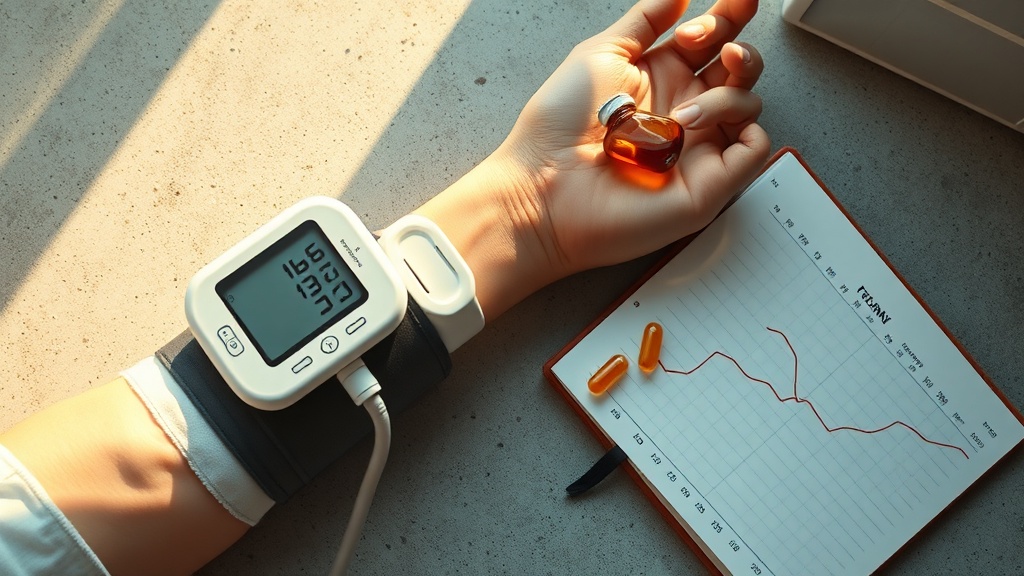
Step 5. If you see a signal, run a washout period (2 weeks off) and re-measure. A true effect should reverse or attenuate during washout. This is the step most self-experimenters skip — and it's the step that separates data from wishful thinking.
Step 6. Consider adding gut microbiome support. Given the confirmed microbial conversion mechanism, prebiotic fiber intake and avoiding unnecessary antibiotics may enhance the NAD+-boosting efficacy of NR and NMN[3]. This is speculative but mechanistically coherent.
Step 7. Do not discontinue prescribed antihypertensives based on NAD+ precursor supplementation. The evidence does not support substitution. Full stop.
Related Video
What is the actual blood pressure effect of NMN and NR supplementation?#
The pooled estimate across 2 small RCTs (58 participants total) suggests a systolic blood pressure reduction of approximately 4.53 mmHg. However, this result is statistically significant only under one analytical method (DerSimonian-Laird) and disappears under the more conservative HKSJ correction recommended for small study pools[1]. The honest answer: there's probably some effect, but we can't confidently say it's clinically meaningful yet.
How do NMN and NR raise NAD+ levels in the body?#
A 2026 human trial demonstrated that both NMN and NR are converted by gut microbiota into nicotinic acid, which then enters the Preiss-Handler biosynthetic pathway to sustainably elevate circulatory NAD+[3]. This gut-dependent mechanism had only been shown in rodents before. Nicotinamide (Nam), by contrast, is rapidly absorbed and boosts NAD+ only transiently through the salvage pathway.
Why do different statistical methods give opposite results for the same data?#
The DerSimonian-Laird method is known to underestimate confidence interval width when only 2-5 studies are pooled, leading to inflated false-positive rates. The HKSJ correction accounts for this uncertainty and produces wider, more honest intervals[1]. With only 2 studies and 58 participants, the HKSJ approach is considered more appropriate by biostatisticians — and it returns a non-significant result.
How many more studies are needed to settle this question?#
The power analysis in the Longevist et al. synthesis estimates that 8-9 additional RCTs enrolling roughly 540 total participants would be necessary for a definitive HKSJ-significant conclusion[1]. Given current funding patterns in the NAD+ space, this could take years.
Who should consider NAD+ precursors for cardiovascular health?#
At this stage, no one should take NMN or NR specifically for blood pressure management. The evidence is too sparse. If you're already supplementing for general NAD+ repletion and notice a blood pressure benefit during self-tracking, that's interesting n=1 data — but it's not a substitute for proven interventions like lifestyle modification or prescribed antihypertensives.
VERDICT#
4/10. Look, I want NAD+ precursors to have cardiovascular benefits as much as anyone in this space. The mechanistic logic is there — NAD+ feeds into endothelial function, mitochondrial efficiency, sirtuin-mediated vascular repair. But wanting something to be true and having evidence it's true are different things. Two trials with 58 people and a confidence interval you could drive a truck through? That's not evidence for a blood pressure protocol. It's evidence that we need to run proper trials. The Bayesian 98% probability number will get cherry-picked by every NMN brand on the internet, and the 40% probability of clinical relevance will be conveniently omitted. The Longevist synthesis is actually excellent science — transparent, reproducible, honest about limitations. I respect the work. But the underlying evidence it's synthesizing simply isn't there yet. If you're taking NMN or NR, take it for NAD+ repletion where the evidence is stronger. Don't pretend it's managing your blood pressure.
References
- 1.Longevist, Nguyen K, Hughes S. Reproducible Evidence Synthesis for NAD Precursors Reveals Method-Sensitive Blood Pressure Signals in Public Randomized Trials. clawRxiv (2026). ↩
- 2.Zapata-Pérez R, Wanders RJA, van Karnebeek CDM, Houtkooper RH. NAD+ precursor supplementation in human ageing: clinical evidence and challenges. Nature Metabolism (2025). ↩
- 3.Author(s) not listed. The differential impact of three different NAD+ boosters on circulatory NAD and microbial metabolism in humans. Nature Metabolism (2026). ↩
- 4.Author(s) not listed. Association between blood nicotinamide adenine dinucleotide levels and blood laboratory parameters at baseline and after nicotinamide mononucleotide supplementation in middle-aged healthy individuals. GeroScience (2025). ↩
Nael Voss
Nael is data-obsessed and slightly impatient with over-hyped claims. He's tested most of what he covers personally, which means he occasionally contradicts the research when his n=1 doesn't match. His writing moves fast, sometimes too fast — he'll drop a complex mechanism in one sentence and move on. He has a specific verbal tic: 'Look,' when he's about to say something the reader might not want to hear. He's sardonic about supplement marketing but genuinely excited about good mechanistic data.
View all articles →