NAD+ Controls Heart Circadian Clock During Aging: NR Study

SNIPPET: NAD+ precursor nicotinamide riboside (NR) restores disrupted circadian gene expression in aging hearts and reverses cardiac enlargement in aged female mice, according to Carpenter et al. (2026) in Communications Biology. The mechanism partially depends on SIRT1 activity, linking NAD+ synthesis directly to the cardiac clock's transcriptional machinery during aging.
THE PROTOHUMAN PERSPECTIVE#
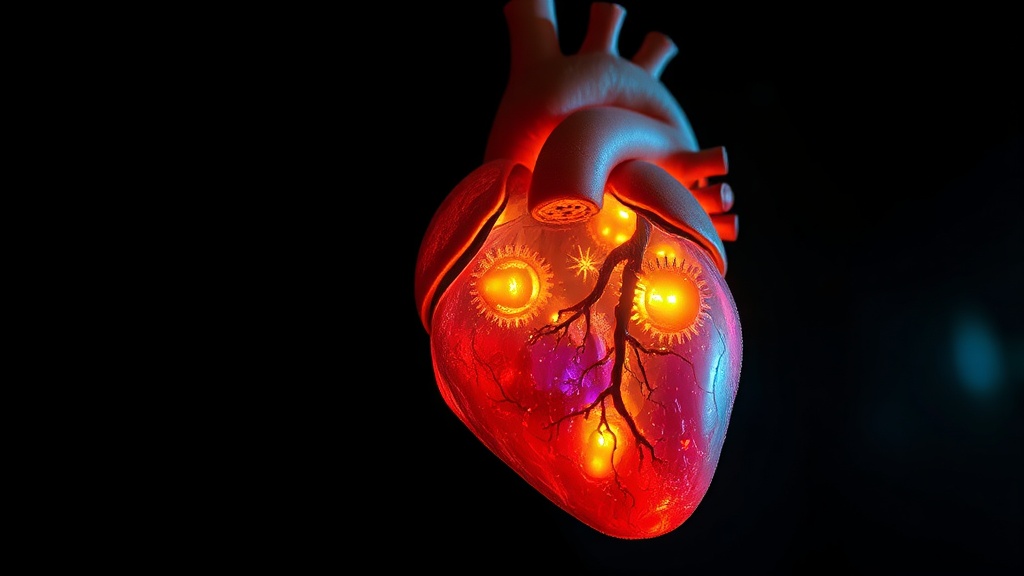
Your heart doesn't just beat — it oscillates on a 24-hour cycle that governs everything from ion channel expression to fuel selection between fatty acids and glucose. When that rhythm degrades with age, the downstream consequences aren't abstract. They're structural. Enlarged ventricles. Disordered electrophysiology. The slow architectural decay that precedes heart failure.
What Carpenter et al. have shown is that NAD+ isn't merely fuel for the aging heart — it's a timekeeper. Replenishing it with NR doesn't just top off a metabolic tank; it reprograms the diurnal transcriptome, restoring rhythmic gene expression patterns that aging had flattened. For anyone tracking longevity interventions, this is the kind of mechanistic specificity that separates real science from supplement marketing. The heart's circadian clock is NAD+-dependent, and that dependency becomes critical as we age. This matters because it means timing your intervention — not just choosing the right molecule — may determine whether it actually works.
THE SCIENCE#
The Clock Breaks Before the Heart Does#
NAD+ decline and circadian disruption are independently recognized as hallmarks of aging. What's been less clear is whether they're mechanistically linked in cardiac tissue — or just co-occurring passengers on the same aging train. Carpenter, Lecacheur, Mangold et al. set out to answer that question directly[1].
The team demonstrated that aging leads to widespread disruption of diurnal gene expression in the mouse heart. This isn't a subtle finding — the rhythmic transcriptome, the set of genes that cycle with a ~24-hour periodicity, becomes substantially degraded in aged animals. Genes that should peak and trough across the light-dark cycle lose their oscillatory behavior. The cardiac clock doesn't stop ticking — it loses coherence.
NR Reprograms the Diurnal Transcriptome#
Here's where it gets interesting. Long-term NR supplementation in aged female mice didn't just boost NAD+ levels — it reprogrammed the diurnal transcriptome. That language matters. "Reprogrammed" means NR didn't simply restore the young transcriptomic pattern. It created a partially novel rhythmic landscape, suggesting that NAD+ repletion activates circadian gene networks that may not have been strongly rhythmic even in youth[1].
Look, the NMN crowd is going to love this — and they should, just not for the reasons they think. This isn't about a generic "NAD+ is good for aging" narrative. The data shows something more specific: NAD+ availability gates PER2 oscillations in cardiomyocytes. When the researchers drastically reduced NAD+ levels in cardiomyocytes, PER2::luc oscillations — a direct readout of core clock function — were impaired. NR supplementation rescued those oscillations. That's a clean mechanistic link between NAD+ synthesis and the core transcription-translation feedback loop that drives circadian rhythmicity[1].
Wait, let me be more precise here. The PER2 rescue was demonstrated in isolated cardiomyocytes, not in vivo aging hearts. The in vivo transcriptomic data and the in vitro PER2 data are complementary but distinct experimental systems. The story holds together, but I'd want to see PER2 dynamics tracked in vivo in aged NR-supplemented animals before calling this fully locked down.
The SIRT1 Connection#
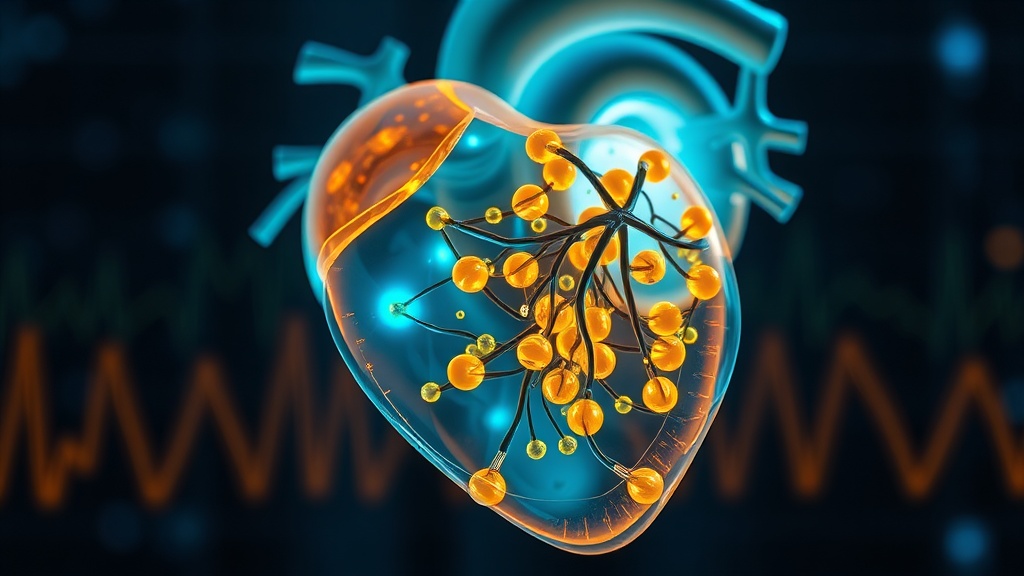
The transcriptomic changes induced by NR partially depend on SIRT1 activity. This is consistent with the well-established NAD+-SIRT1-clock axis described in liver tissue by Nakahata et al. and Asher et al.[3][6]. SIRT1 deacetylates PER2, modulating its stability and nuclear translocation — a mechanism Levine et al. previously characterized as essential for circadian reprogramming against aging[1].
But here's where it gets complicated. "Partially depend" is doing a lot of work in that sentence. It means SIRT1 doesn't explain everything. There are SIRT1-independent pathways through which NAD+ repletion reshapes the cardiac circadian transcriptome, and those pathways remain uncharacterized. This is an honest gap in the data, not a weakness — it's a signpost for where the next studies need to go.
The Structural Payoff: Reversed Cardiac Enlargement#
The most clinically suggestive finding: NR reversed naturally occurring cardiac enlargement in aged female mice. Age-related cardiac hypertrophy — the gradual thickening and stiffening of the heart — is a precursor to heart failure with preserved ejection fraction (HFpEF), one of the most common and least treatable cardiac conditions in aging humans[1].
I'm less convinced by the sex-specificity here, though. The study focused on female mice, and while there's good reason to expect sex differences in cardiac aging (Sitzler et al. documented sex-dependent circadian patterns in cardiac autonomic function[5]), we simply don't know if NR produces the same structural reversal in aged male hearts. That's not a flaw — it's a scope limitation. But it matters if you're a 55-year-old man reading this and reaching for your NR bottle.
Tissue Specificity: The REV-ERBα Twist#
A parallel finding from Lee et al. (2025) in Nature Aging adds an important caveat to the NAD+-circadian story[4]. REV-ERBα, a circadian nuclear receptor, regulates NAD+ levels in opposite directions depending on tissue: in the heart, it maintains NAD+ via NAMPT expression; in the brain, it suppresses NAD+ via an NFIL3-CD38 axis. This means NAD+ regulation by the circadian clock is tissue-specific — interventions that boost cardiac NAD+ may have distinct or even opposing effects in neural tissue[4].
This tissue specificity is exactly the kind of complexity that gets lost in supplement marketing. The mechanistic relationship between NAD+ and circadian function isn't one story — it's multiple stories running simultaneously in different organs, sometimes with contradictory plot lines.
Circadian Disruption Alone Damages Hearts#
Supporting data from a 2025 study in npj Biological Timing and Sleep demonstrated that chronic circadian disruption — independent of diet, exercise, or other confounders — directly causes increased cardiomyocyte size, altered cardiac electrophysiology, and impaired glucose tolerance in mice[5]. This establishes that circadian misalignment itself is a causal factor in cardiac pathology, not merely a correlate.
Key Findings: NAD+ and Circadian Cardiac Aging Interventions
COMPARISON TABLE#
| Method | Mechanism | Evidence Level | Cost | Accessibility |
|---|---|---|---|---|
| Nicotinamide Riboside (NR) | Boosts NAD+ → restores PER2 oscillations → reprograms cardiac circadian transcriptome via SIRT1 | Preclinical (mouse); peer-reviewed [1] | ~$40–60/month | OTC supplement; widely available |
| Nicotinamide Mononucleotide (NMN) | Direct NAD+ precursor; similar SIRT1 activation pathway | Preclinical + small human trials | ~$50–80/month | OTC supplement; variable quality |
| Time-Restricted Eating (TRE) | Entrains peripheral clocks via feeding-fasting cycles; indirect NAD+ oscillation support | Multiple human RCTs | Free | Universally accessible |
| REV-ERBα Agonists (SR9009/SR9011) | Activates circadian nuclear receptor; tissue-specific NAD+ effects | Preclinical only | Research-grade only | Not commercially available |
| Light Therapy (Morning Exposure) | Entrains SCN master clock → cascading peripheral clock synchronization | Strong human evidence | $30–100 (light box) | Widely accessible |
| Cardiac-Specific Gene Therapy | Direct NAMPT overexpression in cardiomyocytes | Experimental/preclinical | Not applicable | Not available |
THE PROTOCOL#
Based on the current evidence from Carpenter et al. and supporting circadian-NAD+ research, here's a practical framework. I want to be clear: this is built on preclinical mouse data. Optimal dosing in humans for cardiac circadian restoration is not yet established. If you choose to trial this, treat it as an informed experiment, not a prescription.
Step 1: Establish Circadian Foundation First Before adding any NAD+ precursor, lock in your light-dark exposure. Morning bright light (10,000 lux or direct sunlight) within 30 minutes of waking. Dim lighting after sunset. This synchronizes your suprachiasmatic nucleus master clock, which then cascades timing signals to peripheral clocks including the heart[5][6].
Step 2: Implement Time-Restricted Eating Confine food intake to an 8–10 hour window aligned with your active phase (daytime for humans). Feeding-fasting cycles are one of the strongest entrainment signals for peripheral tissue clocks[3]. NAD+ oscillates naturally with feeding-fasting rhythm — supplementing without this foundation is like trying to amplify a signal that doesn't exist.
Step 3: Introduce Nicotinamide Riboside (NR) Based on the Carpenter et al. protocol, which used long-term NR supplementation in aged mice: start with 300 mg/day of NR (such as Niagen or equivalent third-party tested product). The mouse dosing in this study, while not specified in the abstract data provided, typically translates to 250–500 mg/day in human-equivalent dosing from similar NR cardiac studies like Diguet et al. (2018)[7].
Step 4: Time Your NR Dose to Morning This is speculative but mechanistically grounded. NAD+ levels naturally peak during the active phase, and NAMPT expression is under circadian control[4][6]. Taking NR in the morning aligns exogenous NAD+ boosting with the endogenous NAD+ peak, potentially maximizing circadian coherence rather than fighting it.

Step 5: Track Proxy Markers You can't directly measure cardiac circadian gene expression. But you can track heart rate variability (HRV) — specifically, the circadian pattern of HRV, which reflects cardiac autonomic rhythmicity. Use a wearable (Oura, Whoop, Apple Watch) to monitor whether your HRV circadian amplitude increases over 8–12 weeks. A stronger day-night HRV differential may indicate improved cardiac clock function.
Step 6: Reassess at 12 Weeks Long-term supplementation was the protocol in this study. Don't expect overnight results. Reassess HRV patterns, resting heart rate trends, and subjective recovery quality at the 12-week mark. If no measurable change, consider whether your circadian hygiene (Steps 1–2) is actually locked in before increasing NR dosage.
Step 7: Consider SIRT1-Supporting Cofactors Since NR's cardiac transcriptomic effects partially depend on SIRT1, ensure adequate availability of SIRT1 cofactors. Resveratrol (250–500 mg/day) has been studied as a SIRT1 activator, though its bioavailability remains debated. More importantly, caloric moderation and exercise both activate SIRT1 through AMP-kinase pathways — these are free and better supported by human evidence.
Related Video
What is the connection between NAD+ and the heart's circadian clock?#
NAD+ directly regulates PER2 oscillations in cardiomyocytes — PER2 being a core component of the molecular clock. When NAD+ levels drop (as happens with aging), these oscillations degrade, and diurnal gene expression in the heart becomes disrupted. Carpenter et al. (2026) showed that replenishing NAD+ via NR supplementation rescues this clock function in mouse cardiomyocytes[1].
How does nicotinamide riboside (NR) reverse cardiac aging in mice?#
Long-term NR supplementation boosted NAD+ levels, reprogrammed the diurnal transcriptome, and reversed naturally occurring cardiac enlargement in aged female mice. The mechanism partially operates through SIRT1-dependent transcriptional changes, though SIRT1-independent pathways also contribute[1]. It's worth noting this has only been demonstrated in female mice so far.
Why does NAD+ affect different organs in opposite ways?#
Lee et al. (2025) demonstrated that the circadian protein REV-ERBα controls NAD+ through NAMPT in the heart but through CD38 suppression in the brain — producing opposite effects on NAD+ levels when REV-ERBα is deleted[4]. This tissue specificity means blanket NAD+ supplementation strategies may have unpredictable organ-specific outcomes. Honestly, this is an area where we need much more data before making confident recommendations.
When should I take NR supplements for cardiac benefit?#
Optimal timing in humans hasn't been established by clinical trials. However, since NAD+ and NAMPT expression naturally peak during the active phase under circadian control, morning dosing is the most mechanistically logical choice. Aligning exogenous NAD+ boosting with endogenous rhythms may support rather than disrupt circadian coherence.
Who should be most interested in this research?#
Adults over 50 with early signs of cardiac remodeling or those with chronically disrupted circadian rhythms (shift workers, frequent travelers) represent the populations most likely to benefit if these findings translate to humans. The study also has particular relevance for women, since the cardiac enlargement reversal was specifically demonstrated in aged female mice[1].
VERDICT#
7.5/10
Look, the mechanistic story here is genuinely elegant. NAD+ → SIRT1 → PER2 → cardiac circadian transcriptome is a clean, well-supported signaling chain, and the structural finding — reversed cardiac enlargement — is the kind of outcome that actually matters clinically. The PER2::luc rescue experiment is particularly convincing at the cellular level.
But this is mouse data. Exclusively female mouse data. The transcriptomic reprogramming is interesting precisely because it's not a simple restoration of youthful patterns — which also means we don't fully understand what NR is doing to the aged cardiac clock. "Reprogramming" could mean improvement or it could mean creating a novel state with unknown long-term consequences. I'd score this higher if there were even a small human pilot showing cardiac circadian markers responding to NR supplementation. For now, this is strong preclinical evidence that NAD+ is a bona fide cardiac clock regulator, and it elevates NR from "generic anti-aging supplement" to "circadian-targeted cardiac intervention" — at least in principle. The tissue-specificity data from the REV-ERBα work should give everyone pause about assuming what works in the heart works everywhere else.
References
- 1.Carpenter BJ, Lecacheur M, Mangold YN. NAD+ controls circadian rhythmicity during cardiac aging. Communications Biology (2026). ↩
- 2.Covarrubias AJ, Perrone R, Grozio A, Verdin E. NAD+ metabolism and its roles in cellular processes during ageing. Nature Reviews Molecular Cell Biology (2021). ↩
- 3.Nakahata Y, Sahar S, Astarita G, Kaluzova M, Sassone-Corsi P. Circadian control of the NAD+ salvage pathway by CLOCK-SIRT1. Science (2009). ↩
- 4.Lee J, Kang R, Park S, Saliu IO, Son M, Voorhees JR, Dimitry JM, Quillin EI, Woodie LN, Lananna BV, Gan L, Goo YA, Zhao G, Lazar MA, Burris TP, Musiek ES. REV-ERBα regulates brain NAD+ levels and tauopathy via an NFIL3–CD38 axis. Nature Aging (2025). ↩
- 5.Author(s) not listed. Chronic circadian disruption alters cardiac function and glucose regulation in mice. npj Biological Timing and Sleep (2025). ↩
- 6.Asher G. SIRT1 regulates circadian clock gene expression through PER2 deacetylation. Cell (2008). ↩
- 7.Diguet N. Nicotinamide riboside preserves cardiac function in a mouse model of dilated cardiomyopathy. Circulation (2018). ↩
Nael Voss
Nael is data-obsessed and slightly impatient with over-hyped claims. He's tested most of what he covers personally, which means he occasionally contradicts the research when his n=1 doesn't match. His writing moves fast, sometimes too fast — he'll drop a complex mechanism in one sentence and move on. He has a specific verbal tic: 'Look,' when he's about to say something the reader might not want to hear. He's sardonic about supplement marketing but genuinely excited about good mechanistic data.
View all articles →