Low-Sodium Oxybate for Idiopathic Hypersomnia: DUET Study Results

SNIPPET: Low-sodium oxybate (Xywav) shows effectiveness in treating idiopathic hypersomnia across daytime sleepiness, sleep inertia, and fatigue in the DUET phase 4 trial. Of 46 enrolled participants, 40 completed the study, with improvements observed on the Epworth Sleepiness Scale and Idiopathic Hypersomnia Severity Scale. The open-label design limits causal certainty, but data supports LXB as a viable treatment for this 24-hour symptom burden.
The ProtoHuman Perspective#
Idiopathic hypersomnia is a sleep disorder that resists the usual optimization playbook. You can't biohack your way out of it with cold plunges and morning sunlight — the circadian architecture itself is disrupted at a level that renders conventional sleep hygiene almost irrelevant. For the performance-obsessed community, this matters because IH sits at the intersection of sleep neuroscience and functional impairment: people with this condition don't just feel tired, they experience a near-total collapse of waking cognitive capacity, work productivity, and autonomic regulation.
What makes the DUET trial significant is its patient-centric approach to measuring outcomes that actually matter — not just sleepiness scores, but work impairment, cognitive complaints, and the brutal phenomenon of sleep inertia, where waking up feels like clawing out of anesthesia. If low-sodium oxybate can reliably address this 24-hour burden, it represents one of the few pharmacological interventions that targets the deep-sleep architecture itself rather than just masking daytime symptoms with stimulants. For anyone tracking the frontier of sleep optimization, this is the study to watch.
The Science#
What Is Idiopathic Hypersomnia, and Why Is It So Hard to Treat?#
Idiopathic hypersomnia (IH) is a central disorder of hypersomnolence — excessive daytime sleepiness that persists despite adequate or even prolonged sleep duration. It is not narcolepsy, although they share some features. The key differentiator is the absence of cataplexy and the presence of profound sleep inertia: a debilitating inability to fully wake up that can last minutes to hours[1]. IH affects an estimated 0.002–0.01% of the general population, making it rare enough to be underdiagnosed and common enough to destroy careers.
The pathophysiology remains unclear. Unlike narcolepsy type 1, there's no identified loss of hypocretin neurons. Current hypotheses involve dysregulation of GABA-A receptor signaling in the brain, potentially through an endogenous somnogen — a substance the body produces that enhances inhibitory neurotransmission, essentially drugging itself into excessive sleep[2]. This is where oxybate enters the picture.
Low-Sodium Oxybate: Mechanism and Rationale#
Calcium, magnesium, potassium, and sodium oxybates — marketed as Xywav (LXB) — is an FDA-approved treatment for IH in adults. The compound is a formulation of gamma-hydroxybutyrate (GHB) with 92% less sodium than traditional sodium oxybate (Xyrem), which matters considerably for cardiovascular safety in long-term use[3].
The mechanism is paradoxical and, honestly, still not fully understood. LXB acts on GABA-B receptors and GHB-specific receptors to consolidate nighttime sleep — deepening slow-wave sleep architecture — which then reduces the compensatory daytime pressure for sleep. Think of it as resetting the homeostatic sleep drive by actually allowing the brain to complete its restorative processes at night, rather than spending the day in a half-awake, half-asleep fugue state.
— Actually, I want to rephrase that. It's not quite a "reset." It's more like LXB forces the brain into the deep-sleep stages it's failing to achieve on its own, and the downstream consequence is less daytime somnolence. The mechanism likely involves enhanced slow-wave oscillation coherence and improved glymphatic clearance during consolidated sleep, though direct evidence for glymphatic effects in IH patients specifically doesn't exist yet.
The DUET Trial: Design and Key Findings#
The Jazz DUET study (Develop hypersomnia Understanding by Evaluating low-sodium oxybate Treatment; NCT05875974) is a phase 4, prospective, multicenter, single-arm, open-label trial — the first to comprehensively evaluate LXB across multiple daytime and nighttime symptom domains in IH using a patient-centric design[1][3].
Here's the structure: a 2–6 week screening period, 8-day baseline assessment, 2–8 week titration period, 2-week stable-dose period, 8-day end-of-treatment (EOT) assessment, and a 2-week safety follow-up. Total study duration ranged from approximately 10 to 21 weeks.
Forty-six participants with IH enrolled, and 40 completed the study — an 87% completion rate, which is reasonable for a sleep disorder trial of this length. The cohort was predominantly female (80.4%), White (84.8%), and non-Hispanic/Latino (76.1%), with a mean age of 38.1 years (SD 11.8)[1]. Notably, 41.3% (n=19) were taking concomitant alerting agents — meaning nearly half the participants were already on stimulants and still symptomatic enough to qualify. That detail alone tells you how inadequate monotherapy with stimulants can be for IH.
The primary endpoint was the change in Epworth Sleepiness Scale (ESS) score from baseline to end of treatment. Secondary endpoints included the Idiopathic Hypersomnia Severity Scale (IHSS) total score, Patient Global Impression of Change (PGI-C) and Severity (PGI-S) for overall IH disease, sleep inertia, and fatigue, plus self-reported sleep quality and feeling rested upon awakening[1].
Prior Phase 3 Context: The Numbers That Matter#
While the full DUET numerical results are reported in the primary publication, the earlier phase 3 trial (NCT03533114) provides critical context for understanding the magnitude of LXB's effects in IH[2][4].
In that phase 3 study of 109 participants stratified by baseline sleep inertia severity, ESS scores improved by a mean of −10.8 points (SD 4.5) in the severe sleep inertia group and −9.7 points (SD 4.8) in the mild group[4]. For reference, an ESS score above 10 indicates excessive daytime sleepiness, and the baseline means across groups hovered around 15.7–16.8. So we're talking about improvements that brought many participants below the clinical threshold.
IHSS total scores showed even more dramatic reductions: −20.8 (SD 9.3) in the severe group, −13.4 (SD 8.1) in the mild group[4]. Nearly all participants — 99% — reported improvement on the Patient Global Impression of Change. The visual analog scale for sleep inertia (VAS-SI) decreased by 33.1 points (SD 22.2) in those with severe baseline sleep inertia[4].
The catch, though. This was an open-label study followed by randomized withdrawal. Open-label phases inflate effect sizes — participants know they're getting the drug, and expectation effects in sleep disorders are substantial. The withdrawal phase showed worsening when LXB was removed, which strengthens the causal inference, but I'm always cautious about open-label response magnitudes.
ESS Score Improvement by Baseline Sleep Inertia Severity
What the DUET Study Adds#
The DUET trial's contribution isn't just replicating efficacy — it's the breadth of assessment. Previous trials didn't include ad libitum polysomnography, objective actigraphy measures, the British Columbia Cognitive Complaints Inventory (BCCI), or the Work Productivity and Activity Impairment Questionnaire (WPAI:SHP)[1][3].
This matters because IH patients consistently report that their cognitive fog and inability to function at work are as debilitating as the sleepiness itself. The FOSQ-10 (Functional Outcomes of Sleep Questionnaire) and WPAI:SHP data from DUET will, for the first time, quantify the functional recovery — not just symptom reduction — associated with LXB treatment.
The study also collected pharmacokinetic data and clinician titration feedback, which should inform more practical dosing guidance[3]. Currently, clinicians are working from the phase 3 protocol, and real-world titration is messier than a controlled trial.
The Limitations I Can't Ignore#
I need to be direct about what this study cannot tell us. It's single-arm, open-label, with no placebo control. The sample size is 46. It's industry-funded by Jazz Pharmaceuticals, who manufacture Xywav. Multiple authors have financial relationships with Jazz[4].
None of this invalidates the findings. But it contextualizes them. The 87% completion rate is encouraging, and the consistency with prior phase 3 data builds confidence. Still, I'd want to see independent replication before treating these numbers as definitive. The honest answer is that we have good signal but imperfect evidence.
Comparison Table#
| Method | Mechanism | Evidence Level | Cost (est. monthly) | Accessibility |
|---|---|---|---|---|
| Low-Sodium Oxybate (Xywav) | GABA-B/GHB receptor agonist; consolidates slow-wave sleep | Phase 3 RCT + Phase 4 open-label | $7,000–$12,000 (before insurance) | Prescription only; REMS program required |
| Sodium Oxybate (Xyrem) | Same mechanism, higher sodium load | Phase 3 RCTs; long-term extension data | $6,000–$10,000 | Prescription only; REMS program |
| Modafinil/Armodafinil | Dopamine reuptake inhibition; wakefulness-promoting | Multiple RCTs (narcolepsy); off-label for IH | $30–$300 (generic available) | Prescription; widely available |
| Methylphenidate/Amphetamines | Dopaminergic/noradrenergic stimulation | Limited RCT data for IH specifically | $20–$200 (generic) | Prescription; Schedule II controlled |
| Solriamfetol (Sunosi) | Dual dopamine/norepinephrine reuptake inhibitor | Phase 3 RCTs (narcolepsy); off-label IH | $500–$800 | Prescription; not approved for IH |
| Pitolisant (Wakix) | Histamine H3 receptor inverse agonist | Phase 3 RCTs (narcolepsy) | $5,000–$8,000 | Prescription; not approved for IH |
The Protocol#
For individuals prescribed low-sodium oxybate for idiopathic hypersomnia, the following protocol reflects current clinical guidance based on the DUET and phase 3 trial designs[1][3][5]:
1. Obtain a confirmed diagnosis of idiopathic hypersomnia from a board-certified sleep specialist, ideally through polysomnography and multiple sleep latency testing to exclude narcolepsy and other causes of hypersomnolence.
2. Enroll in the Xywav REMS program. LXB is only available through a restricted distribution network due to its abuse potential as a GHB-related compound. Your prescriber must be certified, and your pharmacy must be the central pharmacy designated by the program.
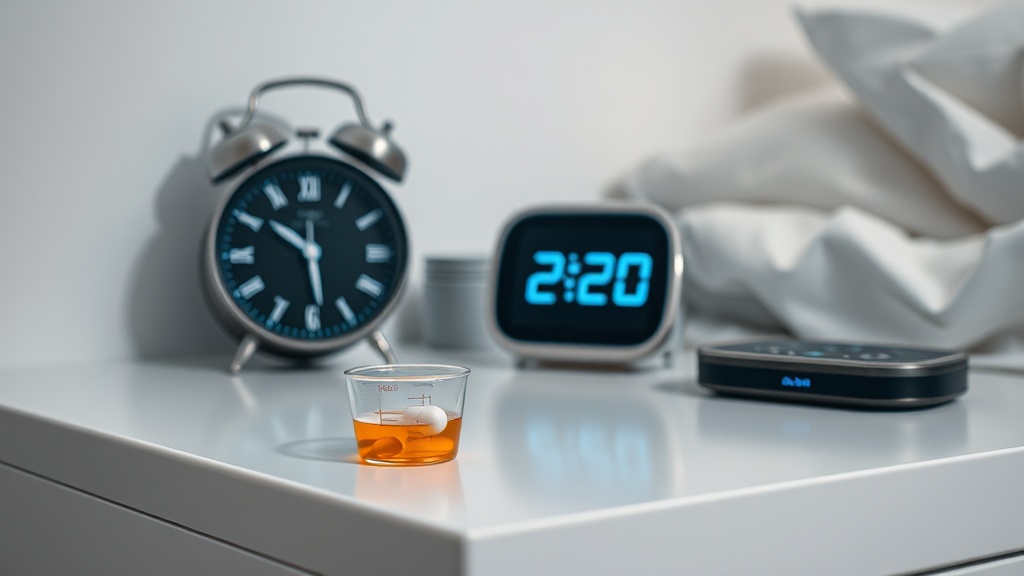
3. Begin titration at the recommended starting dose of 4.5 g per night, divided into two doses. The first dose is taken at bedtime; the second dose is taken 2.5–4 hours later. Set an alarm for the second dose. Based on DUET's 2–8 week titration period, expect dose adjustments over several weeks[1].
4. Titrate upward in increments of 1.5 g per night (0.75 g per dose) at weekly intervals, based on tolerability and clinical response. The maximum recommended dose is 9 g per night. The DUET study used a flexible titration approach, which means your clinician should adjust based on your individual response rather than following a rigid schedule[3][5].
5. Avoid eating within 2 hours of the first dose — food significantly delays absorption and reduces peak concentration. This is non-negotiable for efficacy.
6. Abstain from alcohol entirely while taking LXB. The combination potentiates CNS depression and carries serious safety risks including respiratory depression.
7. Track your symptoms daily using the Epworth Sleepiness Scale and a sleep diary — recording bedtime, wake time, sleep inertia severity (how long it takes to feel fully awake), and daytime fatigue on a 1–10 scale. The DUET trial used daily electronic sleep diaries, and this self-monitoring is essential for guiding titration[1].
8. Schedule a follow-up with your sleep specialist within 2–4 weeks of initiating treatment, and again after reaching your stable dose, to assess response on the IHSS and adjust concomitant medications if applicable. Remember that 41.3% of DUET participants were on alerting agents simultaneously — combination therapy may be appropriate[1].
Related Video
What is low-sodium oxybate and how does it differ from sodium oxybate?#
Low-sodium oxybate (Xywav) is a reformulated version of sodium oxybate (Xyrem) that replaces most of the sodium with calcium, magnesium, and potassium salts. The active compound — gamma-hydroxybutyrate — is the same. The difference is a 92% reduction in sodium content, which matters for patients at risk of cardiovascular complications from chronic high-sodium intake. Both drugs work the same way mechanistically; the choice largely comes down to your sodium sensitivity and your cardiologist's opinion.
How quickly does low-sodium oxybate start working for idiopathic hypersomnia?#
Based on the DUET trial protocol, titration takes 2–8 weeks before reaching a stable therapeutic dose[1]. Most patients won't feel the full benefit until they've been on a stable dose for at least 2 weeks after that. So realistically, you're looking at 4–10 weeks before you can judge whether it's working. I know that feels long when you can barely stay awake, but rushing titration increases adverse event risk without improving outcomes.
Who should not take low-sodium oxybate?#
Anyone with succinic semialdehyde dehydrogenase deficiency is absolutely contraindicated. Beyond that, LXB carries serious warnings for respiratory depression — especially in combination with other CNS depressants, alcohol, or in patients with compromised respiratory function. The REMS program exists for a reason. If you have a history of substance use disorder involving GHB or related compounds, the risk-benefit conversation with your physician needs to be very candid.
Why was the DUET study designed as open-label rather than placebo-controlled?#
This is a fair question, and it's one I'd push on. The DUET investigators chose a patient-centric, open-label design because the goal was comprehensive symptom characterization rather than establishing efficacy from scratch — that was already done in the phase 3 randomized withdrawal trial[2][3]. The trade-off is that you lose the ability to control for placebo effects, which in sleep medicine can be surprisingly large. It's a defensible design choice for a phase 4 study, but it does mean the effect sizes should be interpreted conservatively.
What are the most common side effects?#
The phase 3 data and DUET both assessed treatment-emergent adverse events. The most commonly reported include nausea, headache, dizziness, and decreased appetite. Enuresis (bedwetting) occurs in some patients and is more than just an inconvenience — it can be a compliance-killer. The DUET study included a 2-week safety follow-up, and the fact that 40 of 46 participants completed the study suggests tolerability was generally acceptable, though the six who discontinued represent a real signal worth investigating[1].
Verdict#
7/10. The DUET study adds meaningful depth to our understanding of low-sodium oxybate in idiopathic hypersomnia — particularly around functional outcomes, cognitive complaints, and sleep architecture measures that previous trials didn't capture. The consistency with phase 3 data is reassuring. But I can't score higher than a 7 because it's a 46-person, open-label, industry-funded study without a control arm. The signal is strong. The evidence base is still building. For IH patients who've already failed stimulant monotherapy, LXB remains the most compelling pharmacological option available. For the field, I want to see independent replication, longer follow-up, and — honestly — more diverse cohorts than 84.8% White.
References
- 1.Plante DT, Cairns A, Schneider LD. Effectiveness and Safety of Low-Sodium Oxybate in Participants with Idiopathic Hypersomnia: Primary Results from the DUET Study. CNS Drugs (2026). ↩
- 2.Dauvilliers Y, Arnulf I, Foldvary-Schaefer N. Safety and efficacy of lower-sodium oxybate in adults with idiopathic hypersomnia: a phase 3, placebo-controlled, double-blind, randomised withdrawal study. Lancet Neurology (2022). ↩
- 3.Nichols DA, Steininger TL, Fuller DS. A Patient-centric Clinical Trial Design to Comprehensively Evaluate Low-Sodium Oxybate in People with Idiopathic Hypersomnia or Narcolepsy. Neurology and Therapy (2025). ↩
- 4.Thorpy MJ, Fuller DS. Efficacy of Low-sodium Oxybate by Baseline Sleep Inertia in a Phase 3 Clinical Study in Participants with Idiopathic Hypersomnia. Neurology (2024). ↩
- 5.Morse AM, Bogan RK, Roy A, Thorpy MJ. Dosing optimization of low-sodium oxybate in narcolepsy and idiopathic hypersomnia in adults: consensus recommendations. Neurology and Therapy (2024). ↩
Yuki Shan
Yuki writes with measured precision but genuine intellectual frustration when the data is messy. She uses long, careful sentences for complex mechanisms, then cuts to very short ones for emphasis: 'That's the problem.' She's comfortable saying 'I'm not sure this matters clinically' even when the statistics look impressive. She'll sometimes restart a line of reasoning mid-paragraph: '— actually, I want to rephrase that.' She's suspicious of studies with small sleep cohorts and says so.
View all articles →