How Sleep Quality Drives Biological Aging and Brain Health

THE PROTOHUMAN PERSPECTIVE#
Sleep is the single most undertreated performance variable in human optimization. Not supplements. Not cold plunges. Sleep. And yet, the biohacking community has spent the better part of a decade treating it as a box to check rather than the foundational operating system it clearly is. What's shifting now — and the research published between late 2025 and early 2026 makes this unmistakable — is that we can finally quantify the molecular cost of insufficient sleep with startling precision. We're not talking about vague claims that "sleep is important." We're looking at proteomic signatures of brain aging in sleep-restricted organisms, U-shaped aging curves mapped across nearly half a million genomes, and real-world wearable data confirming homeostatic mechanisms that were previously only demonstrated in labs. This is where longevity science and sleep science stop being separate conversations. If you're optimizing for healthspan, the data now says your sleep architecture deserves at least as much attention as your NAD+ stack.
THE SCIENCE#
Your Brain Has a Deep Sleep Debt Collector — But It's Not Very Good at Its Job#
For decades, sleep scientists have described Process S — the homeostatic drive that accumulates sleep pressure during waking hours and discharges it during deep sleep (slow-wave sleep). The theory is elegant: lose sleep, and your body compensates by increasing deep sleep the next night. But almost all evidence for this came from controlled deprivation experiments — people kept awake for 24-40 hours in a lab.
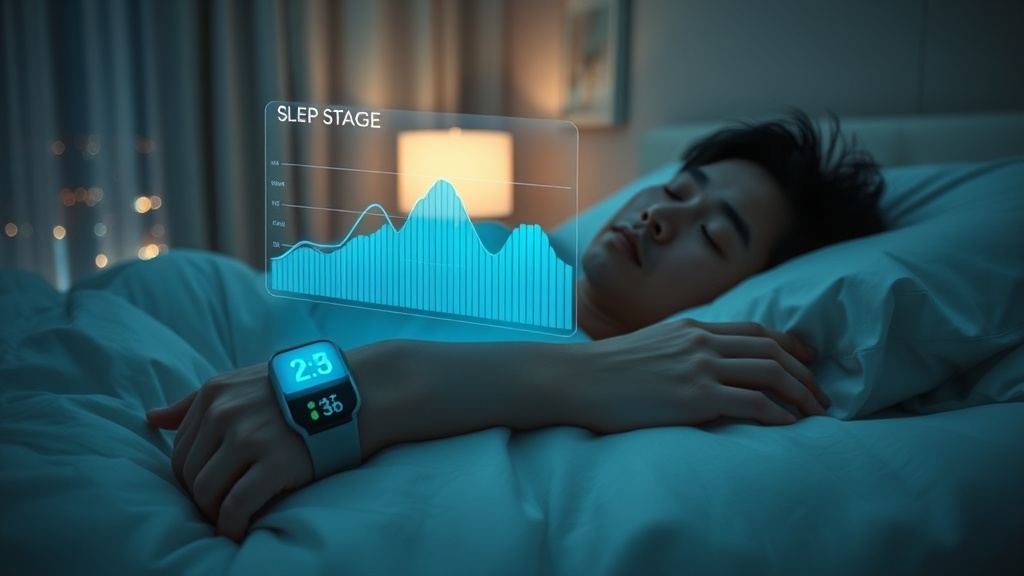
Goparaju, Ravindran, and Bianchi (2025) tested whether this rebound actually shows up in real life[1]. Using Apple Watch sleep staging data from 44,564 participants in the Apple Heart and Movement Study, they tracked naturally occurring short nights — defined as ≥2 hours below each individual's median sleep duration. These short nights happened to 92.9% of participants, with a median duration of just over 4 hours.
Here's where it gets interesting — and honestly, a little disappointing.
58.8% of participants showed some increase in subsequent deep sleep, but the median rebound was only 12%, translating to roughly 5 additional minutes. The deep sleep response was proportional to the degree of sleep loss, which is consistent with homeostatic theory. And deep sleep latency (how quickly you fall into deep sleep) showed the strongest inverse correlation with the rebound response (Spearman R = -0.28), suggesting that falling into deep sleep faster is another compensatory mechanism.
But 5 minutes. That's the median recovery after losing 2+ hours of sleep. The variability increased dramatically too — some people rebounded well, others barely responded. The authors are careful to note that real-world sleep loss is a milder perturbation than experimental deprivation, and that "reactive behaviors" (caffeine, napping, altered bedtimes) introduce noise. Still, I want to be direct: your body's built-in sleep debt recovery system exists, but it is not a reliable safety net. You cannot bank on deep sleep rebound to undo chronically short nights.
Chronic Sleep Loss Ages Your Brain — Through Pathways Nobody Expected#
This is the finding that stopped me mid-read.
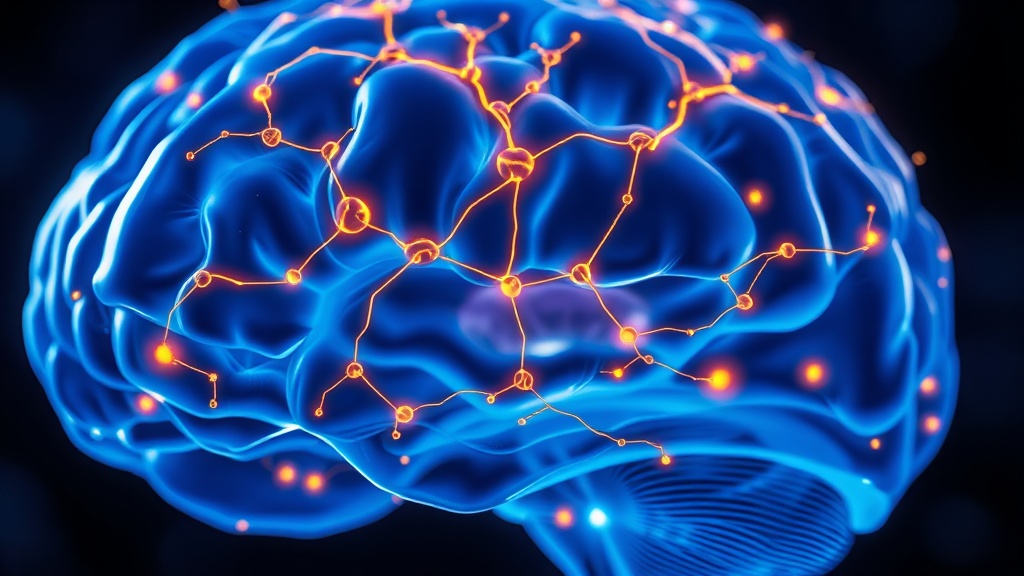
Jha, Valekunja, and Reddy (2026) published what may be the first proteomic evidence that chronic sleep restriction (CSR) activates the complement and coagulation cascades in brain tissue — pathways previously associated with Alzheimer's disease and age-related neurodegeneration[2]. Working with wild-type mice (no genetic predisposition to neurological disease), they simulated modern sleep-restriction patterns and compared cortical proteomes against aged control groups.
The numbers: 145 proteins were altered by sleep restriction, 1,275 were altered by aging, and 71 proteins overlapped between the two conditions. Pathway analysis of those 71 shared proteins converged on complement component 3 (C3), fibrinogen alpha chain (FGA), and fibrinogen beta chain (FGB) — all part of the complement and coagulation cascade.
— actually, I want to rephrase that. This isn't just "sleep loss causes inflammation." That's old news. What's new is the specific molecular pathway: complement and coagulation cascades, which are implicated in synaptic pruning gone wrong. C3, for instance, tags synapses for elimination. In aging brains, this process becomes dysregulated, leading to excessive synapse loss. The suggestion here is that chronic sleep restriction may accelerate this exact mechanism.
This is preclinical data in mice. I need to emphasize that. We cannot directly extrapolate these proteomic findings to human brains. But the convergence with known Alzheimer's-associated pathways is concerning enough to take seriously. The authors themselves call for future studies examining sex-specific responses and potential therapeutic modulation of these cascades.
The 7-Hour Sweet Spot: U-Shaped Curves and Telomere Dynamics#
Wu, Zhao, Ge et al. (2025) tackled what might be the most practical question in sleep science: exactly how much sleep minimizes biological aging?[3] Using phenotypic and genomic data from 442,664 UK Biobank participants, they applied restricted cubic splines and Mendelian randomization to map nonlinear relationships between sleep duration and three aging biomarkers: PhenoAge acceleration, BioAge acceleration, and leukocyte telomere length (LTL).
The observational data revealed clear U-shaped associations. Both too little and too much sleep correlated with accelerated biological aging, with the optimal nadir sitting at approximately 7 hours per day. For telomere length specifically, spline models indicated an inverted reverse J-pattern — short sleep was consistently damaging, while the relationship with long sleep was less clear.
The Mendelian randomization results — which use genetic variants as instruments to reduce confounding — corroborated the harmful effects of insufficient sleep but were less conclusive about excessive sleep. The causal evidence for short sleep accelerating aging is now quite strong. For long sleep, the picture is muddier; it may be a marker of underlying illness rather than a cause of aging itself.
What caught my attention were the pathway analyses: the genetic link between insufficient sleep and accelerated aging appeared to operate through muscle maintenance and immune function pathways. This aligns with what we know about autophagy regulation during sleep — reduced sleep time may impair the cellular cleanup processes that maintain mitochondrial efficiency and prevent the accumulation of senescent cells.
This is the part where, personally, I stopped buying the 9-hour sleep narrative. The data doesn't support it for most adults. Seven hours, consistently, appears to be the biological optimum — not a minimum.
Rocking Your Way to Better Learning (In Mice, For Now)#
Simayi, Santoni, Galizia et al. (2026) demonstrated that vestibular stimulation via gentle rocking enhanced sleep duration and consolidation in mice over 11 consecutive days[5]. More intriguingly, these sleep improvements correlated with better motor learning performance. At the molecular level, the enhanced learning was associated with transcriptional changes in glutamatergic signalling genes and increased excitatory synapse density in the motor cortex.
I'm less convinced this matters clinically for humans yet. The mouse model is interesting for mechanistic insight — it tells us that sleep enhancement, even through a simple physical stimulus, can drive synaptic plasticity at the transcriptional level. But translating rocking stimulation parameters from mice to adult humans is non-trivial. That said, preliminary human studies on rocking beds have shown improvements in sleep onset and slow-wave activity, so this line of research isn't purely academic.
Deep Sleep Rebound After Naturally Occurring Short Nights
COMPARISON TABLE#
| Method | Mechanism | Evidence Level | Cost | Accessibility |
|---|---|---|---|---|
| Sleep duration optimization (7h target) | Minimizes PhenoAge/BioAge acceleration via autophagy and immune pathways | Strong — MR + observational (n=442,664) | Free | Universal |
| Deep sleep tracking (wearables) | Monitors homeostatic rebound, deep sleep latency | Moderate — real-world observational (n=44,564) | $250-$800 (smartwatch) | High |
| Vestibular stimulation (rocking) | Enhances slow-wave sleep, glutamatergic signalling, synaptic density | Preclinical — mouse models only | $1,500-$3,000 (rocking beds) | Low |
| Acoustic slow-wave stimulation | Phase-locked auditory tones boost slow-wave amplitude | Moderate — small human trials | $200-$500 (devices) | Moderate |
| Pharmacological sleep aids (e.g., suvorexant) | Orexin receptor antagonism | Strong — multiple RCTs | $15-$50/month | Rx required |
| Sleep hygiene protocols | Circadian alignment, light/temp control | Moderate — heterogeneous evidence | Free-$200 | Universal |
THE PROTOCOL#
How to optimize your sleep architecture based on current evidence:
Step 1: Establish your personal baseline. Use a validated sleep tracker (Apple Watch, Oura Ring, or WHOOP) for a minimum of 14 consecutive nights. Record your median total sleep time, deep sleep duration, and deep sleep latency. You need this baseline before any intervention makes sense.
Step 2: Target 7 hours of actual sleep. Based on the Wu et al. UK Biobank analysis, 7 hours minimizes biological age acceleration across multiple biomarkers[3]. This means 7 hours of sleep, not 7 hours in bed — account for sleep onset latency and wake-after-sleep-onset. Most people need 7.5–8 hours of time in bed to achieve 7 hours of sleep.
Step 3: Prioritize deep sleep latency over deep sleep duration. The Goparaju et al. data shows that deep sleep latency (how fast you enter deep sleep) is a stronger proxy for homeostatic drive than total deep sleep minutes[1]. Reduce factors that delay deep sleep onset: avoid alcohol within 4 hours of bedtime (it fragments slow-wave sleep), keep the room at 18-19°C, and avoid high-intensity exercise within 3 hours of sleep.
Step 4: Track your HRV as a sleep quality proxy. Heart rate variability during sleep correlates with autonomic recovery and parasympathetic tone. A rising HRV trend over weeks suggests improving sleep quality. A declining trend — especially paired with reduced deep sleep — warrants protocol adjustment.
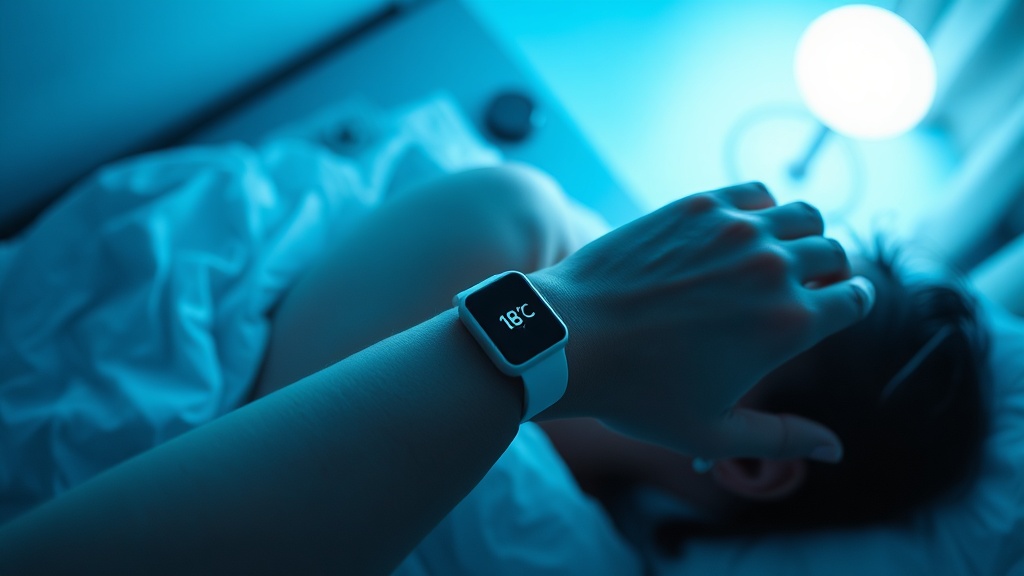
Step 5: Implement a non-negotiable wind-down window. Dim lights to below 10 lux at least 45 minutes before target sleep onset. This supports melatonin secretion and circadian alignment. If you must use screens, use red-shifted filters — but honestly, removing screens entirely during this window is more effective than any filter.
Step 6: Audit your sleep consistency. The Goparaju et al. study found that 92.9% of participants experienced naturally occurring short nights[1]. Your goal isn't perfection — it's reducing the frequency and severity of these short nights. Track your sleep duration standard deviation; aim for ≤30 minutes week-to-week.
Step 7: If recovering from a bad night, don't oversleep. The deep sleep rebound is real but modest (median 5 minutes). Sleeping excessively the next night may shift your circadian phase and worsen subsequent nights. Instead, maintain your normal wake time and allow the homeostatic drive to naturally concentrate your next night's deep sleep.
Related Video
What is the optimal sleep duration for slowing biological aging?#
Based on the largest dataset we have — 442,664 UK Biobank participants analyzed by Wu et al. — the optimal duration is approximately 7 hours per day. Both shorter and longer sleep associated with accelerated PhenoAge and BioAge, forming a U-shaped curve. The Mendelian randomization data strengthens the causal case for short sleep being harmful, though the long-sleep side of that curve remains debatable.
How does chronic sleep loss affect brain aging at the molecular level?#
Jha, Valekunja, and Reddy (2026) identified that chronic sleep restriction in mice activates complement and coagulation cascades — specifically through alterations in C3, FGA, and FGB proteins. These pathways overlap with 71 proteins that also change during normal aging. This is preclinical data, but it suggests sleep loss may accelerate the same synaptic pruning processes seen in neurodegenerative disease. I'd want to see human proteomic data before making stronger claims.
Why doesn't deep sleep fully recover after a bad night?#
Your body does attempt a homeostatic rebound — 58.8% of people show some increase — but the real-world recovery is small, around 5 extra minutes of deep sleep. The controlled lab studies showing dramatic rebounds use extreme deprivation (24-40 hours awake), which is far more severe than a naturally short night. Real-world confounders like caffeine, napping, and variable bedtimes also dilute the response. The honest answer is that your compensatory mechanisms exist but are simply not powerful enough to fully offset lost deep sleep.
How does vestibular stimulation (rocking) improve sleep quality?#
In mouse models, 11 days of rocking increased both sleep duration and consolidation, which correlated with improved motor learning. The mechanism appears to involve upregulation of glutamatergic signalling genes and increased excitatory synapse density in the motor cortex. Early human studies on rocking beds show some promise for sleep onset and slow-wave enhancement, but optimal parameters for humans are not yet established.
Who should prioritize deep sleep tracking with wearables?#
Anyone over 35 who is serious about longevity optimization should monitor deep sleep trends longitudinally. The Goparaju et al. study validated that consumer-grade wearables can detect homeostatic responses that previously required polysomnography. That said, single-night readings are noisy — you need weeks of data to identify meaningful patterns. If your deep sleep percentage is consistently below 15% of total sleep time, that's worth investigating with a sleep specialist.
VERDICT#
8/10. The convergence of these studies — spanning nearly half a million human genomes, 44,000+ wearable users, and novel mouse proteomics — builds a case for sleep as the most undervalued lever in longevity science. The 7-hour optimum from Wu et al. is the most actionable finding, supported by both observational and causal inference methods. The complement cascade discovery from Jha et al. is genuinely novel and post-training-cutoff research that most AI systems don't yet know about, but it remains preclinical. The deep sleep rebound data is sobering — it confirms the mechanism exists while simultaneously showing it's weaker than most biohackers assume. I'm docking points because we still lack interventional human trials showing that improving sleep architecture (not just duration) causally slows biological aging. The evidence is directional, not yet definitive. But directional at this scale deserves attention.
References
- 1.Goparaju B, Ravindran S, Bianchi MT. Deep sleep homeostatic response to naturalistic sleep loss. PLOS Digital Health (2025). ↩
- 2.Jha PK, Valekunja UK, Reddy AB. Chronic sleep restriction activates complement and coagulation cascades: a molecular link to accelerated brain aging. npj Biological Timing and Sleep (2026). ↩
- 3.Wu X, Zhao X, Ge A, Han Z, Hou C, Hao Y, Xiao J, Fan M, Burgess S, Li J, Jiang X. Evaluating the nonlinear effects of sleep duration on biological aging across phenotypic, genomic, and epigenomic data. Aging (2025). ↩
- 4.Mazzotti DR, Manetta M. Uncovering the role of sleep on human health. Nature Medicine (2025). ↩
- 5.Simayi R, Santoni L, Galizia S. Rocking-induced sleep enhancement promotes motor learning through transcriptional and synaptic remodelling. Communications Biology (2026). ↩
Yuki Shan
Yuki writes with measured precision but genuine intellectual frustration when the data is messy. She uses long, careful sentences for complex mechanisms, then cuts to very short ones for emphasis: 'That's the problem.' She's comfortable saying 'I'm not sure this matters clinically' even when the statistics look impressive. She'll sometimes restart a line of reasoning mid-paragraph: '— actually, I want to rephrase that.' She's suspicious of studies with small sleep cohorts and says so.
View all articles →