HA Sheets With NMN for Oral Mucositis: New Preclinical Data

THE PROTOHUMAN PERSPECTIVE#
Oral mucositis isn't a niche problem. It hits up to 80% of head and neck cancer patients undergoing chemoradiotherapy, turning the simple act of eating into agony and derailing treatment compliance. For anyone tracking the NAD+ precursor space — and I know many of you are — this is where NMN leaves the supplement shelf and enters functional biomaterial territory. The convergence here matters: a biodegradable mucoadhesive sheet that sticks to damaged oral tissue and slowly releases NMN directly at the wound site. That's local NAD+ synthesis support precisely where cellular energy metabolism has been obliterated by radiation. From a performance optimization lens, this signals a broader trend — the shift from systemic supplementation to targeted, tissue-specific delivery of NAD+ precursors. If the mechanism holds in human trials, it could redefine how we think about NMN delivery beyond the gut.
THE SCIENCE#
What Oral Mucositis Actually Does to Tissue#
Freeze-dried hyaluronic acid (HA) sheets are thin, biodegradable films made from lyophilized hyaluronic acid — a naturally occurring glycosaminoglycan found in connective tissue, synovial fluid, and the extracellular matrix. Their relevance to human performance and recovery lies in HA's established role in wound healing, cellular hydration, and tissue regeneration. According to Tanaka et al., the 800 kDa HA sheet formulation demonstrated superior healing efficacy among four molecular weights tested in a hamster oral ulcer model[1]. The approach has gained traction across multiple research groups in Japan and China, with several parallel lines of investigation into HA-based oral mucositis treatments published in the past 18 months.
Oral mucositis induced by chemoradiotherapy isn't just inflammation. It's a cascading failure of mucosal barrier integrity — epithelial cell death, submucosa exposure, bacterial colonization, and a self-reinforcing inflammatory loop driven by TNF-α, IL-1β, and NF-κB signaling. The oral cavity's wet, dynamic, saliva-rich environment makes it one of the hardest places in the body to deliver and retain a therapeutic agent.
That retention problem is the core engineering challenge here. Current treatments — topical rinses, gels, systemic analgesics — wash away within minutes. The tissue needs sustained contact with bioactive molecules to initiate meaningful repair.
The Molecular Weight Question#
Tanaka et al. prepared HA sheets using four distinct molecular weights: 50 kDa, 350 kDa, 800 kDa, and 2000 kDa[1]. This is the part that actually matters, and it's more nuanced than "bigger is better."
Low molecular weight HA (50 kDa) dissolves rapidly. It gets into cells efficiently and may trigger pro-regenerative signaling pathways — there's evidence that low MW HA fragments activate TLR2 and TLR4 receptors, stimulating immune responses that can aid early-phase wound repair. But it doesn't stick around.
High molecular weight HA (2000 kDa) forms viscous, adhesive films with excellent buccal retention. The problem? It holds onto its payload too tightly. NMN release from 2000 kDa sheets appeared to be excessively sustained, potentially limiting the bioavailability of NMN at the wound site during the critical early healing window.
The 800 kDa formulation hit the sweet spot. It demonstrated what the authors describe as "an excellent balance between buccal retention and the sustained release of NMN." In the Syrian hamster oral ulcer model, 800 kDa HA sheets showed the greatest healing efficacy among all formulations tested[1].
Wait, let me be more precise here. This is an animal model using 6-week-old male Syrian hamsters — a standard preclinical model for oral mucositis, yes, but still a long way from a human oral cavity dealing with concurrent cisplatin or 5-FU toxicity. The hamster cheek pouch lacks some of the immunological complexity of human buccal mucosa.
NMN as a Local Therapeutic Agent#
Here's where the NMN crowd is going to get excited — and they should, just not for the reasons they think.
NMN (nicotinamide mononucleotide) is typically discussed as an oral supplement for systemic NAD+ repletion. The rationale is straightforward: NMN is a direct precursor to NAD+, which is essential for mitochondrial efficiency, DNA repair via PARP enzymes and sirtuins, and cellular energy metabolism. Radiation and chemotherapy obliterate NAD+ pools in exposed tissue.
But systemic oral NMN supplementation doesn't preferentially target the oral mucosa. The innovation here is loading NMN directly into a mucoadhesive sheet that maintains contact with damaged tissue for hours. This creates a local reservoir for NAD+ synthesis right at the injury site, potentially supporting autophagy pathways and mitochondrial recovery in the exact cells that need it most.
The in vitro cytotoxicity assays confirmed that HA sheets, with or without NMN loading, were non-toxic and suitable for local applications[1]. That's a necessary box to check, not a surprising one — both HA and NMN have well-established safety profiles.
The Broader HA Delivery Landscape#
This study doesn't exist in isolation. Multiple groups are attacking the same problem from different angles.
Yu et al. developed a multifunctional HA/gelatin methacryloyl core-shell microneedle patch for oral mucosal ulcers, using physical penetration to bypass the saliva washout problem[2]. The microneedle approach is clever — it mechanically anchors into the tissue — but introduces manufacturing complexity and potential discomfort that a simple dissolvable sheet avoids.
Wu et al. took yet another approach: a crosslinked HA-based hydrogel embedded with core-shell microgels delivering combined drugs for chemoradiotherapy-induced oral mucositis (CIOM)[3]. Their PHB platform integrates antibacterial action, analgesia, and tissue regeneration. It's more multifunctional than Tanaka's sheet, but also more complex to manufacture and characterize.
D'Agostino et al. explored lyophilized HA formulations combined with platelet-rich plasma (PRP), demonstrating that low-to-medium molecular weight HA (56 and 200 kDa) could sustain growth factor release from PRP for wound healing applications[4]. The lyophilization technique is similar, but PRP adds biological variability that NMN doesn't have.
Look, the problem with all of these parallel approaches is that none of them have published Phase I human trial data yet. We're comparing preclinical systems with different animal models, different endpoints, and different active payloads.
HA Molecular Weight vs. Healing Efficacy in Hamster Model
COMPARISON TABLE#
| Method | Mechanism | Evidence Level | Cost | Accessibility |
|---|---|---|---|---|
| 800 kDa HA + NMN Sheet (Tanaka et al.) | Mucoadhesive sustained NMN release, local NAD+ synthesis support | Preclinical (hamster model) | Low (estimated — HA and NMN are inexpensive raw materials) | Not yet available; research-stage |
| HA/GelMA Microneedle Patch (Yu et al.) | Physical tissue penetration + drug release in wet environment | Preclinical | Moderate (complex manufacturing) | Not yet available; research-stage |
| HA Hydrogel + Core-Shell Microgels (Wu et al.) | Combined antibacterial, analgesic, regenerative drug delivery | Preclinical | Moderate-High | Not yet available; research-stage |
| HA/PRP Lyophilized Formulation (D'Agostino et al.) | Growth factor sustained release via HA matrix | Preclinical (in vitro + storage stability) | High (PRP extraction required) | Limited; requires blood draw |
| Standard Oral Rinses (Benzydamine, chlorhexidine) | Topical anti-inflammatory / antiseptic | Multiple human RCTs | Low | Widely available OTC/Rx |
| Palifermin (Kepivance) | Recombinant keratinocyte growth factor | Phase III / FDA-approved (for specific indications) | Very High (~$5,000/course) | Rx only; limited to hematologic malignancies |
THE PROTOCOL#
Based on current preclinical evidence, no validated human protocol exists for HA-NMN sheet application. However, the following steps outline how this technology could be trialed based on the formulation parameters described by Tanaka et al., intended for clinicians and biohackers monitoring this space.
Step 1: Source pharmaceutical-grade hyaluronic acid at 800 kDa molecular weight and NMN powder (≥98% purity). Both are commercially available from research-grade suppliers. Do not substitute with cosmetic-grade HA — the molecular weight distribution matters significantly.
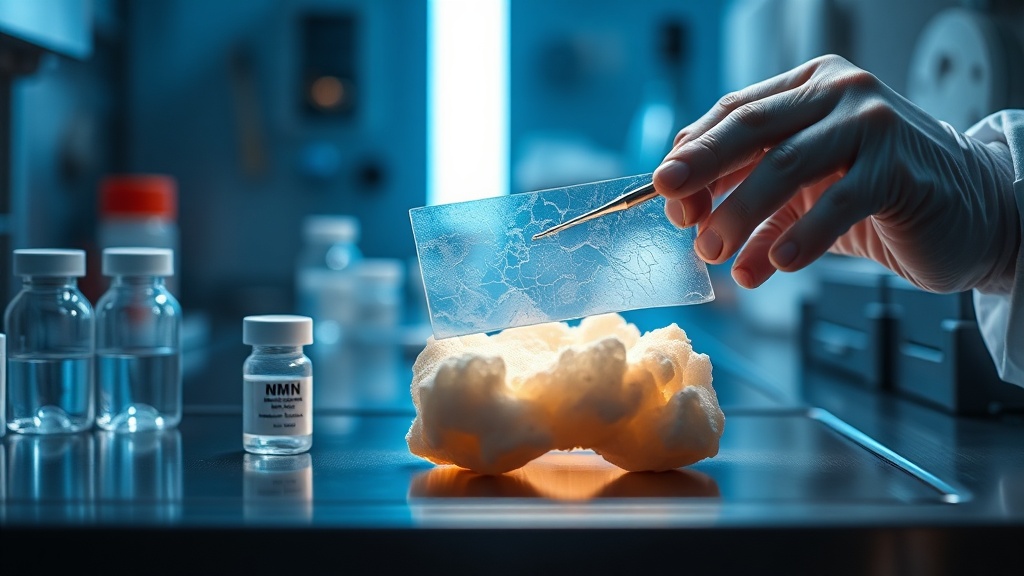
Step 2: Prepare the HA solution at the concentration used in the study (typically 1–2% w/v HA in purified water), incorporate NMN at the target loading concentration, then pour into flat molds and freeze-dry (lyophilize) at −80°C followed by sublimation drying. The resulting sheet should be thin, flexible, and translucent.
Step 3: Store the lyophilized sheets in sealed, desiccated packaging at room temperature. One advantage of freeze-dried formulations is shelf stability — unlike PRP-based systems, these don't require cold chain logistics.
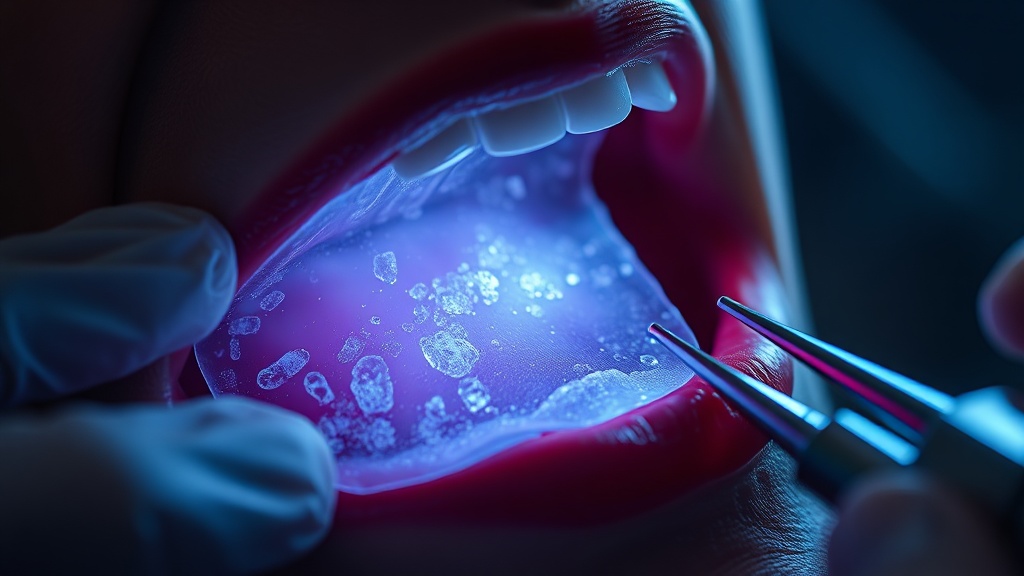
Step 4: For application, the sheet would be placed directly onto the affected oral mucosal area using clean, dry forceps. The sheet hydrates on contact with saliva and adheres to the tissue. Based on the 800 kDa formulation's properties, buccal retention is expected to last several hours.
Step 5: Reapplication frequency has not been established in human studies. In the hamster model, the experimental protocol involved single-application assessment periods. A reasonable starting hypothesis for clinical investigation would be 2–3 applications per day, timed after meals when salivary flow is reduced.
Step 6: Monitor healing progression by standardized oral mucositis grading (WHO scale or NCI-CTCAE). Photograph the lesion at consistent intervals for objective comparison. Track pain scores using a validated visual analog scale.
Step 7: If you're a clinician designing a pilot study, the Tanaka et al. formulation provides a clear starting point: 800 kDa HA, NMN-loaded, freeze-dried sheet format. The critical endpoint is buccal retention time in the human oral cavity, which will differ from the hamster model due to differences in saliva volume, pH, and mechanical forces.
Related Video
What is oral mucositis and who does it affect?#
Oral mucositis is a painful inflammatory condition of the oral mucosa that develops as a side effect of chemotherapy or radiotherapy, particularly in head and neck cancer patients. It affects up to 80% of patients receiving these treatments and can be severe enough to require dose reductions or treatment interruptions, directly impacting cancer outcomes.
How does NMN help with wound healing in the oral cavity?#
NMN is a direct precursor to NAD+, a coenzyme critical for cellular energy production, DNA repair, and sirtuin-mediated stress responses. By delivering NMN locally to damaged oral tissue via a mucoadhesive sheet, the approach may support local NAD+ synthesis in cells where mitochondrial function has been compromised by radiation or chemotherapy. However, the specific mechanism of NMN's contribution to oral mucosal healing has not yet been fully elucidated in human studies.
Why does the molecular weight of hyaluronic acid matter for this application?#
Molecular weight determines the HA sheet's physical properties — dissolution rate, mucoadhesion strength, and drug release kinetics. Tanaka et al. found that 800 kDa HA provided the best balance: it adhered to buccal tissue long enough to sustain NMN delivery without being so viscous that it trapped the payload and prevented release[1]. Lower MW dissolved too fast; higher MW held on too tightly.
When might HA-NMN sheets become available for clinical use?#
Honestly, we don't know yet. The current evidence is preclinical, based on a hamster model. Human clinical trials would need to establish safety, optimal dosing, retention time, and efficacy against standard care. Regulatory approval pathways for mucoadhesive drug delivery devices vary by jurisdiction. A realistic timeline, assuming funded clinical development, would be 3–5 years at minimum.
How do these sheets compare to existing oral mucositis treatments?#
Current standard treatments (benzydamine rinses, magic mouthwash, palifermin) either wash away quickly or are prohibitively expensive. The HA-NMN sheet concept offers sustained local delivery at potentially low cost, but it has not been tested head-to-head against any existing treatment in humans. The comparison remains theoretical until clinical trial data emerges.
VERDICT#
Score: 6.5/10
The mechanistic logic here is sound, and I genuinely like the formulation approach — freeze-dried HA sheets are elegant, scalable, and shelf-stable. The finding that 800 kDa HA optimizes the retention-release tradeoff is a useful engineering insight that advances the field. The NMN loading adds a novel dimension that connects oral wound healing to the NAD+ metabolism space in a way that hasn't been done before.
But let's be honest about what we're looking at: a single preclinical study in hamsters, published in a specialized biomaterials journal. No human data. No pharmacokinetic profiling. No head-to-head comparison with existing treatments. The in vitro cytotoxicity data is necessary but unsurprising — it tells us what's not toxic, not what's therapeutically effective in humans.
I'm less convinced by the lack of mechanistic data on how NMN specifically contributes to healing versus the HA sheet alone. The study evaluated NMN-loaded vs. unloaded sheets, but the reported emphasis is on the molecular weight optimization rather than a detailed NMN dose-response analysis. I'd want to see NMN tissue concentrations, local NAD+ levels, and downstream sirtuin or PARP activity before getting too excited.
Promising direction. Early days. Worth watching, not yet worth acting on.
References
- 1.Tanaka A, Takata T, Katsumi H, Sawai Y, Nakano H, Yoneto C, Yoneto K, Furubayashi T, Sakane T. Development of Freeze-Dried Hyaluronic Acid Sheets for Healing Oral Mucositis: Influence of Hyaluronic Acid Molecular Weight and Nicotinamide Mononucleotide Loading on Healing Efficacy. Journal of Functional Biomaterials (2026). ↩
- 2.Yu Y, Gao Y, Zeng Y, Ge W, Tang C, Xie X, Liu L. Multifunctional hyaluronic acid/gelatin methacryloyl core-shell microneedle for comprehensively treating oral mucosal ulcers. International Journal of Biological Macromolecules (2024). ↩
- 3.Wu Y, Jiang L, Li K, Liu J, Chen P, Xu J, Zhang J. Hyaluronic acid-based composite hydrogels embedded with core-shell microgels with properties of mucosal adhesion and combined drug administration for chemoradiotherapy induced oral mucositis. International Journal of Biological Macromolecules (2025). ↩
- 4.D'Agostino A, d'Agostino M, Nardini M, Muraglia A, Di Meo C, Mastrogiacomo M, Schiraldi C. Novel platelet-rich plasma/hyaluronic acid lyophilized formulations for wound healing applications. Frontiers in Bioengineering and Biotechnology (2025). ↩
Nael Voss
Nael is data-obsessed and slightly impatient with over-hyped claims. He's tested most of what he covers personally, which means he occasionally contradicts the research when his n=1 doesn't match. His writing moves fast, sometimes too fast — he'll drop a complex mechanism in one sentence and move on. He has a specific verbal tic: 'Look,' when he's about to say something the reader might not want to hear. He's sardonic about supplement marketing but genuinely excited about good mechanistic data.
View all articles →