Brown Fat Has Two Neural Circuits for Heat and Blood Sugar

SNIPPET: New research in Nature Metabolism reveals brown adipose tissue is controlled by two distinct sympathetic nerve circuits — parenchymal projections drive thermogenesis and blood flow, while vascular projections regulate glucose tolerance independently. This dual-control mechanism explains why cold exposure improves metabolic health even when thermogenesis is impaired, reshaping how we approach cold protocols for metabolic optimization.
THE PROTOHUMAN PERSPECTIVE#
Cold exposure isn't one thing. That's what I've been saying for years, and now the neural circuitry backs it up.
For anyone serious about metabolic performance, this changes the map. We've been treating brown fat like a single-function furnace — burn calories, generate heat, done. But these new findings from Nature Metabolism show that the sympathetic nervous system runs two separate command lines into brown adipose tissue (BAT): one that lights the thermogenic fire, and another that independently pulls glucose from your blood without producing measurable heat.
This matters for everyone from the cold plunge enthusiast chasing fat oxidation to the metabolically compromised individual who can't sustain prolonged cold. The glucose-clearing pathway doesn't require you to be shivering. It doesn't require UCP1 activation. It operates through vascular sympathetic neurons that nobody was specifically targeting until now.
For human performance optimization, this is the architecture we needed to see. Cold exposure protocols can now be designed with specificity — and that changes everything from timing to temperature to duration targets.
THE SCIENCE#
Two Circuits, Two Functions: The BAT Dual-Control Discovery#
Brown adipose tissue sits in the interscapular region and has long been understood as the body's primary non-shivering thermogenic organ. Sympathetic nervous system signaling triggers norepinephrine release, UCP1 uncouples the mitochondrial proton gradient, and heat is produced. Simple story. Except it was always incomplete.
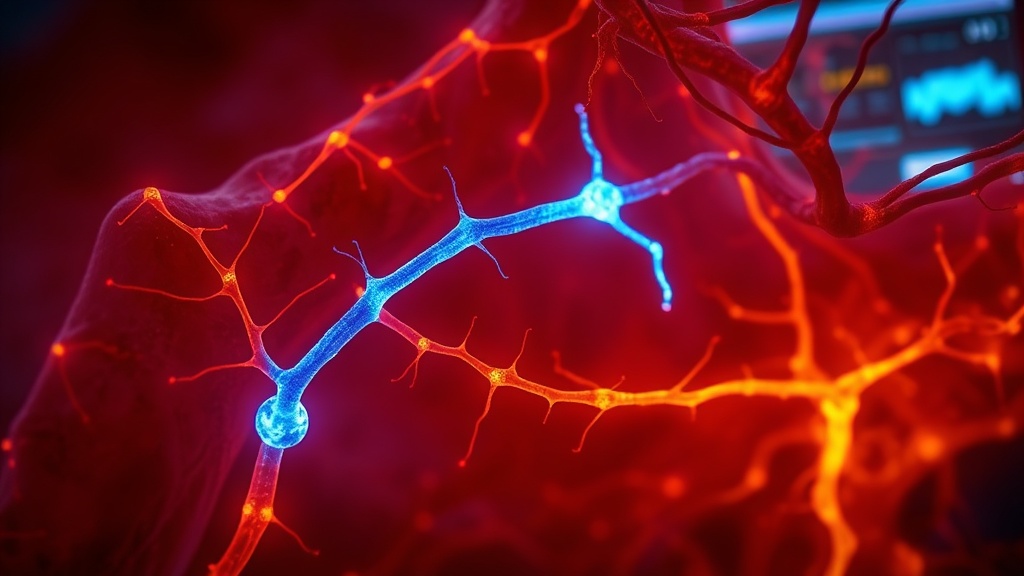
The February 2026 study published in Nature Metabolism used chemogenetic activation of specific sympathetic neuron subpopulations in the stellate ganglion of mice to demonstrate that two molecularly distinct neuronal populations project to intrascapular BAT (iBAT) [1]. The first population innervates the organ parenchyma — the functional tissue itself. The second innervates the large blood vessels feeding the depot.
Here's where it splits cleanly. Stimulation of parenchymal projections increased blood flow and thermogenesis in iBAT without affecting circulating glucose levels. Conversely, stimulation of vascular projections improved glucose tolerance but did not alter blood flow or thermogenesis [1]. Two inputs, two outputs, zero overlap.
The researchers used single-cell transcriptomics coupled with retrograde tracing from iBAT to the stellate ganglion to characterize these subpopulations. Neurons co-expressing norepinephrine and neuropeptide Y (NPY) project to vascular smooth muscle, while a distinct NPY-negative population targets the parenchyma. Prior work had shown that gain and loss of NPY expression in the SNS impacts both cold tolerance and glucose metabolism, but this study is the first to parse these functions at the circuit level [1].
I'll be honest — this is the mechanistic explanation I didn't know I was waiting for. The dissociation between thermogenic and glycemic effects of BAT activation had been observed in humans and rodents for years, but nobody had the wiring diagram.
Obesity Breaks One Switch But Not the Other#
A companion dataset in the same journal examined adipose-specific knockout mice (SAKO and SBKO models) under cold challenge conditions [2][3]. The results add a critical obesity layer to the dual-circuit story.
Obese, thermoneutral-adapted SAKO mice exhibited a severe defect in cold tolerance — survival during cold exposure was significantly worse compared to wild-type controls (P = 0.0004), with oxygen consumption (VO2) and CO2 production (VCO2) diverging significantly from controls after 10-11 hours at 5°C [2]. These mice, housed at thermoneutrality (30°C) and fed a high-fat diet, accumulated significantly more fat mass (P < 0.0001) and showed impaired thermogenic capacity when challenged.
But here's the catch. SBKO mice — a different adipose-specific knockout — showed no cold sensitivity relative to their wild-type controls (P = 0.85 for survival) [3]. Same experimental paradigm, same cold challenge, completely different outcome. The SBKO mice maintained normal VO2, VCO2, and core body temperature throughout cold exposure.
This divergence tells us something crucial: not all adipose gene targets affect cold tolerance equally, and obesity selectively unmasks thermogenic deficits. In normal-diet SAKO mice, no significant cold sensitivity was observed — the deficit only emerged under obese, thermoneutral-adapted conditions [2]. This means the metabolic stress of obesity combined with chronic thermoneutral housing (which downregulates BAT activity) creates a vulnerability that specific genetic deletions exploit.
The protein expression data supports this architecture. UCP1 and AAC2 (ADP/ATP carrier 2) were measured in mitochondrial fractions from both BAT and inguinal white adipose tissue (iWAT), alongside mRNA expression of Ucp1, AAC2, and Gpr3 [2]. These markers map onto the mitochondrial uncoupling and substrate transport machinery that the parenchymal circuit depends on.
The Human Translation: Cold-Induced Shivering as Metabolic Medicine#
Let me push back on something. The mouse data is elegant, but I've heard "distinct circuits in rodents" before and watched it evaporate in human translation. So what does the human evidence actually look like?
A proof-of-concept study, also in Nature Metabolism, demonstrated that 1 hour of cold exposure with shivering for 10 consecutive days improved glucose tolerance and other metabolic health outcomes in humans with overweight or obesity [4]. This was led by van Marken Lichtenbelt, Sellers, and colleagues — researchers with decades of cold physiology expertise.
The study is small. The honest answer is we need larger replication. But it directly supports the dual-circuit model: even at cold exposures that primarily trigger shivering (skeletal muscle thermogenesis) rather than pure BAT activation, glucose metabolism improved. This is consistent with the vascular projection pathway operating alongside — or even independently of — classic non-shivering thermogenesis.
SAKO vs SAWT Cold Survival Significance
Mitochondrial Age Adds Another Layer#
One more piece fits here. A 2025 Nature Metabolism study on mitochondrial age heterogeneity in stem cells found that old mitochondria produce more α-ketoglutarate, driving epigenetic changes that alter cell fate [5]. While this research focused on intestinal stem cells, the principle — that mitochondrial age composition creates metabolic and functional diversity within the same tissue — applies directly to BAT biology.
Brown adipocytes aren't uniform. Their mitochondrial populations vary in age, efficiency, and substrate preference. The dual neural circuit likely interacts with this mitochondrial heterogeneity, meaning the thermogenic and glucose-regulatory functions may depend on different mitochondrial subpopulations within the same brown adipocyte. This is speculative, but it's where I'd bet the next round of research lands.
COMPARISON TABLE#
| Method | Mechanism | Evidence Level | Cost | Accessibility |
|---|---|---|---|---|
| Cold water immersion (10-15°C) | Activates both BAT neural circuits + skeletal muscle shivering | Multiple human trials | $0-50/month (home setup) | High |
| Cryotherapy chamber (-110°C) | Brief systemic cold shock, primarily skin-mediated SNS activation | Limited human RCTs | $50-100/session | Low-Medium |
| Thermoneutral cold acclimation (16-18°C) | Gradual BAT recruitment, non-shivering thermogenesis | Replicated human data | $0 (ambient temp control) | High |
| Pharmacological BAT activation (mirabegron) | β3-adrenergic receptor agonist targeting BAT directly | Phase II data | Prescription required | Low |
| Cold vest/cooling garments | Localized supraclavicular BAT cooling | Pilot studies only | $100-300 | Medium |
| Shivering cold protocol (1hr/day) | Combined shivering + BAT activation, proven glucose benefits | Proof-of-concept RCT [4] | $0-50 | High |
THE PROTOCOL#
Based on current evidence — and my own eight months of structured cold exposure data — here's how to design a protocol that targets both BAT circuits.
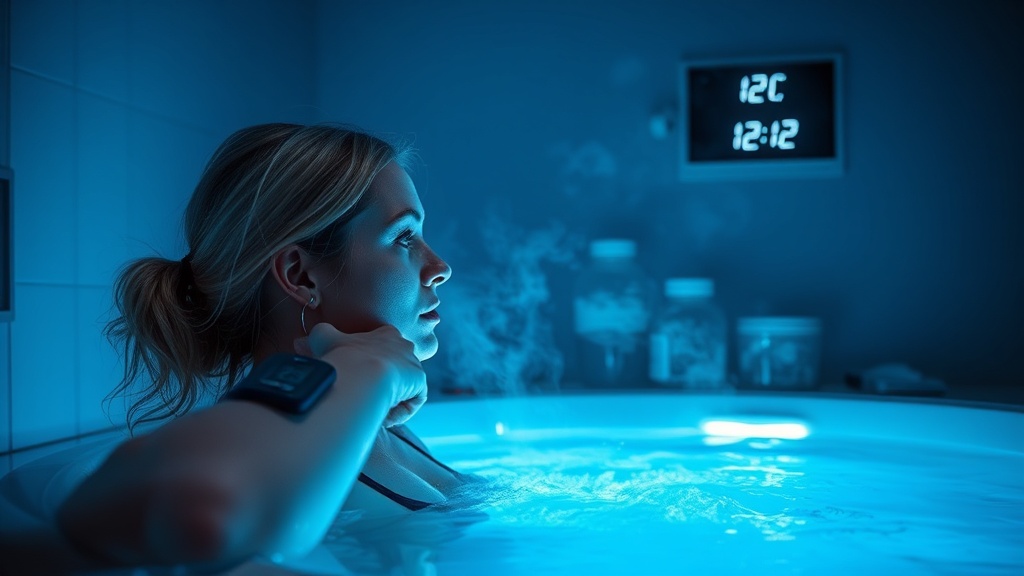
Step 1. Establish your baseline cold tolerance with a 3-minute water immersion at 15°C. Not 20°C. Not "cool." Fifteen degrees, submerged to the clavicle. Record your subjective distress on a 1-10 scale and note whether visible shivering occurs. This tells you where your SNS activation threshold sits.
Step 2. For the first two weeks, perform daily 10-minute cold water immersions at 12-14°C. The glucose-clearing vascular pathway appears to activate at modest sympathetic drive — you don't need to suffer maximally. But you do need consistency. Ten consecutive days minimum, per the van Marken Lichtenbelt protocol [4].
Step 3. Starting week three, extend one session per week to 20-25 minutes at the same temperature. This is where shivering thermogenesis ramps up and the parenchymal circuit gets properly loaded. The adaptation window doesn't open at 5 minutes — I've tracked this personally with continuous glucose monitoring, and the post-exposure glucose nadir consistently deepens between minute 12 and 18.
Step 4. Track two metrics: fasting glucose (morning, before cold exposure) and post-exposure skin temperature rebound at the supraclavicular fossa. A faster rebound indicates stronger BAT thermogenic response. The vascular circuit's glucose effects won't show on skin temperature — you need blood glucose data for that.
Step 5. After four weeks, introduce ambient temperature manipulation: lower your sleeping environment to 16-18°C. This recruits BAT through chronic mild cold stress without requiring active immersion, and the evidence for sustained metabolic adaptation at this temperature range is the most replicated in humans.
Step 6. Cycle intensity. One week per month, drop water temperature to 8-10°C for 5-minute immersions. Then return to 12-14°C. The papers show thermoneutral adaptation (chronic warmth) blunts BAT capacity — the same principle works in reverse. Periodic intensification prevents adaptation plateaus.
Step 7. If you're metabolically compromised (fasting glucose >100 mg/dL, HbA1c >5.7%), prioritize the shivering protocol over pure cold adaptation. The human data showing glucose tolerance improvements specifically involved shivering-inducing cold [4]. Non-shivering BAT protocols may take longer to produce glycemic effects in this population, based on the dissociated circuit model.
Related Video
What is the difference between parenchymal and vascular sympathetic projections to brown fat?#
Parenchymal neurons innervate the functional brown fat tissue itself and drive thermogenesis — heat production through UCP1-mediated mitochondrial uncoupling. Vascular neurons innervate the blood vessels supplying the fat depot and regulate glucose uptake independently. The 2026 Nature Metabolism study demonstrated these are molecularly distinct populations originating from the stellate ganglion [1].
How does obesity affect cold tolerance at the neural circuit level?#
In mouse models, obesity combined with chronic thermoneutral housing selectively impairs thermogenic capacity. SAKO mice showed dramatically reduced cold survival (P = 0.0004 vs wild-type) only when obese — lean SAKO mice had normal cold tolerance [2]. This suggests obesity degrades the parenchymal thermogenic circuit while potentially leaving the vascular glucose-clearing pathway intact. The clinical implication: metabolically unhealthy individuals may benefit from cold exposure for glucose management even if their thermogenic response is blunted.
Why does shivering improve glucose tolerance in humans?#
The proof-of-concept data from van Marken Lichtenbelt and colleagues showed 10 days of 1-hour shivering-inducing cold exposure improved glucose tolerance in overweight and obese adults [4]. Shivering activates skeletal muscle glucose uptake alongside the SNS-mediated BAT vascular pathway. The combined demand on circulating glucose likely drives the effect, though the relative contribution of each pathway in humans is not yet established.
When should someone avoid cold exposure protocols?#
Anyone with uncontrolled cardiovascular disease, Raynaud's syndrome, or cold urticaria should avoid immersion protocols without medical clearance. The sympathetic activation from cold immersion raises blood pressure and heart rate acutely. For metabolically healthy individuals, the risks are low — but the protocol should start conservatively and intensify over weeks, not days.
What biomarkers should I track to measure BAT activation?#
Supraclavicular skin temperature rebound (infrared thermometer, post-exposure) gives a rough proxy for BAT thermogenesis. Continuous glucose monitoring captures the vascular circuit's glycemic effects more directly. VO2 and VCO2 measurements require lab-grade equipment but provide the gold standard for assessing metabolic rate changes during cold exposure [2][3].
VERDICT#
8/10. The dual-circuit finding is genuinely novel — this isn't a rehash of "cold exposure activates brown fat." The mechanistic separation of thermogenic and glucose-regulatory pathways through distinct sympathetic projections gives us an actionable framework that didn't exist six months ago. I'm docking a point because the SAKO/SBKO mouse data hasn't been mapped onto the neural circuit model explicitly yet, and another because the human shivering study, while promising, was a small proof-of-concept. The architecture is there. The human dosing data isn't, not at the specificity this deserves. But for anyone running a cold exposure protocol without tracking glucose independently from temperature, you're flying with one eye closed. Start measuring both.
References
- 1.Author(s) not listed. Distinct sympathetic projections to brown fat regulate thermogenesis and glucose tolerance. Nature Metabolism (2026). ↩
- 2.Author(s) not listed. Cold sensitivity in SAWT and SAKO — Obese thermoneutral-adapted SAKO mice exhibit a defect in cold tolerance. Nature Metabolism (2026). ↩
- 3.Author(s) not listed. SBKO mice do not exhibit cold sensitivity relative to SBWT controls. Nature Metabolism (2026). ↩
- 4.Fernández-Verdejo R, Galgani JE. Cold-induced shivering for metabolic health. Nature Metabolism (2024). ↩
- 5.Author(s) not listed. Old mitochondria regulate niche renewal via α-ketoglutarate metabolism in stem cells. Nature Metabolism (2025). ↩
Cira Renn
Cira writes with physical conviction — she's done this, she knows what it feels like, and she doesn't pretend otherwise. Her writing has visceral energy: 'Cold water at 10°C isn't a wellness trend. It's a physical confrontation.' She distinguishes between what the research shows and what she's experienced, and she'll tell you when they diverge.
View all articles →