Aquatic Exercise + Hot Spring Bathing for Chronic Low Back Pain

SNIPPET: Aquatic exercise combined with hot spring bathing may significantly reduce chronic low back pain beyond conventional physical therapy alone. A 2026 randomized controlled trial found the combination produced 2.7× greater pain reduction (VAS Δ2.56 vs Δ0.94) and improved functional movement scores, disability indices, and lumbar muscle strength compared to standard rehabilitation.
THE PROTOHUMAN PERSPECTIVE#
Chronic low back pain is not a minor inconvenience — it's the single leading cause of disability globally, and it has been for decades. Every protocol we've built around spinal rehabilitation assumes a land-based framework: strengthen the core, mobilize the joints, manage the load. But water changes the physics entirely. Buoyancy strips away compressive force. Thermal exposure alters pain signaling at a neurological level. The combination isn't new in practice — hot spring cultures in Japan, Hungary, and Iceland have understood this intuitively for centuries. What's new is the controlled data quantifying how much better this dual approach performs against the standard clinical pathway. For anyone optimizing spinal health, recovery capacity, or long-term movement quality, this matters. The spine is the structural backbone of every performance metric we care about — from deadlift capacity to sleep posture to autonomic nervous system regulation. When the spine is compromised, everything downstream degrades.
THE SCIENCE#
Defining the Intervention: Water + Heat as a Therapeutic Stack#
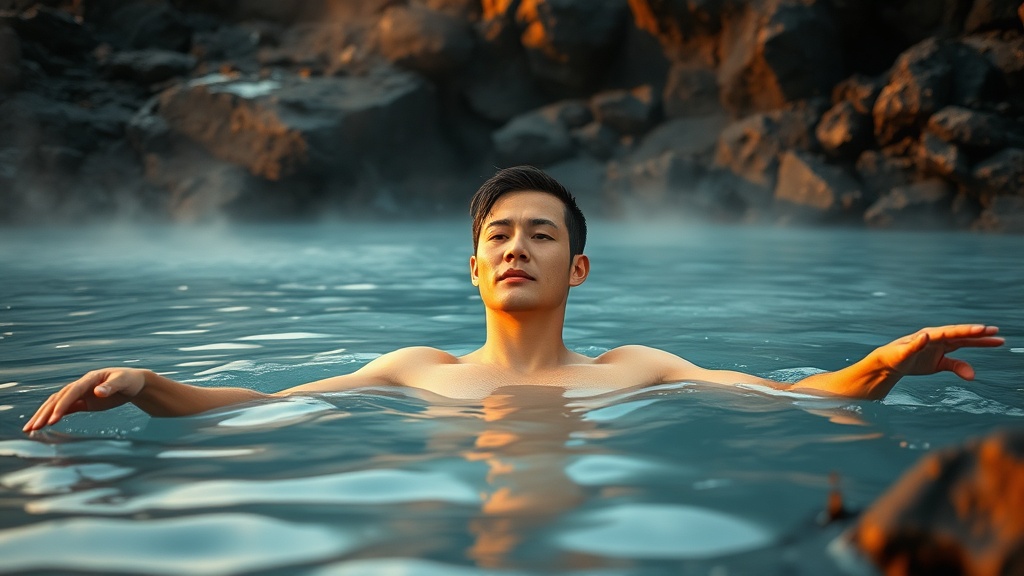
Aquatic exercise combined with hot spring bathing is a dual-modality rehabilitation approach that pairs structured movement in water with thermal immersion in mineral-rich hot spring environments. It matters because chronic low back pain (CLBP) affects an estimated 619 million people worldwide and remains the top contributor to years lived with disability. In the primary RCT by researchers published in BMC Sports Science, Medicine and Rehabilitation (March 2026), the intervention group showed a pain reduction 2.7 times greater than the control group receiving conventional physical therapy alone [1]. This approach is gaining traction in rehabilitation medicine across East Asia and Europe, with multiple 2026 publications reinforcing its clinical relevance.
The trial enrolled 36 participants with CLBP, randomly assigned to either conventional physical therapy or conventional therapy plus aquatic exercise combined with hot spring bathing. Assessors were blinded to group allocation, though participants obviously knew which group they were in — a limitation I'll address, but one that's standard in exercise intervention trials where you can't exactly fake being in a hot spring.
The Numbers That Matter#
Here's where the data gets specific. The intervention group's improvements across all four outcome measures were statistically significant and clinically meaningful [1]:
- Pain intensity (VAS): ΔVAS of 2.56 ± 0.92 in the intervention group vs 0.94 ± 0.54 in controls
- Disability (ODI): ΔODI of 9% ± 6% vs 4% ± 5%
- Functional movement (FMS): ΔFMS of 3.44 ± 2.20 vs 1.44 ± 1.62
- Lumbar muscle strength: Δ18.50 ± 8.52 kg vs 12.44 ± 7.69 kg
The control group only achieved statistical significance on VAS pain scores. Their ODI, FMS, and back muscle strength changes were not statistically significant. That's a critical detail — conventional physical therapy alone moved the needle on subjective pain but failed to produce meaningful functional improvement in this cohort.
The mixed ANOVA (2 × 2: group × time) confirmed significant interaction effects across all measures, meaning the between-group differences weren't just noise.
The Mechanism: Why Water and Heat Work Differently Together#
Let me be direct about the physiology here, because this isn't just "exercise in warm water feels nice."
Water buoyancy reduces effective body weight by up to 80% at chest depth, which directly decreases axial loading on lumbar vertebrae. For CLBP patients whose pain is load-dependent, this creates a window where therapeutic movement becomes possible at intensities that would be intolerable on land. Hydrostatic pressure simultaneously provides proprioceptive input — essentially a compression suit effect — that may enhance neuromuscular recruitment patterns in the trunk stabilizers.
Hot spring thermal stimulation operates through a different pathway. Heat exposure at therapeutic temperatures (typically 37–42°C) triggers local vasodilation, increasing blood perfusion through paraspinal musculature and connective tissue. This enhanced circulation accelerates the clearance of inflammatory mediators and metabolic waste products from chronically irritated tissues. At the neurological level, thermal input competes with nociceptive signaling at the spinal cord — the gate control mechanism — effectively dampening pain perception during and after immersion.
But here's where it gets complicated. A separate 2026 study published in the International Journal of Biometeorology examined balneotherapy combined with conventional physical therapy in 75 patients with chronic low back and knee pain, specifically investigating whether central sensitization altered treatment response [2]. Both groups — those with predominant central sensitization (n=35) and those without (n=40) — showed significant improvements in pain, disability, anxiety, and depression scores. The only differential response was in mental health-related quality of life, where the central sensitization group actually improved more (ΔΔ = 5.95, 95% CI 1.31 to 10.59, p = 0.013).
That finding is genuinely interesting. Central sensitization — where the nervous system amplifies pain signaling beyond what peripheral tissue damage would justify — is notoriously difficult to treat. The fact that balneotherapy appears to benefit these patients as much as, or more than, non-sensitized patients suggests the thermal and aquatic components may be modulating pain processing at a central nervous system level, not just locally.
The Broader Evidence Landscape — and Its Limits#
Wu et al. (2026) published a network meta-analysis in Frontiers in Medicine comparing aquatic and land-based exercise interventions for CLBP across multiple RCTs [3]. The uncomfortable truth? 94.4% of the 36 comparisons for pain intensity were rated low to very low certainty evidence, and all 36 disability comparisons were rated very low certainty. The heterogeneity was high (I² > 85%).
I'm not going to pretend that away. The evidence base for aquatic exercise in CLBP is growing but remains methodologically weak across the field. Small sample sizes, inconsistent intervention protocols, difficulty blinding participants — these are structural problems, not just nitpicks.
The primary RCT we're discussing has 36 participants. That's enough to detect large effect sizes but not enough to draw population-level conclusions. I'd want to see this replicated with at least 100 participants before changing clinical guidelines.
Beyond Pain: The Mental Health Dimension#
A multicenter RCT (N=243) across six Lithuanian medical spa centers tested standardized balneotherapy for stress, anxiety, and depression outcomes [4]. The inpatient balneotherapy group showed reductions of 46% in stress intensity, 54% in depression, and 49% in sleep impairment post-treatment, with effects persisting at 6 months (31% stress reduction, 27% anxiety reduction sustained). Sleep quality improved by up to 67%.
These are not trivial numbers. For context, the chronic pain-depression comorbidity rate exceeds 50% in most clinical populations. Any intervention that simultaneously addresses pain and psychological distress has outsized clinical value because it interrupts the bidirectional amplification loop between chronic pain and mood disorders.
Improvement: Aquatic + Hot Spring vs Conventional PT
COMPARISON TABLE#
| Method | Mechanism | Evidence Level | Cost | Accessibility |
|---|---|---|---|---|
| Aquatic exercise + hot spring bathing | Buoyancy unloading + thermal vasodilation + hydrostatic proprioception | Single RCT (n=36); promising but early | Moderate–High (requires hot spring facility) | Limited to regions with thermal springs or heated therapy pools |
| Conventional physical therapy (land-based) | Manual therapy, strengthening, mobilization | Strong (multiple meta-analyses) | Moderate (clinic visits) | Widely available globally |
| Balneotherapy alone | Thermal + mineral water immersion without structured exercise | Multiple RCTs; low-moderate certainty | Moderate | Limited to spa/thermal centers |
| Shockwave therapy + aquatic exercise | Mechanical tissue stimulation + aquatic movement | Single RCT (Zhang et al., 2025) [6] | High (device cost) | Requires clinical setting with both modalities |
| Pharmacological management (NSAIDs) | COX inhibition, anti-inflammatory | Strong for short-term pain relief | Low | Universal |
THE PROTOCOL#
Based on the available evidence, here is a structured approach for integrating aquatic exercise and thermal immersion into a CLBP management program. This is not medical advice — consult a rehabilitation professional before starting.
Step 1: Establish Baseline Metrics Before beginning, document your current pain level (0–10 scale), functional movement capacity, and any specific movement limitations. If possible, get an FMS assessment from a qualified practitioner. You need a starting point or you're just guessing.
Step 2: Begin With Thermal Immersion Priming (Days 1–3) Start with 15–20 minutes of immersion in water at 38–40°C. This is the adaptation phase. Your cardiovascular system needs to adjust to the thermal load before you add exercise demand. Monitor for dizziness or excessive heart rate elevation. If you have cardiovascular conditions, this step requires medical clearance — no exceptions.
Step 3: Introduce Structured Aquatic Exercise (Week 1 onward) Begin aquatic exercise sessions at chest depth. Focus on lumbar stabilization movements: pelvic tilts, lateral trunk flexion against water resistance, walking patterns with deliberate trunk rotation. Start at 5 minutes of active exercise within the thermal immersion session, not 2. The adaptation window doesn't open at 2. Build to 20–30 minutes over the first two weeks.
Step 4: Progress the Movement Complexity By week 3, incorporate dynamic balance challenges: single-leg stands in water, directional reach patterns, and resisted trunk extension using water's viscosity. The FMS improvements in the RCT (Δ3.44 points) suggest functional movement quality responds well to this environment [1].
Step 5: Maintain Frequency and Duration Target 3–4 sessions per week. The RCT intervention period was structured alongside conventional physical therapy, not as a replacement. Continue any prescribed land-based rehabilitation on alternate days.
Step 6: Track and Adjust Reassess pain (VAS), disability (ODI), and functional movement every 4 weeks. If pain reduction plateaus, increase exercise intensity within the aquatic session before increasing session frequency. The strength gains in the intervention group (Δ18.5 kg lumbar extension) suggest progressive overload principles apply even in water [1].
Related Video
What is aquatic exercise combined with hot spring bathing?#
It's a rehabilitation approach that pairs structured therapeutic exercises performed in water with immersion in naturally heated mineral-rich spring water. The water provides buoyancy to reduce spinal loading while heat enhances blood flow and modulates pain signaling. Based on current evidence, it appears to outperform conventional physical therapy alone for chronic low back pain, though the data is still early.
How does hot spring bathing differ from a regular heated pool?#
Hot spring water contains dissolved minerals — sulfur, bicarbonate, calcium, and other solutes — that may provide additional therapeutic effects beyond simple thermal exposure. A 2026 review in the International Journal of Biometeorology found that mineral-containing water was more effective than plain hot water for conditions including metabolic and musculoskeletal disorders [5]. That said, if you don't have access to a natural hot spring, a heated therapy pool at 38–40°C still provides the thermal and buoyancy benefits.
Who should avoid this protocol?#
Anyone with uncontrolled cardiovascular disease, open wounds, active skin infections, or severe heat intolerance should not attempt thermal immersion without medical clearance. Pregnant individuals and those on blood-thinning medications also need physician guidance. The studies excluded participants with serious spinal pathology (fractures, tumors, cauda equina syndrome) — this protocol is for non-specific chronic low back pain, not acute or structural conditions.
How long before results become noticeable?#
The primary RCT measured outcomes after the full intervention period alongside conventional therapy. The balneotherapy mental health trial showed significant improvements within 11 days of inpatient treatment, with effects persisting at 6 months [4]. Based on this timeline, expect measurable pain reduction within 2–3 weeks of consistent sessions, though individual responses will vary.
Why is the evidence still considered low certainty?#
Small sample sizes (the primary RCT had n=36), inability to blind participants to exercise interventions, and high heterogeneity between study protocols all contribute. Wu et al.'s network meta-analysis rated 94.4% of pain comparisons as low to very low certainty [3]. This doesn't mean the intervention doesn't work — it means we can't yet be confident in the precise magnitude of effect. More and larger trials are needed.
VERDICT#
Score: 7/10
The physiological rationale is sound, the RCT data is directionally strong, and the effect sizes are clinically meaningful across pain, disability, functional movement, and strength outcomes. I'm genuinely impressed by the consistency of improvement across all four measures in the intervention group, especially the functional movement gains that conventional PT alone failed to achieve.
But I can't ignore the limitations. Thirty-six participants is a pilot-scale trial. The evidence certainty across the broader field is low. And access remains a real barrier — most people don't live near a hot spring, and heated therapy pools aren't cheap. The mental health data from the Lithuanian multicenter trial adds substantial weight to the thermal immersion component specifically, but that's a separate intervention from the combined protocol tested here.
If you have access to a heated therapeutic pool or natural hot spring and you're managing chronic low back pain, the data supports integrating aquatic exercise into your protocol. It's not going to replace a well-structured rehabilitation program, but it appears to meaningfully amplify one. I'd trial it for 6 weeks and track the numbers. The body doesn't lie about load tolerance.
References
- 1.Study on the effect of aquatic exercise combined with hot spring bathing for patients with chronic low back pain: a randomized controlled trial. BMC Sports Science, Medicine and Rehabilitation (2026). ↩
- 2.Does the predominance of central sensitization alter the effect of balneotherapy combined with conventional physical therapy in patients with chronic low back and knee pain?. International Journal of Biometeorology (2026). ↩
- 3.Wu H, Liu X, Min Y, Ran R, Diao P, Del Coso J, Qiu B, Zhang Y, Wang Z, Petersen C. In water or on land? A network meta-analysis of aquatic and land-based exercise interventions for pain and disability in chronic lower back pain. Frontiers in Medicine (2026). ↩
- 4.Effects of balneotherapy on stress, anxiety, and depression: results of a multicenter randomized controlled trial with six-month follow-up. BMC Complementary Medicine and Therapies (2026). ↩
- 5.Medical effects of balneotherapy for managing diabetes and obesity: a review. International Journal of Biometeorology (2026). ↩
- 6.Zhang B, Liu M, Bai Z, Shi L, Zhang J, Gao Y. Analysis of combined shockwave therapy and aquatic exercise for chronic nonspecific low back pain. Medicine (Baltimore) (2025). ↩
Cira Renn
Cira writes with physical conviction — she's done this, she knows what it feels like, and she doesn't pretend otherwise. Her writing has visceral energy: 'Cold water at 10°C isn't a wellness trend. It's a physical confrontation.' She distinguishes between what the research shows and what she's experienced, and she'll tell you when they diverge.
View all articles →