Treatment-Resistant Depression: Molecular Priming Explains Why Antidepressants Fail

SNIPPET: Treatment-resistant depression may stem not from simple drug failure but from an absence of adaptive molecular priming in corticolimbic brain regions. New preclinical research shows that prior fluoxetine exposure reshapes transcriptional landscapes in the nucleus accumbens and prefrontal cortex, either facilitating or blocking subsequent ketamine response — suggesting antidepressant resistance has a distinct molecular architecture.
Why Your Antidepressant Stopped Working: The Molecular Priming Theory Rewriting Treatment-Resistant Depression
THE PROTOHUMAN PERSPECTIVE#
Treatment-resistant depression isn't just a clinical label — it's a biological state. And that distinction matters enormously. For years, the prevailing assumption was straightforward: if an antidepressant doesn't work, try another one. But what if each failed treatment actively rewires the brain's transcriptional machinery, making subsequent drugs less likely to succeed?
That's the implication of a new wave of preclinical research mapping gene expression patterns across the corticolimbic pathway — the neural highway connecting reward processing, stress response, and executive function. For anyone interested in cognitive optimization and mental resilience, this is the frontier. We're moving beyond the serotonin narrative into something more honest: a molecular landscape where your treatment history becomes part of your biology. The question is no longer just "which drug?" but "what has the brain already learned from prior interventions?" That reframing has consequences for protocol design, supplement stacking, and how we think about neuroplasticity interventions more broadly.
THE SCIENCE#
Molecular Priming: What the Mouse Model Revealed#
Treatment-resistant depression (TRD) is the clinical designation for depression that fails to respond to two or more adequate antidepressant trials. It affects approximately 30% of individuals with major depressive disorder (MDD), and its neurobiological underpinnings have remained frustratingly opaque [1]. A February 2026 study published in Neuropsychopharmacology by researchers using a chronic social defeat stress (CSDS) paradigm has produced what I think is the most interesting preclinical TRD model we've seen in years.
Here's the setup: mice were exposed to chronic social defeat stress, then sequentially treated — first with fluoxetine (FLX), then with a single dose of ketamine (KET). The animals were then behaviorally stratified into responders and non-responders. RNA sequencing of the nucleus accumbens (NAc) and prefrontal cortex (PFC) revealed something unexpected. In responders, prior fluoxetine exposure exerted a "priming effect" that facilitated molecular and behavioral responsiveness to ketamine [1]. Non-responders, despite receiving identical treatment, showed no such priming. The transcriptional divergence was present in both the NAc and PFC.
I want to sit with that for a moment. Same drug, same dose, same timing — but fundamentally different molecular outcomes. The word "resistance" is doing too much work here. What we're actually seeing is two distinct transcriptional trajectories diverging after the same pharmacological intervention.
Gene Co-Expression Networks and the Architecture of Non-Response#
Gene co-expression network analysis identified specific modules enriched for differentially expressed genes that were unique to stress-susceptible, FLX-KET non-responsive mice. Other modules overlapped with both stress susceptibility and antidepressant resistance, suggesting shared molecular architecture between vulnerability to chronic stress and vulnerability to treatment failure [1].
But here's where it gets complicated. The study also found modules that were exclusively associated with antidepressant resistance — not stress susceptibility alone. This implies that TRD isn't simply "severe depression." It's a molecularly distinct state that may emerge, at least in part, from the treatment process itself.
The authors frame this carefully: "resistance arises not simply from treatment failure but from an absence of adaptive molecular priming" [1]. I'd push back slightly on the framing — "absence" makes it sound passive, when the data suggest something more active. The non-responder brains aren't just failing to prime. They're establishing a different transcriptional configuration entirely.
The PACAP Discovery: Cell-Type Specificity in the Dentate Gyrus#
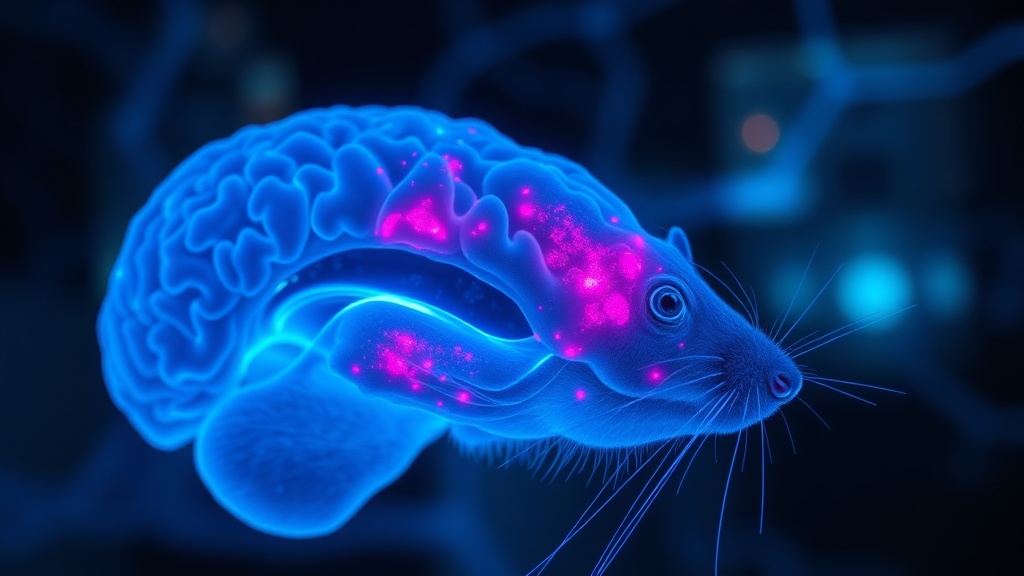
A companion study published in Molecular Psychiatry by a separate research group adds a critical layer. Using Translating Ribosome Affinity Purification (TRAP) with RNA sequencing, they demonstrated that chronic fluoxetine treatment selectively enhances translational activity in hilar mossy cells (MCs) of the dentate gyrus — with zero detectable changes in neighboring granule cells (GCs) [3].
The specificity here is striking. The neuropeptide PACAP was identified as undergoing translation-dependent upregulation exclusively in mossy cells during chronic FLX treatment [3]. This PACAP induction then mediates neuroadaptive plasticity in PAC1 receptor-expressing granule cells. Notably, this behavioral response was prominent in female mice, adding a sex-dependent dimension that most antidepressant research still ignores.
What does this actually feel like, experientially? The therapeutic delay of SSRIs — that 4-to-6-week window — may reflect precisely this kind of cell-type-specific translational reprogramming. You're not waiting for serotonin to "kick in." You're waiting for mossy cells to reprogram their protein synthesis machinery and upregulate PACAP signaling. That's a fundamentally different narrative.
The E/I Balance Story: Prefrontal Cortex and Passive Coping#
A third line of evidence comes from research on the rostral prelimbic cortex (rPL), showing that chronic stress reduces the excitation/inhibition (E/I) ratio through alterations in spiking rate, synaptic strength, and intrinsic excitability [4]. The fast-acting antidepressant (2R,6R)-hydroxynorketamine (HNK) — a ketamine metabolite — restored this E/I balance and partially reversed neuronal changes in chronically stressed mice.
Fast-spiking parvalbumin inhibitory neurons emerged as critical mediators of both the stress-induced disruption and the antidepressant restoration [4]. This connects directly to the priming model: if prior SSRI treatment fails to initiate the necessary neuroplastic cascades in these parvalbumin interneurons, subsequent ketamine therapy may find a prefrontal cortex that's functionally unreceptive.
Stress Habituation: The Hippocampal Dimension#
Research published in Nature Communications maps how repeated stress exposure produces transcriptional habituation in the ventral hippocampus — stress-induced gene expression is blunted without new response profiles emerging [5]. Two distinct mechanisms were identified: early blunting of cAMP-associated genes linked to reduced numbers of activated cells, and shortened transcriptional response of corticosterone-associated genes independent of cell activation counts.
This matters for the priming story because it suggests the brain's transcriptional response to stress is not static. It adapts. And the way it adapts — habituation versus sensitization versus novel programming — may determine whether subsequent pharmacological intervention finds a responsive or resistant substrate.
ECT: When the Molecular Landscape Needs a Hard Reset#
For cases where pharmacological approaches fail entirely, electroconvulsive therapy (ECT) remains the strongest intervention. A 2026 study in Translational Psychiatry using longitudinal neuroimaging of 88 MDD patients found that ECT modulated structural-functional connectivity coupling within the default mode network and somatomotor network [2]. At the molecular level, ECT enhanced mitochondrial respiration, reconfigured neuroplasticity-related pathways, and modulated gene expression alongside serotonergic and dopaminergic neurotransmission [2].
TRD Prevalence and Treatment Response Landscape
COMPARISON TABLE#
| Method | Mechanism | Evidence Level | Cost | Accessibility |
|---|---|---|---|---|
| Sequential SSRI → Ketamine (with molecular priming) | Transcriptional priming in NAc/PFC facilitating ketamine response | Preclinical (mouse CSDS model) | Moderate–High (ketamine clinic) | Limited — requires clinical supervision |
| SSRI Monotherapy | Serotonin reuptake inhibition; PACAP upregulation in dentate gyrus mossy cells | Multiple human RCTs; preclinical translatomics | Low (generic available) | High — first-line prescription |
| HNK (Ketamine metabolite) | Restores prefrontal E/I balance via parvalbumin interneuron modulation | Preclinical (mouse models) | Not yet commercially available | Not accessible — research stage |
| Electroconvulsive Therapy (ECT) | SC-FC coupling modulation; enhanced mitochondrial respiration; neuroplasticity pathway reconfiguration | Human longitudinal imaging (n=88) | High | Limited — specialized centers |
| Transcriptomic-guided precision targeting | Gene co-expression network analysis to predict responder status | Preclinical proof-of-concept | Very High (research-only) | Not accessible — experimental |
THE PROTOCOL#
Based on the current evidence — and I want to be clear that these are preclinical findings being translated cautiously — here are actionable steps for individuals navigating treatment-resistant depression or optimizing neuroplasticity protocols:
-
Audit your treatment history with your clinician. The priming effect data suggests that sequence matters. If you've trialed an SSRI and are considering ketamine, discuss whether the SSRI period — even if subjectively unsuccessful — may have laid molecular groundwork. Premature discontinuation before transcriptional reprogramming occurs (typically 4–6 weeks minimum) could eliminate the priming benefit.
-
Prioritize adequate SSRI trial duration. Based on the PACAP upregulation data [3], the translational reprogramming in dentate gyrus mossy cells requires chronic — not acute — exposure. Minimum 6 weeks at therapeutic dose before concluding non-response. This isn't new advice, but the mechanistic basis is.
-
Support mitochondrial function during treatment transitions. ECT research demonstrated enhanced mitochondrial respiration as a mechanism of action [2]. While you're unlikely to need ECT, supporting mitochondrial efficiency through established interventions — CoQ10 (100–200 mg/day), adequate B-vitamin status, and consistent aerobic exercise (150 min/week moderate intensity) — creates a more favorable metabolic environment for neuroplastic change.
-
Track HRV as a proxy for autonomic and prefrontal function. The E/I balance findings in the prefrontal cortex [4] have a functional correlate: heart rate variability reflects vagal tone and prefrontal regulatory capacity. Monitor resting HRV (using validated wearables) before, during, and after treatment changes. A rising HRV trend may indicate improving prefrontal E/I balance.

-
Manage chronic stress exposure deliberately. The hippocampal habituation research [5] shows that repeated stress blunts transcriptional responsiveness via cAMP-associated gene suppression. Chronic unmanaged stress may reduce the brain's capacity to mount the adaptive molecular responses that antidepressants depend on. Structured stress management — whether through meditation, cold exposure, or scheduled recovery periods — isn't supplementary. It's mechanistically relevant.
-
Discuss biomarker-guided treatment sequencing with your psychiatrist. While transcriptomic profiling isn't clinically available yet, baseline SC-FC coupling metrics showed predictive value for ECT response [2]. Ask about emerging predictive tools and clinical trials evaluating precision psychiatry approaches.
Related Video
What is molecular priming in the context of antidepressant treatment?#
Molecular priming refers to the process by which prior drug exposure reshapes the brain's transcriptional landscape in a way that facilitates or blocks response to subsequent treatments. In the CSDS mouse model, fluoxetine created transcriptional conditions in the nucleus accumbens and prefrontal cortex that enabled ketamine to work in some animals but not others [1]. It's distinct from simple drug sensitization — it's about gene network configuration.
Why do SSRIs take weeks to work if serotonin increases within hours?#
The PACAP discovery provides a compelling answer: chronic SSRI treatment triggers cell-type-specific translational reprogramming in dentate gyrus mossy cells that unfolds over weeks [3]. You're not waiting for serotonin levels to rise — they do that quickly. You're waiting for downstream protein synthesis machinery to reconfigure peptidergic signaling pathways. The delay is biological, not pharmacological.
How does chronic stress affect antidepressant response at the molecular level?#
Chronic stress produces transcriptional habituation — blunted gene expression responses — through at least two mechanisms: suppression of cAMP-associated genes and shortened corticosterone-driven transcription [5]. It also disrupts prefrontal E/I balance by altering parvalbumin interneuron function [4]. Both effects may reduce the brain's capacity to mount the adaptive molecular responses that antidepressants require.
Who might benefit from transcriptomic-guided treatment approaches?#
Individuals with treatment-resistant depression — roughly 30% of MDD patients — stand to benefit most. The preclinical data suggests that gene co-expression network analysis could potentially identify non-responders before they cycle through multiple failed trials [1]. However, this remains experimental. Clinical implementation will require human validation studies, which have not yet been conducted.
When should someone consider ECT for treatment-resistant depression?#
Current clinical guidelines recommend ECT after failure of two or more adequate antidepressant trials. The 2026 neuroimaging data strengthens the case by showing ECT's mechanism involves structural-functional connectivity remodulation and enhanced mitochondrial respiration [2]. The honest answer is that ECT remains underutilized partly due to stigma, despite being one of the most effective interventions we have for severe TRD.
VERDICT#
Score: 7.5/10
This is important preclinical work that reframes antidepressant resistance from a passive concept ("the drug didn't work") to an active molecular process ("the brain's transcriptional architecture diverged"). The priming model is elegant and has real explanatory power. I'm less convinced by how cleanly it'll translate to human heterogeneity — mouse CSDS is a useful model, but human TRD involves polypharmacy histories, comorbidities, and psychosocial variables that no rodent paradigm captures. The PACAP finding is genuinely novel and cell-type-specific in a way that most antidepressant research isn't. I'd want to see this replicated across labs and, critically, validated in human post-mortem or iPSC-derived tissue before changing clinical protocols. But as a mechanistic framework? It's the best articulation of why sequence and history matter in antidepressant treatment that I've encountered. The ECT neuroimaging data is solid but incremental. The stress habituation work from Nature Communications is the kind of foundational resource that will pay dividends for years. Taken together, these studies move us closer to precision psychiatry — but we're still in the preclinical corridor, and honesty about that distance matters.
References
- 1.Author(s) not listed. Transcriptional profiles of antidepressant resistance across the corticolimbic pathway of chronically stressed mice. Neuropsychopharmacology (2026). ↩
- 2.Author(s) not listed. Neurobiological mechanisms of electroconvulsive therapy in major depressive disorder: structure-function coupling with gene expression and molecular mechanism. Translational Psychiatry (2026). ↩
- 3.Author(s) not listed. Translational reprogramming of dentate gyrus peptidergic circuitry gates antidepressant efficacy. Molecular Psychiatry (2026). ↩
- 4.Author(s) not listed. Prefrontal contribution to passive coping behaviour in chronic stress and treatment by fast-acting antidepressant. Neuropsychopharmacology (2025). ↩
- 5.Author(s) not listed. Distinct mechanisms of transcriptomic habituation to repeated stress in the mouse hippocampus. Nature Communications (2025). ↩
Fen Adler
Fen writes with psychological nuance and a slightly meandering quality that feels human. He'll start pursuing one idea, realize it connects to something else, and follow it briefly before returning: 'This reminds me of something from the attentional blink literature — different context, but the pattern holds.' He's interested in the experience, not just the mechanism, which means he'll occasionally ask: 'What does this actually feel like?' when discussing neurological effects.
View all articles →