Transcranial Photobiomodulation tPBM Brain Effects: New Research

THE PROTOHUMAN PERSPECTIVE#
The human brain burns roughly 20% of the body's total metabolic output. Anything that shifts the efficiency of that burn — without pharmaceuticals, without surgery, without side effects worth naming — deserves serious attention. Transcranial photobiomodulation is not new. But what is new is that we're finally getting the mechanistic data to explain why shining near-infrared light through the skull actually does something measurable.
These studies collectively move tPBM from "interesting biohack" toward "precision neuromodulation tool." The shift from default mode network to central executive network dominance is not a trivial observation — it maps directly onto what we see in high-performing cognitive states. The duration-of-action data from O'Connor et al. changes how we think about dosing. And the chemobrain results, while preliminary, suggest tPBM may reach populations that current interventions simply cannot help. For anyone optimizing cognitive performance or recovering neurological function, this body of work matters.
THE SCIENCE#
What tPBM Actually Does at the Cellular Level#
Let me be precise, because the wellness market has done more damage to this field than the skeptics ever could.
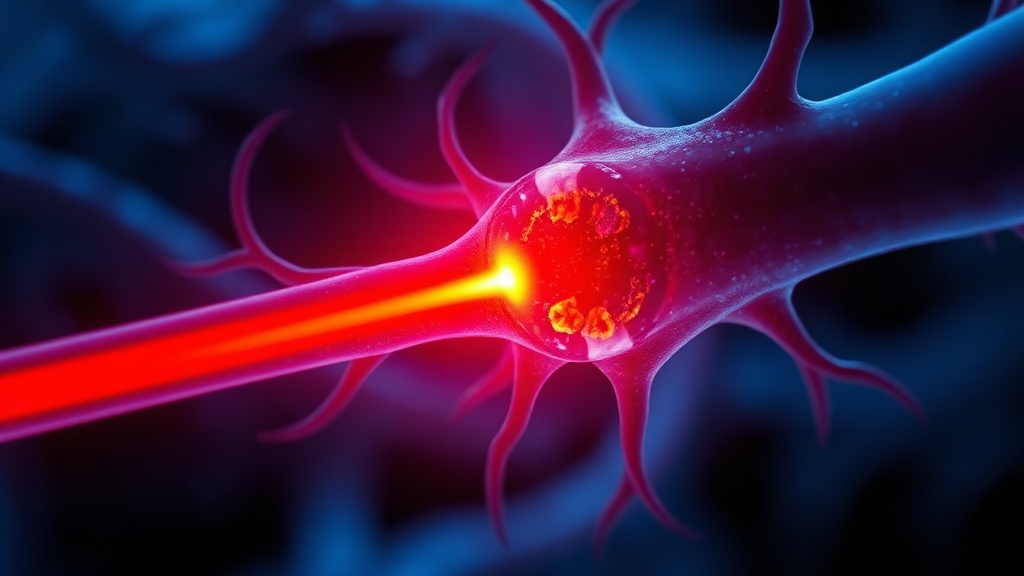
Transcranial photobiomodulation uses near-infrared light — specifically at 1,064 nm in these studies — to penetrate the skull and reach cortical tissue. The primary mechanism is the dissociation of nitric oxide from cytochrome c oxidase (CCO), the rate-limiting enzyme in the mitochondrial electron transport chain [6]. Remove that inhibitory NO molecule, and you get increased adenosine triphosphate (ATP) production. More ATP means more metabolic fuel for neurons. This isn't speculative — it's measurable via increases in oxidized CCO concentrations and cerebral blood flow.
What remained poorly understood was what happens at the network level. Individual mitochondria getting an energy boost is one thing. Reorganizing large-scale cortical dynamics is something else entirely.
Frequency-Specific Cortical Reorganization#
Bastola et al. used simultaneous magnetoencephalography (MEG) and electroencephalography (EEG) in 25 healthy adults to map what happens after prefrontal tPBM at 1,064 nm [1]. The methodology here is worth noting: they used distributed source imaging (sLORETA) and global optimization dipole modeling — tools that let you trace how oscillatory activity propagates across Brodmann areas and functional networks.
The results showed frequency-specific reorganization. Alpha oscillations engaged coordinated fronto-visual circuits, while beta activity preferentially recruited higher-order executive regions. Source imaging revealed a post-stimulation shift from default mode network (DMN) toward central executive network (CEN) dominance with stronger directed interactions.
This is significant. The DMN-to-CEN shift is what the neuroscience literature associates with transitioning from mind-wandering states to focused, task-engaged cognition. tPBM appears to induce this transition through structured, oscillatory modulation — not a brute-force activation, but a reorganization of existing network hierarchies.
Infra-slow rhythms also showed modulation, suggesting that tPBM influences hierarchical phase-amplitude coupling — the mechanism by which slow oscillations coordinate faster activity patterns across distributed cortical regions.
Single Session Effects Last Days, Not Minutes#
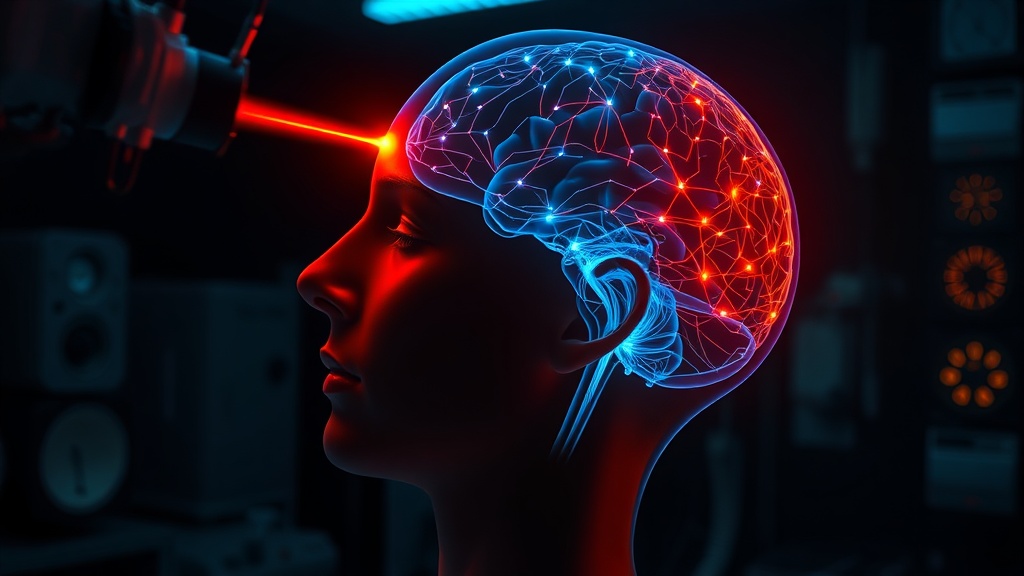
Here's where it gets interesting. O'Connor et al. measured the duration of functional connectivity effects from a single administration of 1,064 nm transcranial infrared laser stimulation (TILS) to the right anterior prefrontal cortex [2]. Twelve healthy adults underwent a sham-controlled, within-subject crossover design with a 4-week washout period. Functional connectivity was measured via 48-channel fNIRS at six time points over five days.
A single session significantly modulated PFC functional connectivity during memory tasks across the entire 5-day assessment period. No significant effects appeared during resting-state conditions — the changes were state-dependent, emerging only under cognitive load.
The catch, though. Twelve subjects is small. Within-subject crossover with a 4-week washout helps control for individual variability, which I appreciate, but I'd want to see this replicated at n=40+ before anchoring dosing protocols to it. Still — five days of measurable functional neuroplasticity from one session is not something you can dismiss.
tPBM for Chemobrain: 93.5% Response Rate#
Godaert et al. conducted a pilot study on transcranial PBM for chemobrain — the cognitive impairment that follows chemotherapy — in cancer patients [3]. They used a Vielight Neuro Duo 4 device in Gamma mode, delivering 20-minute sessions weekly for a minimum of 10 weeks.
The numbers are striking: 93.5% of patients showed clinically meaningful improvement on the FACT-Cog scale, with mean total scores increasing significantly (p < 0.001). About a third of the population showed substantial recovery.
I'm less convinced by the absence of a control group here. This is an open-label pilot with no sham arm, and the FACT-Cog is a self-report measure of perceived cognitive impairment. Placebo effects in cognitive self-assessment are enormous. That said — the incidence of chemobrain ranges from 9.6% to 81% depending on the study, and as the authors note, no pharmacological treatment has proven efficacy against chemotherapy-induced CNS lesions. A Cochrane review found existing approaches produced inconsistent and unreliable results. So even cautious optimism here represents a meaningful signal.
tPBM vs. TMS: The First Direct Comparison#
Bibb et al. published what appears to be the first study directly comparing tPBM and TMS using MRI [4]. Eight participants underwent four lab visits each — tPBM, TMS, and their respective shams — targeting the somatomotor cortex.
Both modalities increased activation in the left somatomotor region during a finger-tapping task. But trending increases in left-lateralized functional and structural connectivity from M1 to thalamus appeared only after tPBM, not TMS. tPBM may be superior to TMS at inducing connectivity changes in connected nodes, though with n=8, "may" is doing a lot of heavy lifting in that sentence.
Parameter Dependence: Wavelength, Irradiance, and Skin Tone Matter#
Chen et al.'s bioRxiv preprint used fMRI to evaluate tPBM's effects on BOLD signal and cerebral blood flow across varying wavelengths, irradiance levels, and pulsing frequencies in 45 healthy adults [6]. The responses were spatially varying — not just at the irradiation site but propagating to distal regions including the default-mode network. The precuneus, posterior cingulate cortex, and hippocampus responded over 40–100 seconds post-stimulation.
Critically, responses depended on stimulation parameters, sex, and skin tone. This is something the consumer device market almost entirely ignores. Wavelength matters. Irradiance matters. Time matters. Skin matters. Most consumer devices get at least one of these wrong.
Chemobrain tPBM Response: Pre- vs Post-Treatment FACT-Cog Scores
COMPARISON TABLE#
| Method | Mechanism | Evidence Level | Cost | Accessibility |
|---|---|---|---|---|
| tPBM (1064 nm laser) | CCO activation → ATP increase → cortical network reorganization | Multiple small human trials; mechanistic fMRI/MEG data | $300–$1,800 (consumer devices); $5,000+ (clinical lasers) | Home use possible; clinical devices require supervision |
| rTMS | Electromagnetic pulses modulate cortical excitability | Large meta-analyses; FDA-cleared for MDD | $6,000–$12,000 per treatment course | Clinic-only; requires trained operator |
| tDCS | Weak direct current shifts neuronal membrane potential | Mixed; many underpowered trials | $50–$400 (consumer); $2,000+ (clinical) | Home use possible; parameter standardization poor |
| Nootropic pharmacology (racetams, modafinil) | Varied: cholinergic, glutamatergic, dopaminergic modulation | Varies widely by compound | $20–$150/month | Over-the-counter or prescription depending on jurisdiction |
| Cognitive training | Task-specific neural pathway reinforcement | Meta-analyses show limited transfer effects | Free–$100/month (apps) | Fully accessible |
THE PROTOCOL#
Based on current evidence from these studies, here is a structured approach for those considering tPBM for cognitive optimization. Note: optimal dosing in humans is not yet fully established, and individual responses may vary based on skin tone, skull thickness, and baseline neurological status.
Step 1: Select appropriate hardware. For home use, devices operating at 810 nm or 1,064 nm with documented irradiance specifications are the minimum. The Vielight Neuro Duo (used in the chemobrain study) or clinical-grade 1,064 nm CW laser systems (used in the Bastola and O'Connor studies) have the most supporting data. Do not use devices that don't publish their power density specifications — if a manufacturer won't tell you the irradiance at the scalp surface, walk away.
Step 2: Target the right prefrontal cortex. The O'Connor et al. study specifically targeted the right anterior PFC, consistent with prior work showing improvements in PFC-based memory, learning, sustained attention, and mood [2]. Place the device over the right forehead, approximately at the Fp2 position in the 10-20 EEG system. For broader cognitive effects, the Bastola et al. protocol targeted bilateral prefrontal regions [1].
Step 3: Set duration and frequency parameters. For pulsed devices, 40 Hz (gamma frequency) was used in the chemobrain protocol [3]. Session duration of 20 minutes aligns with the majority of positive findings. For continuous-wave lasers, the O'Connor and Bastola studies used single acute sessions with measurable effects.
Step 4: Establish a dosing schedule. The chemobrain protocol used once weekly for 10+ weeks [3]. However, O'Connor et al.'s finding that a single session modulates connectivity for up to 5 days suggests that twice-weekly sessions may be sufficient for maintenance [2]. Start with one session per week and assess subjective cognitive changes over 4–6 weeks before adjusting.
Step 5: Track cognitive outcomes. Use standardized measures — n-back tasks, reaction time tests, or validated cognitive batteries — not just subjective "brain fog" assessments. The O'Connor study found effects emerged specifically under cognitive load, not resting state. Test yourself while working, not while relaxing.
Step 6: Account for skin tone. Chen et al. demonstrated that tPBM responses are skin-tone dependent [6]. Individuals with darker skin tones may require adjusted irradiance parameters. This is an active area of investigation, and honest answer: the field does not yet have standardized dosing adjustments for melanin variation.
Related Video
VERDICT#
Score: 7.5/10
The mechanistic picture is getting sharper. The Bastola MEG-EEG study provides the most convincing demonstration yet that tPBM doesn't just "stimulate" the brain — it reorganizes oscillatory hierarchies in a structured, frequency-specific way. The duration-of-action data from O'Connor's group is genuinely surprising and changes how I think about protocol design. The chemobrain results are exciting but methodologically weak — no sham, self-report outcomes, pilot scale. The tPBM-vs-TMS comparison is interesting but underpowered to the point where I wouldn't change clinical practice based on it.
What holds me back from scoring higher: we still lack large, multi-site RCTs with proper blinding. The parameter dependence data from Chen et al. is both important and sobering — it means there's no universal "just turn it on" protocol. Skin tone, sex, irradiance, frequency all modulate outcomes. The field is moving in the right direction, but we're not at the point where I'd tell someone to replace established interventions with tPBM. As an adjunct, though? The risk-benefit profile is difficult to argue against.
Frequently Asked Questions5
References
- 1.Bastola S, Pruitt T, Davenport EM, Maldjian JA, Liu H, Alexandrakis G. Transcranial 1064-nm laser photobiomodulation modulates frequency-specific cortical source dynamics and functional connectivity in healthy adults. Frontiers in Human Neuroscience (2026). ↩
- 2.O'Connor P, Lime T, Barrett DW, Gonzalez-Lima F. Photobiomodulation mechanisms: duration of action in the human prefrontal cortex. Frontiers in Behavioral Neuroscience (2025). ↩
- 3.Godaert L, Dramé M, Lemaire A. Transcranial photobiomodulation for the treatment of chemobrain: new perspectives from a pilot study. Supportive Care in Cancer (2026). ↩
- 4.Bibb SA, Yu EJ, Molloy MF, LaRocco J, Resnick P, Reeves K, Phan KL, Krishna S, Saygin ZM. Pilot study comparing effects of infrared neuromodulation and transcranial magnetic stimulation using magnetic resonance imaging. Frontiers in Human Neuroscience (2025). ↩
- 5.Derakhshan D, Lipsman N, Feinstein A, Levitt A, Eizenman M, Rabin J, Giacobbe P. Identification of cognitive predictors of remission in depression following limited effect of repetitive transcranial magnetic stimulation on hot and cold cognitive systems. Frontiers in Human Neuroscience (2025). ↩
- 6.Chen JJ, Zhong XZ, Chen JX, Van Lankveld H. The fMRI response to transcranial photobiomodulation: the effect of wavelength, irradiance, frequency and skin tone on the BOLD and CBF response in healthy young adults. bioRxiv (2025). ↩
Sova Reld
Sova writes with focused intensity and low tolerance for vague claims. She came to photobiomodulation through personal experimentation and is irritated by both true believers and reflexive skeptics. Her writing has edge: 'The wellness market has done more damage to this field than the skeptics ever could.' She's extremely precise about parameters — wavelength, irradiance, duration — and will tell you when a study used inadequate dosing without apology.
View all articles →