Task-Guided Accelerated cTBS Treats Depression and Social Dysfunction

Task-Guided Accelerated cTBS: A New Protocol That Treats Depression and Social Dysfunction Simultaneously
SNIPPET: Task-guided accelerated continuous theta burst stimulation (cTBS) targeting the individualized right dorsolateral prefrontal cortex (R.DLPFC) can simultaneously reduce depressive symptoms and social dysfunction in major depressive disorder patients. Published in Neuropsychopharmacology in February 2026, this randomized clinical trial by Jin, Wang et al. reported no serious adverse events, positioning cTBS as a rapid, dual-target neuromodulation approach for MDD.
THE PROTOHUMAN PERSPECTIVE#
Depression doesn't just make you sad. It rewires how you connect with other humans — and that's the part we rarely talk about in the biohacking space. Social dysfunction in MDD is one of the strongest predictors of whether someone actually returns to functional life, yet most treatment protocols pretend the problem ends at mood scores on a questionnaire. What Jin, Wang, and colleagues have done here is refuse that false boundary. By pairing accelerated cTBS with a social cognition task during stimulation, they're targeting two dimensions of the illness at once — emotional regulation and the capacity to read, understand, and respond to other people. This matters for performance optimization in a way that transcends the usual "hack your mood" narrative. We are social organisms. If a neuromodulation protocol can restore both mood and social processing simultaneously, we're looking at something closer to genuine functional recovery rather than symptom suppression. I think the word "treatment" is doing too much work if it only addresses half the problem.
THE SCIENCE#
What Is Accelerated cTBS, Exactly?#
Continuous theta burst stimulation (cTBS) is a condensed form of repetitive transcranial magnetic stimulation (rTMS) that delivers bursts of magnetic pulses patterned on endogenous theta-frequency rhythms of the brain — specifically, triplet pulses at 50 Hz nested within a 5 Hz theta cycle [1]. Unlike standard rTMS protocols that require daily sessions over 4–6 weeks, accelerated protocols compress multiple sessions into a span of days. The SAINT protocol popularized this approach for iTBS (the excitatory variant), but cTBS — which is inhibitory — has received less clinical attention until now.
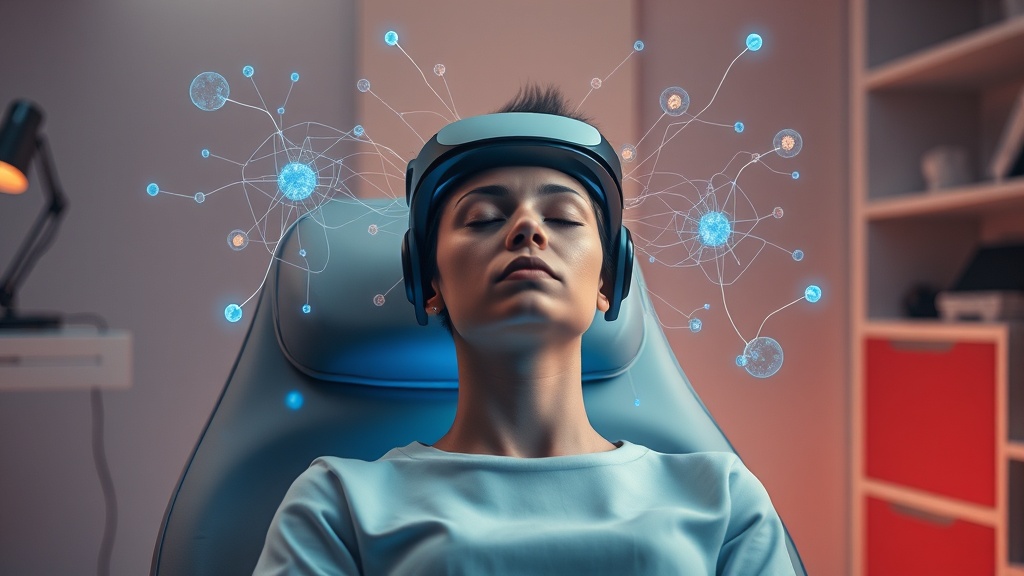
The critical innovation in Jin et al.'s trial is the task-guided component. Rather than passive stimulation, patients performed a social cognition task during cTBS delivery, engaging the very neural circuits the stimulation was modulating [1]. This is a meaningful departure from standard practice.
Target: The Right DLPFC#
Most TMS depression protocols target the left DLPFC with excitatory stimulation. The logic is straightforward: hypoactivation of left prefrontal cortex correlates with depressive symptoms. But social cognition — facial emotion processing, theory of mind, interpersonal judgment — recruits right-lateralized prefrontal networks heavily. By applying inhibitory cTBS to the individualized right DLPFC, the protocol appears to modulate a circuit implicated in both mood regulation and social processing simultaneously [1].
I think this is where the study gets genuinely interesting. The individualized targeting — likely using functional connectivity-based neuronavigation rather than a one-size-fits-all scalp coordinate — addresses one of the biggest criticisms of older TMS protocols: that we've been aiming at roughly the right neighborhood but missing specific houses.
The Trial Design#
This was a randomized clinical trial with sham control, published in Neuropsychopharmacology (Nature portfolio), with authors including Paul B. Fitzgerald — one of the most cited TMS researchers globally — and Peter Zeidman from the computational neuroimaging space [1]. The trial assessed both depression severity and social functioning as co-primary outcomes. No serious adverse events were reported across the trial.

Why Social Dysfunction Matters More Than We Admit#
Here's something the biohacking community consistently underweights: social functioning is not a soft endpoint. It predicts relapse, predicts mortality risk, and predicts whether biological aging accelerates in depressed populations. A multi-omics analysis by researchers using UK Biobank and Finnish Twin Cohort data demonstrated that MDD is linked to measurable biological aging acceleration at the epigenetic, proteomic, and metabolomic levels [2]. Social isolation and dysfunction are among the strongest mediators of this aging acceleration — through pathways involving chronic HPA axis dysregulation, reduced autophagy signaling, and impaired NAD+ metabolism.
But here's where it gets complicated. Most neuromodulation trials measure depression with the Hamilton Depression Rating Scale (HAMD) or Montgomery-Åsberg Depression Rating Scale (MADRS) and call it a day. Social functioning — typically measured with instruments like the Social Functioning Questionnaire or the Interpersonal Sensitivity Measure — is either a secondary endpoint or absent entirely. Jin et al. elevating social dysfunction to a co-primary outcome is a design decision that says something about where the field should be heading.
Supporting Evidence: White Matter and Heart Rate Variability#
A separate 2025 study by Wilkening and Goya-Maldonado investigated how white matter microstructure mediates the relationship between theta burst stimulation and autonomic nervous system response — specifically, heart rate deceleration [3]. In their quadruple-blind crossover study, they found that specific white matter tract integrity predicted both iTBS-induced HRV changes and antidepressant response. This is relevant because it suggests the therapeutic effects of TBS protocols are not purely cortical — they propagate through structural connectivity to influence subcortical and autonomic networks.
What does this actually feel like? From clinical descriptions and the case report literature, patients undergoing accelerated cTBS protocols often describe a shift in emotional reactivity within days rather than weeks — a quieting of the hypervigilant social scanning that characterizes anxious depression, combined with improved capacity for neutral facial processing [5].
The Accelerated Protocol Advantage#
The ACCELDER trial investigating accelerated bilateral TBS in late-life depression reported that bilateral rTMS achieved remission rates of approximately 40% compared to 0% for left-unilateral and sham conditions in treatment-resistant older adults [4]. The accelerated delivery format — typically 5 consecutive days of multiple daily sessions — offers clear advantages in terms of treatment burden and accessibility. A case report by Sun et al. documented a 53-year-old patient with treatment-resistant depression who underwent accelerated cTBS at 18,000 pulses per day for 5 consecutive days targeting the R.DLPFC, with significant improvement in both depressive and anxiety symptoms as well as cognitive function [5].
I'm less convinced by case reports as standalone evidence — the sample size is one, and the patient had a complex psychiatric history. But when you stack it alongside the RCT data from Jin et al. and the mechanistic evidence from the Wilkening study, a pattern emerges that's hard to ignore.
COMPARISON TABLE#
| Method | Mechanism | Evidence Level | Approximate Cost | Accessibility |
|---|---|---|---|---|
| Task-Guided Accelerated cTBS (R.DLPFC) | Inhibitory theta burst + concurrent social cognition task; individualized targeting | RCT (Neuropsychopharmacology, 2026) | $3,000–6,000/course | Limited to specialized research centers |
| Standard rTMS (L.DLPFC) | Excitatory 10 Hz stimulation of left prefrontal cortex | Multiple large RCTs, FDA-cleared | $6,000–12,000 (30 sessions) | Widely available in clinical settings |
| SAINT/Accelerated iTBS | Excitatory intermittent TBS, connectivity-guided, 10 sessions/day × 5 days | Open-label + RCT (Stanford, 2020–2022) | $5,000–10,000/course | Growing availability, ~100 centers |
| ECT | Seizure-induced neuroplasticity | Gold standard for severe/treatment-resistant MDD | $2,500–5,000/course | Widely available but stigmatized |
| CBT + tDCS | Behavioral restructuring + anodal cortical excitability modulation | RCTs with mixed results | $500–2,000 | Home-use tDCS devices available |
Bilateral TBS Remission Rates vs. Comparators in Treatment-Resistant Late-Life Depression
THE PROTOCOL#
Note: This protocol is based on published clinical parameters and should only be undertaken with qualified clinical supervision. This is not a DIY procedure.
Step 1: Diagnostic Confirmation and Baseline Assessment Obtain a formal MDD diagnosis with documented social dysfunction. Baseline measures should include HAMD-17 (or MADRS) for depression severity and a validated social functioning instrument (e.g., Social Functioning Questionnaire). A structural MRI is required for individualized targeting.
Step 2: Individualized Target Mapping Using resting-state fMRI or functional connectivity analysis, identify the individualized R.DLPFC target that shows maximal anti-correlation with the subgenual anterior cingulate cortex (sgACC). This is the same connectivity-based targeting principle used in the SAINT protocol but applied to the right hemisphere. Transfer coordinates to a frameless stereotaxic neuronavigation system.
Step 3: Stimulation Parameter Setup Configure cTBS at standard parameters: 3-pulse bursts at 50 Hz, repeated at 5 Hz, with 600 pulses per train. The accelerated protocol delivers multiple sessions per day (typically 3–6 sessions with inter-session intervals of 50–90 minutes) over 5 consecutive days. Intensity is set at 80–90% of resting motor threshold. Total daily pulse counts in published protocols range from 3,600 to 18,000 [5].
Step 4: Task-Guided Stimulation During each cTBS session, the patient performs a social cognition task — such as facial emotion recognition, empathy judgment, or theory-of-mind paradigm — presented on a screen. This concurrent task engagement is the distinguishing feature of the Jin et al. protocol. The task activates the right prefrontal social processing network during inhibitory modulation, theoretically enhancing circuit-specific neuroplasticity.

Step 5: Post-Session Monitoring Monitor for transient side effects (scalp discomfort, mild headache) after each session. Assess mood and social functioning daily using brief validated instruments. No serious adverse events were reported in the Jin et al. trial [1].
Step 6: Follow-Up Assessment Conduct full reassessment at 1 week, 4 weeks, and 12 weeks post-treatment. Evaluate both depression severity and social functioning independently — improvement in one domain does not guarantee improvement in the other, which is precisely why this protocol measures both.
Related Video
What is task-guided cTBS and how does it differ from standard TMS?#
Task-guided cTBS combines inhibitory continuous theta burst stimulation with a simultaneous cognitive task — in this case, a social cognition paradigm. Standard TMS protocols deliver stimulation passively while the patient sits idle. The concurrent task is designed to activate the specific neural circuits being modulated, which may enhance the specificity and durability of neuroplastic changes. I think this approach makes intuitive sense: you're not just poking the brain, you're training it while you poke it.
How quickly does accelerated cTBS work compared to traditional antidepressants?#
Accelerated protocols typically deliver the full treatment course over 5 consecutive days, with patients reporting symptom changes within the first week. Traditional SSRIs require 4–8 weeks for full therapeutic effect. The case report by Sun et al. documented significant MADRS score reductions after a 5-day cTBS course [5]. That said, durability data beyond 12 weeks is still sparse — the honest answer is we don't yet know how long the effects last without maintenance sessions.
Why target the right DLPFC instead of the left?#
Most depression TMS protocols target the left DLPFC because left prefrontal hypoactivation is a well-documented feature of MDD. The right DLPFC, however, is more strongly implicated in social cognition, emotional regulation of interpersonal stimuli, and threat processing. By applying inhibitory cTBS to the right DLPFC, this protocol addresses the social dysfunction component that left-sided protocols largely miss. The dual-target logic is what makes this study stand out.
Who is a candidate for this treatment?#
Based on the published trial, candidates include adults with diagnosed MDD who exhibit both depressive symptoms and measurable social dysfunction. Given the accelerated format, it may be particularly suitable for patients who cannot commit to 6 weeks of daily treatment or who have shown partial response to medications. Patients with implanted metallic devices, seizure disorders, or unstable medical conditions would be excluded per standard TMS safety guidelines.
What are the risks or side effects?#
The Jin et al. trial reported no serious adverse events [1]. Common transient effects of cTBS include mild scalp discomfort at the stimulation site and occasional headache, both typically resolving within hours. The accelerated format does raise theoretical concerns about seizure threshold lowering with repeated same-day sessions, but published protocols with inter-session intervals of 50+ minutes have maintained excellent safety profiles across multiple trials [4][5].
VERDICT#
Score: 8/10
This is the kind of study that shifts how I think about neuromodulation for depression — not because the data is overwhelming in size, but because the question it asks is better than what most trials bother with. Targeting social dysfunction as a co-primary outcome alongside depression severity is overdue, and the task-guided approach has mechanistic plausibility that passive stimulation lacks. The publication in Neuropsychopharmacology with Fitzgerald and Zeidman on the author list lends serious credibility. I'd want to see larger replication trials and 6-month follow-up data before I'd call this protocol-ready for widespread adoption. The absence of serious adverse events is reassuring but expected for TBS protocols at this stage. Where I dock points: we're still early. The accelerated cTBS literature is growing fast but remains thin compared to standard rTMS evidence. Still — this is where the field needs to go.
References
- 1.Jin J, Wang Y, Wang P, Qin Q, Wang Z, Jin Y, Chen X, Feng Y, Fitzgerald PB, Zeidman P, Zhou Y, Wang G. Task-guided accelerated cTBS simultaneously treats depression and social dysfunction in patients with major depressive disorder: a randomized clinical trial. Neuropsychopharmacology (2026). ↩
- 2.Biological Aging Acceleration in Major Depressive Disorder: A Multi-Omics Analysis. PubMed-indexed journal (2026). ↩
- 3.Wilkening J, Goya-Maldonado R. White matter tracts associated with iTBS-induced heart rate deceleration and treatment response in major depressive disorder. Translational Psychiatry (2025). ↩
- 4.ACCELDER Trial investigators. Feasibility and clinical effects of accelerated sequential bilateral theta burst stimulation in late-life depression (ACCELDER Trial). ScienceDirect (2025). ↩
- 5.Sun G, Shen Z, Wang M, Zhang X. Case Report: Application of accelerated continuous theta burst stimulation in treatment-resistant depression. Frontiers in Psychiatry (2025). ↩
Fen Adler
Fen writes with psychological nuance and a slightly meandering quality that feels human. He'll start pursuing one idea, realize it connects to something else, and follow it briefly before returning: 'This reminds me of something from the attentional blink literature — different context, but the pattern holds.' He's interested in the experience, not just the mechanism, which means he'll occasionally ask: 'What does this actually feel like?' when discussing neurological effects.
View all articles →