Retrograded Black and Red Rice: Resistant Starch Up to 51%

SNIPPET: Retrogradation — a freeze-thaw-drying process applied to cooked pigmented rice — dramatically increases resistant starch content to 47–51%, lowers predicted glycemic index, and enhances pancreatic enzyme inhibition by up to 47.6%. This simple kitchen-adaptable method transforms black and red rice into a functional food with measurable metabolic benefits.
THE PROTOHUMAN PERSPECTIVE#
Your rice is working against you. Or more precisely, the way you cook it is.
Every time you eat freshly cooked white or pigmented rice, the starch hits your gut in its most digestible form — rapidly digestible starch floods your bloodstream with glucose, spikes insulin, and sets off the metabolic cascade that, repeated thousands of times over a lifetime, drives insulin resistance. But the same rice, processed through a retrogradation cycle, becomes a fundamentally different food at the molecular level.
This matters because rice feeds half the planet. If a processing method that requires nothing more than a freezer, an oven, and patience can shift nearly half the starch content into a resistant form — one that behaves more like fibre than sugar — the implications for metabolic health optimization are massive. We're not talking about a supplement. We're not talking about a novel compound. We're talking about restructuring a staple food's molecular architecture so it feeds your gut microbiome instead of your glucose meter.
For those of us tracking HRV, fasting glucose, and postprandial responses, this is a lever worth pulling.
THE SCIENCE#
What Retrogradation Actually Does to Starch#
Starch retrogradation is the recrystallization of amylose and amylopectin chains after gelatinization. When you cook rice, heat disrupts the ordered crystalline structure of starch granules — this is gelatinization. The starch becomes amorphous, accessible, and highly digestible. But when you cool that cooked rice and then dry it under controlled conditions, the amylose chains reassociate into tightly packed double-helix structures that resist enzymatic breakdown in the small intestine[1].
The study by researchers at Universiti Malaysia Sabah, published in Vegetos (Springer Nature) in March 2026, applied a specific freeze-thaw-drying protocol to two local pigmented varieties: Tadong (black rice) and Merah (red rice). The method involved gelatinization, cooling at 4°C, drying at 60°C, then further drying at 95°C[1].
The results aren't subtle.
Resistant Starch Surges, Rapid Starch Collapses#
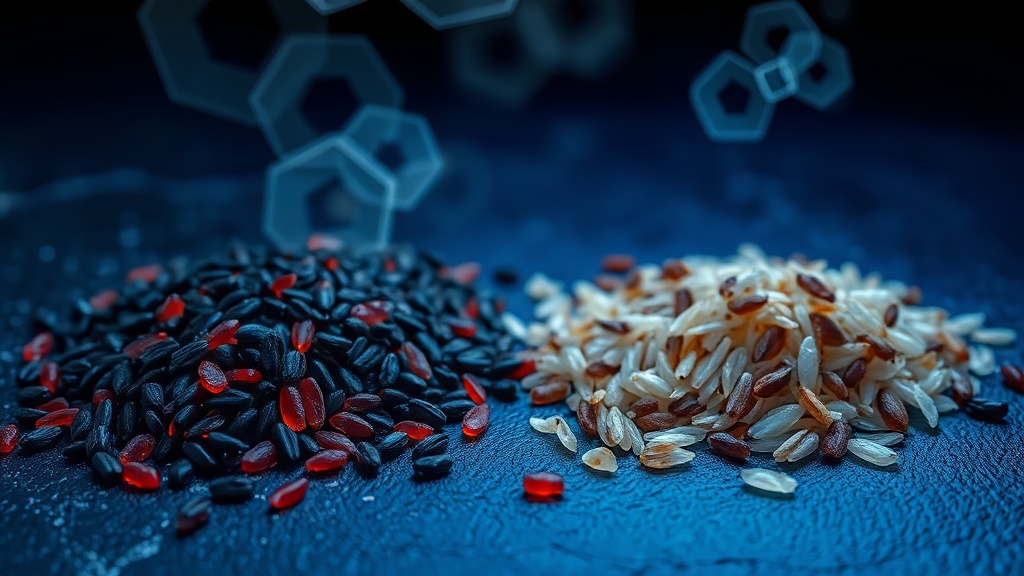
Retrograded samples showed resistant starch (RS) content of 47.37–51.00%, compared to controls. Rapidly digestible starch (RDS) dropped to 20.93–25.47%. The apparent amylose content rose to 24.83–26.43%, and the degree of retrogradation reached 69.29–70.39%[1].
To put that RS figure in context: most freshly cooked rice varieties contain RS levels between 1–5%. Japonica varieties studied by Chakraborty et al. (2025) in ACS Food Science and Technology showed RS values of only 1.4–1.6% with glycemic indices of 74–76[2]. We're looking at a roughly 30-fold increase in resistant starch through retrogradation alone.
That RS doesn't get digested in your small intestine. It passes to the colon, where gut bacteria ferment it into short-chain fatty acids — primarily butyrate — which feed colonocytes, reduce inflammation, and improve insulin sensitivity through mechanisms that involve AMPK activation and improved mitochondrial efficiency in peripheral tissues.
Enzyme Inhibition: A Second Line of Defense#
Here's where it gets interesting beyond just starch structure. The retrograded pigmented rice showed enhanced inhibition of pancreatic α-amylase (39.97–47.61%) and lipase (14.85–20.90%)[1]. α-amylase is the enzyme that breaks starch into maltose and glucose. Lipase handles fat digestion. Inhibiting both simultaneously means you're slowing carbohydrate and fat absorption — a dual mechanism that pharmaceutical interventions like acarbose and orlistat target separately.
I want to be careful here, though. These are in vitro enzyme inhibition assays, not human postprandial measurements. The gap between inhibiting an enzyme in a test tube and achieving clinically meaningful glucose reduction in a living human is real. The predicted glycemic index (PGI) was significantly reduced, but PGI is a calculated estimate from in vitro starch hydrolysis curves, not a measured human blood glucose response. I'd want to see continuous glucose monitor data from actual human subjects eating this rice before making strong claims about glycemic control.
The Trade-Off: Phenolic and Anthocyanin Losses#
Nothing is free. The thermal processing involved in retrogradation caused slight reductions in total phenolic content (TPC) and total monomeric anthocyanin content (TMAC)[1]. Black rice is prized specifically for its anthocyanin profile — cyanidin-3-glucoside being the dominant compound — and any processing that degrades these bioactives needs to be weighed against the starch modification benefits.
The study notes the reductions were "slight," but doesn't provide percentage loss figures in the abstract. This is a gap. If you're eating black rice specifically for its anthocyanin content and antioxidant capacity, the retrogradation process may partially undercut that goal.
But here's where I'd push back on anyone who sees this as a dealbreaker: the metabolic benefits of converting half your starch intake to resistant starch likely outweigh a modest anthocyanin reduction. You can get anthocyanins from blueberries. You can't easily get 50% RS rice without this processing step.
Molecular Structure Matters Beyond Amylose Content#
Supporting data from a January 2026 study in Agricultural Products Processing and Storage on rice noodle digestibility adds nuance[3]. That research found amylose content was negatively correlated with digestibility — the highest-amylose sample (31%) showed the lowest digestibility at 80% — but it wasn't the sole determinant. Fine molecular features like amylopectin branching degree (7.3%) and chain length distribution also played significant roles in digestion rate and extent[3].
This tells us that retrogradation works not just by increasing amylose content, but by reorganizing the entire starch molecular architecture — creating crystalline regions that physically block enzyme access points.
Resistant Starch Content: Retrograded vs. Control Pigmented Rice
COMPARISON TABLE#
| Method | Mechanism | Evidence Level | Cost | Accessibility |
|---|---|---|---|---|
| Freeze-Thaw-Drying Retrogradation (Pigmented Rice) | Amylose recrystallization → RS formation (47–51%), α-amylase & lipase inhibition | Single study, in vitro + analytical (Vegetos, 2026) | Negligible (freezer + oven) | High — home kitchen adaptable |
| Cooling Cooked White Rice (Overnight) | Partial retrogradation → modest RS increase (2–5%) | Multiple studies, some human trials | Negligible | Very high |
| Resistant Starch Supplements (RS2/RS3) | Exogenous RS powder added to meals | Multiple human RCTs | $15–40/month | Moderate — requires sourcing |
| Acarbose (Pharmaceutical) | α-glucosidase inhibition → slowed glucose absorption | Extensive human RCT data, meta-analyses | $20–80/month (Rx) | Low — prescription required |
| High-Amylose Rice Varieties | Naturally higher RS due to amylose content (25–33%) | Several human studies | Standard rice pricing | Low — limited commercial availability |
THE PROTOCOL#
Based on the methodology described in the primary study and current evidence on starch retrogradation, here's a practical adaptation for home use.
-
Select your rice. Use pigmented varieties — black rice (e.g., Indonesian black rice, Chinese forbidden rice, or similar Indica cultivars) or red rice. These contain higher baseline bioactive compounds and respond well to retrogradation. White rice will still retrograde, but you lose the enzyme inhibition and phenolic benefits.
-
Cook fully. Use a standard rice cooker or stovetop method with a 1:2 rice-to-water ratio. The goal is complete gelatinization — the starch granules must fully swell and lose their crystalline structure before you can rebuild it.
-
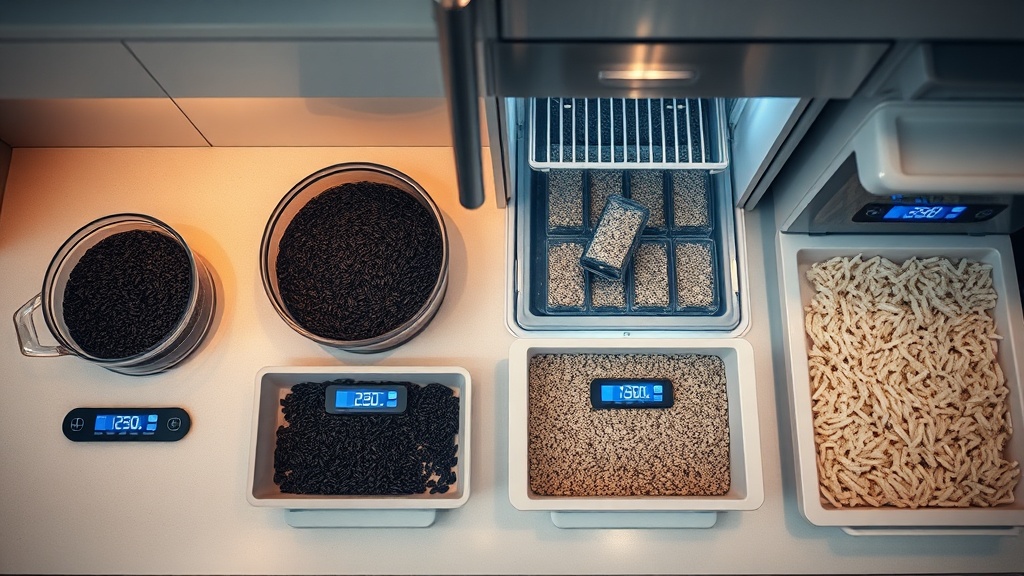
Cool immediately. Transfer cooked rice into shallow containers (maximize surface area) and refrigerate at 4°C for a minimum of 12 hours. The study used controlled cooling, but standard refrigeration achieves the necessary temperature range for amylose retrogradation to begin.
-
Freeze. Move the cooled rice to a freezer (−18°C or colder) for 24 hours minimum. The freeze step is critical — ice crystal formation disrupts remaining amorphous starch regions and accelerates recrystallization upon thawing.
-
Thaw and dry. Remove from freezer, allow to thaw at room temperature for 1–2 hours, then dry in an oven at 60°C for 4–6 hours, followed by 95°C for 1–2 hours. If you don't have precise oven control, use the lowest setting your oven offers (most go to ~75°C/170°F) and extend drying time accordingly. A food dehydrator at 60°C works well for the first stage.
-
Store. The dried retrograded rice has significantly reduced moisture content, making it shelf-stable. Store in airtight containers. It can be rehydrated by boiling for 15–20 minutes when ready to eat.
-
Batch process. Do this in bulk — 2kg at a time minimum. The effort-to-benefit ratio only makes sense if you're preparing a week or more of servings in a single cycle.
-
Track your response. If you have a continuous glucose monitor, compare your postprandial glucose curve eating standard cooked pigmented rice versus the retrograded version. That's your n=1. The in vitro data suggests a significant difference — verify it in your own physiology.
Related Video
What is starch retrogradation and why does it matter for blood sugar?#
Starch retrogradation is the process where cooked starch molecules — specifically amylose chains — reassociate into crystalline structures as the food cools. These recrystallized regions resist digestion by pancreatic enzymes, effectively converting digestible starch into resistant starch. For blood sugar management, this means less glucose enters the bloodstream after eating the same food, simply because the molecular architecture has changed. It's the same rice, same calories on paper, but with a radically different metabolic impact.
How much resistant starch does retrograded black rice contain compared to normal rice?#
The 2026 study on Malaysian black (Tadong) and red (Merah) rice found RS levels of 47.37–51.00% after freeze-thaw-drying retrogradation[1]. For comparison, freshly cooked japonica rice varieties typically contain only 1.4–1.6% resistant starch[2]. That's roughly a 30-fold increase — one of the highest RS enrichment ratios I've seen from a purely physical processing method without chemical modification.
Does the retrogradation process destroy the antioxidants in black rice?#
There are slight reductions in total phenolic content and anthocyanin content due to the thermal processing stages[1]. The study describes these as minor, though precise percentage losses aren't detailed in the available data. My take: if your primary goal is glycemic control and gut health via resistant starch, the trade-off is worth it. If you're eating black rice exclusively for anthocyanins, consider supplementing with fresh black rice or other anthocyanin-rich foods alongside the retrograded version.
Who would benefit most from eating retrograded pigmented rice?#
Anyone managing insulin sensitivity, type 2 diabetes risk, or metabolic syndrome would see the most direct benefit. The dual enzyme inhibition — both α-amylase and lipase — makes this particularly relevant for people dealing with postprandial glucose spikes and elevated triglycerides simultaneously. Athletes and biohackers focused on body composition may also benefit from the increased resistant starch, which feeds butyrate-producing gut bacteria and supports gut barrier integrity.
How does this compare to simply eating cold leftover rice?#
Cold leftover rice does undergo some retrogradation, but the RS increase is modest — typically reaching 2–5% at best. The freeze-thaw-drying cycle used in this study pushes RS to 47–51% because it forces multiple rounds of molecular reorganization under controlled temperature transitions[1]. Simply refrigerating your rice overnight is better than eating it fresh, but it's an order of magnitude less effective than the full retrogradation protocol.
VERDICT#
7.5/10. The underlying science is sound — starch retrogradation is a well-established phenomenon, and the RS levels achieved here are genuinely impressive. The dual enzyme inhibition data adds a layer that goes beyond simple starch modification. But this is a single study with in vitro measurements on two Malaysian rice cultivars. No human glycemic response data. No microbiome analysis. No long-term outcomes. The protocol is practical and the cost is essentially zero, which earns it points. I'd score this higher the moment someone publishes CGM data from humans eating this specific retrograded pigmented rice. Until then, the mechanism is convincing, the numbers are strong, but the clinical validation gap keeps it from an 8 or above. Worth implementing if you already eat pigmented rice. Not worth overhauling your entire diet for based on one in vitro paper.#
References
- 1.Impact of retrogradation on starch digestibility, predicted glycemic index, and nutritional composition in black and red rice. Vegetos (2026). ↩
- 2.Chakraborty I, Das B, Govindaraju I, Yamamoto T, Noothalapati H, Managuli V, Mazumder N. Exploring Retrogradation Behavior of Commercial Rice Varieties and Physicochemical Properties of Respective Extracted Starch. ACS Food Science and Technology (2025). ↩
- 3.Effect of starch molecular structure on texture and digestibility of freshly cooked and retrograded rice noodles. Agricultural Products Processing and Storage (2026). ↩
- 4.Lončarić P, Jukić M, Mihaly Cozmuta A, Mihaly Cozmuta LG, Uivarasan AM, Pichler A, Lučan Čolić M, Lukinac J. FTIR-Based Study of Starch Retrogradation and Protein Structure in Chickpea-Enriched Gluten-Free Bread During Storage. Foods (2026). ↩
Cira Renn
Cira writes with physical conviction — she's done this, she knows what it feels like, and she doesn't pretend otherwise. Her writing has visceral energy: 'Cold water at 10°C isn't a wellness trend. It's a physical confrontation.' She distinguishes between what the research shows and what she's experienced, and she'll tell you when they diverge.
View all articles →