Photobiomodulation Home Light Therapy: What the Research Shows

SNIPPET: Photobiomodulation (PBM) — therapeutic light applied to tissue — now shows evidence across oral mucositis recovery, chronic pain reduction, neuropathic symptom relief, brain drainage enhancement, and facial rejuvenation. A 2026 systematic review of 14 RCTs confirms significant pain reduction, while new studies reveal PBM upregulates antioxidant defenses (SOD, p < 0.001) and modulates mitochondrial complex IV activity in stressed neural tissue.
Photobiomodulation at Home: What the Latest Research Actually Supports
THE PROTOHUMAN PERSPECTIVE#
The home light therapy market is saturated with devices making claims that outpace the science by about a decade. But here's what's shifting: the research catching up to the hype is starting to get specific. Not "light is good for you" specific — I mean wavelength-dosimetry-tissue-target specific. The studies landing in early 2026 are finally asking the right questions about why PBM works at the cellular level, tracking oxidative stress biomarkers, mitochondrial complex IV activity, and meningeal lymphatic drainage with actual controls. For anyone serious about performance optimization and longevity, this matters because PBM sits at the intersection of mitochondrial efficiency, inflammatory modulation, and neuroplasticity — three pillars that define how well you age. The data isn't perfect. Some of these are animal models. Some have small sample sizes. But the direction is consistent, and the mechanistic picture is sharpening in ways that should inform how you use light at home.
THE SCIENCE#
Antioxidant Defense Upregulation in Radiotherapy Patients#
The most clinically rigorous human data this month comes from a study published in Scientific Reports examining PBM's effect on salivary oxidative stress biomarkers in head and neck cancer patients undergoing radiotherapy [1]. Eighteen patients received either intraoral PBM (n=10) or extraoral PBM (n=8) five times weekly during their radiation course. Twenty healthy controls were included.
The numbers that matter: superoxide dismutase (SOD) activity was consistently elevated throughout radiotherapy in PBM-treated patients compared to controls (p < 0.001). Glutathione (GSH) levels increased at mid-radiotherapy (p < 0.01). Meanwhile, the pro-inflammatory cytokines IL-6 and IL-10 decreased from pre- to final-radiotherapy versus controls (p < 0.05).
Less than 40% of patients developed severe oral mucositis. That's notable in a population where severe mucositis is practically expected.
But let me push back on this: n=18 split across two treatment arms is small. There was no sham-PBM control within the cancer group — healthy individuals served as the comparison. That's a design limitation I can't ignore. The biomarker trends are encouraging, but I'd want to see this replicated with a proper sham arm before calling PBM's antioxidant upregulation in this context established.
Transcranial PBM and Mitochondrial Complex IV#
The preclinical data from Neurochemical Research is where things get mechanistically interesting [4]. Rats subjected to chronic mild stress — a validated model for major depressive disorder — received transcranial PBM at either 600 nm (red) or 840 nm (infrared).
Both wavelengths reversed anhedonic behavior (increased sucrose consumption, p < 0.001). But the wavelength-specific effects diverge from there.
Red (600 nm) reduced peripheral lipid peroxidation (TBARS levels lower than sham, p = 0.0048), normalizing to control levels. Infrared (840 nm) increased hippocampal nitric oxide (p = 0.0134) and elevated prefrontal cytochrome c oxidase (CCO/Complex IV) activity compared to the red group (p = 0.012).
This is preclinical. In rats. I'm stating that clearly because the biohacking community has a tendency to read a rodent study and start strapping infrared LEDs to their foreheads the next morning. What this study does tell us is that wavelength selection isn't arbitrary — 600 nm and 840 nm appear to activate different downstream pathways. That's useful information for protocol design, even if human translation remains incomplete.
Brain Drainage and Meningeal Lymphatics#
A study published in PubMed-indexed research demonstrated that 1275 nm PBM improved meningeal lymphatic vessel function in a D-galactose-induced aging mouse model [6]. The mechanism? Nitric oxide release-mediated dilation of meningeal lymphatic vessels (MLVs), promoting clearance of advanced glycation end products (AGEs) from the brain.
PBM-treated aging mice showed improvements in spatial learning and short-term recognition memory alongside reduced neuroinflammation and oxidative damage.
The catch, though. 1275 nm is a wavelength almost no consumer device uses. Most home panels operate at 630-670 nm (red) or 810-850 nm (near-infrared). This study is pointing toward a therapeutic window that the home market hasn't even begun to address. Interesting for the field. Not yet actionable for your home setup.
Systematic Review: Chronic Pain#
Oliveira et al. conducted a systematic review of 14 randomized clinical trials examining PBM for chronic pain, published in Frontiers in Integrative Neuroscience [3]. The review covered fibromyalgia, peripheral neuropathies, orofacial pain, and musculoskeletal conditions.
Most trials demonstrated significant pain reduction with PBM, particularly in fibromyalgia and neuropathy. Adverse events were low across all studies.
The honest limitation the authors themselves identify: heterogeneity of technical parameters across studies makes standardization nearly impossible. Different wavelengths, power densities, treatment durations, and delivery sites. This is the fundamental problem with PBM research — every lab uses its own protocol, making cross-study comparison unreliable.
Facial Rejuvenation: Frequency Matters Less Than You Think#
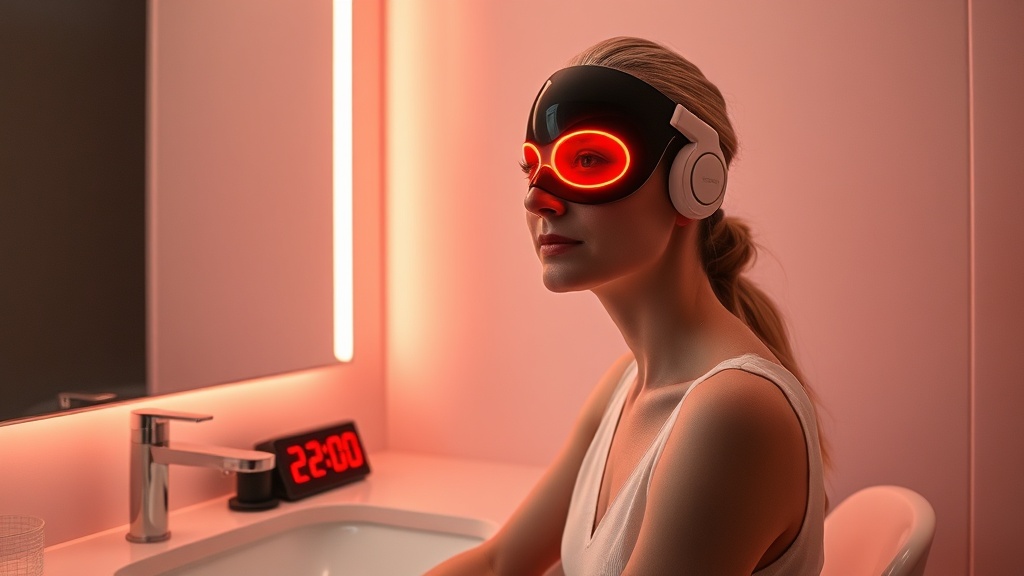
A double-blind, sham-controlled RCT of 95 women (ages 45-60) tested a red LED mask at 660 nm for facial rejuvenation [5]. Group 1 received three sessions weekly; Group 2 received two sessions weekly — both for four weeks.
Both treatment groups showed significant reductions in glabellar and periorbital wrinkle length compared to sham (p < 0.001). Satisfaction rates were 79.6% and 73.4% respectively (p = 0.001 and p = 0.034 vs. control).
The critical finding: two weekly sessions produced results statistically comparable to three weekly sessions. For anyone using an LED mask at home, this is directly relevant dosing information. More is not always more.
LED Mask Facial Rejuvenation: Satisfaction by Protocol
Laser Shoe for Diabetic Neuropathy#
Maiya et al. developed a laser shoe device designed to deliver PBM to the entire plantar surface for type 2 diabetic peripheral neuropathy [2]. The premise is sound — existing laser application methods fail to cover the full foot surface, limiting microcirculation improvement. The device targets neuropathic pain and plantar pressure distribution.
I'm less convinced by this one. The full-text data is behind a paywall, the journal's impact factor is modest, and the concept of a "laser shoe" needs rigorous dosimetry reporting to be taken seriously. Wavelength, irradiance, total joules delivered per session — I need those numbers before I'd recommend this approach over standard clinical PBM for neuropathy.
COMPARISON TABLE#
| Method | Mechanism | Evidence Level | Cost | Accessibility |
|---|---|---|---|---|
| Red LED Mask (660 nm) | Fibroblast stimulation, collagen synthesis | Strong — sham-controlled RCT, n=95 | $50–$300 (consumer) | High — home use |
| Transcranial PBM (600-840 nm) | CCO/Complex IV activation, NO modulation | Preclinical — rat CMS model | $200–$1,500 (devices) | Moderate — requires specific devices |
| Intraoral/Extraoral PBM | SOD upregulation, IL-6/IL-10 modulation | Moderate — small human trial, n=18 | Clinical setting | Low — requires clinical supervision |
| 1275 nm Transcranial PBM | MLV dilation, AGE clearance | Preclinical — mouse aging model | Not commercially available | Very low — research only |
| Laser Shoe PBM | Microcirculation, neuropathic pain relief | Preliminary — limited data | ~$65 (article access) | Low — prototype stage |
| Pharmacological (gabapentin for neuropathy) | GABA analog, calcium channel modulation | Strong — multiple RCTs | $10–$50/month | High — prescription |
THE PROTOCOL#
Based on the current evidence — and only the evidence — here's what a responsible home PBM protocol looks like:
1. Select your wavelength based on your target. For skin rejuvenation and surface tissue, 660 nm red LED is the best-supported option. For deeper tissue penetration (joint pain, muscle recovery), 810-850 nm near-infrared has more clinical support. Do not mix these up. Wavelength matters.
2. Set your irradiance and dose correctly. The facial rejuvenation RCT used 6.4 mW/cm² at 8.05 J/cm² for 21 minutes per session [5]. Most consumer LED masks fall in this range, but check your device specifications. Underdosing wastes your time. Overdosing may trigger a biphasic response where you get less effect, not more.
3. Establish frequency: twice weekly is sufficient for facial applications. The data shows no significant advantage to three sessions per week versus two for facial rejuvenation [5]. Start with two sessions weekly and maintain consistency for a minimum of four weeks before assessing results.
4. For chronic pain applications, match the protocol to the condition. The systematic review by Oliveira et al. found the strongest evidence in fibromyalgia and neuropathy, but protocols varied widely across studies [3]. If using PBM for pain, start conservatively — 2-3 sessions per week, 810-850 nm, 4-8 J/cm² — and track your symptoms with a standardized pain scale.
5. Track and log your parameters. Record wavelength, distance from skin, session duration, and any subjective outcomes. This is how you build your own n=1 dataset. Without logging, you're just guessing.
6. Do not attempt transcranial PBM at home without clinical guidance. The preclinical data on 600 nm and 840 nm transcranial application is promising but remains in animal models [4]. The 1275 nm brain drainage work is fascinating but entirely inaccessible to consumers [6]. If you're interested in cognitive applications, work with a practitioner who understands dosimetry.
7. Reassess at 30 days. The facial rejuvenation data showed measurable changes at the 30-day post-treatment assessment point [5]. Give any protocol at least this long before deciding it isn't working.
Related Video
VERDICT#
Score: 6.5/10
The direction of PBM research is consistent and the mechanistic data is getting sharper. But the field remains hamstrung by its own heterogeneity — every study uses different parameters, making it difficult to build a unified protocol. The strongest actionable data for home users comes from the facial rejuvenation RCT (good design, adequate sample, sham-controlled). The antioxidant and mitochondrial data are mechanistically compelling but either small-sample human or preclinical animal work. I'd score the potential higher. The current evidence base for home application earns a 6.5. Use it if you're precise about parameters. Ignore the marketing.
Frequently Asked Questions5
References
- 1.Effect of intraoral and extraoral photobiomodulation on salivary oxidative stress and inflammatory cytokines in patients with radiotherapy-induced oral mucositis. Scientific Reports (2026). ↩
- 2.Maiya GA, Jadhav RA, Yadav HK, Hande MH, Hebbar H, Mohan K. Effect of Novel Laser Shoe Photobiomodulation on Neuropathic Pain and Plantar Pressure Profile in Type 2 Diabetes Mellitus with Peripheral Neuropathy. Current Diabetes Reviews (2025). ↩
- 3.Oliveira ABC, Santos GN, Ferreira LMA, Mendes JJB, Costa GV, Silva IR, Pereira GS, Silva ML. Photobiomodulation in chronic pain: a systematic review of randomized clinical trials. Frontiers in Integrative Neuroscience (2026). ↩
- 4.Transcranial Photobiomodulation Modulates Oxidative Stress Biomarkers and Complex IV Activity in Anhedonic-Like Behavior. Neurochemical Research (2026). ↩
- 5.Role of photobiomodulation application frequency in facial rejuvenation: randomized, sham-controlled, double-blind, clinical trial. Lasers in Medical Science (2025). ↩
- 6.1275-nm Photobiomodulation Alleviates Brain Drainage Impairment as a Promising Therapeutic Strategy for Aging-Related Neurological Decline. PubMed (2025). ↩
Sova Reld
Sova writes with focused intensity and low tolerance for vague claims. She came to photobiomodulation through personal experimentation and is irritated by both true believers and reflexive skeptics. Her writing has edge: 'The wellness market has done more damage to this field than the skeptics ever could.' She's extremely precise about parameters — wavelength, irradiance, duration — and will tell you when a study used inadequate dosing without apology.
View all articles →