Photobiomodulation for Chronic Pain & Cognition: Evidence Review

THE PROTOHUMAN PERSPECTIVE#
Photobiomodulation sits at an inflection point. The therapy has moved past the era of anecdotal wound-healing stories and into systematic evidence synthesis — umbrella reviews, meta-analyses of RCTs, sham-controlled crossover designs. That shift matters.
What we're looking at is a non-pharmaceutical intervention that targets mitochondrial efficiency directly. Not downstream. Not through a receptor cascade. Light hits cytochrome c oxidase, electron transport accelerates, ATP output increases. For anyone tracking human performance optimization, that mechanism is foundational — mitochondria are the rate-limiting step in nearly every tissue that degrades with age.
But here's where I get cautious. The evidence is real, yet scattered across wildly different protocols, wavelengths, irradiance levels, and treatment durations. The umbrella review by Luo et al. covering 204 RCTs across 15 disease conditions confirms PBM works for some things. The question has shifted from "does it work?" to "under what exact parameters does it work, and for whom?" That's the question most consumer devices still can't answer.
THE SCIENCE#
What Photobiomodulation Actually Is#
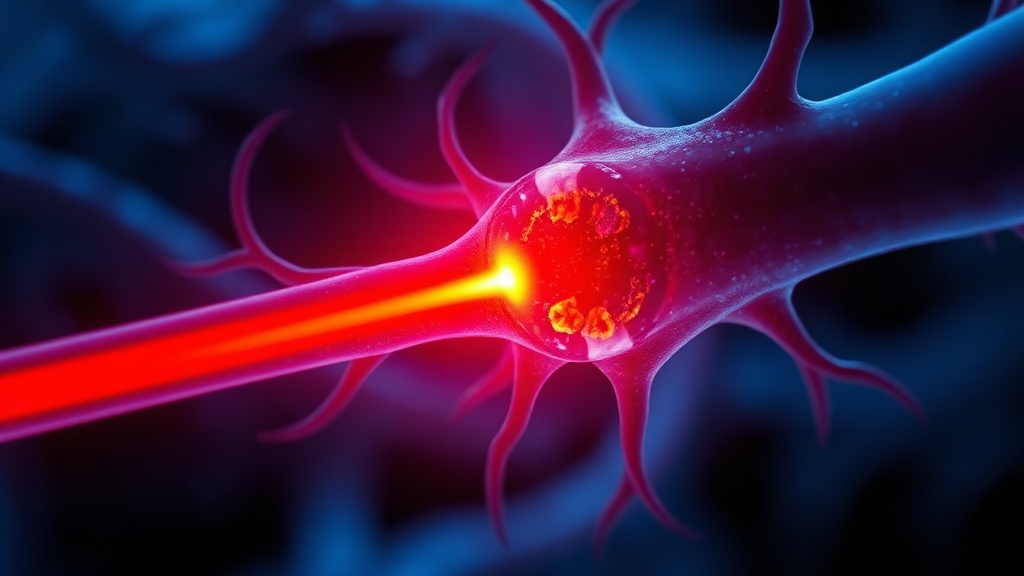
Photobiomodulation is the application of non-ionizing red to near-infrared light — typically within the 600–1100 nm wavelength range — to biological tissue at power densities insufficient to cause thermal damage[6]. The primary chromophore is cytochrome c oxidase (CCO), the terminal enzyme in the mitochondrial electron transport chain. When photons at the correct wavelength are absorbed by CCO, the enzyme's catalytic activity increases, driving enhanced ATP synthesis, a transient burst of reactive oxygen species (ROS), and the release of nitric oxide (NO)[2][6].
These aren't speculative mechanisms. They're measurable. The downstream effects include upregulation of antioxidant enzymes, inhibition of inflammatory mediators like NF-κB, and activation of transcription factors that promote cytoprotective gene expression[2].
The problem — and I keep returning to this — is that parameters define outcomes. Wavelength matters. Irradiance matters. Time matters. Spot size matters. And the field still hasn't converged on standardized dosing for most conditions.
Chronic Pain: The Systematic Review Evidence#
Cabral Oliveira et al. (2026) published a systematic review in Frontiers in Integrative Neuroscience examining 14 RCTs of PBM for chronic pain, covering fibromyalgia, peripheral neuropathies, orofacial pain, and musculoskeletal conditions[1]. Their search spanned five databases (PubMed, Embase, Scopus, LILACS, MEDLINE) from 2015 to 2025, screening 6,611 studies before narrowing to those 14.
Most trials demonstrated significant pain reduction with PBM, particularly in fibromyalgia and neuropathy. Some studies also showed functional gains and improved quality of life. Adverse event incidence was low.
I want to be precise about what "significant" means here: statistically significant within individual trials, not a pooled meta-analytic effect size. The review notes that heterogeneity of technical parameters — different wavelengths, power densities, treatment schedules — compromises cross-study standardization. That's not a minor caveat. It's the central limitation of the entire PBM-for-pain literature.
The honest assessment: PBM appears to reduce chronic pain in several populations, with a favorable safety profile. But the variability in protocols means we cannot yet write a single prescription and expect consistent results across patients.
The Umbrella Review: 204 RCTs, 15 Disease Conditions#
Luo et al. (2025) in Systematic Reviews conducted what may be the most comprehensive synthesis of PBM evidence to date — an umbrella review of 15 meta-analyses encompassing 204 RCTs and over 9,000 participants across 35 health endpoints[2].
The findings that reached moderate certainty of evidence:
- Burning mouth syndrome pain reduction: eSMD −0.92 (95% CI −1.38 to −0.46)
- Knee osteoarthritis disability: eSMD 0.65 (95% CI 0.14 to 1.15)
- Fibromyalgia fatigue: eSMD 1.25 (95% CI 0.63 to 1.87)
- Androgenetic alopecia hair density: eSMD 1.32 (95% CI 1.00 to 1.63)
- Cognitive function: eSMD 0.49 (95% CI 0.14 to 0.84)
That fibromyalgia fatigue effect size of 1.25 is large by any standard in rehabilitation research. But I'm less convinced by some of the other endpoints — most exhibited low or very low certainty, and publication bias was identified in several analyses.
Cognitive Enhancement: A Surprising Signal#
This is where the data genuinely surprised me. The meta-analysis by a team published in Lasers in Medical Science (2025) pooled 24 RCTs involving 820 participants and found PBM treatment produced significant improvements in global cognitive function (SMD = 0.66, P = 0.003), working memory span (SMD = 1.41, P < 0.0001), and attention (SMD = −1.15, P = 0.01)[4].
A working memory effect size of 1.41 in an RCT meta-analysis is not subtle. That's a large effect.
Subgroup analyses revealed that cognitively impaired subjects showed improvement across nearly all cognitive domains, while healthy subjects showed partial improvements — primarily in attention and working memory. The authors appropriately flag heterogeneity as a limitation.
Duration of Action: The Gonzalez-Lima Lab Findings#
O'Connor et al. (2025) at UT Austin addressed a question that's been nagging the field: how long does a single PBM session actually last?[5]
Using transcranial infrared laser stimulation (TILS) at 1064 nm applied to the right anterior prefrontal cortex, they measured functional connectivity via fNIRS across a 5-day span in 12 healthy adults. Sham-controlled, within-subject crossover design with a 4-week washout. Tight methodology for a small study.
A single administration of TILS significantly modulated prefrontal cortex functional connectivity during memory tasks across the entire 5-day assessment period. No effects during resting state. No adverse effects.
The catch, though. Twelve participants. That's the kind of sample size where I'd want replication before adjusting any protocol. But the signal — persistent functional neuroplasticity from a single session — is worth tracking.
PBM Effect Sizes Across Health Outcomes (Umbrella Review)
COMPARISON TABLE#
| Method | Mechanism | Evidence Level | Estimated Cost | Accessibility |
|---|---|---|---|---|
| PBM (Clinical-grade laser, 600–1064 nm) | Mitochondrial CCO activation → ↑ ATP, ↓ NF-κB | Moderate (umbrella review of 204 RCTs) | $2,000–$15,000 device; $50–$150/session clinical | Specialist clinics; select home devices |
| TENS (Transcutaneous Electrical Nerve Stimulation) | Gate control theory; endorphin release | Moderate (multiple RCTs, mixed results) | $30–$300 consumer; $50–$100/session clinical | Widely available OTC |
| NSAIDs (Oral) | COX-1/COX-2 inhibition → ↓ prostaglandins | High (extensive RCT base) | $5–$30/month | OTC; universally accessible |
| tDCS (Transcranial Direct Current Stimulation) | Cortical excitability modulation | Low-to-moderate (heterogeneous protocols) | $200–$500 consumer; $100–$200/session | Growing consumer availability |
| Cognitive Behavioral Therapy for Pain | Central sensitization modulation; neuroplasticity | High (meta-analyses) | $100–$250/session | Requires trained therapist |
THE PROTOCOL#
Based on current evidence from the reviewed RCTs and meta-analyses. Note: optimal dosing in humans is not fully established for all conditions. If you choose to trial PBM, these parameters reflect the best-supported ranges.
1. Identify your target condition and select the appropriate wavelength. For chronic pain (fibromyalgia, neuropathic pain, musculoskeletal): red light at 630–660 nm for superficial tissue, or near-infrared at 808–850 nm for deeper penetration. For transcranial cognitive applications: 1064 nm infrared, as used in the Gonzalez-Lima lab protocols[5].
2. Verify your device's irradiance output. This is where most consumer devices fail. You need a minimum irradiance of 10–50 mW/cm² at the tissue surface for therapeutic effect. Many LED panels marketed for "red light therapy" deliver under 5 mW/cm² at working distance. Measure it. Don't trust marketing claims.
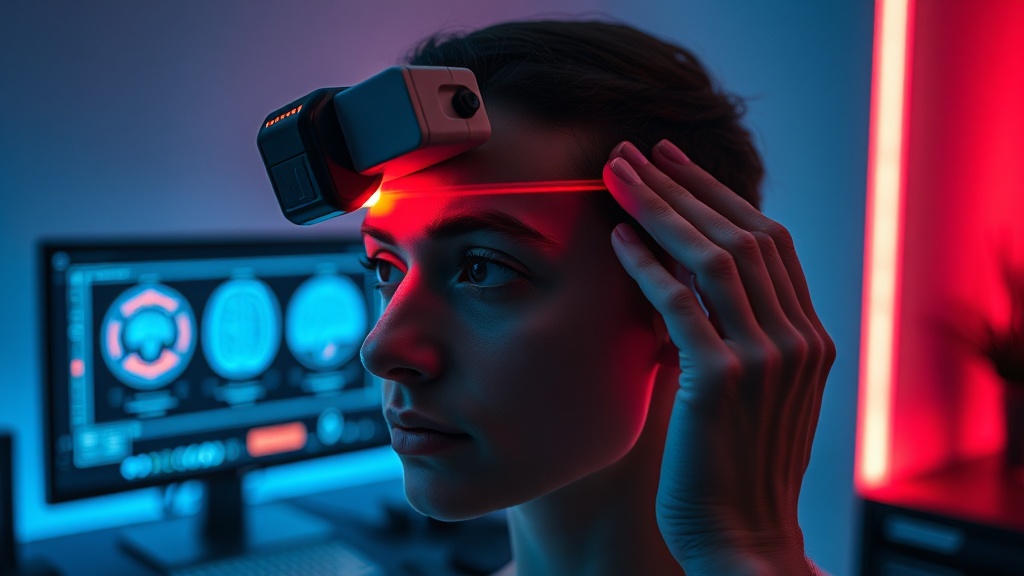
3. Set appropriate dosing parameters. For pain applications, the reviewed RCTs used energy densities typically ranging from 1–8 J/cm² per treatment point[1]. For transcranial stimulation, the O'Connor et al. protocol used high-fluence 1064 nm laser applied to the right forehead[5]. Start conservatively — lower end of the dose range — and assess response.
4. Establish treatment frequency and duration. Most chronic pain trials used 2–3 sessions per week for 4–12 weeks[1]. For cognitive enhancement, even single sessions showed multi-day effects[5], but the chronic dosing schedule for sustained cognitive benefits is not yet established. I'd suggest starting with 3 sessions per week for 8 weeks, then reassessing.
5. Track outcomes systematically. Use a validated pain scale (VAS or NRS) weekly for pain conditions. For cognitive targets, use standardized working memory tests (n-back tasks) at baseline and every 4 weeks. Without tracking, you're guessing — and PBM parameters are too variable for guessing to be useful.
6. Monitor for adverse effects — even though they're rare. The systematic reviews consistently report low adverse event incidence[1][2]. But erythema, mild headache, and transient visual discomfort have been noted in individual trials. If using transcranial protocols, start below maximum fluence and titrate up.
7. Reassess at 8 weeks. If no measurable improvement in your tracked outcome, the protocol needs adjustment — wavelength, dose, or treatment site — not just more sessions at the same parameters.
Related Video
What is photobiomodulation and how does it differ from regular light therapy?#
Photobiomodulation uses specific wavelengths of red and near-infrared light (600–1100 nm) at controlled power densities to stimulate mitochondrial function via cytochrome c oxidase absorption. It is fundamentally different from broad-spectrum light therapy used for seasonal affective disorder, which targets retinal photoreceptors and circadian rhythm — not mitochondrial bioenergetics. The precision of wavelength and irradiance is what separates therapeutic PBM from a light box on your desk.
How long do the effects of a single PBM session last?#
Based on O'Connor et al. (2025), a single transcranial infrared laser session at 1064 nm modulated prefrontal cortex functional connectivity for at least 5 days during cognitive tasks[5]. However, this was a small study (n=12), and the duration may vary by target tissue, wavelength, and individual physiology. For chronic pain, most protocols assume effects are cumulative across multiple sessions rather than sustained from a single treatment.
Who benefits most from PBM based on current evidence?#
The strongest evidence supports PBM for individuals with fibromyalgia (both pain and fatigue), knee osteoarthritis-related disability, burning mouth syndrome, and cognitive impairment[2]. Healthy adults may see partial cognitive improvements, particularly in attention and working memory[4]. The data for many other conditions remains at low or very low certainty — promising but not yet definitive.
Why is protocol standardization such a problem in PBM research?#
Because PBM has at least five independent variables that affect outcomes: wavelength, power density (irradiance), energy density (fluence), treatment duration, and application site. Most trials use different combinations, making cross-study comparison nearly impossible[1][6]. Until the field converges on condition-specific parameter sets, we'll keep seeing reviews that conclude "PBM works, but we can't tell you exactly how to do it." It's the field's biggest self-inflicted wound.
What are the risks or side effects of photobiomodulation?#
Across the 204 RCTs reviewed by Luo et al. and the 14 trials in Cabral Oliveira et al., adverse event incidence was consistently low[1][2]. Reported side effects include mild and transient erythema, occasional headache with transcranial applications, and temporary visual discomfort. No serious adverse events have been attributed to PBM at therapeutic doses in the reviewed literature. The safety profile is one of PBM's genuine strengths.
VERDICT#
7.5/10
The evidence base for photobiomodulation has matured substantially. An umbrella review of 204 RCTs is not nothing — and the effect sizes for fibromyalgia fatigue, cognitive function, and osteoarthritis disability are clinically meaningful. The Gonzalez-Lima lab's work on duration of action adds a mechanistic dimension that the field badly needed. Safety profile is excellent.
I'm docking points for the persistent protocol chaos. After decades of research, the inability to write a single standardized prescription for any condition is a failure of the field, not the therapy. Consumer devices remain a minefield of inadequate dosing. And most of the evidence sits at low-to-moderate certainty — good enough to justify clinical exploration, not good enough for definitive treatment guidelines.
If you have fibromyalgia, neuropathic pain, or early cognitive decline and conventional treatments aren't cutting it, PBM is worth trialing under informed parameters. Just don't buy the cheapest LED panel on Amazon and expect the same results as a 1064 nm laser in a controlled study.
References
- 1.Cabral Oliveira AB, Nogueira Santos G, Lourenço Silva M, Santos Pereira G, Reis Silva I, Vitoria Costa G, Baltazar Mendes JJ, Maia Alves Ferreira L. Photobiomodulation in chronic pain: a systematic review of randomized clinical trials. Frontiers in Integrative Neuroscience (2026). ↩
- 2.Luo Z et al.. Effects of photobiomodulation on multiple health outcomes: an umbrella review of randomized clinical trials. Systematic Reviews (2025). ↩
- 3.Zhang Z, Xue X, Liu P, Zhang C, Li J, Liu Y, Jiang Y, Lv S, Wang L, Zhou H, Shen W, Yang S. The role of photobiomodulation in modulating neural activity and brain function: A systematic bibliometric analysis. Photodiagnosis and Photodynamic Therapy (2025). ↩
- 4.Author(s) not listed. Photobiomodulation effects on cognitive function — a systematic review and meta-analysis of randomized controlled trials. Lasers in Medical Science (2025). ↩
- 5.O'Connor P, Lime T, Barrett DW, Gonzalez-Lima F. Photobiomodulation mechanisms: duration of action in the human prefrontal cortex. Frontiers in Behavioral Neuroscience (2025). ↩
- 6.Shivappa P, Basha S, Biswas S, Prabhu V, Prabhu SS, Ramakrishna Pai A, Mahato KK. From light to healing: photobiomodulation therapy in medical disciplines. Journal of Translational Medicine (2025). ↩
Sova Reld
Sova writes with focused intensity and low tolerance for vague claims. She came to photobiomodulation through personal experimentation and is irritated by both true believers and reflexive skeptics. Her writing has edge: 'The wellness market has done more damage to this field than the skeptics ever could.' She's extremely precise about parameters — wavelength, irradiance, duration — and will tell you when a study used inadequate dosing without apology.
View all articles →