Photobiomodulation for Brain Health, Pain & Mental Health

SNIPPET: Photobiomodulation (PBM) — the therapeutic application of red and near-infrared light — shows emerging evidence as a non-invasive intervention for chronic pain, cognitive decline, and mental health conditions. A bibliometric analysis of 150 PubMed-indexed studies confirms PBM enhances ATP synthesis, modulates nitric oxide signaling, and suppresses neuroinflammation. However, standardized dosing protocols remain unestablished, and parameter heterogeneity across studies limits definitive clinical recommendations.
THE PROTOHUMAN PERSPECTIVE#
Light is the oldest signal the human body knows. Before pharmaceuticals, before surgery, before we had a word for medicine — photons were already driving mitochondrial function. Photobiomodulation sits at an intersection that should matter to anyone serious about performance optimization: it targets cytochrome c oxidase directly, the terminal enzyme in the mitochondrial electron transport chain, the bottleneck of cellular energy production.
What makes PBM worth watching right now isn't a single breakthrough study. It's the convergence. In the last 18 months, we've seen systematic reviews stack up across neurology, pain medicine, and psychiatry — all pointing toward a non-pharmacological tool with a low adverse-event profile and plausible mechanisms. The catch is that the field is drowning in protocol variability. Wavelength, irradiance, pulse frequency, treatment duration — change any one parameter and you may get a completely different biological response. For the biohacking community, this is both opportunity and trap. The opportunity: a genuinely promising modality. The trap: the consumer device market has raced ahead of the science, selling products with parameters that often bear no resemblance to what's been tested in trials.
THE SCIENCE#
Mechanisms: What Light Actually Does to Your Cells#
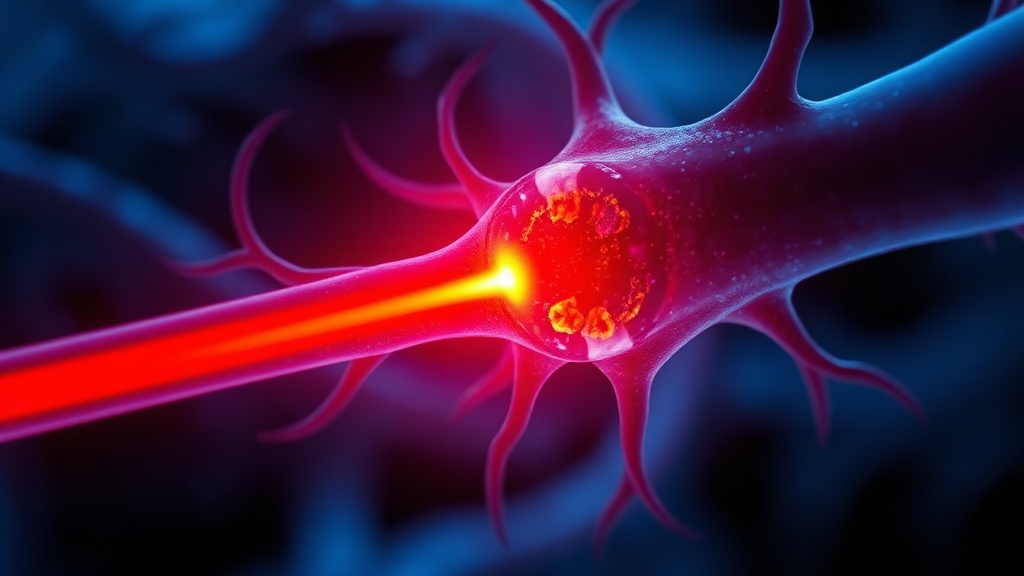
The primary chromophore in PBM is cytochrome c oxidase (CCO), a mitochondrial enzyme that absorbs photons in the red (600–700 nm) and near-infrared (780–1100 nm) spectral windows. Photon absorption dissociates inhibitory nitric oxide from CCO's catalytic site, restoring electron flow and upregulating ATP synthesis[1]. This isn't speculative biochemistry — it's established photochemistry with decades of in vitro confirmation.
Zhang et al.'s bibliometric analysis of 150 PubMed-indexed studies, including 46 clinical trials, identifies six key mechanisms through which PBM affects the central nervous system: enhanced ATP production, modulated nitric oxide signaling, improved neuronal excitability, suppressed oxidative stress, anti-inflammatory effects, and ion channel modulation[1]. That's a broad mechanistic portfolio, and honestly, the breadth is part of what makes me cautious. When a therapy claims to do six things at once, I want to see tight dose-response curves for each. We don't have those yet.
The translational review by the Journal of Translational Medicine adds specificity to the mechanism picture: PBMT influences cytochrome c oxidase–mediated energy transduction, reactive oxygen species (ROS) modulation, and cytokine regulation[6]. The ROS piece is particularly relevant. At low doses, PBM generates a mild oxidative signal that activates NF-κB and Nrf2 transcription factors — essentially triggering the cell's own antioxidant defense system. At excessive doses, you get the opposite: oxidative damage. This biphasic dose-response (the Arndt-Schulz curve) is the single most important concept in PBM that consumer device companies consistently ignore.
Duration of Action: The Gonzalez-Lima Findings#
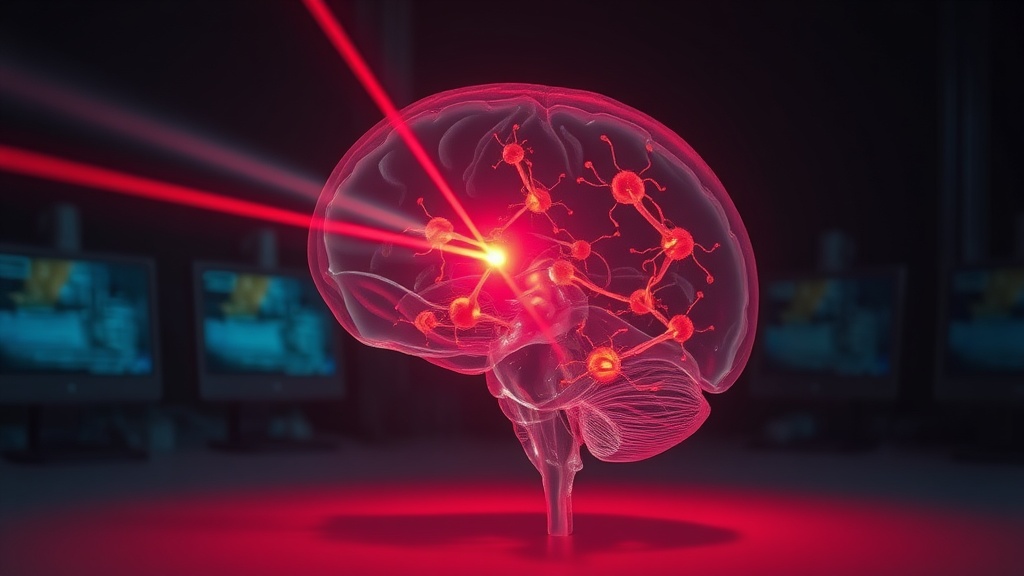
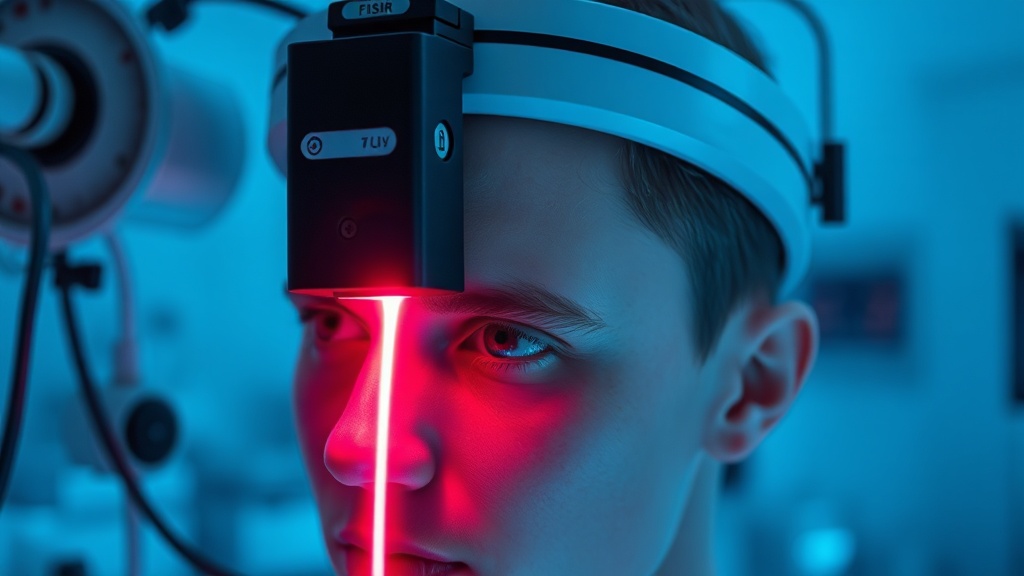
Here's where it gets interesting. Lime, Barrett, O'Connor, and Gonzalez-Lima at UT Austin published original research demonstrating that a single administration of transcranial infrared laser stimulation (TILS) at 1064 nm modulated prefrontal cortex functional connectivity for up to 5 days[4].
Twelve healthy adults. Sham-controlled crossover design. 4-week washout. Functional connectivity measured via 48-channel fNIRS at six time points over five days.
The effect was state-dependent — it showed up during cognitively demanding 2-back memory tasks but not during resting state. No adverse effects reported[4].
I want to be precise about what this means and what it doesn't. Twelve subjects is a small sample. But the crossover design with sham control and extended washout is methodologically sound for a mechanistic study. The finding that a single session can induce functional neuroplasticity persisting for days challenges the assumption that PBM requires daily application. If replicated in larger cohorts, this has direct implications for dosing frequency.
Chronic Pain: The Systematic Review Evidence#
Cabral Oliveira et al. conducted a systematic review of 14 randomized clinical trials examining PBM for chronic pain conditions — fibromyalgia, peripheral neuropathies, orofacial pain, and musculoskeletal pain[2]. The majority of trials demonstrated significant pain reduction, particularly in fibromyalgia and neuropathy populations. Functional gains and quality-of-life improvements appeared in some studies. Adverse events were infrequent and mild.
But here's where I push back. "Most trials demonstrated significant pain reduction" across 14 studies with heterogeneous protocols, different wavelengths, different target tissues, different treatment durations — that tells me the signal exists, but the noise is enormous. The authors themselves acknowledge that "the variability of clinical parameters and limited follow-up still hinder more comprehensive recommendations"[2]. Until someone runs a proper multicenter trial with standardized dosimetry, we're stacking up small positive results without knowing which specific protocol is actually working.
Cognitive Function and Mental Health#
The tPBM review focused on older women found that transcranial photobiomodulation improved cognitive impairment in Alzheimer's disease, stroke, and Parkinson's disease — but only seven articles met inclusion criteria[3]. Seven. For an entire systematic review. That's not a field with mature evidence; that's a field in its infancy.
The mental health integrative review by Lasers in Medical Science included 14 clinical studies addressing anxiety, depression, and seasonal affective disorder[5]. PBM showed therapeutic potential with reported improvements in brain activity, reduced anxiety, and antidepressant effects. Adverse events were mild: occasional headaches, irritability, difficulty sleeping. The protocol variability problem surfaces again — wavelength, application sites, and session duration varied wildly across studies[5].
PBM Studies Analyzed Across Reviews
COMPARISON TABLE#
| Method | Mechanism | Evidence Level | Cost | Accessibility |
|---|---|---|---|---|
| Transcranial PBM (1064 nm laser) | CCO activation, ATP upregulation, NO modulation | Moderate (small RCTs, sham-controlled) | $800–$3,000 (clinical-grade device) | Low — requires specific laser hardware |
| LED-based PBM panels (600–850 nm) | Same chromophore target, lower irradiance | Low-to-moderate (parameter variability) | $150–$600 (consumer devices) | High — widely available online |
| TMS (Transcranial Magnetic Stimulation) | Electromagnetic induction of neural currents | High (FDA-cleared for depression) | $6,000–$12,000 (treatment course) | Low — clinic-based only |
| tDCS (Transcranial Direct Current Stimulation) | Subthreshold neuronal membrane modulation | Moderate (mixed results across trials) | $50–$400 (consumer devices) | Moderate — home-use devices exist |
| Pharmacotherapy (SSRIs/SNRIs) | Serotonin/norepinephrine reuptake inhibition | High (large-scale RCTs, meta-analyses) | $10–$200/month | High — prescription-based |
THE PROTOCOL#
Based on current evidence — and I want to emphasize "current" because this will evolve — here's a practical framework for those considering transcranial PBM. This is not medical advice. It's a synthesis of published parameters.
Step 1: Select wavelength and device type. The strongest mechanistic and clinical data exists for 1064 nm continuous-wave laser for transcranial applications targeting the prefrontal cortex[4]. For broader applications (pain, inflammation), 810 nm and 850 nm near-infrared LEDs have the most trial coverage. Wavelength matters. Don't buy a device without confirming its exact spectral output.
Step 2: Verify irradiance, not just total power. A 10W LED panel at 30 cm delivers a very different irradiance at the skin surface than a focused laser. For transcranial applications, the Gonzalez-Lima lab has used approximately 250 mW/cm² at the scalp with 1064 nm[4]. Most consumer panels deliver 20–80 mW/cm² — adequate for superficial tissue, insufficient for meaningful transcranial penetration. Know your numbers.
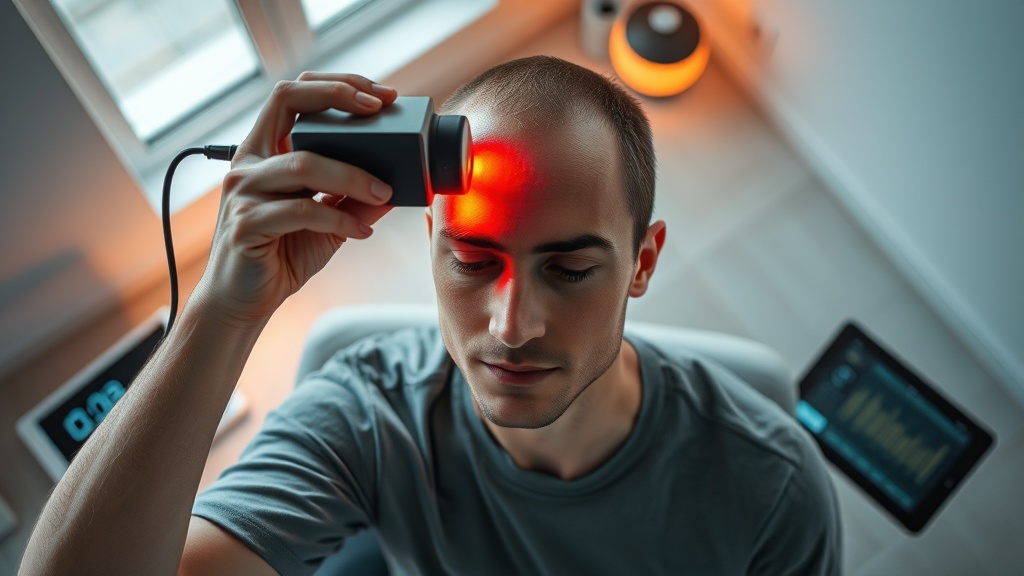
Step 3: Establish treatment duration and frequency. The UT Austin protocol used a single 8–12 minute session targeting the right forehead (Fp2 region). Effects persisted for up to 5 days[4]. For chronic pain protocols, most reviewed RCTs used 2–3 sessions per week over 4–12 weeks[2]. Start conservative. More is not better — recall the biphasic dose-response.
Step 4: Target the right anatomical site. For cognitive enhancement and mood, the right prefrontal cortex (roughly the right forehead, 2 cm above the eyebrow) is the most studied target. For pain, target the affected dermatome or nerve root. Placement precision matters less with LED panels but is critical with focused laser.
Step 5: Track subjective and objective outcomes. Use standardized cognitive assessments (n-back tasks, reaction time tests) and mood scales (PHQ-9 for depression, GAD-7 for anxiety) before and after treatment blocks. Without measurement, you're guessing. I use HRV tracking as a secondary biomarker for autonomic response, though direct evidence linking PBM to HRV optimization is still sparse.
Step 6: Respect contraindications and monitor for adverse effects. Avoid PBM over active malignancies or the thyroid gland. Discontinue if persistent headaches, visual disturbances, or sleep disruption occur. The adverse event profile across all reviewed studies is reassuringly mild[2][5], but individual responses vary.
Related Video
What is photobiomodulation and how does it work?#
Photobiomodulation is the application of red or near-infrared light to biological tissue to stimulate cellular function. The primary mechanism involves photon absorption by cytochrome c oxidase in mitochondria, which enhances ATP production and modulates nitric oxide signaling[1][6]. It is distinct from high-power surgical lasers — PBM uses low-level light that does not heat or ablate tissue.
How long do the effects of a single PBM session last?#
According to Lime, Barrett, O'Connor, and Gonzalez-Lima, a single transcranial session at 1064 nm modulated prefrontal cortex functional connectivity for up to 5 days in healthy adults during cognitive tasks[4]. This suggests PBM may not require daily application, though optimal dosing intervals remain unestablished for most conditions.
Who might benefit most from photobiomodulation therapy?#
Current evidence suggests the strongest signals for individuals with chronic pain conditions (fibromyalgia, neuropathy), age-related cognitive decline, and mood disorders including anxiety and depression[2][3][5]. Healthy individuals seeking cognitive enhancement have a smaller evidence base, primarily from the UT Austin group's work on prefrontal function.
Why aren't PBM protocols standardized yet?#
The field suffers from extreme parameter heterogeneity — different studies use different wavelengths, power densities, pulse modes, treatment durations, and target sites. There is no equivalent of a "dose" in pharmacology that has been agreed upon. Every reviewed source in this article identifies this as the primary barrier to clinical translation[1][2][5][6].
What should I look for in a PBM device?#
Confirmed wavelength output (independently verified, not just marketing claims), stated irradiance in mW/cm² at the treatment distance, and whether it's continuous or pulsed wave. Avoid any device that doesn't publish these three specifications. The difference between a therapeutic device and an expensive nightlight is dosimetry.
VERDICT#
Score: 6.5/10
The mechanism is real. The safety profile is genuinely encouraging across hundreds of subjects. The Gonzalez-Lima lab's work on duration of action is the most interesting recent finding — single-session neuroplasticity persisting for days is not trivial. But I can't score this higher when the entire field still can't agree on basic dosing parameters. We have 150+ studies and 46 clinical trials in the CNS space alone, yet no standardized protocol has emerged. The chronic pain review pulls from 14 RCTs with wildly different parameters. The cognitive review in older women found only seven qualifying studies. The signal-to-noise ratio is improving, but we're still in the "promising but unoptimized" phase. If you're going to experiment, use the parameters from the studies that actually showed effects — not whatever a consumer device happens to output. This field will either mature into a legitimate clinical tool or fragment into a hundred conflicting protocols. The next two years will determine which.
References
- 1.Zhang Z, Xue X, Liu P, Zhang C, Li J, Liu Y, Jiang Y, Lv S, Wang L, Zhou H, Shen W, Yang S, Wang F. The role of photobiomodulation in modulating neural activity and brain function: A systematic bibliometric analysis. Photodiagnosis and Photodynamic Therapy (2025). ↩
- 2.Cabral Oliveira AB, Nogueira Santos G, Ferreira LMA, Mendes JJB, Costa GV, Silva IR, Pereira GS, Silva ML. Photobiomodulation in chronic pain: a systematic review of randomized clinical trials. Frontiers in Integrative Neuroscience (2026). ↩
- 3.Author(s) not listed. Transcranial photobiomodulation therapy in older women regarding cognitive functions: a systematic review. Lasers in Medical Science (2025). ↩
- 4.Lime T, Barrett DW, O'Connor P, Gonzalez-Lima F. Photobiomodulation mechanisms: duration of action in the human prefrontal cortex. Frontiers in Behavioral Neuroscience (2025). ↩
- 5.Author(s) not listed. Exploring photobiomodulation as a complementary approach for mental health: an integrative review. Lasers in Medical Science (2025). ↩
- 6.Author(s) not listed. From light to healing: photobiomodulation therapy in medical disciplines. Journal of Translational Medicine (2025). ↩
Sova Reld
Sova writes with focused intensity and low tolerance for vague claims. She came to photobiomodulation through personal experimentation and is irritated by both true believers and reflexive skeptics. Her writing has edge: 'The wellness market has done more damage to this field than the skeptics ever could.' She's extremely precise about parameters — wavelength, irradiance, duration — and will tell you when a study used inadequate dosing without apology.
View all articles →