Oral Peptide Delivery: Why Most Fail and Semaglutide Is the Exception

SNIPPET: Oral peptide delivery remains largely unsuccessful despite a century of innovation, with oral semaglutide succeeding only due to its rare pharmacokinetic profile — a ~168-hour half-life and wide therapeutic window. A new negative-selection framework from Niazi (2026) identifies which peptides will predictably fail oral delivery before costly development begins.
Why Most Oral Peptides Fail — And Why Semaglutide Is the Exception, Not the Rule
THE PROTOHUMAN PERSPECTIVE#
The biohacking community has been riding high on oral semaglutide. GLP-1 agonists swallowed as a pill instead of injected — it sounds like the future of metabolic optimization just arrived. But the pharmacokinetic reality underneath that enthusiasm is far less generous than the headlines suggest.
For anyone tracking peptide-based performance optimization — whether that's BPC-157, thymosin alpha-1, epithalon, or GLP-1 compounds — the delivery route isn't a convenience detail. It's the entire pharmacological bottleneck. Most therapeutic peptides are destroyed in the gut before they ever reach systemic circulation. The oral bioavailability of semaglutide sits around 0.4–1%. That's not a typo. And it still works — but only because of an extremely unusual set of molecular properties that most peptides simply do not share.
This matters because the supplement and peptide optimization space is flooded with oral peptide products marketed on the implicit assumption that if semaglutide works orally, so can everything else. The data says otherwise. Understanding where the pharmacokinetic boundaries actually lie is the difference between effective self-optimization and expensive placebo consumption.
THE SCIENCE#
Oral Peptide Delivery: A Century of Mostly Failing#
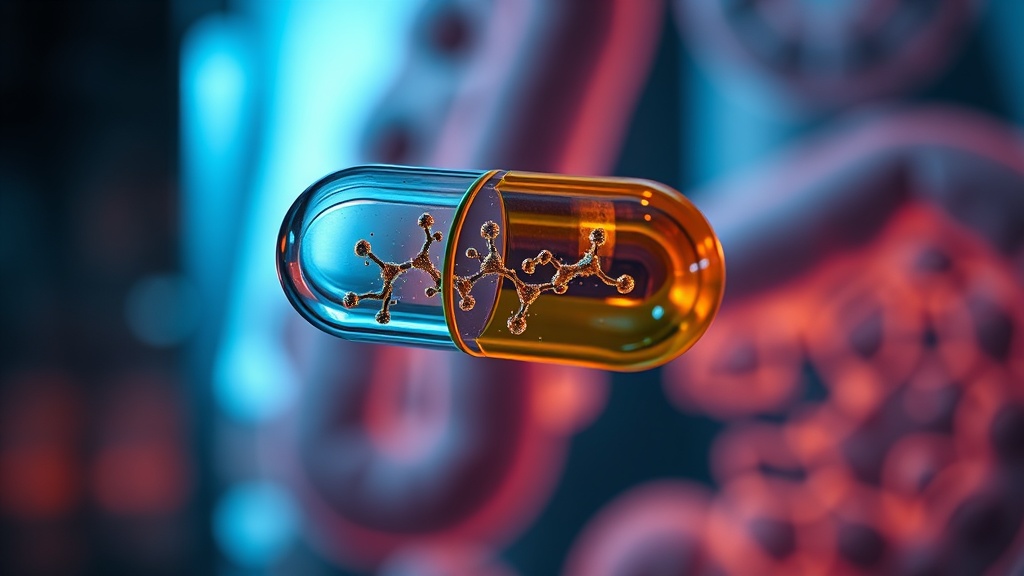
Oral delivery of peptides and proteins is a problem that has been pursued for over a hundred years[1]. The appeal is obvious — noninvasive, high compliance, no needles. The technological attempts have been earnest: enteric coatings, enzyme inhibitors, permeation enhancers, nanoparticles, liposomes, hydrogels, and ingestible microneedle devices[1][3]. And yet, the vast majority of oral peptide programs have failed to reach regulatory approval or commercial viability.
Why? The gastrointestinal tract is not a passive absorption surface. It's an active degradation environment.
Three barriers operate simultaneously against oral peptides. First, the physicochemical barrier: gastric acid (pH 1–3), pepsin, pancreatic proteases, bile salts, and microbial enzymes degrade peptide structures before absorption can occur[5]. Second, the cellular barrier: the intestinal epithelium — tight junctions between enterocytes, goblet cells, microfold cells — restricts paracellular transport of anything larger than ~500 Da[2][5]. Third, the mucus barrier: a viscous glycoprotein layer that physically traps peptide molecules, reducing diffusion to the epithelial surface[5].
Even peptides that survive all three barriers face first-pass hepatic metabolism, where the liver further reduces circulating drug concentration[3]. The net result is that oral bioavailability for most therapeutic peptides is well below 2%, and often below 0.5%.
The Three Failure Modes#
Niazi's 2026 review in Frontiers in Drug Delivery provides the most useful analytical framework I've seen for understanding why oral peptide programs fail so predictably[1]. He identifies three recurrent failure modes:
1. Exposure infeasibility. When low bioavailability combines with a short elimination half-life, the drug simply cannot accumulate to therapeutic levels. No formulation trick fixes this. If you absorb 0.5% of the dose and the molecule clears in 2 hours, you're fighting thermodynamics.
2. Variability-driven regulatory failure. Oral peptide absorption is inherently noisy — coefficients of variation (CV) in AUC and Cmax are often so high that bioequivalence requirements cannot be met. The FDA demands 90% confidence intervals for pharmacokinetic parameters falling within 80–125% of reference. High CV makes this statistically impossible at feasible sample sizes.
3. Dose-escalation toxicity. To compensate for low absorption, you escalate the oral dose. This creates two problems simultaneously: gastrointestinal toxicity from the formulation excipients (particularly permeation enhancers like SNAC/sodium salcaprozate) and prohibitive manufacturing costs for peptides that already cost significantly more per milligram than small molecules.
Semaglutide: The Boundary Case, Not the Platform#
Here's where the over-extrapolation problem becomes dangerous.
Oral semaglutide works because of a constellation of properties that most peptides do not possess. Niazi frames it explicitly as a "boundary case" — not as proof that oral peptide delivery has been solved[1].
The key properties:
- Elimination half-life of ~168 hours (roughly 7 days). This is exceptional. It means even with oral bioavailability around 0.4–1%, once-daily dosing allows steady-state accumulation over weeks. The long half-life paper over the absorption variability.
- High receptor potency. Semaglutide activates the GLP-1 receptor at very low plasma concentrations.
- Wide therapeutic window. The distance between the minimum effective concentration and the toxic concentration is large enough that high PK variability doesn't translate into safety events.
- Time-integrated pharmacodynamics. The clinical endpoint (HbA1c reduction, weight loss) responds to cumulative exposure over weeks, not peak concentrations on any given day.
Strip away any one of these properties, and the oral formulation likely fails. A peptide with a 2-hour half-life and the same oral bioavailability wouldn't achieve detectable steady-state levels. A peptide with a narrow therapeutic window would produce unacceptable toxicity at the high end of the absorption variability curve.
I'll be direct: anyone citing oral semaglutide as evidence that their favorite peptide "could go oral" needs to compare half-lives and therapeutic windows first. Most won't survive that comparison.
Oral Octreotide and the Emerging Pipeline#
Oral octreotide (Mycapssa) received FDA approval but under restricted maintenance-only labeling — patients must first be stabilized on injectable octreotide before switching[1]. This is another boundary case that illustrates the constraints rather than solving them.
But here's where it gets interesting. The competitive landscape is shifting away from trying to force classical peptides through the gut.
Macrocyclic peptides like MK-0616 (Merck's oral PCSK9 inhibitor) and JNJ-77242113 (Johnson & Johnson's oral IL-23 blocker) represent a new molecular class designed from the ground up for oral bioavailability — better metabolic stability, smaller ring sizes, engineered membrane permeability[1].
And then there's orforglipron, a small molecule GLP-1 agonist. Not a peptide at all. It bypasses every peptide delivery barrier because it's a conventional small molecule with oral bioavailability in the 30–60% range — orders of magnitude higher than oral semaglutide. If orforglipron's Phase 3 data holds up, the entire rationale for oral peptide delivery of GLP-1 agonism becomes questionable.
Oral Bioavailability: Peptides vs. Small Molecule GLP-1 Agonists
The Negative-Selection Framework#
The most practically useful contribution from Niazi's review is the negative-selection framework — a decision tree that identifies peptides unsuitable for classical oral delivery before resources are wasted on formulation development[1].
The logic is pharmacokinetically sound: if the combination of expected oral bioavailability, elimination half-life, and therapeutic window cannot mathematically produce steady-state concentrations within the efficacy range, stop. Move to the route-triage step and redirect to pulmonary, nasal, buccal, subcutaneous depot, or long-acting injectable delivery.
This is the kind of disciplinary rigor the biohacking space desperately needs. Too many oral peptide products are formulated and sold without any published pharmacokinetic data demonstrating that the active compound survives gastrointestinal transit at therapeutic levels in humans.
COMPARISON TABLE#
| Method | Mechanism | Evidence Level | Cost | Accessibility |
|---|---|---|---|---|
| Oral Semaglutide (Rybelsus) | SNAC permeation enhancer + 168h half-life accumulation | Multiple Phase 3 RCTs, FDA-approved | High ($$$) | Prescription only |
| Oral Octreotide (Mycapssa) | Transient permeability enhancer (TPE) | Phase 3, FDA-approved (maintenance only) | High ($$$) | Prescription, restricted label |
| Orforglipron (small molecule GLP-1) | Non-peptide GLP-1 receptor agonist, conventional oral absorption | Phase 3 ongoing | Expected moderate ($$) | Not yet approved |
| MK-0616 (macrocyclic peptide) | Engineered oral PCSK9 inhibitor, designed for membrane permeability | Phase 2b/3 | Unknown | Not yet approved |
| Injectable Semaglutide (Ozempic/Wegovy) | Subcutaneous, near-complete bioavailability | Multiple Phase 3 RCTs, FDA-approved | High ($$$) | Prescription only |
| Nanoparticle/Liposome Peptide Delivery | Encapsulation protecting against GI degradation | Mostly preclinical, few human trials | Variable | Research stage |
| Ingestible Microneedle Devices (LUMI) | Mechanical injection from swallowed device into GI mucosa | Early clinical | Very high ($$$$) | Investigational |
THE PROTOCOL#
How to evaluate whether an oral peptide product is worth your money — or whether you're paying for expensive urine.
Step 1: Check the elimination half-life. Look up the peptide's published pharmacokinetic data. If the elimination half-life is under 6 hours, oral delivery at sub-1% bioavailability cannot produce meaningful steady-state accumulation. This single parameter eliminates the majority of peptides sold in oral form. BPC-157, for example, has extremely limited published human PK data — which itself is a red flag.
Step 2: Demand human bioavailability data. Not rat data. Not in vitro permeation studies. Human oral bioavailability, measured as AUC from a crossover study against IV or subcutaneous administration. If the manufacturer cannot point to published human PK data, you are the experiment.
Step 3: Calculate the dose math. If the effective injectable dose is 500 mcg and oral bioavailability is 0.5%, the oral dose would need to be 100 mg to achieve equivalent exposure — assuming no first-pass metabolism, which is optimistic. Ask whether that oral dose is what's actually in the product.
Step 4: Evaluate the formulation. Does the product include a permeation enhancer (SNAC, sodium caprate, EDTA)? These are not benign at the doses required to meaningfully improve peptide absorption. Chronic use raises questions about intestinal barrier integrity — particularly relevant for anyone monitoring gut permeability as part of their health optimization.
Step 5: Consider alternative routes. For peptides that fail the oral viability check, subcutaneous injection remains the gold standard for bioavailability. Nasal delivery may offer 10–20% bioavailability for some smaller peptides. Buccal (sublingual) absorption bypasses first-pass metabolism but still faces enzymatic degradation in saliva. Each alternative route has trade-offs, but all are superior to oral delivery for most peptides.
Step 6: Track your own data. If you do trial an oral peptide, measure relevant biomarkers before and during use. Without objective measurement — blood panels, DEXA, continuous glucose monitoring, HRV trends, or whatever is relevant to the peptide's claimed mechanism — you cannot distinguish pharmacological effect from placebo.
Related Video
What makes oral semaglutide different from other oral peptides?#
Oral semaglutide succeeds because of an exceptionally rare combination: a ~168-hour elimination half-life that allows accumulation despite <1% oral bioavailability, high receptor potency at low plasma concentrations, and a wide therapeutic window that tolerates high absorption variability[1]. Most therapeutic peptides have half-lives under 6 hours and lack this pharmacokinetic profile entirely.
Why do most oral peptide supplements have no proven efficacy?#
The gastrointestinal tract degrades peptides through acid hydrolysis, enzymatic proteolysis, and the mucus/epithelial barrier, resulting in oral bioavailability typically below 1%[2][5]. Without published human pharmacokinetic data showing that a specific oral peptide product achieves therapeutic plasma levels, there is no pharmacological basis for assuming efficacy. Many products skip this step entirely.
How does the negative-selection framework work?#
Niazi's framework evaluates a peptide's elimination half-life, projected oral bioavailability, therapeutic window width, and pharmacodynamic integration time[1]. If the mathematical combination of these parameters cannot produce steady-state concentrations within the therapeutic range, the peptide is triaged to an alternative delivery route — pulmonary, nasal, buccal, or injectable — rather than proceeding with oral formulation development.
When will small molecule GLP-1 agonists replace oral peptide semaglutide?#
Orforglipron and other non-peptide GLP-1 receptor agonists are currently in late-phase clinical trials. If Phase 3 results confirm oral bioavailability in the 30–60% range with comparable efficacy to semaglutide, they could reach market within 1–2 years[1]. This would fundamentally change the competitive calculus for oral GLP-1 therapy by eliminating the peptide delivery problem altogether.
Who should avoid oral peptide products?#
Anyone with compromised intestinal barrier function (leaky gut, IBD, celiac disease) should be cautious with formulations containing permeation enhancers like SNAC or sodium caprate, as these work by temporarily disrupting tight junctions[5]. Additionally, individuals spending significant money on oral peptides without any published human PK data supporting oral bioavailability for that specific compound should reconsider their approach — the money may be better spent on delivery routes with established absorption characteristics.
VERDICT#
Score: 8/10
Niazi's review is the most pharmacokinetically honest analysis of oral peptide delivery I've read this year. The negative-selection framework alone justifies the paper — it formalizes what experienced pharmacologists already know intuitively but what the commercial peptide space routinely ignores. The identification of oral semaglutide as a boundary case rather than a platform proof-of-concept is critical and under-discussed. Where I'd push for more: the review doesn't deeply address the gut microbiome's role in peptide degradation, and the economic analysis of dose escalation costs could use concrete numbers. But the core argument is airtight. If you're involved in peptide optimization in any capacity — research, self-experimentation, or product development — this framework should be your first filter.
References
- 1.Niazi SK. Oral delivery of peptides and proteins: pharmacokinetic boundaries, negative selection, and route triage. Frontiers in Drug Delivery (2026). ↩
- 2.Wang X, Yang Z, Zhang W, Xing L, Cao S, Luo R. Obstacles, research progress, and prospects of oral delivery of bioactive peptides: a comprehensive review. Frontiers in Nutrition (2024). ↩
- 3.Wang X et al.. Strategies for overcoming multiple barriers of oral administration of protein and peptide therapeutics. Materials Today Bio (2026). ↩
- 4.Chavda VP et al.. Oral delivery of protein and peptide therapeutics. Progress in Molecular Biology and Translational Science (2025). ↩
- 5.Baral KC, Choi KY. Barriers and Strategies for Oral Peptide and Protein Therapeutics Delivery: Update on Clinical Advances. Pharmaceutics (2025). ↩
Petra Luun
Petra writes with clinical depth and a slight edge of frustration at how poorly understood this space is by both advocates and critics. She will dismantle bro-science and mainstream medical conservatism with equal energy in the same article. Her writing has surgical precision: she explains receptor pharmacology, feedback loops, and half-life considerations in one coherent thread without dumbing any of it down.
View all articles →