Noradrenaline Spreads Association in Hippocampal Cognitive Maps

THE PROTOHUMAN PERSPECTIVE#
This is the kind of finding that reframes how we think about memory itself — not as a filing cabinet, but as a living topology that noradrenaline can stretch and warp in real time.
For anyone interested in cognitive performance, the implications cut in two directions. On one hand, noradrenaline-driven association spread could be the mechanism behind creative leaps — the ability to link ideas that don't obviously belong together. On the other, it explains why learning under high arousal so often produces distorted, overgeneralised memories. Think exam panic. Think trauma encoding. Think ADHD medication effects during study sessions.
What Koolschijn et al. have done is identify the actual synaptic trade-off: extend the map to make inferences, or preserve a faithful record. Noradrenaline tips the scales toward extension. For the biohacking community, this isn't just neuroscience trivia — it's a control parameter. If you can modulate noradrenergic tone during learning, you may be able to tune whether your brain stores precise facts or broad conceptual links. That's a different kind of optimisation than most people are chasing.
THE SCIENCE#
What Is a Cognitive Map, and Why Does It Blur?#
A cognitive map is the brain's internal model of relationships between entities — places, concepts, people, abstract categories. The idea traces back to Tolman's 1948 work with rats and was formalised by O'Keefe and Nadel in their landmark 1978 monograph [1]. More recently, Behrens et al. (2018) expanded the framework, arguing that cognitive maps organise knowledge for flexible behaviour far beyond spatial navigation [2].
The new study from Koolschijn et al., published March 2026 in Nature Communications, asks a deceptively simple question: what controls whether the brain extends a cognitive map to make novel inferences versus storing a veridical copy of experience? Their answer is noradrenaline [3].
Using a cross-scale approach — pharmacological intervention in human participants combined with spiking neural network modelling — the researchers demonstrate that elevated noradrenaline during learning elicits a measurable "spread of association" across hippocampal representations. The data includes fMRI, magnetic resonance spectroscopy (MRS), and pupillometry, giving them converging evidence across multiple physiological scales.
I think the word "spread" is doing important work here. It's not that noradrenaline strengthens individual memories. It widens the plasticity window — what they call the "smoothing kernel" — so that synaptic changes meant for one memory bleed into representations of neighbouring or related memories. The result is overgeneralisation: memories that should remain distinct start to merge.
The Smoothing Kernel Mechanism#
Here's where it gets mechanistically interesting. The neural network model shows that noradrenaline alters synaptic plasticity rules such that the weight changes associated with learning one stimulus-association pair propagate to nearby representations on the cognitive map. Imagine learning that a particular location contains a reward — under high noradrenaline, the plasticity doesn't just tag that location. It tags adjacent locations too. The map becomes smoother, more generalised.
This isn't entirely surprising if you know the noradrenaline literature. Mather et al. (2016) proposed the "glutamate amplifies noradrenergic effects" (GANE) model, where norepinephrine ignites local hotspots of neuronal excitation that amplify selectivity in perception and memory [4]. But the Koolschijn findings add a critical nuance: at the level of the cognitive map, this amplification doesn't sharpen — it blurs. The selectivity operates at a different scale than the map-level generalisation.
This reminds me of something from the attentional blink literature — different context, but the pattern holds. A system that's optimised for detection at one level can produce distortion at another.
Converging Evidence: The Dentate Gyrus Story#
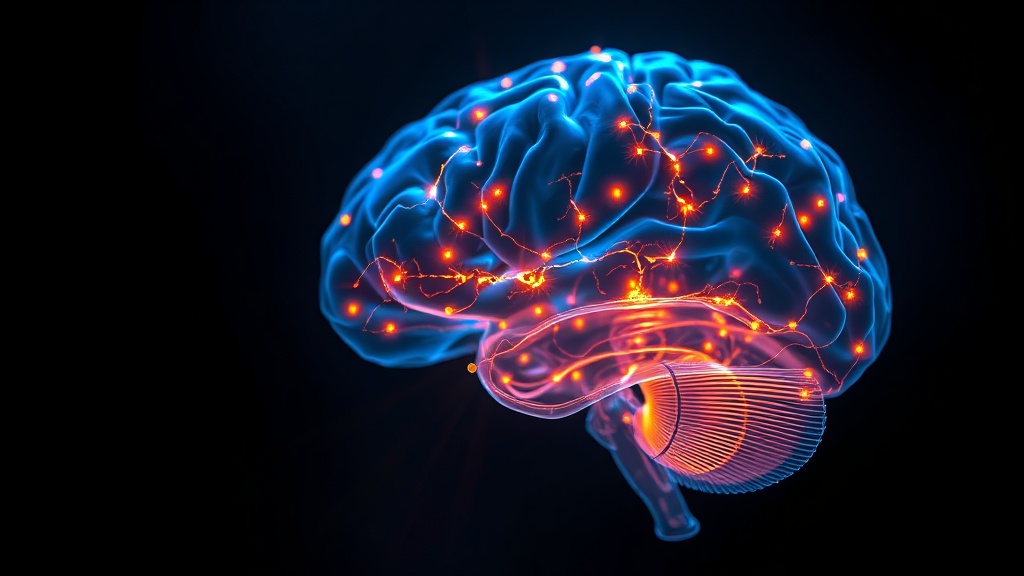
The Koolschijn et al. finding doesn't exist in isolation. A January 2026 study by Zhang et al. in Nature Communications showed that norepinephrine release in the dentate gyrus follows a ramping dynamic during aversive contextual processing — linear elevations in tonic NE that are sufficient to produce contextual disambiguation even without a salient aversive stimulus [5]. This is the flip side of the coin: in the dentate gyrus, NE sharpens pattern separation. In the broader hippocampal map, it smooths.
But here's where I want to push back slightly. A separate 2026 study in Communications Biology demonstrated that noradrenaline sparsifies and decorrelates granule cell activity in the dentate gyrus via enhanced feedforward inhibition from cholecystokinin-expressing interneurons [6]. So noradrenaline simultaneously makes individual dentate gyrus representations more distinct while the downstream cognitive map becomes less distinct. That's not a contradiction — it's a multi-scale architecture. The dentate gyrus encodes with precision; the CA1/CA3 map integrates with flexibility.
The honest answer is we don't fully understand how these opposing effects coordinate in real-time human cognition. The Koolschijn study is pharmacological, meaning it elevates noradrenaline systemically. What happens with the more surgical, phasic bursts from the locus coeruleus during natural arousal could look quite different.
β-Adrenergic Receptors as the Gate#
Hagena et al.'s work on β-adrenergic control of hippocampal function provides the receptor-level framework [7]. And a February 2026 study in Scientific Reports by Manahan-Vaughan and colleagues fills in a critical piece: β-adrenergic receptor antagonism prior to initial learning reduced cellular recruitment, disrupted ensemble reactivation, impaired synaptic plasticity, and reduced spatial tuning in CA1 [8]. Population burst activity — the kind associated with memory updating — was dampened.
So β-ARs aren't just involved. They appear to be the gate through which noradrenaline controls whether new spatial memories get properly encoded and integrated. Block them, and the whole ensemble dynamics fall apart.
The connection to the Koolschijn smoothing kernel is direct: if β-ARs gate the plasticity that enables map extension, then pharmacological manipulation of these receptors could, in theory, control the trade-off between precise storage and generalised inference.
Noradrenaline Effects Across Hippocampal Subregions
COMPARISON TABLE#
| Method | Mechanism | Evidence Level | Cost | Accessibility |
|---|---|---|---|---|
| Acute noradrenaline elevation (reboxetine/atomoxetine) | Widens synaptic plasticity smoothing kernel across cognitive map | Single human pharmacological + computational study (Koolschijn et al., 2026) | ~$30-80/month (prescription) | Prescription only |
| β-AR agonism (isoproterenol) | Gates ensemble recruitment and synaptic plasticity in CA1 | Preclinical mouse models (Manahan-Vaughan et al., 2026) | Research-grade only | Not available clinically |
| Cold exposure / acute stress | Endogenous locus coeruleus NE release | Indirect evidence; multiple human and animal studies | Free | High |
| Exercise-induced arousal | Moderate NE elevation with BDNF co-release | Multiple human RCTs for memory enhancement | Free | High |
| Caffeine + L-theanine | Mild adrenergic + GABAergic modulation | Several small human trials | ~$10-20/month | Over-the-counter |
| Meditation / HRV training | Tonic locus coeruleus regulation, reduced baseline NE | Multiple human studies; HRV optimization linked to cognitive flexibility | Free–$200 (device) | High |
THE PROTOCOL#
Based on current evidence, here is a practical framework for leveraging noradrenergic modulation of cognitive maps during learning. I want to be clear: optimal dosing in humans for cognitive map manipulation is not yet established. This protocol draws on what we know and flags where it's speculative.
Step 1: Identify your learning goal. Determine whether the session demands precise memorisation (facts, sequences, exact details) or creative association (connecting ideas, brainstorming, conceptual synthesis). This determines whether you want higher or lower noradrenergic tone during encoding.
Step 2: For precision learning, lower arousal before the session. Use 10-15 minutes of slow, controlled breathing (4-7-8 pattern or box breathing) to down-regulate locus coeruleus tonic firing. HRV biofeedback targeting coherence ratios above 1.5 may help. Aim for a calm but alert state — the parasympathetic window where pattern separation in the dentate gyrus is favoured.
Step 3: For associative/creative learning, deliberately elevate arousal. A 10-minute bout of vigorous exercise (running, cycling, or high-intensity intervals) 20-30 minutes before the learning session raises endogenous noradrenaline. Cold exposure (2-3 minutes cold shower or 30-60 seconds ice-water face immersion) provides a more acute NE spike. The goal is moderate elevation — not panic-level arousal, which collapses the inverted-U curve.
Step 4: Time your caffeine strategically. If using caffeine (100-200mg), take it 30-45 minutes before the creative learning session. Caffeine indirectly elevates noradrenergic tone. Pair with L-theanine (200mg) to buffer against anxiety-driven overshoot. For precision sessions, skip the caffeine or use it minimally.

Step 5: Structure your study blocks accordingly. During high-NE creative sessions, expose yourself to diverse but related material — let the smoothing kernel work. During low-NE precision sessions, focus on isolated facts with spaced repetition. Alternate between session types across the day or week.
Step 6: Monitor and track. Use HRV as a proxy for autonomic state. Resting HRV (RMSSD) measured before sessions gives you a baseline. If RMSSD is below your personal average, you're likely in a higher sympathetic/noradrenergic state already — use that window for creative work rather than fighting it.
Step 7: Sleep is non-negotiable for consolidation. Noradrenaline drops to near-zero during deep NREM sleep, which is when memory replay consolidates what you encoded. Disrupting sleep after high-NE learning sessions may leave you with the overgeneralised map but without the refinement that comes during offline processing. Prioritise 7-9 hours with consistent sleep timing.
Related Video
What does noradrenaline actually do to memories during learning?#
Based on Koolschijn et al. (2026), noradrenaline widens the window of synaptic plasticity across the hippocampal cognitive map. In practical terms, this means memories encoded under high noradrenaline are more likely to bleed into each other — your brain stores a broader, fuzzier version of events rather than a precise recording. Whether that's useful depends entirely on what you're learning.
How is this different from the common claim that stress improves memory?#
That claim has always been an oversimplification, and I think this research shows why. Noradrenaline can improve memory formation at one level (dentate gyrus pattern separation becomes sharper) while simultaneously distorting the broader cognitive map. So you might remember that something happened vividly, but the relational details — where exactly, in what order, associated with whom — get smeared. This matters enormously for contexts like eyewitness testimony or traumatic memory.
Who should be cautious about deliberately raising noradrenaline for learning?#
Anyone with anxiety disorders, PTSD, or panic disorder should be extremely careful. The overgeneralisation effect documented in this research maps directly onto threat generalisation — the hallmark of anxiety where neutral stimuli start feeling dangerous because they share features with an aversive memory. Deliberately elevating NE could worsen this pattern. If you have a clinical history, work with a professional before experimenting.
When would overgeneralisation from noradrenaline actually be beneficial?#
Creative problem-solving, conceptual learning, and building mental models across domains all benefit from linking disparate ideas. If you're trying to see connections between fields, brainstorm novel hypotheses, or develop intuition for a complex system, a moderate NE boost during encoding may genuinely help. The key is moderate — the inverted-U applies here.
Why does this matter for ADHD medication protocols?#
Medications like atomoxetine (Strattera) are selective noradrenaline reuptake inhibitors. This research suggests that while these drugs improve attention, they may simultaneously alter how the cognitive map forms during learning — potentially creating broader, more generalised associations. I'd want to see this replicated specifically in ADHD populations before drawing firm conclusions, but it's a question worth asking.
VERDICT#
Score: 8/10
This is a genuinely important study. The combination of human pharmacological data with computational neural network modelling is the right approach for a question at this scale, and the convergence with the 2026 dentate gyrus findings from other groups adds real weight. I'm less convinced that the smoothing kernel metaphor will hold up exactly as described once we have higher-resolution data on phasic versus tonic NE dynamics in humans — but as a framework, it's the most coherent account I've seen of why arousal simultaneously sharpens some memory features while blurring others. The practical implications for learning protocols are real but should be held with appropriate uncertainty. This is one study. A strong one, but one.
References
- 1.O'Keefe J, Nadel L. The Hippocampus as a Cognitive Map. Oxford University Press (1978). ↩
- 2.Behrens TEJ, Muller TH, Whittington JCR, Mark S, Baram AB, Stachenfeld KL, Kurth-Nelson Z. What is a cognitive map? Organizing knowledge for flexible behavior. Neuron (2018). ↩
- 3.Koolschijn RS et al.. Noradrenaline causes a spread of association in the hippocampal cognitive map. Nature Communications (2026). ↩
- 4.Mather M, Clewett D, Sakaki M, Harley CW. Norepinephrine ignites local hotspots of neuronal excitation: how arousal amplifies selectivity in perception and memory. Behavioral and Brain Sciences (2016). ↩
- 5.Zhang ET, Saglimbeni GS, Feng J, Li Y, Bruchas MR. Dentate gyrus norepinephrine ramping facilitates aversive contextual processing. Nature Communications (2025). ↩
- 6.Author(s) not listed. Sparsification and decorrelation of granule cell activity in the dentate gyrus by noradrenaline. Communications Biology (2026). ↩
- 7.Hagena H, Hansen N, Manahan-Vaughan D. β-adrenergic control of hippocampal function: subserving the choreography of synaptic information storage and memory. Cerebral Cortex (2016). ↩
- 8.Manahan-Vaughan D et al.. β-adrenergic receptors modulate CA1 population coding and synaptic plasticity during cumulative spatial memory formation and updating. Scientific Reports (2026). ↩
Fen Adler
Fen writes with psychological nuance and a slightly meandering quality that feels human. He'll start pursuing one idea, realize it connects to something else, and follow it briefly before returning: 'This reminds me of something from the attentional blink literature — different context, but the pattern holds.' He's interested in the experience, not just the mechanism, which means he'll occasionally ask: 'What does this actually feel like?' when discussing neurological effects.
View all articles →