Mindfulness Meditation for Gaming Disorder and Depression: RCT Results

THE PROTOHUMAN PERSPECTIVE#
Here's what caught my attention about this research: we've spent years treating internet gaming disorder and depression as separate problems, with separate interventions. CBT for one, SSRIs for the other, maybe some combination if you're lucky. But the brain doesn't work in neat diagnostic categories.
What Xu, Dong, and their colleagues have shown across multiple trials is that a single intervention — structured mindfulness meditation — can simultaneously target addiction circuitry and mood regulation networks. That's not just clinically convenient. It suggests something deeper about how these conditions share neural architecture.
For anyone interested in cognitive performance optimization, the implications extend well beyond gaming addiction. The executive control network enhancements documented here — strengthened prefrontal-striatal coupling, refined default mode network activity — are the same circuits that govern impulse control, sustained attention, and emotional regulation in healthy populations. This is less about treating a disorder and more about understanding how contemplative practice rewires the brain's command-and-control systems.
THE SCIENCE#
What Is Internet Gaming Disorder With Depression?#
Internet gaming disorder (IGD) is a persistent pattern of compulsive online gaming behavior that causes significant impairment across personal, social, and occupational domains. It matters because it now affects an estimated 9.9% of adolescents and young adults globally, according to a meta-analysis spanning over 400,000 participants across 33 countries[2]. Depression co-occurs with IGD at alarming rates, creating a feedback loop where gaming serves as maladaptive emotional regulation, which deepens depressive symptoms, which drives more gaming. Current treatment approaches — CBT, pharmacotherapy with bupropion or escitalopram, non-invasive brain stimulation — show inconsistent results, and no single intervention has reliably addressed both conditions simultaneously[2].
The Trial Design#
The primary study, published in Translational Psychiatry in February 2026 by Xu et al., enrolled 70 patients diagnosed with comorbid IGD and depression (IGD-D)[1]. Participants were randomly assigned to either a mindfulness meditation (MM) group or a progressive muscle relaxation (PMR) control group. Both groups completed 8 training sessions over one month, with resting-state functional magnetic resonance imaging (fMRI) conducted before and after the intervention.
Of the 70 enrolled, 61 completed the study — 34 in the MM group and 27 in the PMR group. That's a 13% dropout rate, which is acceptable but worth noting. The PMR control is a smart design choice: it controls for the general relaxation component of meditation, isolating the mindfulness-specific effects.
A companion study published in npj Mental Health Research by the same research group expanded the investigation, comparing fMRI data from 61 IGD patients and 60 healthy controls, then running a separate randomized trial with 80 IGD patients[2].
What Mindfulness Actually Changed in the Brain#
I think the word "mindfulness" is doing too much work in most popular discussions. What we're actually talking about here is a specific set of attentional training exercises that produce measurable changes in neural connectivity patterns.
The MM group showed significantly less severe depression, addiction scores, and gaming cravings compared to the PMR control[1]. But the neural data is where this gets genuinely interesting.
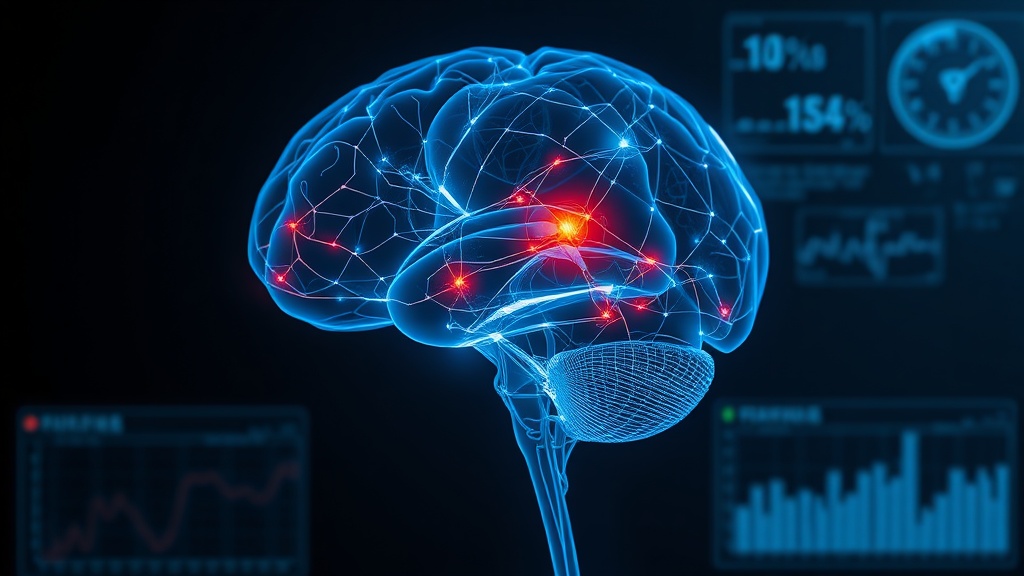
Functional connectivity analysis revealed three key network-level changes:
First, MM increased connectivity within the executive control network (ECN). This is the prefrontal machinery responsible for impulse inhibition, goal-directed behavior, and cognitive flexibility. In IGD patients, the ECN shows characteristic dysfunction — it's essentially weakened, unable to override reward-seeking impulses from subcortical structures[2].
Second, MM strengthened frontostriatal pathway connectivity. This is the highway between prefrontal cortex and the striatum — the circuit that translates executive decisions into behavioral control over habitual responses. Enhanced frontostriatal coupling means the "stop" signal from prefrontal regions can actually reach and modulate the reward circuits driving compulsive gaming.
Third, and this reminds me of something from the default mode network literature in depression — MM altered default mode network (DMN) activity. The DMN is active during self-referential thinking and mind-wandering, and its dysregulation is implicated in both rumination (a hallmark of depression) and craving-related mental imagery in addiction[1][5].
The Neurotransmitter Correlations#
Here's where it gets complicated — in a good way. The functional connectivity changes weren't just structural rearrangements. They correlated significantly with neurotransmitter receptor activity: specifically, 5-HT1A receptors, serotonin transporters, vesicular acetylcholine transporters, and dopamine D1 and D2 receptors[1].
The serotonin connection matters because 5-HT1A receptor activity directly modulates mood regulation. The dopamine D1/D2 correlation matters because these receptors are the core machinery of reward processing — the same system hijacked by addictive behaviors. What the data suggests is that MM doesn't just change how brain regions talk to each other; it appears to modulate the biochemical substrate underlying both depression and addiction.
I'd want to see this replicated with direct PET imaging of receptor binding rather than correlation with connectivity data. The current approach uses neurotransmitter maps from existing atlases, which is methodologically reasonable but not the same as measuring actual receptor changes in these specific patients.
Structural Changes: Online vs. Face-to-Face#
A third study published in the Journal of Psychiatric Research by Dong et al. added another dimension: both online and face-to-face mindfulness meditation produced measurable changes in cortical structure in IGD patients[4]. This is significant because cortical morphology is considered a more stable and reliable neural biomarker than functional connectivity, which fluctuates with state.
One hundred IGD patients were randomly assigned to face-to-face MM, online MM, or PMR control. Both MM delivery formats reduced IGD severity and enhanced cortical structures. The accessibility implications are substantial — if online delivery is comparably effective, the intervention scales dramatically.
Supporting Evidence From Long-Term Practitioners#
Separate research by Rho et al., published in Scientific Reports in February 2026, used dynamic causal modeling of EEG data from long-term Tibetan Buddhist meditation practitioners[6]. Their findings support the notion that sustained meditation practice refines attentional control and internal awareness by modulating effective connectivity patterns — particularly involving the salience network.
This isn't directly about IGD, but it provides convergent evidence that the neural mechanisms identified in the clinical trials reflect genuine meditation-induced plasticity rather than non-specific relaxation effects.
IGD Prevalence Rates by Age Group (Global Meta-Analysis)
COMPARISON TABLE#
| Method | Mechanism | Evidence Level | Cost | Accessibility |
|---|---|---|---|---|
| Mindfulness Meditation (MM) | Enhances ECN, frontostriatal, and DMN connectivity; modulates serotonin/dopamine activity | Multiple RCTs with fMRI (n=70, n=80, n=62, n=100) | Low (guided sessions, apps available) | High — effective both online and face-to-face |
| Cognitive Behavioral Therapy (CBT) | Restructures maladaptive cognitions around gaming behavior | Several RCTs, inconsistent long-term outcomes | Moderate-High (therapist required) | Moderate — requires trained clinician |
| Pharmacotherapy (Bupropion/Escitalopram) | Modulates dopamine/serotonin reuptake | Inconclusive evidence for IGD specifically | Moderate (ongoing prescription) | Moderate — requires psychiatric evaluation |
| Non-Invasive Brain Stimulation (rTMS/tDCS) | Directly modulates cortical excitability | Limited RCTs for IGD; more evidence in substance addiction | High (clinical equipment) | Low — specialized facility required |
| Progressive Muscle Relaxation (PMR) | General relaxation response; mild stress reduction | Active control in MM trials; some benefit but inferior to MM | Low | High |
THE PROTOCOL#
Based on the intervention protocols described across these trials, here is a practical framework. A critical caveat: this protocol is derived from clinical research on diagnosed IGD-D patients. If you're adapting this for general cognitive optimization, the dosing may differ.
Step 1: Establish baseline awareness. Before beginning, honestly assess your current relationship with gaming (or any compulsive digital behavior) and mood state. The Internet Addiction Test (IAT) by Young is freely available online and was used in these trials as a screening tool[2]. This isn't about labeling yourself — it's about having a measurable starting point.
Step 2: Structure your sessions — twice weekly, 8 sessions total. The trials used a consistent format: two guided mindfulness meditation sessions per week over four weeks[1][2]. Each session involved focused attention meditation (concentrating on breath or body sensations) followed by open monitoring meditation (observing thoughts and impulses without attachment or reaction).
Step 3: Session duration and technique. While exact session lengths weren't fully detailed in the abstracts, standard clinical MM protocols typically run 30-45 minutes. Begin with 10 minutes of focused breathing, transition to body scan awareness for 10-15 minutes, then spend the remaining time in open monitoring — simply observing whatever arises mentally without engagement.
Step 4: Target the craving response specifically. The neural data shows MM works partly by enhancing top-down control over craving impulses[2][5]. During open monitoring phases, when gaming-related thoughts or urges arise, practice labeling them ("craving," "urge," "thought about gaming") without acting on them. This is the behavioral correlate of the enhanced ECN-reward network coupling observed in the fMRI data.

Step 5: Consider delivery format. Based on Dong et al.'s findings, both online and face-to-face delivery produced cortical structural changes[4]. If access to in-person instruction is limited, guided online sessions appear to be a viable alternative. Apps like Waking Up or guided protocols through telehealth platforms could serve this function.
Step 6: Track progress with behavioral markers. Monitor gaming hours, craving intensity (rate 1-10 daily), and mood (PHQ-9 or similar validated scale). The trials demonstrated changes within one month, so reassess after completing the 8-session cycle.
Step 7: Maintenance practice. The trials measured outcomes at the end of the intervention period. For sustained benefit — particularly the cortical structural changes documented by Dong et al. — ongoing practice is likely necessary. Even 15-20 minutes of daily mindfulness practice may help maintain the connectivity changes, though optimal maintenance dosing in humans is not yet established.
Related Video
What is internet gaming disorder with depression (IGD-D)?#
IGD-D refers to the co-occurrence of compulsive, impairing online gaming behavior alongside clinically significant depressive symptoms. These conditions share overlapping neural circuitry — particularly dysfunction in reward processing and executive control networks — which is why they frequently appear together and reinforce each other.
How does mindfulness meditation change the brain in gaming addiction?#
MM strengthens functional connectivity within the executive control network and between prefrontal regions and the striatum (the frontostriatal pathway). It also modulates default mode network activity associated with rumination and craving. These changes correlate with serotonin and dopamine receptor activity, suggesting MM acts on the biochemical systems underlying both mood and reward processing[1].
How long does mindfulness meditation take to produce measurable neural changes?#
The clinical trials documented significant changes in both functional connectivity and behavioral outcomes after just 8 sessions over approximately one month[1][2]. Structural cortical changes were also observed within a similar timeframe[4]. However, long-term practitioner data from Rho et al. suggests that deeper, more stable changes accumulate with sustained practice over months and years[6].
Who should consider mindfulness meditation for gaming-related issues?#
The trials enrolled young adults diagnosed with IGD, with and without comorbid depression. MM appears most relevant for individuals who recognize problematic gaming patterns accompanied by mood disturbance. However, the underlying mechanisms — enhanced impulse control, improved emotional regulation — are broadly applicable. Anyone experiencing difficulty disengaging from compulsive digital behaviors might benefit, though clinical-level problems warrant professional assessment.
Why is mindfulness meditation considered superior to progressive muscle relaxation for IGD?#
PMR served as the active control in these trials, and while it produced some benefits, the effects were consistently inferior to MM[5]. The critical difference appears to be that MM specifically trains attentional control and non-reactive awareness of impulses, directly targeting the executive control deficits that characterize IGD. PMR reduces general physiological arousal but doesn't engage the top-down cognitive control systems that MM strengthens.
VERDICT#
Score: 7.5/10
The evidence here is genuinely promising — multiple pre-registered RCTs from the same research group, with consistent fMRI data showing plausible neural mechanisms. The replication across studies (n=62, n=70, n=80, n=100) with consistent findings strengthens confidence. The neurotransmitter correlations add biological plausibility.
But here's where I'm less convinced: this is essentially one research group's body of work, all pre-registered at the same Chinese clinical trial registry. I'd want independent replication from different labs, different populations, and ideally different cultural contexts before making strong claims. The sample sizes are decent but not large. The dropout rates are manageable but not trivial. And the correlation between functional connectivity and neurotransmitter maps, while interesting, isn't the same as directly measuring neurochemical changes.
The honest assessment: MM looks like a genuinely useful intervention for IGD-D, with more mechanistic support than most behavioral interventions currently have. But we're still in the "promising early evidence" phase, not the "established treatment" phase. I'd recommend it as a low-risk, high-accessibility addition to a treatment plan — not as a standalone replacement for clinical care in severe cases.
References
- 1.Xu X, Ni H, Wang H, Wang T, Liu C, Song X, Dong G-H. The effect and neural changes underlying mindfulness meditation training in patients with comorbid internet gaming disorder and depression: A randomized clinical trial. Translational Psychiatry (2026). ↩
- 2.Xu X, Ni H, Wang H, Wang T, Liu C, Song X, Dong G-H. Functional connectivity-related changes underlying mindfulness meditation for internet gaming disorder: a randomized clinical trial. npj Mental Health Research (2025). ↩
- 4.Dong H, Wang H, Xu X, Ma X, Ni H, Liu C, Song X, Dong G-H. Both online and face-to-face mindfulness meditation can change cortical structure in internet gaming disorder. Journal of Psychiatric Research (2025). ↩
- 5.Xu X, Ma X, Ni H, Wang H, Wang T, Liu C, Dong G-H. Mindfulness Meditation Changed Interregional Connectivity in Subcortical and Default Mode Networks in Internet Gaming Disorder. Mindfulness (2024). ↩
- 6.Rho G, Bossi F, Norbu N, Kechok J, Sherab N, Soepa J, Thakchoe J, Greco A, Scilingo EP, Vanello N, Neri B, Callara AL. Dynamic causal modeling of low-density resting-state EEG in long-term meditation practitioners. Scientific Reports (2026). ↩
Fen Adler
Fen writes with psychological nuance and a slightly meandering quality that feels human. He'll start pursuing one idea, realize it connects to something else, and follow it briefly before returning: 'This reminds me of something from the attentional blink literature — different context, but the pattern holds.' He's interested in the experience, not just the mechanism, which means he'll occasionally ask: 'What does this actually feel like?' when discussing neurological effects.
View all articles →