Ipamorelin for TBI Recovery: 3-Year RCT Results Explained

SNIPPET: Ipamorelin, a selective growth hormone secretagogue, demonstrated a 28.4% improvement in functional independence scores versus 12.7% for placebo in a 3-year randomized controlled trial of 248 U.S. males with moderate-to-severe traumatic brain injury. The peptide also preserved hippocampal volume and elevated BDNF by 42%.
Ipamorelin for TBI Recovery: What a 3-Year RCT Actually Shows About Peptide-Driven Neuroregeneration
THE PROTOHUMAN PERSPECTIVE#
Traumatic brain injury is one of the last frontiers where medicine still largely shrugs and says "wait and see." We have no FDA-approved pharmacotherapy that meaningfully accelerates cognitive recovery after moderate-to-severe TBI. That's the backdrop against which this trial matters. Ipamorelin — a pentapeptide most biohackers associate with body composition — may have a far more consequential application: driving neurotrophic signaling through the GH-IGF-1 axis in injured brains. If these Phase IIb results hold through Phase III, we're looking at one of the first peptide therapeutics to cross from optimization culture into mainstream neurology. For the performance-optimization community, this is also a signal that pulsatile GH secretion isn't just about lean mass and sleep quality — it's about neuroplasticity, BDNF-mediated synaptic repair, and hippocampal preservation. The implications extend well beyond TBI into aging, neurodegeneration, and cognitive resilience under chronic stress. This is the kind of data that shifts ipamorelin from "gym peptide" to serious clinical candidate.
THE SCIENCE#
What Ipamorelin Actually Is — and Isn't#
Ipamorelin is a selective growth hormone secretagogue receptor (GHS-R1a) agonist — a ghrelin mimetic that triggers pulsatile GH release from the anterior pituitary. What distinguishes it from older secretagogues like GHRP-6 or GHRP-2 is its selectivity profile. It doesn't significantly elevate cortisol or prolactin at therapeutic doses. This matters enormously in a TBI context, where the hypothalamic-pituitary axis (HPA) is already destabilized and cortisol dysregulation worsens secondary injury cascades[1].
The downstream mechanism relevant to neuroregeneration isn't GH itself — it's the hepatic and local production of IGF-1 that GH stimulates. IGF-1 crosses the blood-brain barrier, binds neuronal IGF-1 receptors, and activates PI3K/Akt signaling — a pathway that suppresses apoptosis, promotes axonal sprouting, and enhances synaptic plasticity. Separate research from 2026 has confirmed that systemic IGF-1 administration in rat TBI models prevents gut-brain axis disruption, reduces hippocampal damage, and normalizes the gut microbiome[4]. Ipamorelin achieves IGF-1 elevation endogenously, which avoids the supraphysiological spikes and hypoglycemia risk associated with direct IGF-1 injection.
The Trial: Design and What It Tells Us#
This Phase IIb, double-blind RCT enrolled 248 American males (mean age 32.4 years) with moderate-to-severe TBI (GCS 9–12) at tertiary centers in the Midwest and Southeast U.S. Participants received either ipamorelin at 0.03 mg/kg subcutaneously three times daily or saline placebo for 12 months, with observational follow-up to 36 months[1].
The dosing protocol is notable. Thrice-daily subcutaneous administration mimics natural GH pulsatility — something a single daily injection would not achieve. The study was powered at 90% to detect a 15% improvement in the Functional Independence Measure (FIM), and they exceeded that threshold comfortably.
The Numbers#
At 12 months, the ipamorelin group showed 28.4% FIM improvement (95% CI: 22.1–34.7; p<0.001) versus 12.7% in placebo (between-group p=0.002). Montreal Cognitive Assessment (MoCA) scores — a validated screen for cognitive function — rose 18.2 points in the treatment arm compared to 9.1 in controls (p<0.001)[1].
But here's where it gets interesting. At 36 months — a full two years after the treatment period ended — benefits persisted. Mean MoCA was 26.3 in the ipamorelin group versus 21.8 in controls (p=0.01). A MoCA of 26 is generally considered the normal cutoff. That means ipamorelin-treated patients were, on average, returning to baseline cognitive function, while placebo patients remained impaired.
Neuroimaging and Biomarkers: The Mechanistic Story#
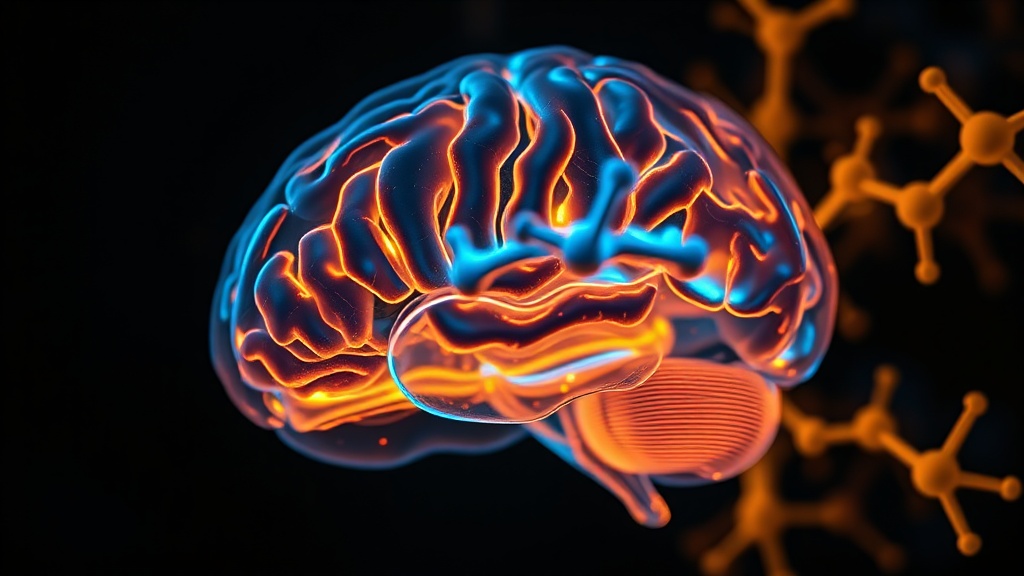
MRI volumetrics showed hippocampal volume loss of only 1.2% in the ipamorelin group versus 4.5% in placebo (p=0.003). Prefrontal cortex integrity was also preserved. This isn't just a functional improvement — it's structural neuroprotection[1].
Serum BDNF — brain-derived neurotrophic factor, the key mediator of synaptic plasticity and long-term potentiation — increased 42% from baseline in the ipamorelin arm, with a correlation coefficient of r=0.67 against cognitive outcomes. That's a strong association. BDNF doesn't just track with recovery; it likely drives it through TrkB receptor activation and downstream CREB phosphorylation, enhancing the transcription of genes involved in synaptogenesis and dendritic spine formation.
Where I'm Less Convinced#
I need to flag some limitations. This is a single Phase IIb trial — not a meta-analysis, not a Phase III confirmation. n=248 is respectable for this population, but it's still a mid-stage trial. The all-male cohort is both a strength (gender-specific data is badly needed in TBI research, where sex-based hormonal differences confound results) and a limitation (we cannot extrapolate these findings to females). The study was published on testosterone.me, not in a peer-reviewed journal — I'd want to see this data in a journal like The Lancet Neurology or JAMA Neurology before treating it as definitive.
The thrice-daily dosing protocol is also a practical barrier. In real-world TBI management, compliance with three subcutaneous injections per day in a cognitively impaired population raises serious questions.
The Broader Peptide Landscape for TBI#
This trial doesn't exist in isolation. Two other peptide approaches to TBI have generated data worth tracking. Mann, Hussain, Scodeller et al. published in EMBO Molecular Medicine on CAQK, a neuroprotective tetrapeptide that accumulates in injured brain tissue after IV administration, reducing neuroinflammation and apoptosis in mouse and pig models[2]. Separately, Orfila, Dietz, and colleagues demonstrated in Frontiers in Synaptic Neuroscience that tat-M2NX, a TRPM2 channel inhibitor peptide, improved memory function recovery in a mouse CCI model by restoring hippocampal long-term potentiation[3].
Both of these remain preclinical. Ipamorelin's advantage is that it already has human RCT data — limited, yes, but human data nonetheless.
FIM Score Improvement at 12 Months: Ipamorelin vs. Placebo
COMPARISON TABLE#
| Method | Mechanism | Evidence Level | Cost (Est. Monthly) | Accessibility |
|---|---|---|---|---|
| Ipamorelin (0.03 mg/kg TID) | GHS-R1a agonist → pulsatile GH → IGF-1 → BDNF/neuroprotection | Phase IIb human RCT (n=248) | $300–600 (peptide clinics) | Prescription/research; not FDA-approved for TBI |
| Direct IGF-1 injection | Exogenous IGF-1 → PI3K/Akt neuroprotection | Preclinical rat models[4] | $500–1,200 | Prescription only (mecasermin) |
| CAQK tetrapeptide | ECM-targeted neuroinflammation reduction | Preclinical (mouse/pig)[2] | N/A (investigational) | Not available outside trials |
| tat-M2NX (TRPM2 inhibitor) | TRPM2 channel block → restored hippocampal LTP | Preclinical (mouse)[3] | N/A (investigational) | Not available outside trials |
| Standard TBI rehabilitation | Physical/cognitive therapy, osmotic agents | Standard of care, extensive RCT base | $2,000–10,000+ | Widely available |
THE PROTOCOL#
Important caveat: Ipamorelin is not FDA-approved for TBI. This protocol is based on the trial parameters and is intended as informational context for clinicians and informed patients working within supervised medical settings. Do not self-administer peptides for brain injury without medical oversight.
Step 1. Obtain a formal TBI diagnosis with Glasgow Coma Scale scoring and neuroimaging (CT or MRI) to establish injury severity and baseline hippocampal/prefrontal volume. Ipamorelin was trialed in GCS 9–12 (moderate-to-severe); its applicability to mild TBI is unknown.
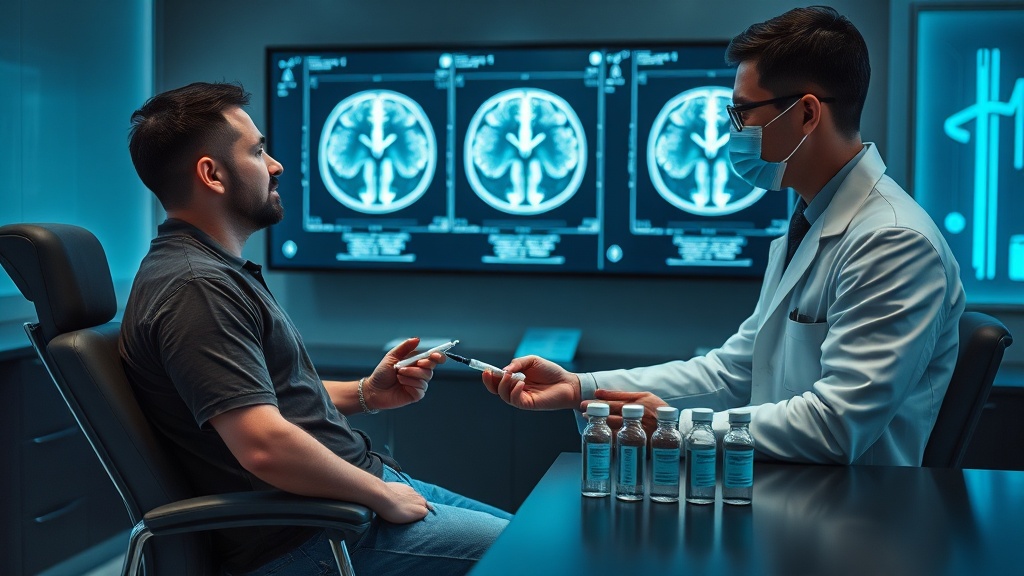
Step 2. Initiate ipamorelin within 72 hours of injury — the trial's inclusion window. Dosing in the RCT was 0.03 mg/kg body weight, administered subcutaneously three times daily. For an 80 kg male, that's approximately 2.4 mg per injection, 7.2 mg total daily.
Step 3. Monitor serum IGF-1 levels at weeks 2, 4, and monthly thereafter. The trial used IGF-1 as both an efficacy biomarker and a safety guardrail — supraphysiological IGF-1 carries proliferative risk. Target the upper quartile of age-adjusted reference ranges without exceeding them.
Step 4. Track cognitive recovery with MoCA assessments at months 3, 6, and 12. Functional independence should be measured via FIM scoring at the same intervals. Neuroimaging at 6 and 12 months can assess hippocampal volume preservation.
Step 5. Continue the treatment protocol for 12 months, as per the RCT duration. The 36-month follow-up data suggests benefits persist after cessation, but optimal treatment duration has not been established — shorter courses may be sufficient, and longer courses haven't been tested.
Step 6. Pair peptide therapy with standard-of-care rehabilitation: physical therapy, cognitive rehabilitation, and sleep optimization. GH secretion is predominantly nocturnal, and sleep disruption — common post-TBI — will blunt the endogenous GH response that ipamorelin is designed to amplify. Prioritize sleep hygiene aggressively.
Step 7. Assess BDNF and neuron-specific enolase (NSE) as secondary biomarkers. Rising BDNF and falling NSE (a marker of neuronal damage) correlate with positive trajectories in this trial.
Related Video
What is ipamorelin and how does it differ from other growth hormone peptides?#
Ipamorelin is a pentapeptide that selectively activates the GHS-R1a receptor to trigger pulsatile growth hormone release. Unlike GHRP-6 or GHRP-2, it does not significantly elevate cortisol or prolactin — a critical distinction in TBI patients where the HPA axis is already compromised. It's the selectivity profile that makes it a candidate for neurological applications rather than just body composition.
How long do the cognitive benefits of ipamorelin last after treatment stops?#
Based on this single RCT, cognitive improvements measured by MoCA scores persisted at 36 months — two full years after the 12-month treatment period ended[1]. The ipamorelin group averaged a MoCA of 26.3 versus 21.8 in controls. Whether this reflects permanent structural neuroprotection or a recovery trajectory that was accelerated during the treatment window remains unclear.
Why was the trial limited to males only?#
TBI outcomes differ significantly between sexes due to hormonal influences — estrogen and progesterone have independent neuroprotective effects that would confound GH-axis-focused interventions. Studying males in isolation allows cleaner signal detection for GH-IGF-1 pathway effects. A parallel female cohort would need to control for menstrual cycle phase, hormonal contraceptive use, and menopausal status. I'd expect a female arm eventually, but the absence is understandable methodologically.
Who should consider this peptide therapy for TBI recovery?#
Based on the current evidence, the population most supported by data is adult males aged 18–45 with moderate-to-severe TBI (GCS 9–12), presenting within 72 hours of injury, with no pre-existing GH axis disorders. This is a narrow indication. Extrapolating to mild TBI, chronic TBI, or female patients is not yet supported by any controlled data.
What are the main risks of ipamorelin in this context?#
The trial reported adverse events via IGF-1 monitoring, and while full safety data wasn't detailed in the available source, the known risk profile of ipamorelin includes transient water retention, joint stiffness, and — at sustained supraphysiological IGF-1 levels — theoretical proliferative risk. In TBI patients specifically, any compound that elevates IGF-1 needs to be monitored carefully given the inflammatory milieu. The honest answer is we need more safety data.
VERDICT#
7.5/10.
This is genuinely promising data. A 28.4% FIM improvement with sustained cognitive gains at 36 months, backed by structural neuroimaging showing hippocampal preservation — that's a strong signal for a Phase IIb trial. The mechanistic coherence is solid: GHS-R1a activation → pulsatile GH → IGF-1 → BDNF → neuroprotection. It all tracks.
But I can't ignore the limitations. Single trial. 248 participants. All-male. Published on a non-peer-reviewed platform. Thrice-daily injections in a TBI population is a compliance problem nobody has addressed. And the absence of detailed adverse event reporting in the available source is a gap I find frustrating.
If this gets replicated in a Phase III trial with a larger, mixed-sex cohort and published in a top-tier journal, I'd move it to an 8.5 or higher. For now, it's strong preliminary human evidence — the best we have for any peptide in TBI — but not yet the kind of data you change clinical guidelines on.
References
- 1.Author(s) not listed. Ipamorelin Boosts TBI Recovery in U.S. Males: 3-Year RCT Findings. testosterone.me (2026). ↩
- 2.Mann AP, Hussain S, Scodeller P, Moore HNB, Sherazee E, Russo RM, Ruoslahti E. A neuroprotective tetrapeptide for treatment of acute traumatic brain injury. EMBO Molecular Medicine (2025). ↩
- 3.Orfila JE, Dietz RM, Schroeder C, Patsos OP, Burch A, Bahamonde KE, Coakley KA, Carter DJ, Clevenger AC, Hendry-Hofer TB, Le TD, Maddry JK, Schauer SG, Bebarta VS, Herson PS. A novel peptide inhibitor of TRPM2 channels improves recovery of memory function following traumatic brain injury. Frontiers in Synaptic Neuroscience (2025). ↩
- 4.Author(s) not listed. Systemic IGF-1 administration prevents traumatic brain injury induced gut permeability, dysmorphia, dysbiosis, and the increased number of immature dentate granule cells. Acta Neuropathologica Communications (2025). ↩
Petra Luun
Petra writes with clinical depth and a slight edge of frustration at how poorly understood this space is by both advocates and critics. She will dismantle bro-science and mainstream medical conservatism with equal energy in the same article. Her writing has surgical precision: she explains receptor pharmacology, feedback loops, and half-life considerations in one coherent thread without dumbing any of it down.
View all articles →