High vs Low Intensity Diode Laser for Periodontitis Treatment

SNIPPET: High-intensity diode laser therapy (DLT-H) combined with scaling and root planing significantly improves clinical attachment level in periodontitis patients compared to SRP alone or low-intensity laser, according to a 2026 RCT in Scientific Reports. However, low-level laser therapy alone shows inconsistent benefits, with multiple trials finding no advantage over standard mechanical debridement when parameters are suboptimal.
THE PROTOHUMAN PERSPECTIVE#
Periodontitis isn't just a dental disease. It's a systemic inflammatory condition linked to cardiovascular risk, metabolic dysfunction, and accelerated biological aging. The oral microbiome-systemic axis is one of the most underappreciated vectors in human performance optimization, and chronic periodontal inflammation drives elevated CRP, disrupts endothelial function, and may even compromise mitochondrial efficiency through sustained TNF-α and IL-1β signaling.
So when a new RCT drops showing that a specific laser protocol — high-intensity diode, not the low-power consumer stuff — delivers measurably better periodontal attachment gains than the current gold standard alone, that matters beyond the dental chair. This is inflammation control at a gateway tissue. For anyone tracking HRV, managing autoimmune markers, or optimizing recovery capacity, unresolved periodontal disease is a silent drag on every system. The question isn't whether lasers work. It's which parameters actually move the needle — and which are expensive light shows.
THE SCIENCE#
What Periodontitis Actually Costs You#
Periodontitis is a chronic inflammatory disease driven by subgingival microbial biofilm that progressively destroys the connective tissue attachment and alveolar bone supporting the teeth. It affects roughly 50% of adults over 35, with approximately 10% suffering severe forms[1]. Standard treatment — scaling and root planing (SRP) — mechanically removes calculus and disrupts the biofilm. It works. But it has limits, especially in deep pockets (≥7 mm), where instrument access is compromised and residual pathogens persist.
This is where adjunctive therapies enter the conversation. And diode lasers have been aggressively marketed as the upgrade.
The Al-Sharani Trial: Intensity Matters#
The most recent — and most relevant — data comes from Al-Sharani, Al-Hajj, and Madfa, published in Scientific Reports in February 2026[1]. This was a randomized, within-patient, site-level controlled trial. Twenty-seven patients, 81 quadrants, 596 individual periodontal sites. Each patient served as their own control, which is the right design for this kind of comparison.
Three arms: SRP alone, SRP + high-intensity diode laser therapy (DLT-H), and SRP + low-intensity diode laser therapy (DLT-L). Clinical indices — plaque index, gingival index, probing pocket depth, and clinical attachment level — were measured at baseline, one month, and three months.
All three approaches produced statistically significant improvements across every parameter (p < 0.001). That's expected. SRP works. The question is whether the laser adds anything real.
It did — but only at high intensity.
DLT-H showed significantly greater CAL improvement at both T1 (p = 0.001 vs. SRP; p = 0.037 vs. DLT-L) and T2 (p < 0.001 vs. SRP; p = 0.018 vs. DLT-L)[1]. The low-intensity arm produced moderate gains that didn't consistently separate from SRP alone. And SRP by itself showed early improvements that plateaued — a pattern anyone familiar with conventional debridement will recognize.
The catch, though. This is 27 patients followed for three months. The within-patient design strengthens internal validity, but three months is not long enough to know if these CAL gains hold. Periodontal healing is measured in years, not weeks. I'd want to see 12-month data before recommending protocol changes.
The Vienna Trial: When Low-Level Doesn't Deliver#
Now contrast that with the Dervisbegovic et al. study from the Medical University of Vienna, published in Clinical Oral Investigations in April 2025[2]. This was a split-mouth RCT using a 980-nm diode laser at low-level settings as an adjunct to SRP.
The result was unambiguous: no statistically significant difference between SRP + LLLT and SRP alone on any clinical parameter (all p > 0.05)[2]. Recolonization of P. gingivalis and T. denticola wasn't significantly reduced in the laser group either.
This is where the laser therapy conversation gets uncomfortable. The biostimulatory effects of LLLT — increased cell proliferation, accelerated wound healing, modulation of inflammatory cytokines — are well-documented in vitro. The Arndt-Schultz curve describes the biphasic dose response: too little energy does nothing, too much causes damage, and there's a therapeutic window in between[2]. The problem is that translating those cellular-level responses into meaningful clinical outcomes has been maddeningly inconsistent.
Dervisbegovic's team was honest about it: "Currently, there is no recommended treatment protocol for adjunctive LLLT in periodontitis."[2] That's the core issue. Without standardized parameters — wavelength, power density, irradiance, exposure time, number of sessions — every trial is essentially testing a different intervention.
The LANAP Data: Deep Pockets Respond Differently#
A third dataset adds nuance. A 2025 RCT published in Lasers in Medical Science evaluated both the laser-assisted new attachment procedure (LANAP) and LLLT against SRP alone in 68 periodontitis patients[3]. In moderate pockets (4–6 mm) and deep pockets (≥7 mm), laser-treated groups showed significant reductions in pocket depth and CAL compared to control[3].
But here's where it gets complicated. The biochemical markers — IL-1β, IL-10, VEGF in gingival crevicular fluid — showed no statistically significant differences between groups[3]. So the clinical measurements improved, but the inflammatory mediator profile didn't shift detectably. That disconnect is worth noting. It might mean the laser effect is primarily mechanical/thermal rather than truly immunomodulatory at these settings. Or it might mean the biomarker assays weren't sensitive enough. Either way, I'm less convinced by claims of "host-modulatory effects" when the host markers don't actually modulate.
Wavelength Specificity: The PBM Wavelength Trial#
Chittabathina et al. (2025) examined photobiomodulation using single-wavelength (810 nm) and dual-wavelength (810 + 650 nm) diode lasers as adjuncts to bone graft material in intrabony defects[4]. The dual-wavelength approach is interesting because different chromophores in periodontal tissues absorb at different peaks — cytochrome c oxidase responds maximally around 660-680 nm and again near 810-830 nm.
Wavelength matters. Irradiance matters. Time matters. Tissue depth matters. Most trials don't adequately report all four, which makes cross-study comparison almost useless.
CAL Improvement Significance by Treatment Group (Al-Sharani et al.)
COMPARISON TABLE#
| Method | Mechanism | Evidence Level | Cost | Accessibility |
|---|---|---|---|---|
| SRP Alone | Mechanical biofilm disruption, calculus removal | Strong (gold standard, decades of RCTs) | $$ | Universal — standard of care |
| SRP + High-Intensity Diode Laser | Photothermal antimicrobial effect + tissue biostimulation at higher power densities | Moderate (single RCT showing superior CAL gains) | $$$$ | Limited — requires trained clinician + device |
| SRP + Low-Intensity Diode Laser (LLLT) | Photobiomodulation via cytochrome c oxidase stimulation, anti-inflammatory cytokine modulation | Weak-to-Moderate (inconsistent results across trials) | $$$ | Moderate — devices widely available, protocols unstandardized |
| LANAP (Nd:YAG) | Selective tissue ablation, clot formation, bactericidal activity at 1064 nm | Moderate (significant in deep pockets, limited RCTs) | $$$$$ | Low — specialized equipment + certification required |
| Dual-Wavelength PBM (810 + 650 nm) | Multi-chromophore activation across red and near-infrared spectra | Preliminary (small RCTs, emerging data) | $$$$ | Low — research settings primarily |
THE PROTOCOL#
If you're considering diode laser therapy as an adjunct to periodontal treatment — either as a clinician or as a patient advocating for your own care — here's what the current evidence actually supports.
Step 1: Confirm the diagnosis and establish baseline measurements. Full periodontal charting with six-point probing depths, CAL measurements, bleeding on probing, and standardized radiographs. No laser therapy should be initiated without knowing where you're starting. This is non-negotiable.
Step 2: Complete thorough SRP first. The laser is an adjunct, not a replacement. Every trial showing benefit used laser after mechanical debridement. SRP remains the foundation. If your clinician suggests laser instead of scaling, that's a red flag.
Step 3: If using diode laser, prioritize high-intensity settings with validated parameters. Based on Al-Sharani et al., high-intensity diode laser produced significantly better CAL outcomes than low-intensity[1]. The specific parameters from this trial — while not fully detailed in the abstract — fall within the range used in prior high-power diode studies (typically 808–980 nm wavelength, 1–2 W power output in continuous or pulsed mode, with fiber optic tip insertion into the pocket).
Step 4: Target deep pockets preferentially. The evidence for laser benefit is strongest in pockets ≥5 mm, where SRP alone has known limitations in biofilm access[3]. For shallow sites (≤4 mm), the marginal benefit of adjunctive laser is minimal based on current data.
Step 5: Schedule re-evaluation at 4–6 weeks post-treatment. Re-probe, reassess bleeding on probing, and compare to baseline. The Al-Sharani data showed measurable differences at one month (T1), so this timeframe is appropriate for initial assessment.
Step 6: Repeat laser application if clinically indicated. Some protocols call for a second session at the re-evaluation appointment if residual pockets persist. Based on current evidence, this should be guided by clinical response, not a fixed schedule.
Step 7: Do not rely on laser therapy alone for periodontal maintenance. Adjunctive means adjunctive. Oral hygiene, regular supportive periodontal therapy, and control of systemic risk factors (smoking, diabetes, stress-driven inflammation) remain the backbone of long-term management.
Related Video
What is diode laser therapy for periodontitis?#
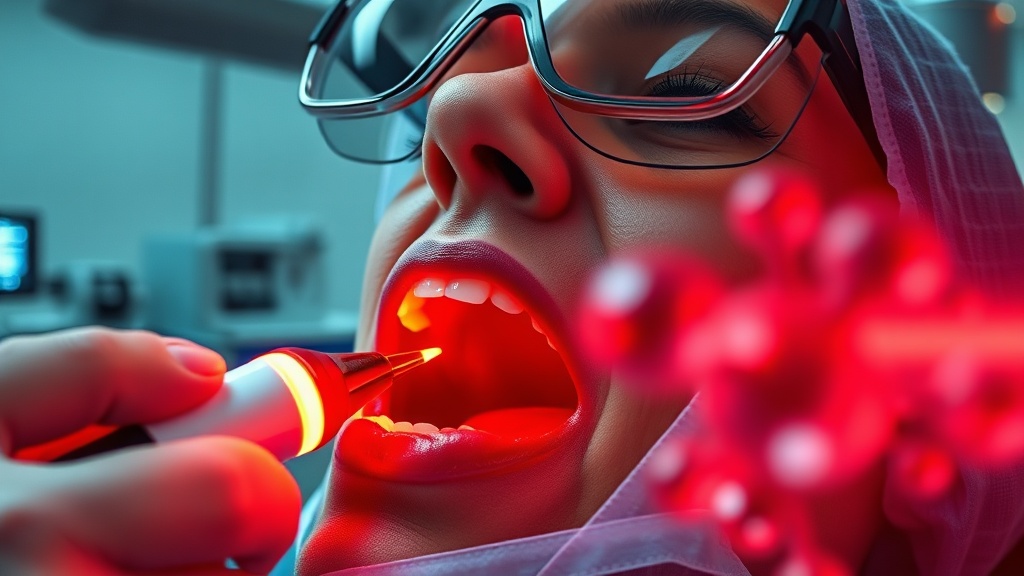
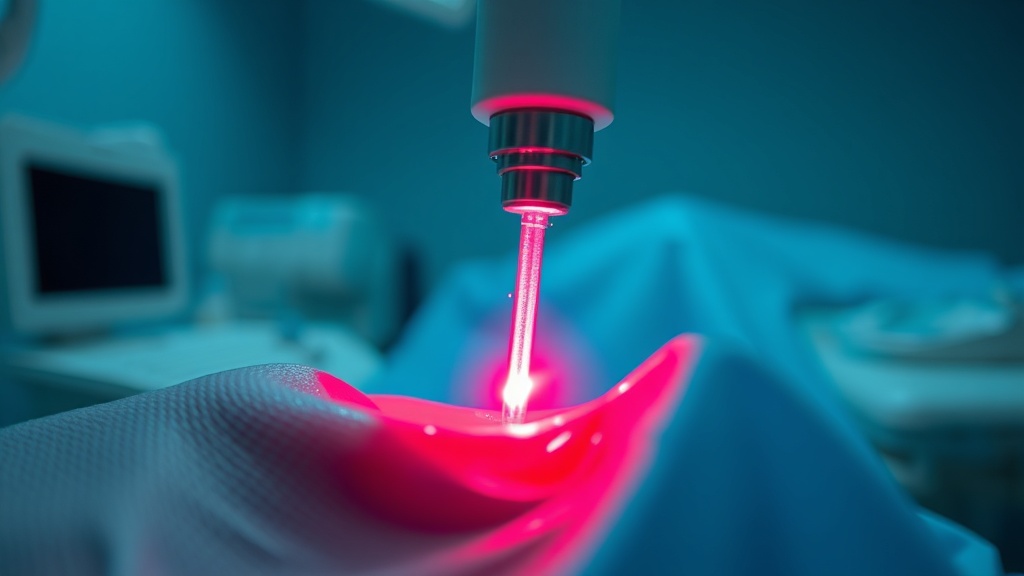
Diode laser therapy uses semiconductor lasers (typically 808–980 nm wavelength) to deliver photonic energy into periodontal pockets after scaling and root planing. The mechanism involves photothermal bacterial reduction at higher intensities and photobiomodulatory tissue stimulation at lower intensities. It's an adjunct to standard mechanical debridement — not a standalone treatment.
How does high-intensity diode laser differ from low-level laser therapy?#
High-intensity diode laser therapy operates at power outputs typically above 1 W and produces both photothermal and biostimulatory effects. LLLT uses sub-500 mW output and relies purely on photobiomodulation — stimulating cellular processes without generating significant heat. The Al-Sharani 2026 trial found high-intensity produced significantly greater clinical attachment gains, while multiple studies show LLLT alone offers inconsistent benefits over SRP[1][2].
Why do laser therapy studies show conflicting results?#
Parameter chaos. There is no standardized protocol for wavelength, power density, irradiance, exposure time, spot size, or number of sessions in periodontal laser therapy. A "diode laser" study using 980 nm at 300 mW for 30 seconds is testing a fundamentally different intervention than one using 810 nm at 1.5 W for 60 seconds — yet both get categorized as "diode laser therapy" in reviews. Until consensus protocols emerge, conflicting results are inevitable.
Who should consider adjunctive laser therapy for periodontitis?#
Patients with moderate-to-severe periodontitis who have deep pockets (≥5 mm) that respond incompletely to conventional SRP are the best candidates based on current evidence[3]. Patients with shallow pocketing or gingivitis alone are unlikely to see meaningful additional benefit. The decision should involve a periodontist experienced with the specific laser parameters supported by clinical data.
When will we have definitive evidence on laser periodontal protocols?#
Honestly, we don't know yet. The field needs large, multi-center RCTs with standardized laser parameters, 12+ month follow-up, and biological outcome measures beyond clinical probing. The Al-Sharani trial is a step forward, but 27 patients over three months is not enough to change practice guidelines. I'd estimate we're 3–5 years from anything resembling consensus parameters — if the research community can agree on which variables to standardize.
VERDICT#
Score: 6.5/10
The Al-Sharani 2026 data is genuinely interesting — high-intensity diode laser as an SRP adjunct produced statistically significant and clinically meaningful CAL improvements over both low-intensity laser and SRP alone. That's a real signal. But it's one trial with 27 patients and a three-month follow-up. The Vienna LLLT trial found no benefit whatsoever. The LANAP data is encouraging in deep pockets but biochemically unconvincing. The field is plagued by parameter heterogeneity, and most consumer-facing laser claims run far ahead of the evidence. High-intensity diode may earn a higher score when longer-term, larger-sample data arrives. For now, it's a promising adjunct — not a proven upgrade. If your periodontist has the equipment and uses validated high-intensity parameters on deep pockets, the risk-benefit calculation favors trying it. But I wouldn't switch providers or pay a massive premium based on what we have today.
References
- 1.Al-Sharani AA, Al-Hajj WA, Madfa AA. Clinical efficacy of high versus low intensity diode laser as an adjunct to non-surgical periodontal therapy in periodontitis: randomized controlled clinical trial. Scientific Reports (2026). ↩
- 2.Dervisbegovic S, Lettner S, Tur D, Laky M. Adjunctive low‐level laser therapy in periodontal treatment – A randomized clinical split-mouth trial. Clinical Oral Investigations (2025). ↩
- 3.Author(s) not listed. Evaluating efficacy of laser-assisted new attachment procedure and adjunctive low-level laser therapy in treating periodontitis: A single-blind randomized controlled clinical study. Lasers in Medical Science (2025). ↩
- 4.Chittabathina P, Gottumukkala SNVS, Penmetsa GS, Ramesh KSV. Clinical and microbiological outcomes of adjunctive photobiomodulation using various wavelengths in treatment of intrabony defects: a randomized controlled clinical trial. Lasers in Medical Science (2025). ↩
Sova Reld
Sova writes with focused intensity and low tolerance for vague claims. She came to photobiomodulation through personal experimentation and is irritated by both true believers and reflexive skeptics. Her writing has edge: 'The wellness market has done more damage to this field than the skeptics ever could.' She's extremely precise about parameters — wavelength, irradiance, duration — and will tell you when a study used inadequate dosing without apology.
View all articles →