
GLP-1 Receptor Agonists Anti-Aging: Omics Reversal Evidence

SNIPPET: GLP-1 receptor agonists may counteract molecular aging signatures across multiple organ systems, according to a January 2026 study in Nature Aging. In mouse models, GLP-1RA treatment reversed age-related omics profiles, suggesting these drugs intersect with fundamental aging pathways — not just metabolic ones. Combined with emerging geroprotective compounds and telomere therapies, GLP-1RAs are reshaping longevity science.
THE PROTOHUMAN PERSPECTIVE#
The semaglutide conversation has moved past weight loss. Past cardiovascular risk reduction. Past even the kidney and liver data. What we're watching now is a drug class originally designed for glucose control being systematically evaluated against the aging process itself.
This matters because it signals a paradigm collision. Endocrinology is crashing into geroscience, and the resulting data is forcing both fields to reconsider what these incretin-based molecules actually do at a systems level. GLP-1 receptors aren't just sitting in your pancreas — they're expressed in the brain, heart, kidneys, and vasculature. When you activate them pharmacologically, the downstream signaling cascades touch nutrient-sensing networks, inflammatory pathways, and mitochondrial efficiency in ways we're only beginning to map.
For those of us tracking human performance optimization, this is the inflection point. Not because GLP-1RAs are "anti-aging drugs" — that claim is premature — but because the mechanistic data is finally catching up to the clinical observations. And it's arriving alongside a wave of parallel geroprotective research that, taken together, redefines what intervention against biological aging might look like within the next decade.
THE SCIENCE#
GLP-1 Receptor Agonism Reverses Molecular Aging Signatures#
Kriebs, reporting in Nature Aging (January 2026), describes how GLP-1 receptor agonism counteracts omics-level aging markers in mouse models [1]. The study's significance lies not in a single biomarker shift but in the breadth of molecular reversal observed — spanning transcriptomic, proteomic, and metabolomic aging profiles across tissues.
The co-corresponding author Ho Ko frames it directly: the recent failure of a GLP-1RA trial in clinical-stage Alzheimer's disease shouldn't be read as a death sentence for the drug class in neurodegeneration. Instead, it highlights a timing problem. "The greatest benefit may well lie in early intervention or prevention, where the drug may confer resilience before irreversible neurological damage occurs," Ko states [1].
I want to dwell on this because it's a critical distinction the popular press keeps missing. A drug that fails in late-stage disease but shows molecular age reversal in healthier models isn't a failed drug — it's a misapplied one. The GLP-1RA mechanism intersects with age-related pathways involving energy metabolism, cognitive aging, and systemic inflammation. The question isn't whether these drugs affect aging biology. The mouse omics data suggests they do. The question is whether we're deploying them at the right point in the disease trajectory.
But here's where it gets complicated. This is mouse data. Omics reversal in a murine model does not automatically translate to functional healthspan extension in humans. I've seen too many promising mouse longevity findings evaporate at the clinical trial stage. The signal is strong enough to warrant serious investigation — not strong enough to justify prescribing semaglutide as an anti-aging therapeutic.
Cyrene: An Accidental Geroprotective Discovery#
In what reads like one of the more interesting serendipity stories in geroscience, researchers identified Cyrene (dihydrolevoglucosenone) — a biocompatible solvent they were originally using as a vehicle for compound delivery — as a geroprotective agent in its own right [2]. Published in npj Aging in December 2025, the data shows Cyrene extending lifespan and healthspan in both C. elegans and Drosophila melanogaster.
The specifics are worth noting. In C. elegans, Cyrene improved locomotor function and conferred resistance to oxidative, thermal, osmotic, genotoxic, and proteotoxic stress. It also showed neuroprotective effects in models of Alzheimer's, Parkinson's, and Huntington's disease [2]. Cross-species efficacy in Drosophila strengthens the case that this isn't a worm-specific artifact.
What's mechanistically interesting is the partial independence from DAF-16/FOXO signaling. Most geroprotective compounds we know — rapamycin, metformin, resveratrol — act through nutrient-sensing and stress-response networks that converge on FOXO transcription factors. Cyrene appears to operate through at least partially distinct pathways. That's genuinely novel.
The catch, though: this is invertebrate data. No mammalian studies yet. The authors themselves note that "conservation across species supports future work to dissect molecular mechanisms and test its potential in mammals." Translation: promising, but early.

Stem Cell Rejuvenation via Metabolic Rewiring#
A January 2026 study in Cell Discovery identified the IGF2BP3-m6A-BCAT1/GLS axis as a central regulator of adipose-derived stem cell aging [5]. The researchers found that elderly-derived human adipose stem cells (E-hASCs) show attenuated branched-chain amino acid (BCAA) and glutamine catabolism compared to infant-derived cells.
The practical takeaway: supplementation with BCAAs and glutamine significantly rejuvenated aged stem cells, restoring proliferation, differentiation, and wound-healing capacity in vivo [5]. The mechanism involves IGF2BP3 stabilizing BCAT1 and GLS mRNAs through METTL3-mediated m6A modification — essentially an epitranscriptomic switch that preserves redox homeostasis and mitochondrial energy production.
This is one of the cleaner mechanistic stories I've seen in the stem cell aging space. Two actionable therapeutic strategies emerge: nutrient supplementation to rescue metabolic deficits, and m6A modulation to stabilize key mRNAs. The former is accessible now. The latter requires drug development.
Telomere Engineering Enters a New Phase#
Nagpal and Agarwal, publishing in Nature Biomedical Engineering, demonstrated that synthetic engineered telomerase RNA (eTERC) can extend telomere length and replicative lifespan in human stem cells [6]. A single transient exposure to eTERC forestalled telomere-induced senescence in telomerase-deficient cell lines and lengthened telomeres in iPSCs from nine patients with different telomere-maintenance gene mutations.
The engineering here is elegant. Unlike therapeutic mRNAs, eTERC requires avoiding nucleoside base modifications and uses a distinct trimethylguanosine 5′ cap. The TENT4B polymerase was repurposed to catalyze self-limited 2′-O-methyladenosine tailing for stabilization [6]. This isn't gene therapy — it's transient RNA delivery that achieves functional telomerase reconstitution.
I'm less convinced by the immediate translational framing, though. Telomere dynamics in human aging are not as straightforward as "longer = better." Constitutive telomerase activation carries oncogenic risk. The transient delivery model mitigates this somewhat, but the safety profile in humans remains entirely uncharacterized.
Biological Age Reduction: Two Pilot Approaches#
Two smaller studies round out the picture. A pilot study (n=9) in Scientific Reports found that 60 days of microbiota-accessible nutritional complexes (MAC) — combining prebiotics, postbiotics, autophagy stimulators, and senolytic activators — reduced hs-CRP by 69% (p=0.009) and showed AI-modeled biological age reductions of up to 3.3 years via XGBoost [3].
Separately, a clinical observational trial published in npj Aging demonstrated that collagen amino acid supplementation (glycine:proline:hydroxyproline in a 3:1:1 ratio) reduced biological age by 1.4 years (p=0.04) within six months and improved skin features within three months [4].
The honest assessment: both studies have severe limitations. The MAC study is single-arm with nine participants. The collagen study is observational. Neither would survive rigorous scrutiny as standalone evidence. But as directional signals within the broader geroprotective landscape, they're worth tracking.
Reported Biomarker and Biological Age Changes Across Interventions
COMPARISON TABLE#
| Method | Mechanism | Evidence Level | Cost | Accessibility |
|---|---|---|---|---|
| GLP-1 Receptor Agonists (semaglutide, etc.) | Incretin signaling → nutrient-sensing, anti-inflammatory, omics age reversal | Mouse omics data (Nature Aging); multiple human RCTs for metabolic endpoints | $800–1,300/mo (branded); biosimilars emerging | Prescription only; expanding indications |
| Cyrene (dihydrolevoglucosenone) | Stress resistance, partial FOXO-independent geroprotection | Invertebrate models only (C. elegans, Drosophila) | N/A (not available as supplement) | Research only; no human protocol exists |
| MAC (Prebiotic/Postbiotic Complex) | Autophagy stimulation, senolytic activation, microbiome modulation | Pilot human study (n=9), single-arm | ~$50–120/mo (estimated) | OTC supplement formulations |
| Collagen AA (3:1:1 Gly:Pro:Hyp) | Collagen homeostasis, epigenetic age modulation | Observational human trial + C. elegans lifespan data | $20–60/mo | Widely available OTC |
| BCAA/Glutamine Supplementation | IGF2BP3-m6A axis → stem cell metabolic rescue | In vivo (human cells + mouse wound healing) | $15–40/mo | Widely available OTC |
| eTERC (Engineered Telomerase RNA) | Transient telomere extension via synthetic lncRNA delivery | iPSC proof-of-concept (9 patients); no in vivo human data | N/A (experimental) | Clinical development stage |
| Rapamycin (comparator) | mTOR inhibition → autophagy, senescence delay | Extensive preclinical; limited human longevity RCTs | $50–200/mo (off-label) | Prescription; off-label use |
THE PROTOCOL#
Based on the current evidence — and I want to be clear that none of this constitutes a validated anti-aging regimen yet — here's how the actionable elements from this research landscape could be integrated into a longevity-oriented protocol.
Step 1: Baseline Biomarker Assessment. Before modifying anything, get a comprehensive blood panel including hs-CRP, LDH, fasting glucose, LDL-C, total cholesterol, ferritin, and a biological age estimate (GrimAge or DunedinPACE epigenetic clock if accessible). This establishes your personal baseline for tracking meaningful change.
Step 2: Collagen Amino Acid Supplementation. Based on the npj Aging data [4], supplement with collagen peptides providing glycine, proline, and hydroxyproline in a 3:1:1 ratio. Standard hydrolyzed collagen supplements approximate this ratio. Target 10–15g daily, taken consistently for a minimum of three months before assessing skin and six months before re-testing biological age markers.
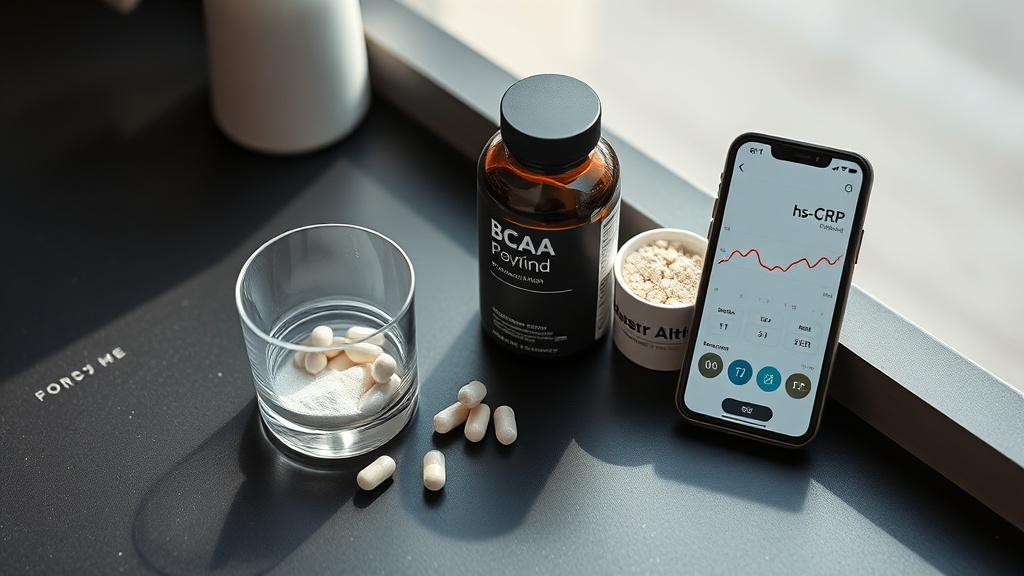
Step 3: BCAA and Glutamine Support. The Cell Discovery findings [5] suggest that BCAA and glutamine catabolism decline with age, contributing to stem cell functional collapse. A reasonable starting point: 5–10g BCAAs and 5g L-glutamine daily, preferably on an empty stomach or peri-workout. This is not a megadose protocol — it's a metabolic substrate replacement strategy.
Step 4: Microbiome-Targeted Nutrition. The MAC pilot data [3] supports incorporating prebiotics (inulin, FOS), postbiotics (butyrate), and natural probiotics into your daily nutrition. While the specific commercial formulation used in the study isn't publicly specified, the component categories are accessible. Prioritize 5–10g prebiotic fiber and a multi-strain probiotic daily.
Step 5: GLP-1RA Consideration (Clinical Supervision Only). If you have metabolic risk factors or are working with a physician on longevity optimization, the emerging omics data [1] adds to the case for GLP-1RA therapy beyond weight management. This is strictly a prescription decision. Do not source these drugs without medical oversight — the dose-response relationship, gastrointestinal side effects, and lean mass preservation all require clinical management.
Step 6: Track and Reassess at 90 and 180 Days. Repeat the biomarker panel from Step 1. Look specifically at hs-CRP trajectory, metabolic markers, and if available, epigenetic clock readings. Adjust the protocol based on your individual response, not population averages.
Related Video
What are GLP-1 receptor agonists doing beyond weight loss?#
The January 2026 Nature Aging study shows GLP-1RA treatment reversing omics-level aging signatures in mouse models across multiple tissue types [1]. The drug class appears to intersect with fundamental age-related pathways — energy metabolism, cognitive aging, and systemic inflammation — suggesting effects well beyond metabolic control. However, translating mouse omics data to human anti-aging claims requires substantially more evidence.
How does collagen supplementation reduce biological age?#
The specific ratio matters. Research published in npj Aging identified a minimal effective unit of three glycine to one proline to one hydroxyproline [4]. This ratio appears to restore collagen homeostasis at a cellular level, and in a clinical observational trial, six months of oral supplementation reduced biological age by 1.4 years (p=0.04). The mechanism likely involves signaling effects of collagen-derived peptides, not just structural protein replacement.
What is Cyrene and can I take it now?#
Cyrene (dihydrolevoglucosenone) is a biocompatible solvent that unexpectedly showed geroprotective properties in C. elegans and Drosophila [2]. It extends lifespan, improves stress resistance, and shows neuroprotective effects in invertebrate disease models. You cannot and should not take it now — there are no mammalian studies, no established human dosing, and no safety profile outside of its industrial use as a solvent. This is a watch-and-wait compound.
Why did the GLP-1 Alzheimer's trial fail if the drug affects aging?#
The trial targeted clinical-stage Alzheimer's disease — meaning patients with established, irreversible neurological damage. The study authors argue the drug class may be more effective as early intervention or prevention, conferring resilience before damage accumulates [1]. This is consistent with how most geroprotective interventions work: they slow or prevent decline rather than reverse established pathology.
How reliable is biological age testing with AI models?#
It depends entirely on which model you use. The MAC supplementation study [3] tested three AI regressors — XGBoost showed consistent moderate improvements, Random Forest was more variable, and SVR detected almost nothing. Biological age estimation is still a developing field with no gold standard. I'd trust epigenetic clocks (GrimAge, DunedinPACE) more than blood-biomarker-based AI models at this stage, but even those have reproducibility questions.
VERDICT#
7.5/10. The convergence of GLP-1RA omics data, novel geroprotective compounds, stem cell metabolic rewiring, and telomere engineering represents a genuine expansion of the longevity intervention toolkit. The GLP-1RA aging data from Nature Aging is the headline — not because it's the strongest evidence (it's mouse data), but because it connects a drug class already in widespread clinical use to molecular aging reversal mechanisms. The collagen and BCAA findings offer low-risk, accessible supplementation strategies with at least preliminary human support. Cyrene and eTERC are fascinating but years from any human application.
Where I'd dock points: the human evidence base for anti-aging applications specifically remains thin. The MAC study had nine participants. The collagen trial was observational. The GLP-1RA omics work is preclinical. We're watching the early chapters of something potentially significant, not reading the conclusion. Anyone selling this as a complete anti-aging protocol today is ahead of the data.
References
- 1.Kriebs A. GLP-1 receptor agonism counteracts omics aging in mice. Nature Aging (2026). ↩
- 2.Author(s) not listed. Cyrene: a novel geroprotective compound that extends lifespan and healthspan in C. elegans and Drosophila. npj Aging (2025). ↩
- 3.Author(s) not listed. Targeting biological age with bioactive, microbiota-accessible nutritional complexes: a pilot study on healthspan extension in medically healthy adults. Scientific Reports (2025). ↩
- 4.Author(s) not listed. A collagen amino acid composition supplementation reduces biological age in humans and increases health and lifespan in vivo. npj Aging (2025). ↩
- 5.Author(s) not listed. IGF2BP3-dependent glutamine/BCAA metabolic rewiring rejuvenates aged human adipose-derived stem cells for enhanced tissue regeneration. Cell Discovery (2026). ↩
- 6.Nagpal N, Agarwal S. Extension of replicative lifespan by synthetic engineered telomerase RNA in patient induced pluripotent stem cells. Nature Biomedical Engineering (2025). ↩
Petra Luun
Petra writes with clinical depth and a slight edge of frustration at how poorly understood this space is by both advocates and critics. She will dismantle bro-science and mainstream medical conservatism with equal energy in the same article. Her writing has surgical precision: she explains receptor pharmacology, feedback loops, and half-life considerations in one coherent thread without dumbing any of it down.
View all articles →