Epigenetic Aging Clocks Predict Cancer Risk: New Cohort Data

SNIPPET: Accelerated epigenetic aging — measured through DNA methylation clocks — is now directly linked to increased cancer risk, with hazard ratios up to 1.67 per standard deviation increase in PCGrimAge. Two major 2026 cohort studies confirm that biological age, not chronological age, drives cancer incidence, and that cardiovascular health scores (LE8) may partially offset this risk.
Epigenetic Aging Clocks Now Predict Cancer Risk — and Your Lifestyle Score May Be the Counter-Move
THE PROTOHUMAN PERSPECTIVE#
This is the kind of data that forces a recalibration. For years, the longevity community has treated epigenetic clocks as vanity metrics — a way to measure whether your cold plunges and supplement stacks are "working." But what Yin, Stevenson-Hoare, Holleczek et al. have done in 2026, alongside parallel findings from Li, Zhang, and Zhang et al., is anchor these clocks to something harder: cancer incidence over decade-plus follow-up periods.
The implication for human performance optimization is severe and simple. If your biological age is accelerating, you are not just aging faster — you are accumulating cancer risk in a measurable, trackable way. And if a cardiovascular health score like Life's Essential 8 can modify that risk, we're looking at the first real bridge between geroscience and oncology prevention. The data tells me this matters more than any single-molecule intervention I've covered this year.
This changes the priority stack.
THE SCIENCE#
What Is Epigenetic Aging, Exactly?#
Epigenetic aging refers to the progressive accumulation of DNA methylation changes at specific CpG sites across the genome — changes that can be quantified using algorithms known as epigenetic clocks. These clocks estimate biological age (BA), which may diverge significantly from chronological age depending on lifestyle, disease burden, environmental exposures, and genetic predisposition. The relevance to human healthspan has been theorized for over a decade, but until recently, longitudinal cancer outcome data was sparse.[1]
The importance is direct: if biological age independently predicts cancer, then it becomes a modifiable risk biomarker — not just a research curiosity. Yin et al. report hazard ratios up to 1.67 (95% CI 1.25–2.24) per standard deviation increase in PCGrimAge for cancer incidence in 1,916 German adults aged 50–75.[1] Steve Horvath, the pioneer of epigenetic clocks at Altos Labs, has described 2026 as a turning point for AI-enhanced biological age estimation, citing models like CpGPT that may soon outperform manually curated clocks.[3]
The ESTHER Cohort: Five Clocks, One Signal#
The German ESTHER study is not small, and it's not short. With 1,916 participants at baseline and repeat measurements for 894 of them eight years later, this is a genuinely longitudinal design — the kind I want to see before I change my thinking.
Yin et al. estimated five DNA methylation-based biological age metrics. The strongest cancer signal came from PCGrimAge, which showed a 67% increased cancer risk per SD increase. But the data didn't stop there. Four out of five BA trajectory measures showed monotonic, linear associations with cancer, corresponding to a 33% to 37% higher risk per SD increase in their slopes.[1]
That linearity matters. It means there's no apparent safe threshold — every unit of accelerated aging tracks with more risk. The restricted cubic spline analyses confirmed this for most clocks, though PCGrimAge showed a slightly more complex curve.
The catch, though. The ESTHER cohort is ethnically homogeneous (German adults), and the age range is 50–75. I'd want replication in younger and more diverse populations before extending these findings broadly. The study also couldn't disentangle which specific cancers drove the signal — it's an overall cancer incidence outcome.
The UK Biobank Parallel: LE8 as a Modifier#
Li, Zhang, Zhang et al. tackled a complementary question using the UK Biobank — a much larger dataset with a median follow-up of 13.5 years.[2] They assessed aging through four markers: KDM biological age, PhenoAge, leukocyte telomere length, and chronological age. All four were associated with elevated overall cancer risk after FDR correction.
The genuinely new finding here is the interaction between Life's Essential 8 (LE8) scores and biological aging. LE8 — which integrates diet quality, physical activity, nicotine exposure, sleep health, BMI, blood lipids, blood glucose, and blood pressure — appeared to modify cancer risk among biologically older individuals. Joint analyses showed consistent risk reductions for esophageal, gastric, breast, and uterine cancers among those with higher LE8 scores, even in the context of accelerated biological aging.[2]
A significant interaction (FDR-corrected p < 0.05) between LE8 and PhenoAge was specifically observed for lung cancer risk. That's a notable specificity — it suggests that cardiovascular health behaviors may influence cancer through aging-related pathways, potentially via effects on autophagy regulation, systemic inflammation, and NAD+ metabolism.

Methylation, Mitochondria, and the Cancer Bridge#
Why would epigenetic aging drive cancer incidence? The mechanism isn't fully mapped, but the leading hypothesis centers on accumulated epigenetic drift destabilizing tumor suppressor gene regulation while simultaneously impairing mitochondrial efficiency and cellular senescence pathways. As methylation patterns degrade, cells lose their ability to execute proper autophagy — the cellular cleanup process that eliminates damaged organelles and proto-cancerous cells.
Singh and Poeggeler's editorial in Frontiers in Aging reinforces this connection, highlighting how LEF1 gene silencing via promoter methylation promotes inflammation and reactive oxygen species production — two well-established cancer-permissive conditions.[4] The aging epigenome doesn't just make you biologically older. It makes your cellular environment more hospitable to malignant transformation.
I'm less convinced by speculative links to telomere dynamics in this context. Li et al. used leukocyte telomere length as one of their four aging markers, and while it did associate with cancer risk, the signal was weaker and less consistent than PhenoAge or KDM.[2] Telomere length remains a noisy biomarker — useful directionally but not precise enough for individual-level risk stratification. The data tells me methylation clocks are simply better tools for this purpose.
Cancer Risk Increase per SD of Biological Aging
COMPARISON TABLE#
| Method | Mechanism | Evidence Level | Cost | Accessibility |
|---|---|---|---|---|
| PCGrimAge Clock | DNA methylation at mortality-associated CpG sites | Strong — longitudinal cohort, HR 1.67/SD [1] | $300–$500 per test | Requires lab processing (Illumina arrays) |
| PhenoAge | Composite of clinical biomarkers + DNAm | Strong — UK Biobank validated, 13.5-yr follow-up [2] | $300–$500 per test | Lab-dependent |
| KDM Biological Age | Clinical biomarker composite (no DNAm) | Moderate — validated but less cancer-specific | $50–$150 (standard bloodwork) | High — any clinical lab |
| Leukocyte Telomere Length | Telomere shortening proxy | Moderate — noisier signal for cancer [2] | $100–$300 | Moderate — specialized assays |
| LE8 Score (Lifestyle) | 8-factor cardiovascular health composite | Emerging — modifies cancer risk in joint analyses [2] | Free (self-assessment) | Universal |
| CpGPT / AI Clocks | Foundation-model DNAm analysis | Early-stage — outperforming legacy clocks in validation [3] | TBD | Research-only currently |
THE PROTOCOL#
Based on the current evidence from both cohort studies, here is a practical framework for using epigenetic age data in your cancer risk management. I want to be clear: this is not a substitute for clinical oncology screening. It's a complementary layer.
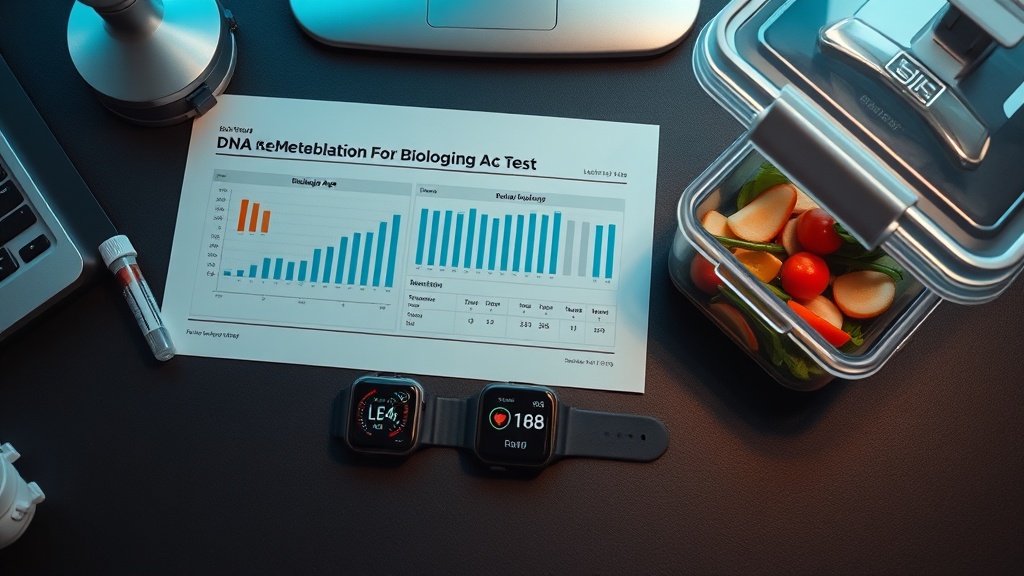
Step 1: Establish Your Epigenetic Baseline Order a DNA methylation test from a validated provider that reports GrimAge or PhenoAge metrics. TruDiagnostic, Elysium Health's Index, or research-grade Illumina EPIC array services are current options. Record your biological age acceleration (the gap between your BA and chronological age). One test alone is directional — the real value comes from longitudinal tracking.
Step 2: Calculate Your LE8 Score The American Heart Association provides a free LE8 calculator. Assess your diet quality, physical activity minutes, nicotine status, sleep duration, BMI, non-HDL cholesterol, fasting glucose, and blood pressure. Based on Li et al.'s findings, a higher LE8 score may partially offset cancer risk even in biologically older individuals.[2] Aim for a total score above 80/100.
Step 3: Target the Modifiable Methylation Drivers The ESTHER data suggests that prior malignant tumors accelerate PCHannum and PCGrimAge.[1] If you have a cancer history, epigenetic monitoring becomes more urgent. For everyone: sustained aerobic exercise (150+ min/week), a Mediterranean-pattern diet, and smoking cessation are the strongest evidence-backed interventions for decelerating methylation age. These aren't novel recommendations — but the cancer-risk framing adds weight.
Step 4: Retest at 12–24 Month Intervals Yin et al. used an 8-year interval for repeat measurements. For personal optimization, 12–24 months is more practical. You want to see your BA acceleration slope flattening or reversing. If your trajectory slope is increasing by more than 0.5 SD over the measurement period, escalate your lifestyle interventions and discuss clinical cancer screening frequency with your physician.
Step 5: Integrate with Standard Cancer Screening Epigenetic clocks do not replace colonoscopies, mammograms, or PSA testing. They add a systemic risk layer. If your biological age is accelerating and your LE8 score is below 60, consider earlier or more frequent standard screenings — especially for the cancers flagged in the UK Biobank data: esophageal, colorectal, pancreatic, skin, kidney, and urinary tract.[2]
Step 6: Monitor Emerging AI-Enhanced Clock Updates Horvath has flagged CpGPT and BioLearn as likely improvements over current clocks.[3] As these tools become clinically available, they may offer sharper cancer-risk stratification. Stay within the validated testing ecosystem — don't chase unvalidated consumer products.
Related Video
What is an epigenetic clock and how does it relate to cancer?#
An epigenetic clock is an algorithm that estimates biological age based on DNA methylation patterns at specific genomic sites. According to Yin et al., accelerated biological age as measured by clocks like PCGrimAge is associated with up to 67% increased cancer risk per standard deviation.[1] It's a systemic biomarker, not a tumor-specific test.
How does the Life's Essential 8 score reduce cancer risk in biologically older individuals?#
Li et al. found that higher LE8 scores — reflecting better cardiovascular health behaviors across eight domains — appear to modify cancer risk even among people whose biological age exceeds their chronological age.[2] The mechanism may involve reduced systemic inflammation, improved autophagy function, and better metabolic regulation. Honestly, the exact pathway is not yet established — but the epidemiological signal is consistent across multiple cancer types.
Who should get an epigenetic age test for cancer risk assessment?#
Based on the ESTHER data, individuals aged 50 and older — particularly those with a prior cancer history — may benefit most from epigenetic age monitoring.[1] But the UK Biobank findings suggest that biological aging across all ages carries cancer implications.[2] If you're optimizing for long-term risk reduction, baseline testing in your 40s is reasonable if cost is not a barrier.
When will AI-enhanced epigenetic clocks be available for clinical use?#
Steve Horvath has described models like CpGPT as already outperforming legacy clocks in validation cohorts.[3] Clinical availability likely depends on regulatory approval and integration with existing lab infrastructure. I'd estimate 2–3 years for broader access, though research-grade testing is available now.
Why is PCGrimAge a stronger cancer predictor than other clocks?#
PCGrimAge was originally trained on mortality data, incorporating methylation proxies for smoking pack-years and plasma protein levels linked to lifespan. This mortality-facing design appears to capture cancer-relevant biological pathways — particularly those involving chronic inflammation and cellular senescence — more effectively than clocks trained purely on chronological age prediction.[1]
VERDICT#
8/10. The convergence of these two 2026 studies — one German, one UK-based, both longitudinal, both published in npj Aging — gives me more confidence than any single paper could. The ESTHER cohort delivers the mechanistic specificity with five-clock comparisons and trajectory data. The UK Biobank study provides the scale and the LE8 interaction finding, which is genuinely actionable. I'm docking points because neither study establishes causation, the cancer endpoints are aggregate rather than site-specific in the German cohort, and optimal intervention thresholds for BA deceleration remain undefined. But the direction is clear, and the data is strong enough to warrant protocol changes for anyone serious about decade-level cancer risk management.
This one actually moved me.
References
- 1.Yin Q, Stevenson-Hoare J, Holleczek B. Epigenetic aging and cancer incidence in a German cohort of older adults. npj Aging (2026). ↩
- 2.Li J, Zhang Y, Zhang W. Aging and increased cancer risk: exploring the potential of LE8 score to mitigate risk. npj Aging (2026). ↩
- 3.Mazin A. Geroscience in 2025: The Expert Roundup. Lifespan.io (2026). ↩
- 4.Singh SK, Poeggeler B. Editorial: Aging epigenome and longevity. Frontiers in Aging (2025). ↩
Orren Falk
Orren writes with the seriousness of someone who thinks about their own mortality every day and has made peace with it. He takes the long view, which means he's less excited than others about marginal gains and more focused on whether something moves the needle on a decade-level timescale. He'll admit when a study impresses him: 'This one actually moved me.' He uses 'the data' as a character in his writing — it speaks, it tells him things, it sometimes disappoints him.
View all articles →